
European
The Imperative of Daily Practice
0:20 - 0:59 (39 min)
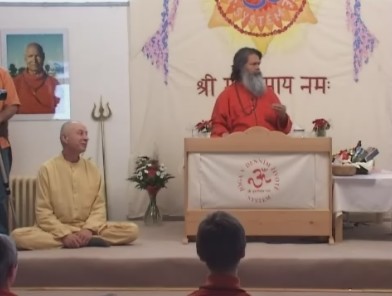
A direct address to yoga students on the necessity of disciplined daily practice for physical and mental purification.
"Practicing means at home—here you only learn. Practicing for just one week is ineffective; it must be a continuous, daily process."
"We must become sāttvic. Where the body is sāttvic, there is no vikāra. Vikāra exists in the mind as well."
Swami Avatarpuri (Swāmījī) leads a satsang, critiquing the lack of consistent practice among attendees. He stresses that health through daily āsana, prāṇāyāma, and seasonal cleansing techniques like Śaṅkha Prakṣālana is the essential foundation for spirituality. He expands on the concepts of vikāra (impurity/illness) and the guṇas, urging a transformation in diet (āhār), recreation (vihār), behavior (ācār), and thought (vicār). The talk includes practical instructions, responses to questions about cleansing practices, and a call for teachers to become examples of yogic health.
Filming location: Strilky, Czech Republic
The Nature of the Knower and the Self
1:05 - 1:40 (35 min)
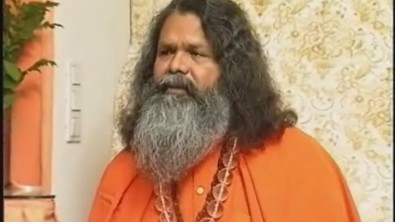
A discourse on Advaita Vedanta and the nature of the Self, based on Śaṅkarācārya's teachings.
"This body is full of vikāra. Some have a cough, some a cold, some have lung problems... But Ātman is not born; there is no change in your Ātman, and it will not die either."
"If you have no form, what can death do to you?... You are Avināśī. So if you are Avināśī, no one can destroy you, no one can take you away; then why are you afraid?"
The speaker expounds on the true nature of the Self (Ātman) as distinct from the body, explaining key Sanskrit terms: Nirvikāra (free from decay/impurity), Nirākāra (formless), Nirmala (pure), and Avināśī (immortal). He emphasizes that identifying with the eternal, formless Self, rather than the impermanent body, is the path to overcoming fear, disease, and sorrow. The talk integrates scriptural commentary, practical advice like breath awareness and Self-inquiry, and concludes with the realization of the Self as all-pervading (Vyāpaka) consciousness.
Filming location: Vienna, Austria
Live as a Human
1:45 - 2:19 (34 min)
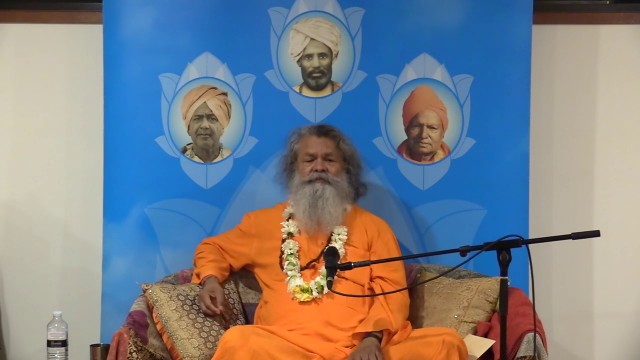
A spiritual discourse on non-violence, divine oneness, and the sanctity of all life.
"We are like other Swamis; we are the same. But we are working for everyone, every time, everywhere."
"Jīvā means life, life, and in that life there are all creatures: a little ant, this little ant, and humans, and all are all equal, what is living, living."
A Swami addresses a gathering, weaving together cosmology, ethics, and personal anecdote. He speaks of Bhagavān Śiva as the primordial source and emphasizes the fundamental equality of all life (Jīva). The core teaching is the practice of ahimsa (non-violence), advocating for a vegan lifestyle and abstaining from alcohol, framed as a recognition of our shared humanity. He instructs listeners to begin each day with the affirmation "I am human" to cultivate this awareness, and concludes with a bhajan.
Filming location: Gold Coast, Australia
Om Sri Deveshwar Mahadevaya Namaha
2:25 - 2:58 (33 min)
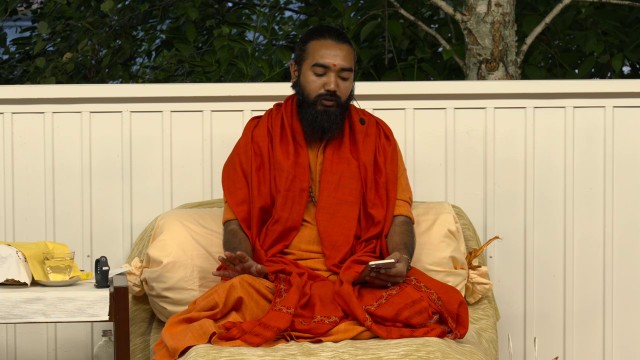
A group chanting and mantra recitation session.
"Today we will have a break from storytelling and cleanse our body a little bit. We will chant one powerful mantra of Swamijī 108 times."
"Once we know it by heart, then we go slow, but to learn it, the process is that we do it in parts. Then we do slowly, then we speed it up, and then we again go slowly."
A teacher leads participants in a session focused on mantra repetition. The group begins by chanting the "Oṁ Śrī Deveśvara Mahādevāya Namaḥ" mantra 108 times, followed by a review and speed practice of a previously learned Sanskrit verse from the Sannyasukta. The teacher explains the learning methodology of alternating slow and fast tempos, mentions plans to learn the Ganeśa Atharvaśīrṣa, and concludes with a series of devotional salutations and shorter prayers.
Filming location: Strilky, Czech Republic
Devik shakti
3:05 - 3:35 (30 min)
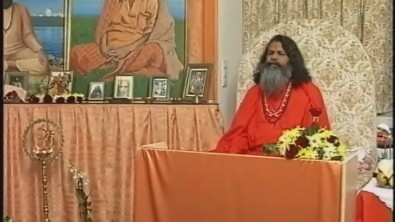
A spiritual discourse on the two fundamental forces of the universe, Devīśakti and Āsurīśakti.
"Both forces, Devīśakti and Āsurīśakti, exist. Devīśakti is positive power, and Āsurīśakti is negative power. But the origin of both is one: God Himself."
"Thus, Devīśakti and Āsurīśakti develop. The part of the power, the energy gathered in negative qualities, day by day, will become Āsurīśakti, and the positive forces will become Devīśakti."
The speaker explains the cosmic duality of divine and negative powers, both emanating from a single divine source. He describes how an individual's path—toward development or destruction—is influenced by their company (saṅga). The talk covers the three types of suffering (Tri-Tāpa), the importance of the Guru's grace for protection, and the significance of the Navarātri festival dedicated to the Divine Mother, or cosmic Śakti.
Filming location: Vienna, Austria
The Divine Lineage of Alakpurījī: Saints, Siddhas, and the Eternal Guru
3:40 - 4:10 (30 min)
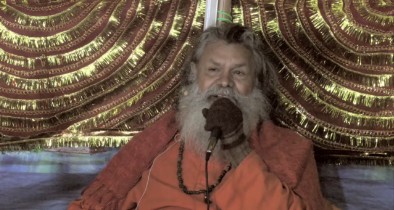
A discourse on the divine lineage of the Alakpurījī Siddha tradition.
"From time to time I incarnate in every yuga to protect the dharma, to liberate all the pure souls, and again to remove or destroy the āsurī śaktis."
"Guru Brahma, Guru Viṣṇu, Guru Devo Maheśvara, Guru Sākṣāt Para Brahma, Tasmai Śrī Guruve Namaha—the Guru Tattva, Śiva Tattva, Viṣṇu Tattva, and Brahma Tattva."
A spiritual teacher narrates from a high Himalayan valley, explaining the eternal Guru principle and the Nityāvatāra of great saints. He recounts the lineage from the ancient Alakpurījī to Devapurījī, then to Bhagavān Śrī Dīp Nārāyaṇa Mahāprabhujī, and finally to their Satguru, Swāmī Madhavānandapurījī, whose birth anniversary is being celebrated. The talk includes a parable about missing divine blessings and emphasizes surrender and patience on the spiritual path.
Filming location: India
The One in All and All in One
4:15 - 4:43 (28 min)
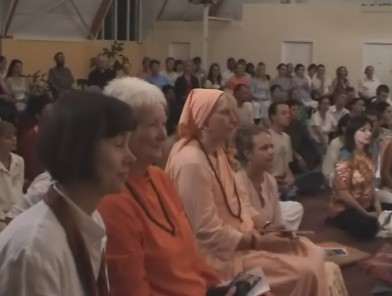
A spiritual discourse on universal consciousness, creation, and human purpose.
"Our great master used to say, 'One in all and all in one.'"
"Yoga is not physical postures... Yoga is the balancing principle... Where there is a balance, there is harmony."
The lecturer delivers a talk exploring the origins of the universe, consciousness, and the principle of yoga. He explains the Vedic concept of creation from sound (Aum) and the elemental evolution from space to earth. The discourse covers the oneness of all life, the unique potential of human intellect, and the importance of education in human values, tolerance, and understanding. He concludes by relating the cycle of rebirth to the modern concept of recycling.
Filming location: Brisbane, Australia
Mental food
4:50 - 6:48 (118 min)
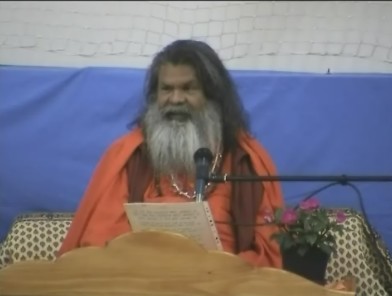
Swamiji in Sliac, April 2007
The Self and The Soul, Melbourne
6:55 - 8:25 (90 min)
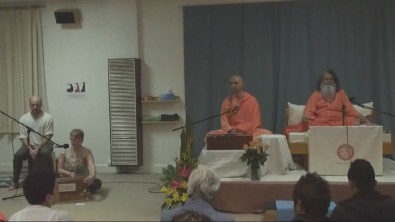
Sri Ram - Kirtan sung by Ally. Swami Jasraj Puri brings an example: When on the spiritual path arise doubts - hold on, it will calm down. Swami Sannyasanand speaks about Pranayama, Ida and Pingala breathing. Swamiji speaks about Lord Shiva,Yog Shakti, the sound OM and Siddhis - the supernatural powers. Atman is universal, the Self, it is immortal. It is like the space, no one can destroy,fire cannot burn nor dead can effect it. Jivatma is individual,is born,reborn comming and going. It is a bundle of our karmas and there are 4 ways to do karma. Swamiji tells a episode from the Ramayana, about Garuda, the carrier of Lord Vishnu as he lost his bhakti to Lord Rama and he was suffering a lot because of his doubts. We have 9 doors where the soul will go out of the body.We can lead ourselves to the Brahman or we can lead ourselves down, it depends on our individual karma and our practice. Translation of the bhajan: Shivoham Shivoham.
Bhajans evening from the Strilky Ashram
8:30 - 9:33 (63 min)
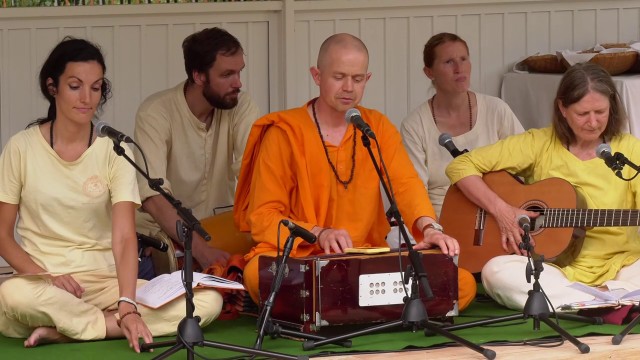
Evening satsang from Strilky Ashram, Czech Republic. Bhajan singing and translation.
Bhajan evening in the Strilky Ashram
9:40 - 10:33 (53 min)
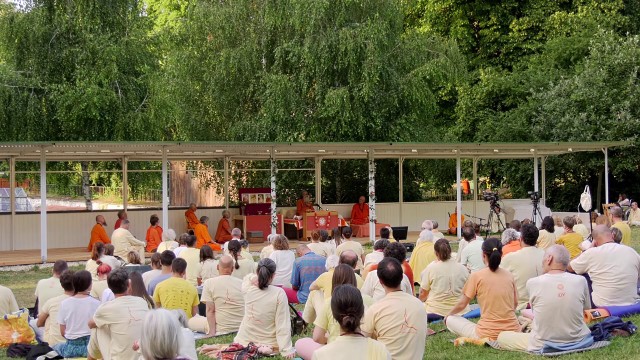
Evening satsang from Strilky Ashram, Czech Republic. Bhajan singing and translations. We shouldn't hold animals in a cage. They feel much pain there. Let them be free. We are also like that bird in the
Bhajan singing from Jadan
10:40 - 10:51 (11 min)
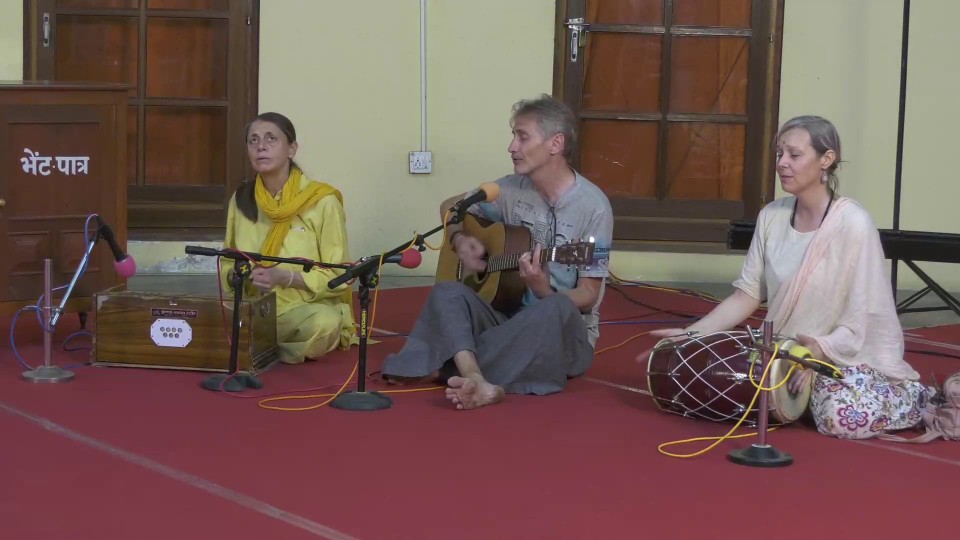
Evening satsang with Vishwaguruji from Jadan Ashram, Rajasthan, India.
Yuga Yuga Jivo Maheshwarananda
10:55 - 11:02 (7 min)
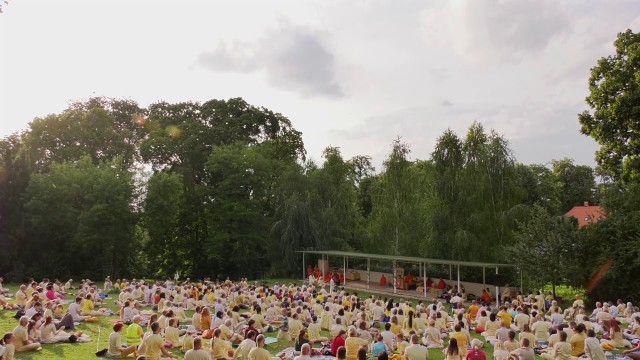
Evening satsang with Vishwaguruji from Strilky Ashram, Czech Republic. Bhajan singing on Gurupurnima satsang.
Sataguru rakho laj hamari
11:10 - 11:16 (6 min)
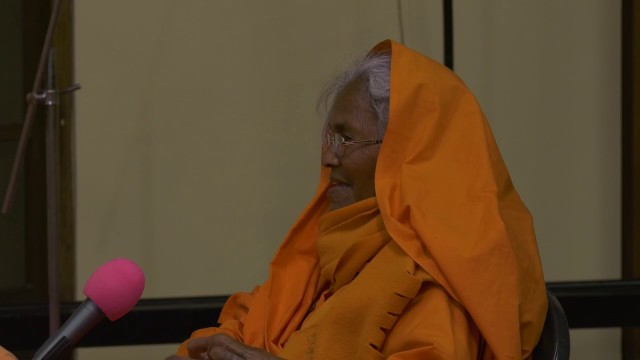
Evening satsang from Jadan Ashram, Rajasthan, India. Vishwaguruji"s sister sings Bhajans.
Repeat the name of Gurudev
11:20 - 11:47 (27 min)
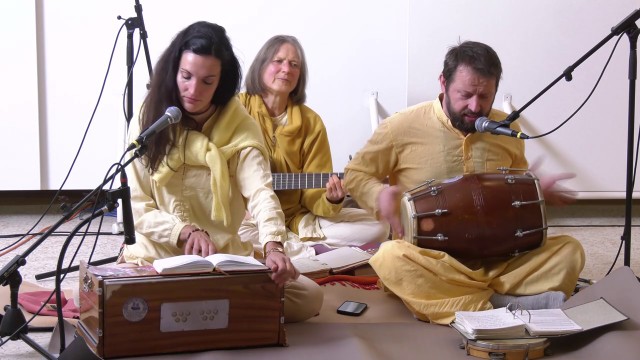
Evening satsang with Vishwaguruji from Vienna, Austria. Bhajan singinig to the Guru. Guru carano me arasatha tiratha he
Mental food
11:55 - 13:53 (118 min)
Swamiji in Sliac, April 2007
The Self and The Soul, Melbourne
14:00 - 15:30 (90 min)
Sri Ram - Kirtan sung by Ally. Swami Jasraj Puri brings an example: When on the spiritual path arise doubts - hold on, it will calm down. Swami Sannyasanand speaks about Pranayama, Ida and Pingala breathing. Swamiji speaks about Lord Shiva,Yog Shakti, the sound OM and Siddhis - the supernatural powers. Atman is universal, the Self, it is immortal. It is like the space, no one can destroy,fire cannot burn nor dead can effect it. Jivatma is individual,is born,reborn comming and going. It is a bundle of our karmas and there are 4 ways to do karma. Swamiji tells a episode from the Ramayana, about Garuda, the carrier of Lord Vishnu as he lost his bhakti to Lord Rama and he was suffering a lot because of his doubts. We have 9 doors where the soul will go out of the body.We can lead ourselves to the Brahman or we can lead ourselves down, it depends on our individual karma and our practice. Translation of the bhajan: Shivoham Shivoham.
Gurudev sees our past and future
15:35 - 16:51 (76 min)
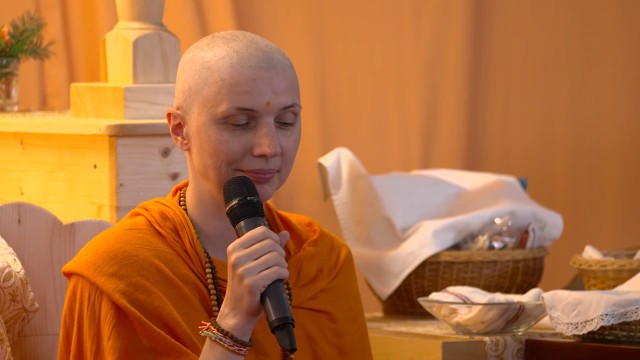
A satsang discourse on the guru's grace, destiny, and the power of surrender.
"Even the guru can change destiny, because there is no higher law than the guru’s law."
"Since the day I told Swāmījī, 'I surrender, do what you want,' I am in peace."
A speaker, likely a senior disciple, addresses the gathering following morning prayers. He discusses the validity of Vedic sciences like astrology (Jyotish) but emphasizes the supreme power of the guru's grace to alter destiny, illustrating this with a traditional parable about a guru changing the fate of two royal children. He shares personal anecdotes of learning to obey the guru's guidance, concluding that true peace comes from complete surrender to the guru's will, allowing him to manage one's life and mitigate karma.
Filming location: Strilky, Czech Republic
A Gentle Yoga Practice
17:00 - 18:07 (67 min)
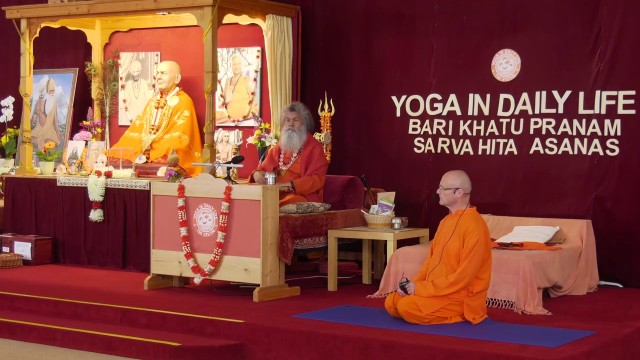
A guided gentle yoga class focusing on breath and alignment.
"Pavanamuktāsana is excellent for digestion." "When we start to breathe a little deeper, we immediately have more energy and less tension."
An instructor leads a group through a sequence of postures, including Pavanamuktāsana on the back and standing, Uttānāsana, and balancing poses like Ekapāda Uttānāsana. The guidance emphasizes anatomical awareness, the benefits for circulation and focus, and connects the physical practice to the cleansing of the nāḍīs for prāṇic flow. The session concludes with Bhujaṅgāsana and relaxation.
Filming location: Strilky, Czech Republic
Time and destiny, Melbourne
18:15 - 19:25 (70 min)
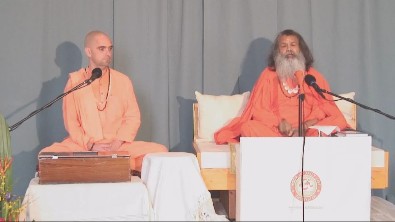
Every saint or holy incarnation has to go through certain experiences in life. Even God has to go through particular situaions. Does God have a destiny? The life of Jesus - he had to go through many hard situations in his life. Was this his destiny or was him given a task to go trough? Swamiji tells episodes from the life of the Sufi master Mansur Al-Hallaj and Hanumanji from the Ramayana. If we have faith - God and we are one - then nothing will happen. When we hold on God's name we will cross the ocean and reach the shore of happiness and peace. Kirtan is the repetition of God's name. The positive vibration will resonance in our whole body and will give positive effects. This will influence our destiny. Guruvakyas, Satsangs, Kirtans and Bhajans are good guidelines in our life. Recorded in Melbourne, Australia.
Om Sri Deveshwar Mahadevaya Namaha
19:30 - 20:03 (33 min)
A group chanting and mantra recitation session.
"Today we will have a break from storytelling and cleanse our body a little bit. We will chant one powerful mantra of Swamijī 108 times."
"Once we know it by heart, then we go slow, but to learn it, the process is that we do it in parts. Then we do slowly, then we speed it up, and then we again go slowly."
A teacher leads participants in a session focused on mantra repetition. The group begins by chanting the "Oṁ Śrī Deveśvara Mahādevāya Namaḥ" mantra 108 times, followed by a review and speed practice of a previously learned Sanskrit verse from the Sannyasukta. The teacher explains the learning methodology of alternating slow and fast tempos, mentions plans to learn the Ganeśa Atharvaśīrṣa, and concludes with a series of devotional salutations and shorter prayers.
Filming location: Strilky, Czech Republic
We are full of resonance
20:10 - 21:04 (54 min)
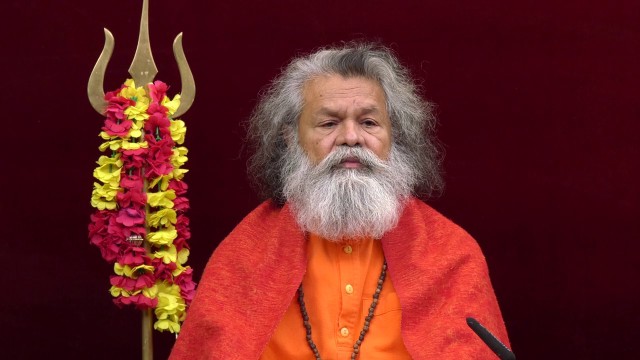
Evening satsang with Vishwaguruji from Strilky Ashram, Czech Republic. There are many Gods but finally, there are all one. Our soul is circling in the universe like water in the earth. The story about how can some seeds öf grain remain unbroken. Who is going to the Satsang they can reach the Supreme. Sometimes we see the karma but don't do that. Man saints past away but their name remained with us. Holiguruji was very lovely and strict for those persons who were around him. Holiguruji knew if somebody criticises him the bad karma went to that man. Diving to the ocean we can hear the beautiful sound and we hear this also if we plug our ears. Viswaguruji blows the conch three times for the honour of Holiguruji.
The Nature of the Knower and the Self
21:10 - 21:45 (35 min)
A discourse on Advaita Vedanta and the nature of the Self, based on Śaṅkarācārya's teachings.
"This body is full of vikāra. Some have a cough, some a cold, some have lung problems... But Ātman is not born; there is no change in your Ātman, and it will not die either."
"If you have no form, what can death do to you?... You are Avināśī. So if you are Avināśī, no one can destroy you, no one can take you away; then why are you afraid?"
The speaker expounds on the true nature of the Self (Ātman) as distinct from the body, explaining key Sanskrit terms: Nirvikāra (free from decay/impurity), Nirākāra (formless), Nirmala (pure), and Avināśī (immortal). He emphasizes that identifying with the eternal, formless Self, rather than the impermanent body, is the path to overcoming fear, disease, and sorrow. The talk integrates scriptural commentary, practical advice like breath awareness and Self-inquiry, and concludes with the realization of the Self as all-pervading (Vyāpaka) consciousness.
Filming location: Vienna, Austria
Gurudeva hi Kevalam
21:50 - 22:45 (55 min)
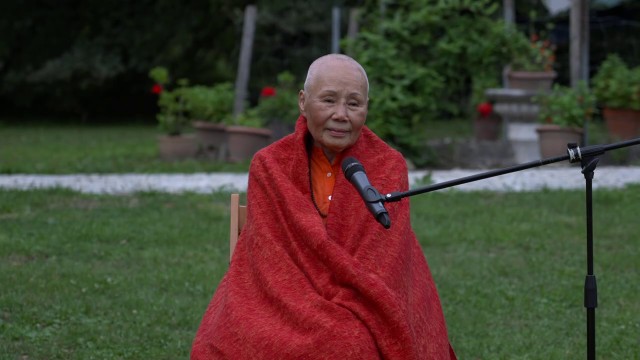
Evening satsang from Yoga Summer Retreat from Strilky, Czech Republic. As we know, things are changing in our lives. What comes shall go. A story of a man, who was a happy person, and used to make others happy. This man time to time went to his Guruji for darshan and advice. Gurudev knows what is going on in our minds. Karma yoga is a help for us. We are all blessed to have Gurudev's guidance. Bansuri flute music. Lecture by Swami Daya Mata, about good and bad things that are transient.
Live as a Human
22:50 - 23:24 (34 min)
A spiritual discourse on non-violence, divine oneness, and the sanctity of all life.
"We are like other Swamis; we are the same. But we are working for everyone, every time, everywhere."
"Jīvā means life, life, and in that life there are all creatures: a little ant, this little ant, and humans, and all are all equal, what is living, living."
A Swami addresses a gathering, weaving together cosmology, ethics, and personal anecdote. He speaks of Bhagavān Śiva as the primordial source and emphasizes the fundamental equality of all life (Jīva). The core teaching is the practice of ahimsa (non-violence), advocating for a vegan lifestyle and abstaining from alcohol, framed as a recognition of our shared humanity. He instructs listeners to begin each day with the affirmation "I am human" to cultivate this awareness, and concludes with a bhajan.
Filming location: Gold Coast, Australia
Be happy be good
23:30 - 0:15 (45 min)
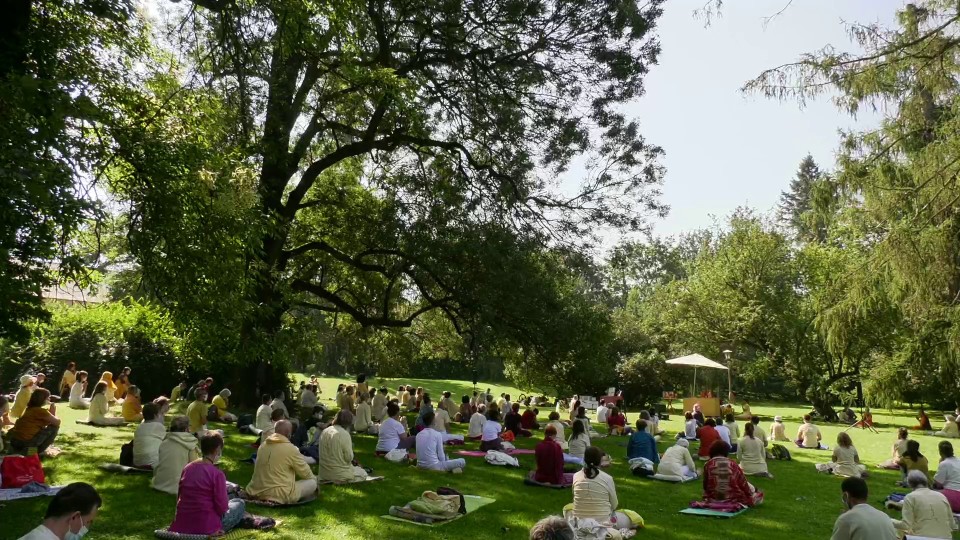
A closing address and prayer session at a spiritual seminar.
"For one week, we were very comfortable, very relaxed, and we had immense spiritual development and spiritual talks."
"What you have learned now, after a long time, it will come inside... You cannot say, 'Finally, I am perfect.'"
A teacher addresses participants at the conclusion of a week-long seminar, expressing gratitude and offering guidance for integrating the teachings. He discusses the gradual process of learning, warns against fear and superstition, emphasizes love for family, and clarifies that yoga extends beyond physical practice. The session includes chanting, a prayer, and final instructions for departure.
Filming location: Strilky, Czech Republic
American
Australian