
European
Practicing from Villach
0:00 - 1:11 (71 min)
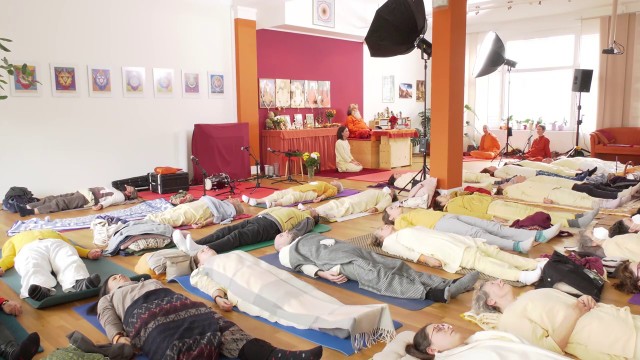
Morning program with Vishwaguruji from Villach, Austria. Asana practice.
How can I love myself?
1:15 - 1:48 (33 min)
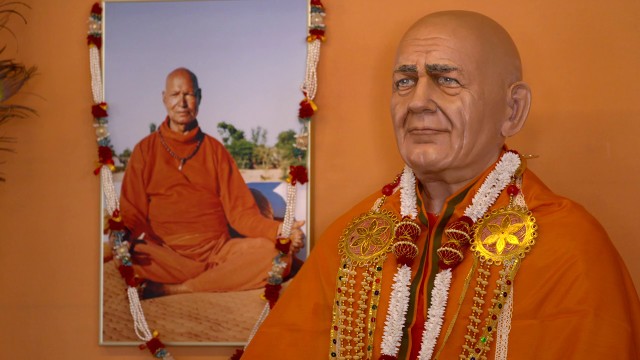
A satsang exploring the concept of self-love through the framework of the four aspects of divine grace (kripa).
"Swāmījī did not really use this word, but I know it comes from Holī Gurujī; he is always using that."
"Love each and every living being, if not more, then at least as much as yourself."
Guru Lilā, addressing the community, explains the four aspects of kripa: Deva Kripa (grace of the gods), Śāstra Kripa (grace of the scriptures), Guru Kripa (the Guru's grace), and Kuṭkī Kripa (self-grace). He focuses on Kuṭkī Kripa as self-love, arguing it is a prerequisite for loving others. He outlines a practical path to self-love through self-acceptance, self-understanding, and self-giving, linking it to core teachings. He shares an anecdote about a woman healing from ALS through self-love and concludes with a traditional story about Guru Nānak illustrating the complex workings of karma.
Filming location: Strilky, Czech Republic
Do not waste your human life
1:55 - 2:55 (60 min)
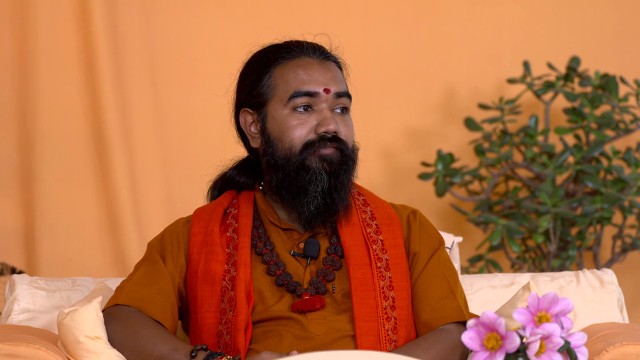
An evening satsang discourse on dharma, grace, and spiritual practice.
"Dharma rakṣati rakṣitaḥ. He who protects dharma, dharma protects him."
"The Guru will show us the right path... But we need to do the effort."
The lecturer leads a satsang exploring the nature of dharma and the four blessings (kṛpā) essential for spiritual progress: divine grace, scripture, the Guru, and one's own initiative. He weaves in teachings from the Bhagavad Gītā, stories from the Mahābhārata, and practical advice for students, emphasizing the necessity of the Guru's guidance and the disciple's personal effort to follow the righteous path and achieve liberation.
Filming location: Strilky, Czech Republic
Around the world - Bhajans from Kailash(3/3)
3:00 - 3:47 (47 min)
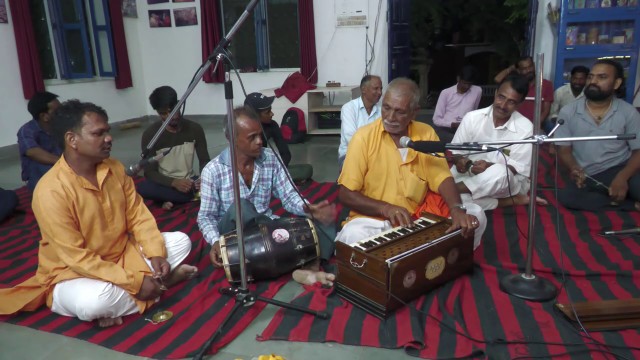
Evening satsang from Kaliash Ashram, Rajasthan, India. Bhajans on the occasion of Sri Devpuriji Mahasamadhi.
Around The World - Summer Yoga at the Beach, Split, CRO
3:55 - 4:01 (6 min)
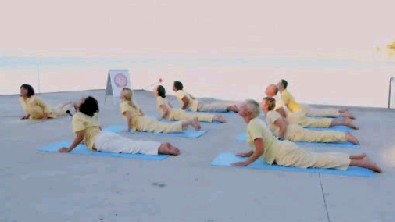
Summer Yoga at the Beach, Split, Croatia
Around The World - Surya Namaskar at Sri Devpuriji Ashram, Zagreb, CRO
4:05 - 4:41 (36 min)
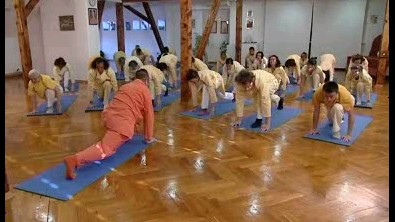
Surya Namaskar in Sri Devpuriji Ashram, Zagreb, Croatia with english subtitles
Bhajan evening from Strilky
4:45 - 4:59 (14 min)
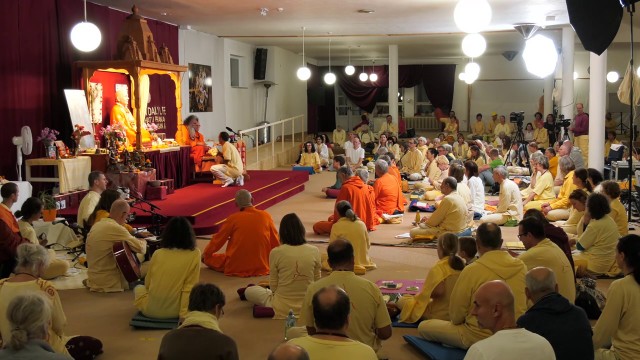
Evening satsang with Vishwaguruji from Strilky Ashram, Czech Republic.
Vegetarian cooking lesson 20
5:00 - 5:18 (18 min)

Vegetarian cooking lesson
The living heart of God
5:25 - 5:46 (21 min)
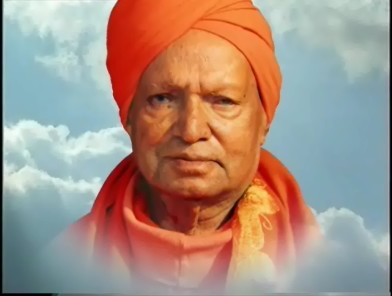
In Memory of His Holines Hindu Dharmasamrat Paramhansa Swami Madhavananda Puri.
Support the flame of life within you
5:50 - 6:37 (47 min)
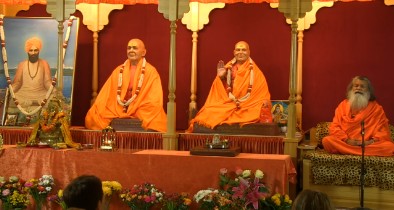
A spiritual discourse on the inner fire of tapasyā (austerity) and renunciation.
"God has given this human life with many good things, as well as past negatives, unpleasantness, sorrows, and attachments. Now, every one of us would like very much to become holy. But how many minutes, hours, or days do we give to tapasyā before we give up?"
"Tapasyā is a fire which burns all negative qualities; everything burns. Fire is one of the best elements which purifies everything."
The lecturer addresses a webcast from the Alagpuriji Siddhapitha, reflecting on the nature of true renunciation (vairagya) and spiritual practice. He explains that all positive and negative qualities originate within the self, and emphasizes that sustained tapasyā—the inner fire of austerity—is needed to purify consciousness and burn away attachments. He shares anecdotes about the severe tapasyā of his Guru, Sri Sri Madhavanandaji, in the deserts of Rajasthan, which sanctified the land and led to the establishment of a Shiva temple. The talk concludes with an invitation to a ten-day inauguration festival at the temple in Jadan.
Filming location: Vienna, Austria
The real meditation
6:45 - 7:34 (49 min)
A spiritual discourse on meditation, mantra, and the guru principle.
"Without a Guru Mantra, meditation is like a statue without life in it."
"Gu means darkness, and ru means light. He is the one who removes the darkness of ignorance and leads us to the light of wisdom, freedom, and mokṣa."
The lecturer delivers an evening satsang, explaining mantra as the essential seed of meditation. He details the importance of a guru-given mantra, describes the guru as a divine principle beyond form, and outlines a five-stage practice for perfecting mantra repetition, from writing to silent, automatic resonance.
Filming location: UK
This time will not come back
7:40 - 8:38 (58 min)
A satsang discourse on the foundational principles of yoga and spiritual life.
"Our spiritual growth is like climbing a mountain. It is hard; there are many steps going upwards."
"You cannot just directly start from the top... it is a gradual process."
The lecturer leads an evening talk, using the analogy of building a house to explain the sequential, foundational importance of the yamas and niyamas in Ashtanga Yoga. He expands on themes of patience, gratitude, managing expectations, and surrendering inner conflicts to progress on the path, emphasizing the preciousness of human life and the disciple's connection to the guru parampara. The session includes personal anecdotes, audience interaction, and concludes with traditional chants and a peace invocation.
Filming location: Strilky, Czech Republic
Disciples remembrances and stories about Gurudev
8:45 - 9:43 (58 min)
A morning satsang on devotion, grace, and personal spiritual experiences.
"For Gurudeva also, we do not need to present a golden chariot and such things. He is one of the most simple, natural persons."
"He works on bhāva. Bhāva means feelings. It is very similar with Gurudeva. He works on feelings."
Swami Avatarpuri opens the session by discussing the simplicity of devotion, using the example of Lord Shiva's grace toward a sincere, unlearned forest dweller. He announces a daily Shiva Abhisheka ritual for the seminar. Several disciples then share personal stories of meeting their Guru, receiving mantra initiation, and learning through karma yoga and subtle guidance, all emphasizing the transformative power of the Guru's grace and the importance of heartfelt intention (bhāva).
Filming location: Strilky, Czech Republic
Gurudev always works for his bhaktas
9:50 - 10:48 (58 min)
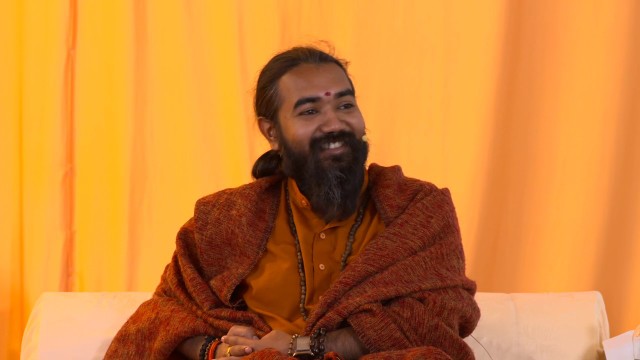
Evening satsang from Strilky Ashram, Czech Republic. Atma is immortal. The story of Naciketa and Yanaraj. Yamaraj tells Nacikata the nature of the Atman. Gurudev forms us like a smith forms the iron into a beautiful shape. But we need patience. Gurudev helps us attain liberation. A story of a man who didn’t want to go with his Guru. If we solve one problem the same time we create two other. Only surrender to Gurudev can really solve our problems.
Introduction of the Strilky Ashram
10:50 - 10:59 (9 min)
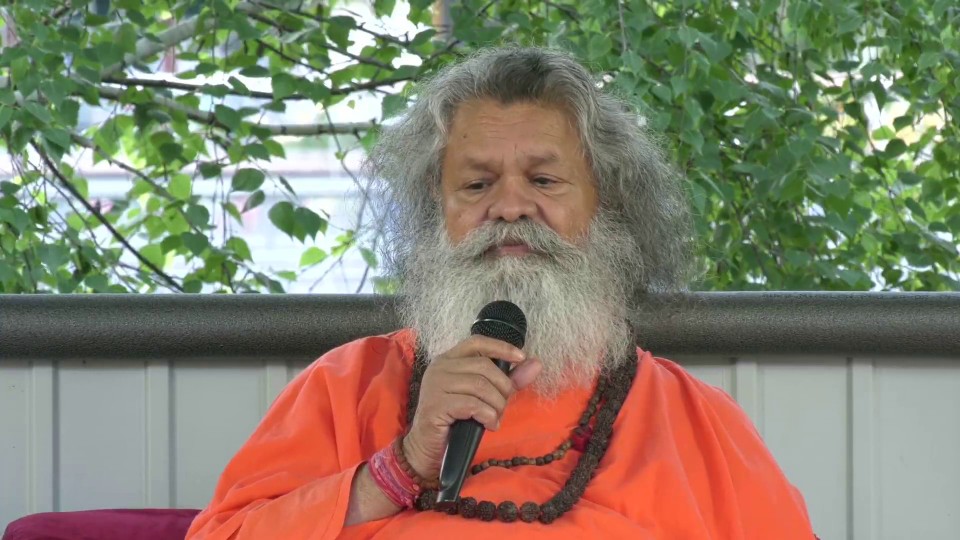
A spiritual leader inaugurates and blesses a new sacred grove for satsang.
"Our yoga people have been in many, many countries: from India, from here in Europe. And from Europe, many of our bhaktas went to other countries."
"I tell you that anytime, if you desire something, if you need something, if something happens, you should come to this place and pray with our mantra. Everything will return to peace and harmony."
The speaker, likely Swami Madhavanandji, addresses a gathering at a newly prepared forest satsang site. He emphasizes the sanctity of the place, its rules of entry, and its power for prayer. He reflects on the ashram's history, its global community of devotees, and the transformative impact of their yoga practice, which leads many to give up meat and alcohol. The talk transitions into a search for the ancient saint Alak Puriji, briefly touching upon associated mythology involving Shiva.
Filming location: Strilky, Czech Republic
Around the world - Opening of new YIDL center in Murska Sobota, Slovenia
11:00 - 11:42 (42 min)
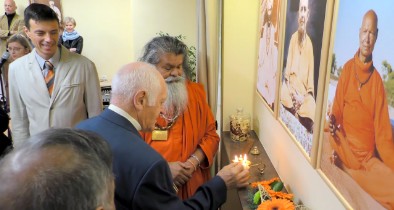
We will go one day
11:50 - 12:33 (43 min)
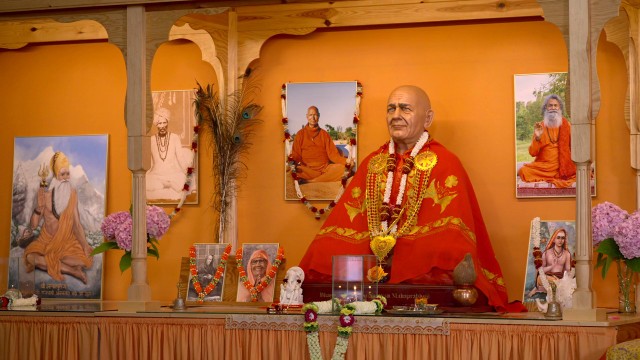
Evening satsang from Strilky Ashram, Czech Republic. We always worry about death. Death is a universal law. Our mind is always restless. We can train it by mantra. Manas is the storehouse of memories. Yogis are not attached to things. Only the bond between the disciple and the Guru is permanent. The story of a man who planned that when Yama came, he would hide somewhere. We should meditate always not only when we are in trouble. We should remember God every day, at least a little bit. Unfortunately present Indian generation is beginning to forget their roots. Birth and death come and go, but remember the name of God.
In the service of Life
12:40 - 13:24 (44 min)
India, Summer 2005. Report about the Swamijis activities.
The spiritual path
13:30 - 14:01 (31 min)
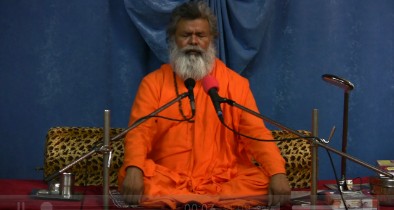
A spiritual discourse on meditation and the paths of worldly engagement and inward withdrawal.
"You try to meditate, you sit and repeat mantras, but the vṛttis—various kinds of mental modifications—persist."
"Nivṛtti means setting aside all obligations: physical, mental, social, political, spiritual—everything. Now you are only with your Self. That is meditation."
The lecturer leads a satsang, analyzing the obstacles to deep meditation. He explains the concepts of pravṛtti (extroverted engagement) and nivṛtti (inward withdrawal), emphasizing the need to control mental modifications (vṛttis) and purify oneself of impurities (mala) to achieve authentic self-inquiry. He critiques superficial prayer and incompetent teaching, urging sincere practice and surrender.
Filming location: Jadan, Rajasthan, India
Strengthening the fire
14:05 - 14:35 (30 min)
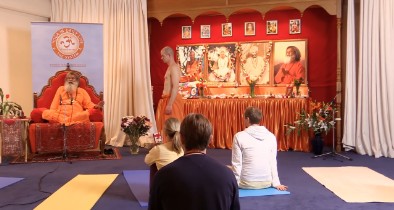
An instructional session on Agni Sāra Kriyā, a yogic practice for health.
"Blood pressure and diabetes are the best of friends. When diabetes arrives, blood pressure accompanies it."
"Agni Sāra Kriyā awakens a fire within your body that burns all excess fat and unnecessary matter."
A teacher explains the philosophy and health benefits of the digestive fire (jāṭharāgni) and Agni Sāra Kriyā, relating it to conditions like diabetes and memory. He details the proper fasting conditions, precautions, and the practice's effects on organs and fat. The session includes a live demonstration by a student named Madhuram, showing the correct posture and breathing technique for the Kriyā.
Filming location: Wellington, New Zealand
We will go one day
14:40 - 15:23 (43 min)
Evening satsang from Strilky Ashram, Czech Republic. We always worry about death. Death is a universal law. Our mind is always restless. We can train it by mantra. Manas is the storehouse of memories. Yogis are not attached to things. Only the bond between the disciple and the Guru is permanent. The story of a man who planned that when Yama came, he would hide somewhere. We should meditate always not only when we are in trouble. We should remember God every day, at least a little bit. Unfortunately present Indian generation is beginning to forget their roots. Birth and death come and go, but remember the name of God.
Singing bhajans by Swami Gajanandji
15:30 - 16:07 (37 min)
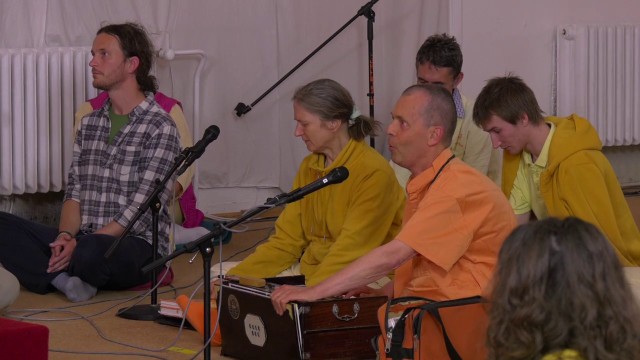
Evening satsang with Vishwaguruji from Strilky Ashram, Czech Republic. Singing bhajans by Swami Gajanandji.
Bhajan evening from Vep
16:15 - 17:10 (55 min)
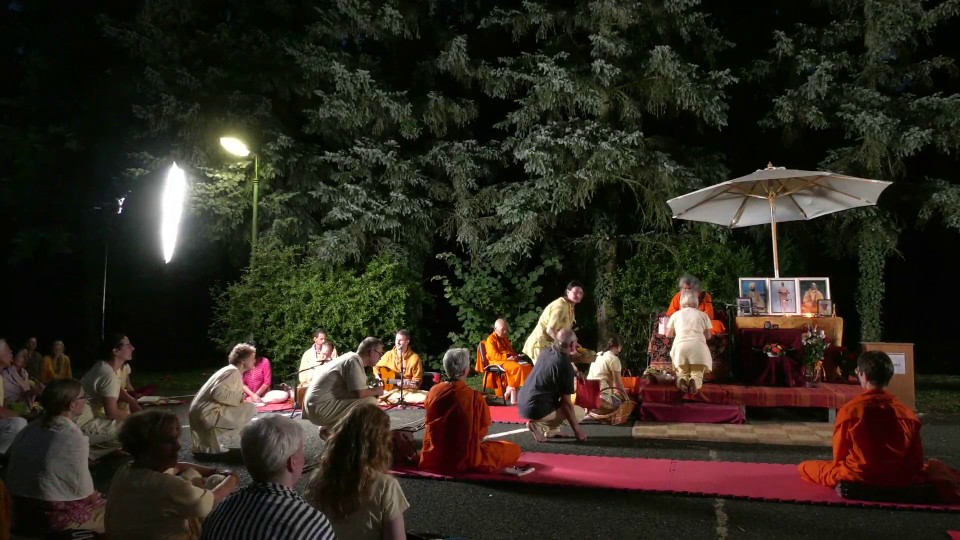
Evening satsang with Vishwaguruji from Vep, Hungary. Bhajan singing.
Bhajan singing from Vep
17:15 - 18:06 (51 min)
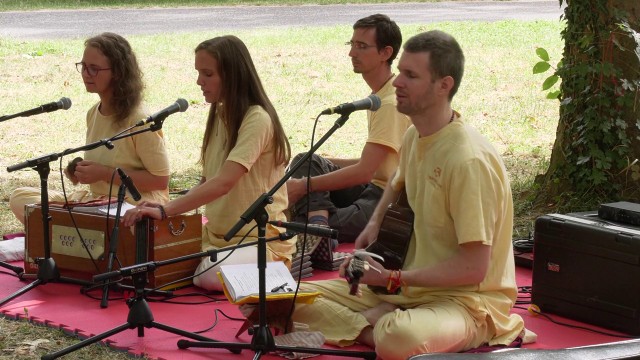
Morning satsang with Vishwaguruji from Vep, Hungary. Bhajan singing.
Bhajans from Strilky Ashram
18:10 - 19:44 (94 min)
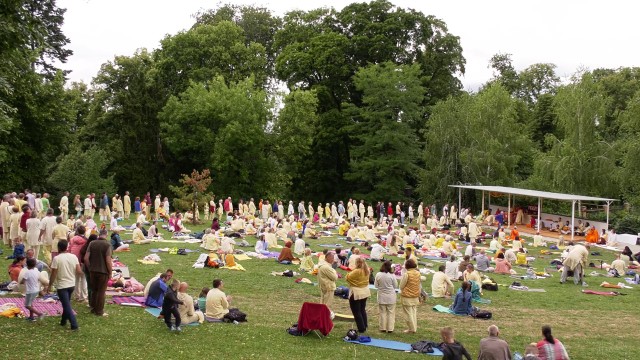
Morning satsang from Strilky Ashram, Czech Republic.
This time will not come back
19:50 - 20:48 (58 min)
A satsang discourse on the foundational principles of yoga and spiritual life.
"Our spiritual growth is like climbing a mountain. It is hard; there are many steps going upwards."
"You cannot just directly start from the top... it is a gradual process."
The lecturer leads an evening talk, using the analogy of building a house to explain the sequential, foundational importance of the yamas and niyamas in Ashtanga Yoga. He expands on themes of patience, gratitude, managing expectations, and surrendering inner conflicts to progress on the path, emphasizing the preciousness of human life and the disciple's connection to the guru parampara. The session includes personal anecdotes, audience interaction, and concludes with traditional chants and a peace invocation.
Filming location: Strilky, Czech Republic
The Thread of Love and the Roots of Devotion
20:55 - 22:05 (70 min)
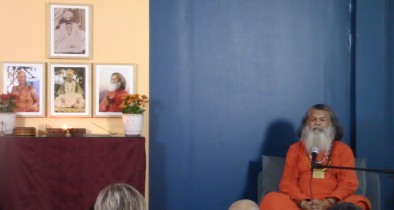
A satsang commemorating the incarnation day of Satguru Swāmī Madhavānandjī, focusing on devotion, family, and spiritual roots.
"Every breath was a remembrance of Mahāprabhujī: every inhalation and exhalation, I repeat thy name."
"O Rahim Dās, the thread of love is fragile—do not break it with a little misunderstanding. Once broken, it cannot be joined seamlessly; a knot will remain."
The lecturer addresses attendees at a seminar and retreat. He begins by honoring his Guru's incarnation day, describing the saint's devotion and miracles. The talk emphasizes traditional family values, the sacred roles within Indian kinship, and the power of forgiveness, illustrated by a story of a long-married couple. He explains the importance of a genuine guru-disciple relationship and concludes by describing his journey to the Himalayan cave of Alagpurījī, the root of his spiritual lineage.
Filming location: Vancouver, Canada
Do not waste your human life
22:10 - 23:10 (60 min)
An evening satsang discourse on dharma, grace, and spiritual practice.
"Dharma rakṣati rakṣitaḥ. He who protects dharma, dharma protects him."
"The Guru will show us the right path... But we need to do the effort."
The lecturer leads a satsang exploring the nature of dharma and the four blessings (kṛpā) essential for spiritual progress: divine grace, scripture, the Guru, and one's own initiative. He weaves in teachings from the Bhagavad Gītā, stories from the Mahābhārata, and practical advice for students, emphasizing the necessity of the Guru's guidance and the disciple's personal effort to follow the righteous path and achieve liberation.
Filming location: Strilky, Czech Republic
Symbolical stories about Tat Tvam Asi and Ganesha
23:15 - 23:53 (38 min)
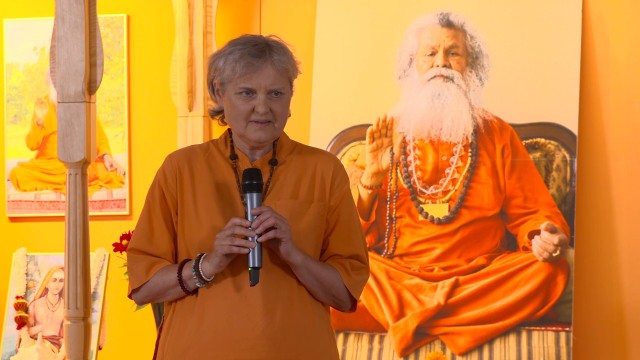
A satsang discourse weaving Upanishadic teachings with personal reflection on a spiritual name.
"The father explained that everything in the space comes from one cause. That cause is Brahma, or the Absolute."
"Gaṇeśa is the lord of these elements... What does it mean if someone is ruling over the elements? It means he is able to control, to balance, to harmonize all the elements."
Following opening prayers, the speaker narrates the Upanishadic story of a father teaching his son Śvetaketu the Mahāvākya "Tat Tvam Asi" (You are That), using analogies of clay, seeds, salt in water, and rivers in the ocean to illustrate the all-pervading Brahma. The discourse then shifts to a personal exploration of the speaker's name, Gajanant (Gaṇeśa), explaining its symbolism through Purāṇic stories, its role in bhajans as an invocation of the guru, and finally, its deepest meaning as the yogic principle that harmonizes the elements.
Filming location: Strilky, Czech Republic
American
Australian