
European
Practicing Yoga Asanas
0:00 - 0:41 (41 min)
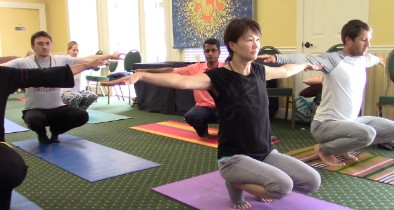
A yoga instruction session focusing on the practice and benefits of Vajrāsana and Vīrāsana.
"This Vajrāsana is designed especially to strengthen or to activate that Vajra Nāḍī."
"This will repair our digestion. This will repair our headache problems, also many, many things. This looks very simple, but it is very powerful."
An instructor guides students through the physical postures of Vajrāsana (thunderbolt pose) and Vīrāsana (hero pose), explaining their effects on the Vajra Nāḍī energy channel, digestion, and sciatic nerve. The session includes detailed alignment instructions, benefits for concentration and alertness, and transitions into other balancing postures and a forward bend before concluding.
Filming location: USA
We will go one day
0:45 - 1:28 (43 min)
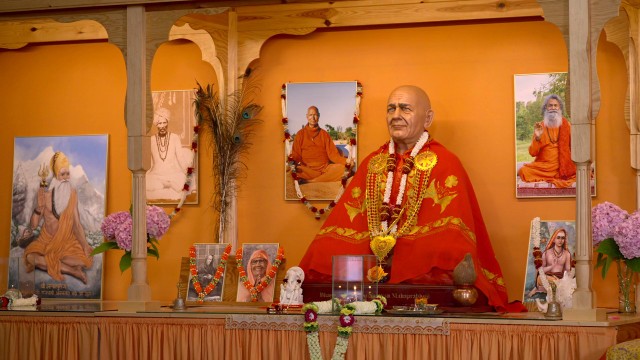
Evening satsang from Strilky Ashram, Czech Republic. We always worry about death. Death is a universal law. Our mind is always restless. We can train it by mantra. Manas is the storehouse of memories. Yogis are not attached to things. Only the bond between the disciple and the Guru is permanent. The story of a man who planned that when Yama came, he would hide somewhere. We should meditate always not only when we are in trouble. We should remember God every day, at least a little bit. Unfortunately present Indian generation is beginning to forget their roots. Birth and death come and go, but remember the name of God.
In the service of Life
1:35 - 2:19 (44 min)
India, Summer 2005. Report about the Swamijis activities.
We will go one day
2:25 - 3:08 (43 min)
Evening satsang from Strilky Ashram, Czech Republic. We always worry about death. Death is a universal law. Our mind is always restless. We can train it by mantra. Manas is the storehouse of memories. Yogis are not attached to things. Only the bond between the disciple and the Guru is permanent. The story of a man who planned that when Yama came, he would hide somewhere. We should meditate always not only when we are in trouble. We should remember God every day, at least a little bit. Unfortunately present Indian generation is beginning to forget their roots. Birth and death come and go, but remember the name of God.
Support the flame of life within you
3:15 - 4:02 (47 min)
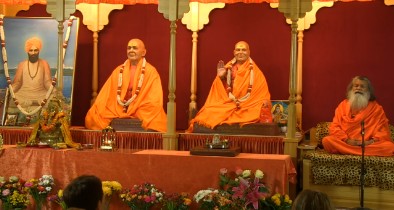
A spiritual discourse on the inner fire of tapasyā (austerity) and renunciation.
"God has given this human life with many good things, as well as past negatives, unpleasantness, sorrows, and attachments. Now, every one of us would like very much to become holy. But how many minutes, hours, or days do we give to tapasyā before we give up?"
"Tapasyā is a fire which burns all negative qualities; everything burns. Fire is one of the best elements which purifies everything."
The lecturer addresses a webcast from the Alagpuriji Siddhapitha, reflecting on the nature of true renunciation (vairagya) and spiritual practice. He explains that all positive and negative qualities originate within the self, and emphasizes that sustained tapasyā—the inner fire of austerity—is needed to purify consciousness and burn away attachments. He shares anecdotes about the severe tapasyā of his Guru, Sri Sri Madhavanandaji, in the deserts of Rajasthan, which sanctified the land and led to the establishment of a Shiva temple. The talk concludes with an invitation to a ten-day inauguration festival at the temple in Jadan.
Filming location: Vienna, Austria
How can I love myself?
4:10 - 4:43 (33 min)
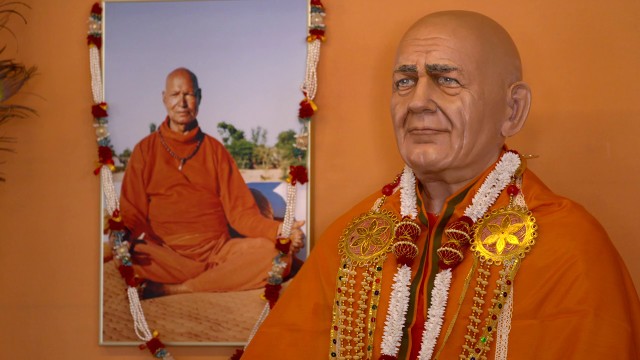
A satsang exploring the concept of self-love through the framework of the four aspects of divine grace (kripa).
"Swāmījī did not really use this word, but I know it comes from Holī Gurujī; he is always using that."
"Love each and every living being, if not more, then at least as much as yourself."
Guru Lilā, addressing the community, explains the four aspects of kripa: Deva Kripa (grace of the gods), Śāstra Kripa (grace of the scriptures), Guru Kripa (the Guru's grace), and Kuṭkī Kripa (self-grace). He focuses on Kuṭkī Kripa as self-love, arguing it is a prerequisite for loving others. He outlines a practical path to self-love through self-acceptance, self-understanding, and self-giving, linking it to core teachings. He shares an anecdote about a woman healing from ALS through self-love and concludes with a traditional story about Guru Nānak illustrating the complex workings of karma.
Filming location: Strilky, Czech Republic
Experiences of bhaktas about Vishwaguruji
4:50 - 5:59 (69 min)
Morning satsang from Strilky Ashram, Czech Republic. "Yesterday, the topic was karma yoga, and I realized that for me, this has been the main form of yoga for the past twenty years. It is a very practical way to submit ourselves to the Supreme. Swamiji and his successor, Swami Avatarpuriji, are the way for us. " "Holi Guruji always said: One in all and all in one. For me, the starting point was a book about the relationship between the Master and his disciple. Then a strong desire arose in me to find an original, genuine Indian Guru. The next day, I saw a poster at the university announcing a lecture by an original, genuine Indian Guru." "I went to the next seminar every time. At the second seminar, I asked Swami ten questions, and he gave me the task of establishing a yoga center." Swami Avatarpuri leads the mansik puja to Gurudeva. Swami Avatarpuri leads the mansik puja to Gurudeva.
This time will not come back
6:05 - 7:03 (58 min)
A satsang discourse on the foundational principles of yoga and spiritual life.
"Our spiritual growth is like climbing a mountain. It is hard; there are many steps going upwards."
"You cannot just directly start from the top... it is a gradual process."
The lecturer leads an evening talk, using the analogy of building a house to explain the sequential, foundational importance of the yamas and niyamas in Ashtanga Yoga. He expands on themes of patience, gratitude, managing expectations, and surrendering inner conflicts to progress on the path, emphasizing the preciousness of human life and the disciple's connection to the guru parampara. The session includes personal anecdotes, audience interaction, and concludes with traditional chants and a peace invocation.
Filming location: Strilky, Czech Republic
Disciples remembrances and stories about Gurudev
7:10 - 8:08 (58 min)
A morning satsang on devotion, grace, and personal spiritual experiences.
"For Gurudeva also, we do not need to present a golden chariot and such things. He is one of the most simple, natural persons."
"He works on bhāva. Bhāva means feelings. It is very similar with Gurudeva. He works on feelings."
Swami Avatarpuri opens the session by discussing the simplicity of devotion, using the example of Lord Shiva's grace toward a sincere, unlearned forest dweller. He announces a daily Shiva Abhisheka ritual for the seminar. Several disciples then share personal stories of meeting their Guru, receiving mantra initiation, and learning through karma yoga and subtle guidance, all emphasizing the transformative power of the Guru's grace and the importance of heartfelt intention (bhāva).
Filming location: Strilky, Czech Republic
Symbolical stories about Tat Tvam Asi and Ganesha
8:15 - 8:53 (38 min)
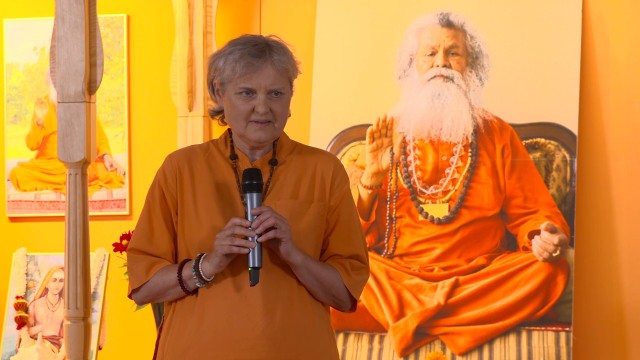
A satsang discourse weaving Upanishadic teachings with personal reflection on a spiritual name.
"The father explained that everything in the space comes from one cause. That cause is Brahma, or the Absolute."
"Gaṇeśa is the lord of these elements... What does it mean if someone is ruling over the elements? It means he is able to control, to balance, to harmonize all the elements."
Following opening prayers, the speaker narrates the Upanishadic story of a father teaching his son Śvetaketu the Mahāvākya "Tat Tvam Asi" (You are That), using analogies of clay, seeds, salt in water, and rivers in the ocean to illustrate the all-pervading Brahma. The discourse then shifts to a personal exploration of the speaker's name, Gajanant (Gaṇeśa), explaining its symbolism through Purāṇic stories, its role in bhajans as an invocation of the guru, and finally, its deepest meaning as the yogic principle that harmonizes the elements.
Filming location: Strilky, Czech Republic
Kriya and Kundalini
9:00 - 9:46 (46 min)
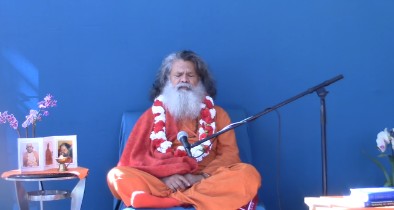
A spiritual discourse on Kuṇḍalinī, Śakti, and the foundational rites for spiritual practice.
"Kuṇḍalinī is the energy in our body. Kuṇḍalinī is a kind of consciousness which has clarity, and it leads the aspirant to the highest level of consciousness."
"Your Kriya Yoga will be successful. At that time, your Kuṇḍalinī will be pure, and it will awaken. Otherwise... they remain only a fairy tale."
Following a children's performance, Swami Ji delivers a morning satsang exploring the nature of Kuṇḍalinī energy and its connection to Kriyā Yoga. He explains that successful spiritual awakening depends on fulfilling one's ancestral obligations through the sixteen Vedic saṃskāras (rites of passage), detailing ceremonies like ear piercing (Karṇa Vedha) and the funeral rites (Antyeṣṭi, Kapāla Kriyā). He emphasizes that unfulfilled duties to ancestors can obstruct one's practice and family harmony, and invites attendees to participate in upcoming ceremonies to liberate these ancestral souls.
Filming location: San Francisco, USA
Gurudev always works for his bhaktas
9:50 - 10:48 (58 min)
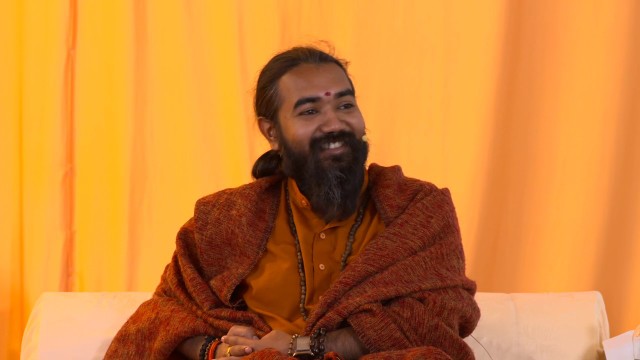
Evening satsang from Strilky Ashram, Czech Republic. Atma is immortal. The story of Naciketa and Yanaraj. Yamaraj tells Nacikata the nature of the Atman. Gurudev forms us like a smith forms the iron into a beautiful shape. But we need patience. Gurudev helps us attain liberation. A story of a man who didn’t want to go with his Guru. If we solve one problem the same time we create two other. Only surrender to Gurudev can really solve our problems.
Traveling with Swamiji (5/5)
10:50 - 10:55 (5 min)
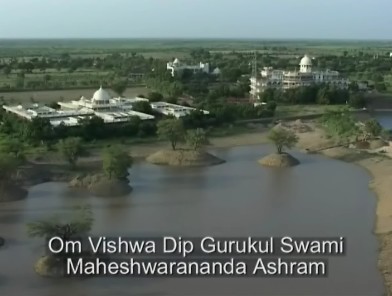
Indian temples and ashrams.
Around the world - Inauguration Nandeshwar
11:00 - 11:05 (5 min)
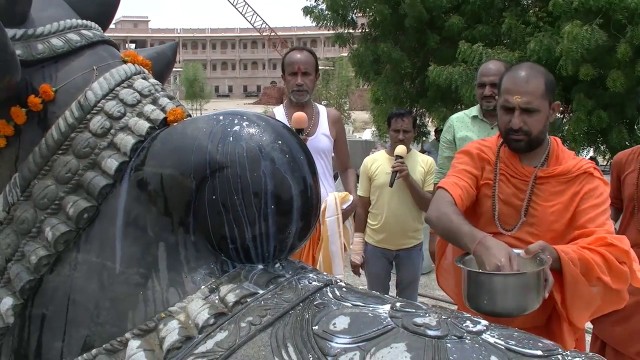
Arrival of Nandeshwar to Om Ashram. Jadan, Rajasthan, India.
Around the world - International Seminar on Indian Culture (1/2)
11:10 - 12:31 (81 min)
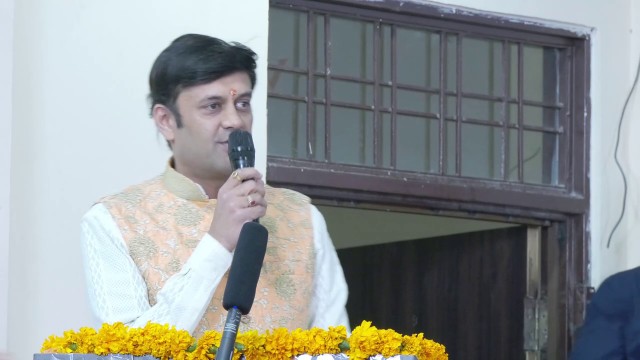
Seminar on Indian Culture worldwide with Vishwaguruji. Apex University, Jaipur, India.
The spiritual path
12:35 - 13:06 (31 min)
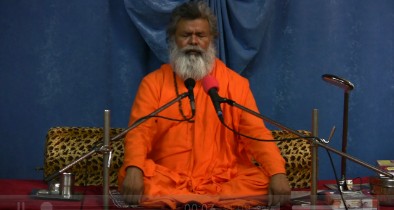
A spiritual discourse on meditation and the paths of worldly engagement and inward withdrawal.
"You try to meditate, you sit and repeat mantras, but the vṛttis—various kinds of mental modifications—persist."
"Nivṛtti means setting aside all obligations: physical, mental, social, political, spiritual—everything. Now you are only with your Self. That is meditation."
The lecturer leads a satsang, analyzing the obstacles to deep meditation. He explains the concepts of pravṛtti (extroverted engagement) and nivṛtti (inward withdrawal), emphasizing the need to control mental modifications (vṛttis) and purify oneself of impurities (mala) to achieve authentic self-inquiry. He critiques superficial prayer and incompetent teaching, urging sincere practice and surrender.
Filming location: Jadan, Rajasthan, India
Build your intellect supportive
13:15 - 14:31 (76 min)
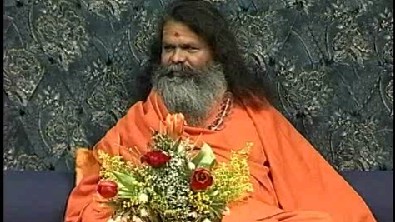
Lecture by Swamiji from Vep, Hungary, February 2001
Do everything with bhava
14:35 - 14:51 (16 min)
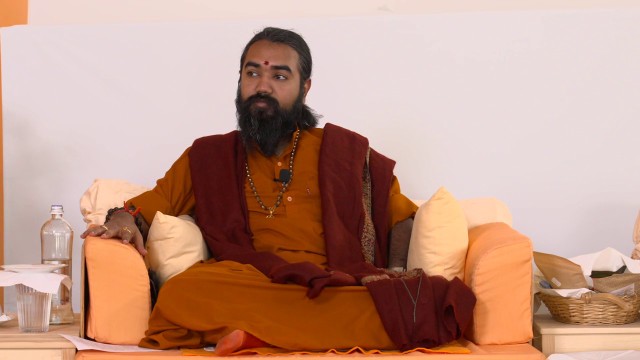
A morning satsang discourse on the significance of Śrāvaṇa month and the power of devotion.
"Bhole Bābā is bholā because he is innocent. You can offer him anything, and he accepts."
"It does not matter how we do it, but with which bhāva, with which feelings, we are doing it."
Swami Veda narrates the story of Lord Śiva drinking the poison to become Nīlakaṇṭha, explaining the symbolism of ritual offerings. He then tells a parable of a devoted boy named Jayaprakāś who performs a flawed but heartfelt abhiṣeka with spoiled milk and pickle water, illustrating that pure intention (bhāva) is more important than ritual perfection. The talk emphasizes that any action done with love and pure feeling becomes fruitful.
Filming location: Strilky, Czech Republic
Strengthening the fire
14:55 - 15:25 (30 min)
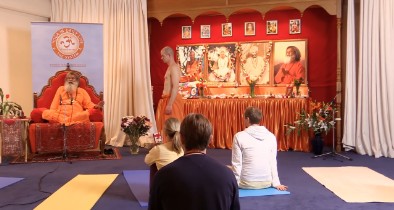
An instructional session on Agni Sāra Kriyā, a yogic practice for health.
"Blood pressure and diabetes are the best of friends. When diabetes arrives, blood pressure accompanies it."
"Agni Sāra Kriyā awakens a fire within your body that burns all excess fat and unnecessary matter."
A teacher explains the philosophy and health benefits of the digestive fire (jāṭharāgni) and Agni Sāra Kriyā, relating it to conditions like diabetes and memory. He details the proper fasting conditions, precautions, and the practice's effects on organs and fat. The session includes a live demonstration by a student named Madhuram, showing the correct posture and breathing technique for the Kriyā.
Filming location: Wellington, New Zealand
The 3rd Sri Swami Maheshwarananda Festival (1/4)
15:30 - 16:41 (71 min)
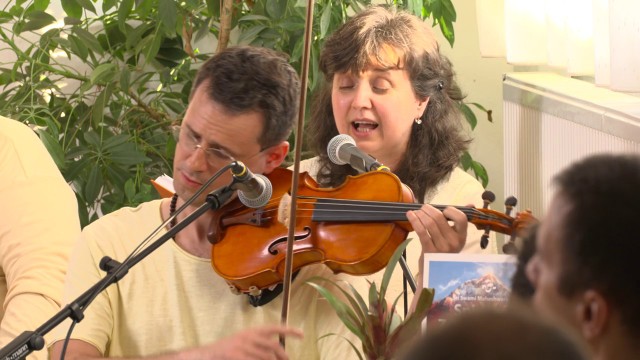
Welcome to the third Sri Swami Maheshwarananda Festival of Spiritual Music, Debrecen, Hungary.
The 3rd Sri Swami Maheshwarananda Festival (2/4)
16:45 - 17:54 (69 min)
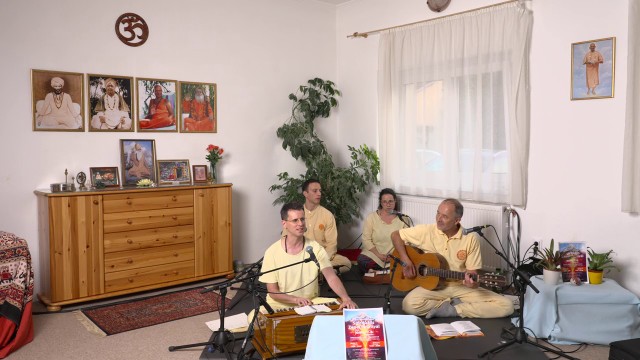
Welcome to the third Sri Swami Maheshwarananda Festival of Spiritual Music, Debrecen, Hungary.
The 3rd Sri Swami Maheshwarananda Festival (3/4)
18:00 - 19:07 (67 min)
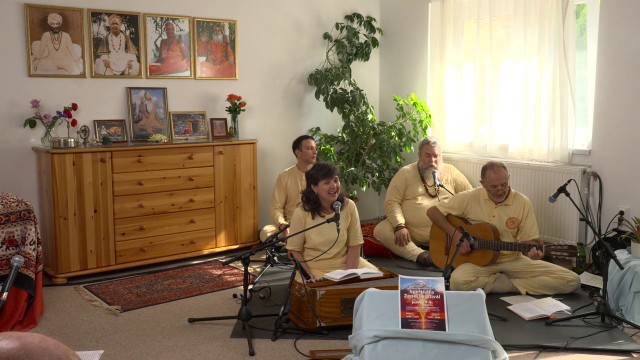
Welcome to the third Sri Swami Maheshwarananda Festival of Spiritual Music, Debrecen, Hungary.
How can I love myself?
19:15 - 19:48 (33 min)
A satsang exploring the concept of self-love through the framework of the four aspects of divine grace (kripa).
"Swāmījī did not really use this word, but I know it comes from Holī Gurujī; he is always using that."
"Love each and every living being, if not more, then at least as much as yourself."
Guru Lilā, addressing the community, explains the four aspects of kripa: Deva Kripa (grace of the gods), Śāstra Kripa (grace of the scriptures), Guru Kripa (the Guru's grace), and Kuṭkī Kripa (self-grace). He focuses on Kuṭkī Kripa as self-love, arguing it is a prerequisite for loving others. He outlines a practical path to self-love through self-acceptance, self-understanding, and self-giving, linking it to core teachings. He shares an anecdote about a woman healing from ALS through self-love and concludes with a traditional story about Guru Nānak illustrating the complex workings of karma.
Filming location: Strilky, Czech Republic
There is only one reality
19:55 - 21:11 (76 min)
A spiritual discourse on the origins and essence of yoga.
"Yoga is beyond any religion. Yoga is not a part of religion, but all religion is a part of yoga."
"Yoga is that science of body, mind, and soul. Keep the harmony between body, mind, and soul."
Swami Avatarpuri Ji gives an introductory talk at a temple, offering a glimpse into yoga's cosmic beginnings. He describes the primordial state of endless space (śūnyākāśa) and consciousness, the emergence of divine energy (yoga), and the manifestation of creation through sound and light. He explains the human role within the 8.4 million life forms, the law of karma, and presents yoga as a practical science for harmonizing body, mind, and soul to realize the divine self.
Filming location: New York, USA
The Thread of Love and the Roots of Devotion
21:15 - 22:25 (70 min)
A satsang commemorating the incarnation day of Satguru Swāmī Madhavānandjī, focusing on devotion, family, and spiritual roots.
"Every breath was a remembrance of Mahāprabhujī: every inhalation and exhalation, I repeat thy name."
"O Rahim Dās, the thread of love is fragile—do not break it with a little misunderstanding. Once broken, it cannot be joined seamlessly; a knot will remain."
The lecturer addresses attendees at a seminar and retreat. He begins by honoring his Guru's incarnation day, describing the saint's devotion and miracles. The talk emphasizes traditional family values, the sacred roles within Indian kinship, and the power of forgiveness, illustrated by a story of a long-married couple. He explains the importance of a genuine guru-disciple relationship and concludes by describing his journey to the Himalayan cave of Alagpurījī, the root of his spiritual lineage.
Filming location: Vancouver, Canada
Meditation can help us
22:30 - 23:55 (85 min)
Public lecture with Vishwaguruji from Poprad, Slovakia. Why don’t we have time? Why are we suffering from stress? And even more if we have more money? If we would practice yoga three hours a day we would have happy life. Meditation can help us. Vishwaguruji gives a short and practical insight into the system of Yoga in Daily Life.
American
Australian