
European
Practising fifth level of Yoga in Daily Life System
0:00 - 1:26 (86 min)
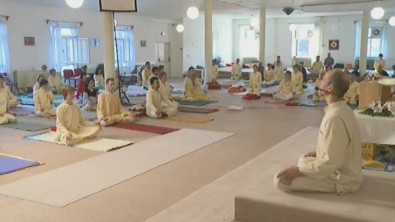
Morning practising. Fifth level of the System" Yoga in Daily Life" from Mahaprabhudeep Ashram, Strilky, Czech Republic on 9th of July 2010.
Kriya and Kundalini
1:30 - 2:16 (46 min)
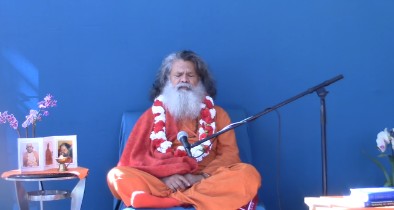
A spiritual discourse on Kuṇḍalinī, Śakti, and the foundational rites for spiritual practice.
"Kuṇḍalinī is the energy in our body. Kuṇḍalinī is a kind of consciousness which has clarity, and it leads the aspirant to the highest level of consciousness."
"Your Kriya Yoga will be successful. At that time, your Kuṇḍalinī will be pure, and it will awaken. Otherwise... they remain only a fairy tale."
Following a children's performance, Swami Ji delivers a morning satsang exploring the nature of Kuṇḍalinī energy and its connection to Kriyā Yoga. He explains that successful spiritual awakening depends on fulfilling one's ancestral obligations through the sixteen Vedic saṃskāras (rites of passage), detailing ceremonies like ear piercing (Karṇa Vedha) and the funeral rites (Antyeṣṭi, Kapāla Kriyā). He emphasizes that unfulfilled duties to ancestors can obstruct one's practice and family harmony, and invites attendees to participate in upcoming ceremonies to liberate these ancestral souls.
Filming location: San Francisco, USA
You are like bees
2:20 - 3:02 (42 min)
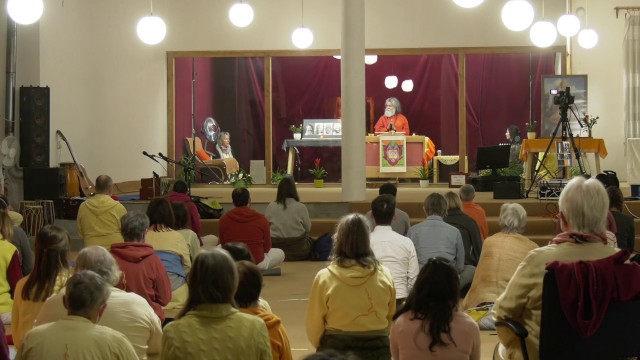
Evening satsang with Vishwaguruji from Strilky, Czech Republic. There are many Gurus and many more disciples in the world. We are not our body, we are Atma. Never be negative with anyone. Bhajan is like honey coming from our throat. I bless you and work for you. The corona will pass away sooner or later. We are all like bees. Singing Bhajans.
We should be worthy to be a human
3:10 - 4:14 (64 min)
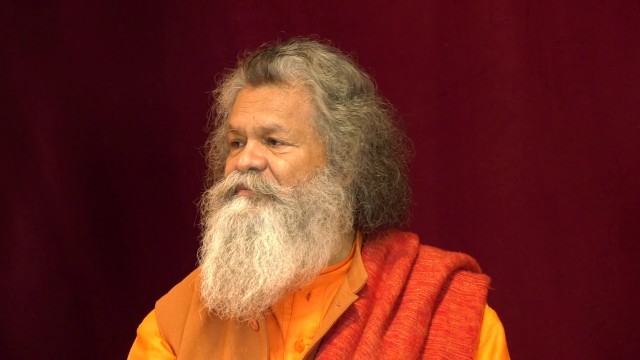
Evening satsang with Vishwaguruji from Strilky Ashram, Czech Republic. God gave spirituality to humans. There is God in the water, earth, air and food also. All creatures got their life from God. The story of Buddha, who dedicated his life to God. The story of a young Indian princess who wants to continue her father's spiritual work. We are like a God but unfortunately, we have lost our way. God gave us much beauty but now we use much makeup. We should know and respect the value of life. There are some people in the world who tortured cats and dogs. But the cat and dog can reborn as a human and vice versa. There are also many very good people in the world. In prayer, we go to God. Be always humble and peaceful. Nowadays many foods are not healthy, some are not even edible.
In the service of Life
4:20 - 5:04 (44 min)
India, Summer 2005. Report about the Swamijis activities.
Sakar and nirakar
5:10 - 5:39 (29 min)

A satsang discourse blending spiritual teachings with a story from the Ramayana.
"This consciousness is unbroken; it is everywhere. There is absolutely no place where it is not."
"I took you over Gaṅgā. So you take me over this ocean of suffering."
A speaker addresses a retreat gathering, first paying homage to the all-pervading consciousness and the Guru. He shares the story of a clever ferryman who, recognizing Lord Rama's divinity, bargains to wash his feet for passage and then asks Rama to ferry him across the ocean of suffering. The talk meanders into themes of form (Sākāra) and formlessness (Nirakāra), using the analogy of a flame and leaves in the wind, and concludes with well-wishes and observations on modern life.
Filming location: Strilky, Czech Republic
Experiences of bhaktas about Vishwaguruji
5:45 - 6:54 (69 min)
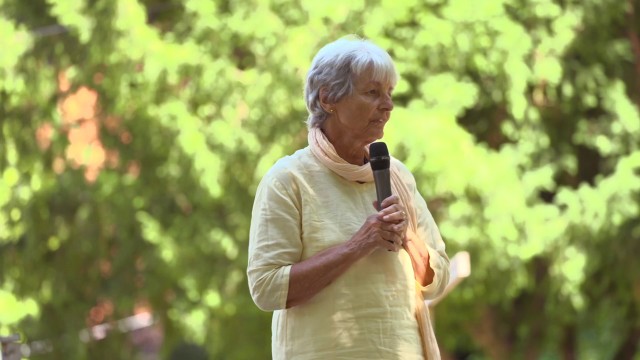
Morning satsang from Strilky Ashram, Czech Republic. "Yesterday, the topic was karma yoga, and I realized that for me, this has been the main form of yoga for the past twenty years. It is a very practical way to submit ourselves to the Supreme. Swamiji and his successor, Swami Avatarpuriji, are the way for us. " "Holi Guruji always said: One in all and all in one. For me, the starting point was a book about the relationship between the Master and his disciple. Then a strong desire arose in me to find an original, genuine Indian Guru. The next day, I saw a poster at the university announcing a lecture by an original, genuine Indian Guru." "I went to the next seminar every time. At the second seminar, I asked Swami ten questions, and he gave me the task of establishing a yoga center." Swami Avatarpuri leads the mansik puja to Gurudeva. Swami Avatarpuri leads the mansik puja to Gurudeva.
God is only one
7:00 - 7:36 (36 min)
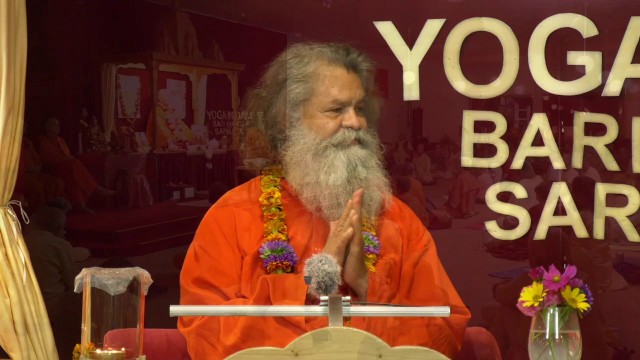
A spiritual discourse on unity, the human condition, and devotional surrender.
"I cannot plan anything that I would like. I am in the hand of my Master."
"Yoga means oneness... all humans, they are one."
Following an opening Sanskrit invocation, a spiritual teacher addresses a gathering, reflecting on a recent summer program with their Guru, Viśvagurujī. The talk emphasizes utilizing received spiritual grace and expands into themes of universal oneness, using metaphors of ocean water and the five elements to illustrate the singular divine source behind all religions and life. The speaker advises a mindful daily routine, warns against harming life and substance abuse, and concludes with blessings for all attendees and the world.
Filming location: Strilky, Czech Republic
What does Sanatana Dharma mean?
7:40 - 8:31 (51 min)
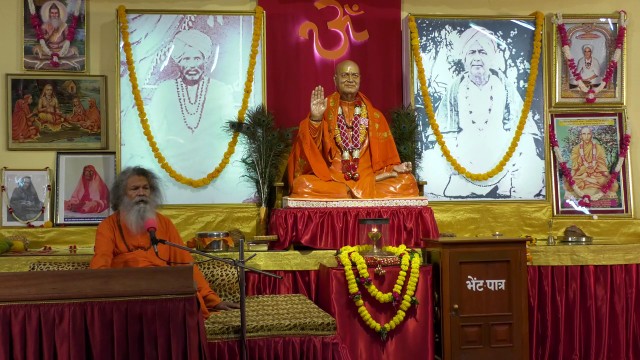
Evening satsang with Vishwaguruji from Jadan Ashram, Rajasthan, India. Lecture about Sanatana Dharma. by Acaryaji. Simple and clear explanation of many expressions and processes connecting to Sanatana Dharma and to the Hindu philosophy. Chanting mantras by one of Vishwagurujis youngest Indian followers. Swami Madhuram speaks about consciousness and how to realize atma in us and how he became sanatani. Swami Premanand speaks about the deep meaning of Divali. Bhajan singing.
How can I love myself?
8:35 - 9:08 (33 min)
A satsang exploring the concept of self-love through the framework of the four aspects of divine grace (kripa).
"Swāmījī did not really use this word, but I know it comes from Holī Gurujī; he is always using that."
"Love each and every living being, if not more, then at least as much as yourself."
Guru Lilā, addressing the community, explains the four aspects of kripa: Deva Kripa (grace of the gods), Śāstra Kripa (grace of the scriptures), Guru Kripa (the Guru's grace), and Kuṭkī Kripa (self-grace). He focuses on Kuṭkī Kripa as self-love, arguing it is a prerequisite for loving others. He outlines a practical path to self-love through self-acceptance, self-understanding, and self-giving, linking it to core teachings. He shares an anecdote about a woman healing from ALS through self-love and concludes with a traditional story about Guru Nānak illustrating the complex workings of karma.
Filming location: Strilky, Czech Republic
We will go one day
9:15 - 9:58 (43 min)
Evening satsang from Strilky Ashram, Czech Republic. We always worry about death. Death is a universal law. Our mind is always restless. We can train it by mantra. Manas is the storehouse of memories. Yogis are not attached to things. Only the bond between the disciple and the Guru is permanent. The story of a man who planned that when Yama came, he would hide somewhere. We should meditate always not only when we are in trouble. We should remember God every day, at least a little bit. Unfortunately present Indian generation is beginning to forget their roots. Birth and death come and go, but remember the name of God.
Support the flame of life within you
10:05 - 10:52 (47 min)
A spiritual discourse on the inner fire of tapasyā (austerity) and renunciation.
"God has given this human life with many good things, as well as past negatives, unpleasantness, sorrows, and attachments. Now, every one of us would like very much to become holy. But how many minutes, hours, or days do we give to tapasyā before we give up?"
"Tapasyā is a fire which burns all negative qualities; everything burns. Fire is one of the best elements which purifies everything."
The lecturer addresses a webcast from the Alagpuriji Siddhapitha, reflecting on the nature of true renunciation (vairagya) and spiritual practice. He explains that all positive and negative qualities originate within the self, and emphasizes that sustained tapasyā—the inner fire of austerity—is needed to purify consciousness and burn away attachments. He shares anecdotes about the severe tapasyā of his Guru, Sri Sri Madhavanandaji, in the deserts of Rajasthan, which sanctified the land and led to the establishment of a Shiva temple. The talk concludes with an invitation to a ten-day inauguration festival at the temple in Jadan.
Filming location: Vienna, Austria
Part 1: Yoga, Faith, and Integration: A Personal Journey and Panel Discussion
11:00 - 12:04 (64 min)
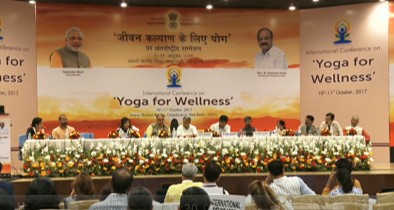
A personal testimony on faith-based yoga healing and a panel discussion on integrating traditional medical systems.
"I refused chemotherapy, radiotherapy, and surgery... I believed those fresh, positive thoughts in my consciousness would bleed down into my nervous system and start to talk to my cells."
"Yoga is not about the āsana. Why not? It is about God. If you allow God's energy to run into your system... God will provide the miracles."
Neil Patel shares his personal journey of using yoga and conscious thought to survive cancer for 18 years after refusing conventional treatment. Following his testimony, a moderated panel featuring practitioners of Homeopathy, Ayurveda, Siddha, and Yoga discusses pathways to integrate these AYUSH systems with modern medicine for holistic wellness. Key themes include treating the whole person, cost-effective care, managing non-communicable diseases, and yoga's role in raising consciousness beyond mere physical health.
Filming location: Delhi, India
Do not waste your human life
12:10 - 13:10 (60 min)
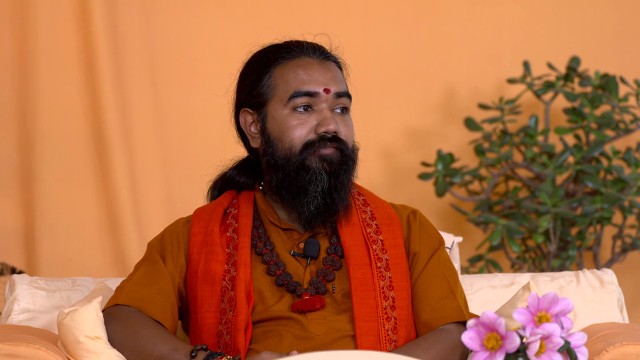
An evening satsang discourse on dharma, grace, and spiritual practice.
"Dharma rakṣati rakṣitaḥ. He who protects dharma, dharma protects him."
"The Guru will show us the right path... But we need to do the effort."
The lecturer leads a satsang exploring the nature of dharma and the four blessings (kṛpā) essential for spiritual progress: divine grace, scripture, the Guru, and one's own initiative. He weaves in teachings from the Bhagavad Gītā, stories from the Mahābhārata, and practical advice for students, emphasizing the necessity of the Guru's guidance and the disciple's personal effort to follow the righteous path and achieve liberation.
Filming location: Strilky, Czech Republic
In the bliss of bhajans
13:15 - 14:26 (71 min)
Bhajans from different ashrams in India
The spiritual path
14:30 - 15:01 (31 min)
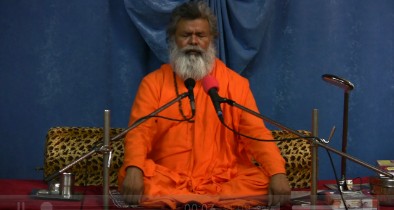
A spiritual discourse on meditation and the paths of worldly engagement and inward withdrawal.
"You try to meditate, you sit and repeat mantras, but the vṛttis—various kinds of mental modifications—persist."
"Nivṛtti means setting aside all obligations: physical, mental, social, political, spiritual—everything. Now you are only with your Self. That is meditation."
The lecturer leads a satsang, analyzing the obstacles to deep meditation. He explains the concepts of pravṛtti (extroverted engagement) and nivṛtti (inward withdrawal), emphasizing the need to control mental modifications (vṛttis) and purify oneself of impurities (mala) to achieve authentic self-inquiry. He critiques superficial prayer and incompetent teaching, urging sincere practice and surrender.
Filming location: Jadan, Rajasthan, India
The Pearl of Everlasting Bliss
15:05 - 15:26 (21 min)
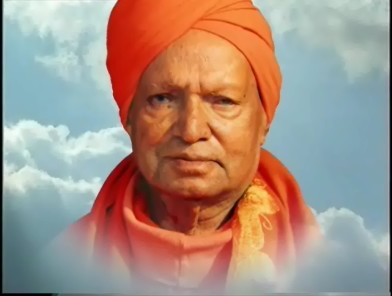
A biographical tribute to the life and legacy of Hindu saint Paramahaṁsa Śrī Svāmī Madhavānandajī.
"My eyes filled with tears, and I fell to my knees. I knew I had found the everlasting light of my life. I was home at last."
"All humans belong to one religion, and that is humanity... ahiṃsā paramo dharma: non-violence is the highest religion."
The narrative chronicles the spiritual journey of Swami Madhavānandaji, from his childhood in Rajasthan and transformative meeting with his guru, Bhagavān Śrīdīp Nārāyaṇa Mahāprabhujī, to his life of devotion, teaching, and global service. It details his initiation, his work establishing ashrams, and his teachings on non-dualism and universal love, culminating in his Mahāsamādhi in 2003 and the continuation of his lineage through his disciple, Swami Māheśvarānandajī.
Filming location: Rajasthan, India; Kathu Ashram, India; Bola Guda Ashram, India; Nepal
Bhajan singing on the Satsang
15:30 - 15:57 (27 min)
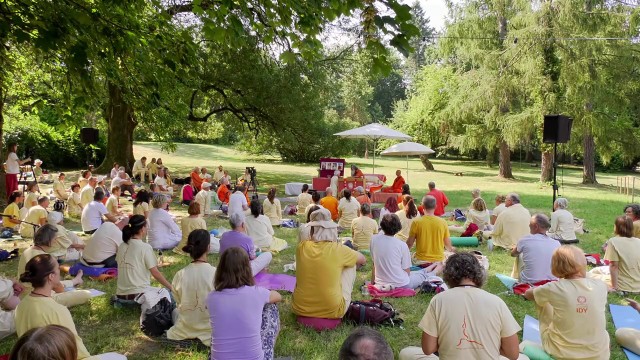
A devotional introduction and singing of a traditional bhajan.
"We can sing a very beautiful bhajan from Swāmī Lālā Nānjī. It is called Manarata Nāma, and it means, 'Oh my mind, repeat the name of God, repeat your mantra.'"
"Give your body and mind to Sāddhā Gurudeva, and he will destroy all your doubts and all your bad qualities. In the holy lotus feet of Satguru Deva reside all holy pilgrimages."
The speaker introduces a lesser-sung bhajan by Swāmī Lālā Nānjī, emphasizing the urgency of spiritual practice in human life. They explain the bhajan's theme of repeating the divine name and extol the glory and essential role of the true Guru in guiding devotees across the ocean of worldly existence. The session includes singing verses from the bhajan and concludes with salutations.
Filming location: Strilky, Czech Republic
Bhajans evening from the Strilky Ashram
16:05 - 17:08 (63 min)
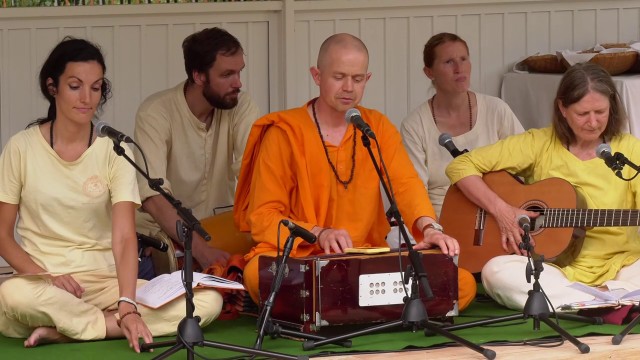
Evening satsang from Strilky Ashram, Czech Republic. Bhajan singing and translation.
Bhajan evening in the Strilky Ashram
17:15 - 18:08 (53 min)
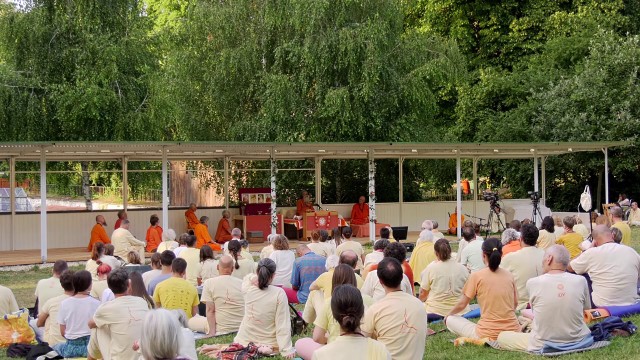
Evening satsang from Strilky Ashram, Czech Republic. Bhajan singing and translations. We shouldn't hold animals in a cage. They feel much pain there. Let them be free. We are also like that bird in the
Bhajan singing from Jadan
18:15 - 18:26 (11 min)
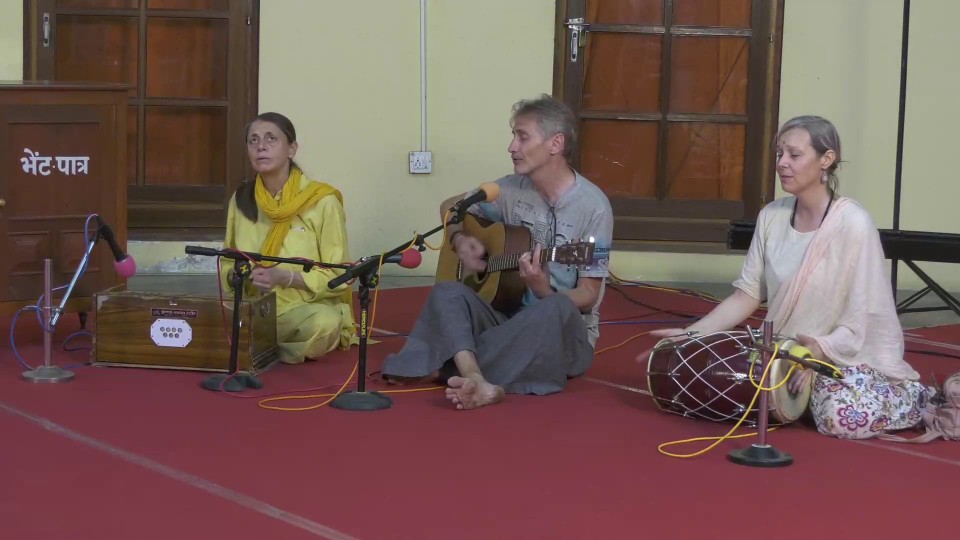
Evening satsang with Vishwaguruji from Jadan Ashram, Rajasthan, India.
How to overcame vritis
18:30 - 20:03 (93 min)
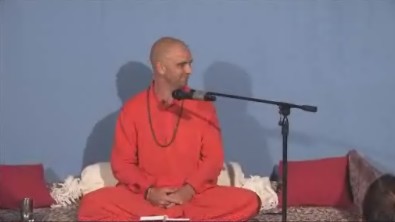
Evening satsang from Yoga retreat with MM Swami Jasraj Puri and Swami Gajanand, Iz, Croatia
Meditation can help us
20:10 - 21:35 (85 min)
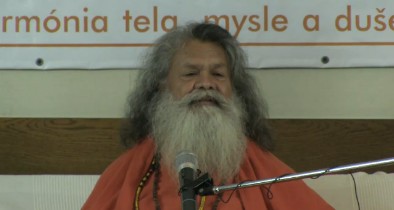
Public lecture with Vishwaguruji from Poprad, Slovakia. Why don’t we have time? Why are we suffering from stress? And even more if we have more money? If we would practice yoga three hours a day we would have happy life. Meditation can help us. Vishwaguruji gives a short and practical insight into the system of Yoga in Daily Life.
Experiences of bhaktas about Vishwaguruji
21:40 - 22:49 (69 min)
Morning satsang from Strilky Ashram, Czech Republic. "Yesterday, the topic was karma yoga, and I realized that for me, this has been the main form of yoga for the past twenty years. It is a very practical way to submit ourselves to the Supreme. Swamiji and his successor, Swami Avatarpuriji, are the way for us. " "Holi Guruji always said: One in all and all in one. For me, the starting point was a book about the relationship between the Master and his disciple. Then a strong desire arose in me to find an original, genuine Indian Guru. The next day, I saw a poster at the university announcing a lecture by an original, genuine Indian Guru." "I went to the next seminar every time. At the second seminar, I asked Swami ten questions, and he gave me the task of establishing a yoga center." Swami Avatarpuri leads the mansik puja to Gurudeva. Swami Avatarpuri leads the mansik puja to Gurudeva.
Gurudev always works for his bhaktas
22:55 - 23:53 (58 min)
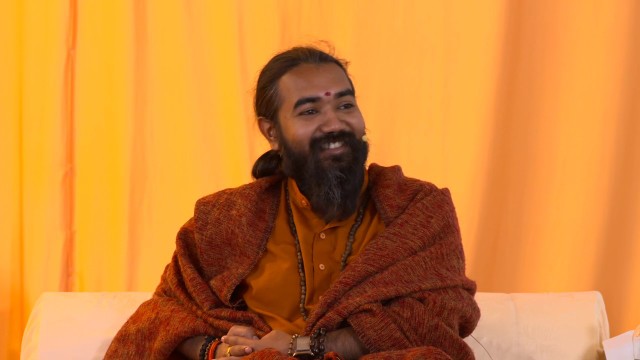
Evening satsang from Strilky Ashram, Czech Republic. Atma is immortal. The story of Naciketa and Yanaraj. Yamaraj tells Nacikata the nature of the Atman. Gurudev forms us like a smith forms the iron into a beautiful shape. But we need patience. Gurudev helps us attain liberation. A story of a man who didn’t want to go with his Guru. If we solve one problem the same time we create two other. Only surrender to Gurudev can really solve our problems.
American
Australian