
European
Practicing from Strilky
0:00 - 1:31 (91 min)
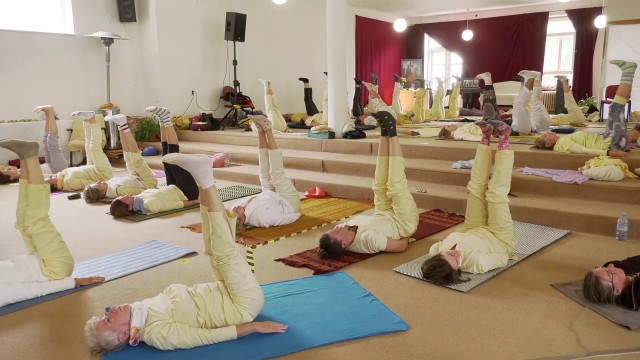
Morning satsang from Strilky Ashram, Czech Republic. Practice with Vishwaguruji and Swami Umapuriji.
We have to become one
1:35 - 3:09 (94 min)
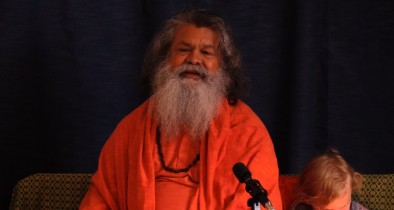
Evening satsang with Vishwaguruji from Auckland, New Zealand. There are many things in the space. We should stop our attachment. Great yogis do not attach to anything and to anybody. Break from the attachment and join to God. Nothing is mine. Explanation of bhadzsan Chidananda Rupam Sivoham Sivoham. Sometimes we can not understand wisdom. Shiva means only space. He is everywhere in everything and nowhere. Explanation of bhadzsan Ragupati Raghava Raj Ram. One in all and all in one. Explanation of bhadzsan Sabda Sanehi Mhari Jatra. A story or a poem can help you to understand knowledge. The knowledge what we have we should understand, realize and give further. Chakras are the major stations in our body. The Earth connected to the Sun. The system of elements and chakras in our body.
God is everywhere
3:15 - 4:56 (101 min)
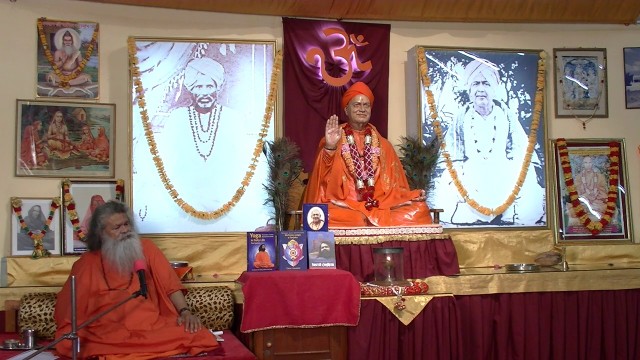
Evening satsang with Vishwaguruji from Jadan Ashram, Rajasthan, India. First Swami Avatarpuri and Swami Premanand are speaking. The sixth day of Navratri is dedicated to Goddess Katyayani. Goddess Katyayani is revered on the sixth day of Navratri. She is an incarnation of Durga, came to protect the whole World against demon Maheesasur. Worship is everywhere. All of our actions becomes worship, we are a part of God. Just allow yourself to get locked in the room if you would like to know the World - said Hafiz. Vishwaguruji is speaking about Bhagwan Ram and Bhagwan Krishna. Many people are not understanding Bhagwan Shiva and do not worship. Yoga means knowledge, Gurudev will make disciple Guru.
How can I love myself?
5:00 - 5:33 (33 min)
A satsang exploring the concept of self-love through the framework of the four aspects of divine grace (kripa).
"Swāmījī did not really use this word, but I know it comes from Holī Gurujī; he is always using that."
"Love each and every living being, if not more, then at least as much as yourself."
Guru Lilā, addressing the community, explains the four aspects of kripa: Deva Kripa (grace of the gods), Śāstra Kripa (grace of the scriptures), Guru Kripa (the Guru's grace), and Kuṭkī Kripa (self-grace). He focuses on Kuṭkī Kripa as self-love, arguing it is a prerequisite for loving others. He outlines a practical path to self-love through self-acceptance, self-understanding, and self-giving, linking it to core teachings. He shares an anecdote about a woman healing from ALS through self-love and concludes with a traditional story about Guru Nānak illustrating the complex workings of karma.
Filming location: Strilky, Czech Republic
Shiva and Shakti
5:00 - 5:55 (55 min)
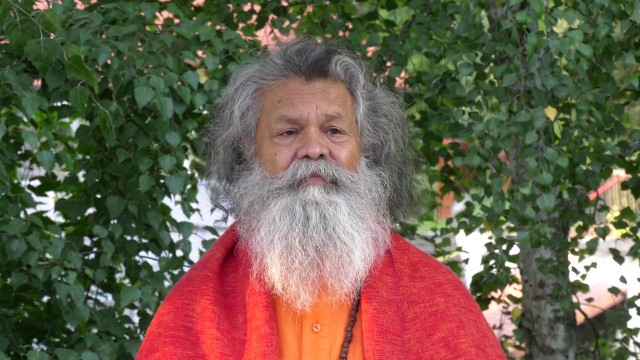
Evening satsang with Vishwaguruji from Strilky Ashram, Czech Republic. In this Kaliyuga (the dark age) a black cloud covers the world. Lord Shiva created the world, Shakti means power. The two are actually in unity. The story about Vishnu who practised Anusthan (intense practice) and made a Shankalpa (resolve). Lord Vishnu finally offered one of his eyes to complete Anusthan. A mother does everything for her child, even while they are in her womb.
Atma is spotless
6:05 - 6:51 (46 min)
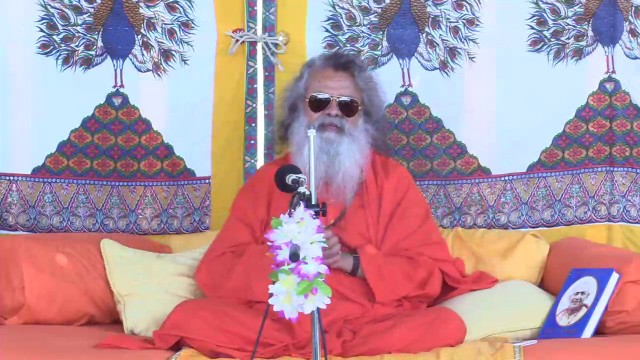
A spiritual discourse on divine presence, the nature of the soul, and the guru's grace, illustrated through parables and teachings.
"When the difficult time comes, then you should know that you are now with God."
"Śrī Guru Ātmā, that is the highest... our Ātmā is connected to Holy Gurujī."
A teacher shares parables, including one where God carries a devotee through hardship and another where a renunciate yogi refuses Lord Shiva's offer. He explains the spotless, all-pervading nature of the soul (Ātmā) and its connection to the Guru, weaving in teachings on devotion, renunciation, and the elements of the body.
Filming location: Australia
The spiritual family
6:55 - 7:46 (51 min)
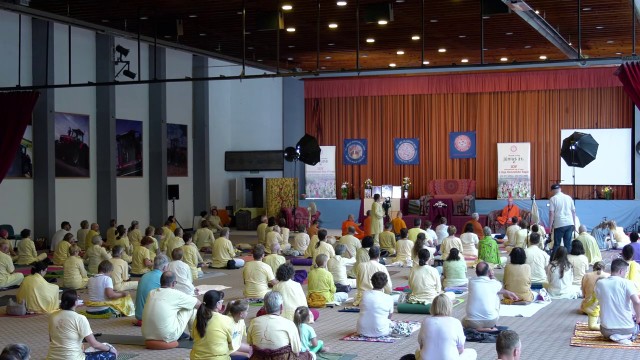
An opening talk at a spiritual seminar addressing the absence of the guru and the purpose of gathering.
"People are always complaining, 'Oh, Kali Yuga is not good, Kali Yuga is a terrible time.' But if you know how to utilize it, Kali Yuga is also excellent."
"We need to be like a Paramahaṁsa... We should be like that. In this world, we have so many things... we should be like the Haṁsa: take the pearls, take the milk, and leave the water."
A senior disciple addresses the assembled spiritual family at the Vép seminar, acknowledging the physical absence of Viśvagurūjī. He reframes the gathering as a vital opportunity to recharge, strengthen spiritual family bonds, and deepen personal practice. Key themes include extracting the essence from the Kali Yuga, the necessity of a supportive community for sādhanā, and using the seminar for introspection, mauna (silence), and focused practice of āsana and prāṇāyāma to calm the mind.
Filming location: Vép, Hungary
Webcast from Slovenska Vas
7:50 - 8:32 (42 min)
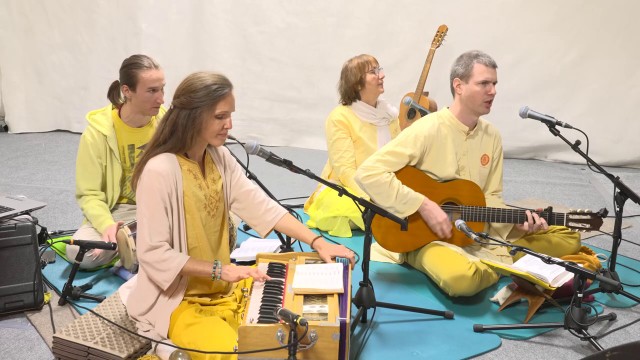
Evening satsang with Vishwaguruji from Slovenska Vas, Slovenia.
Listen to only ourselves and our Gurudev
8:40 - 9:20 (40 min)
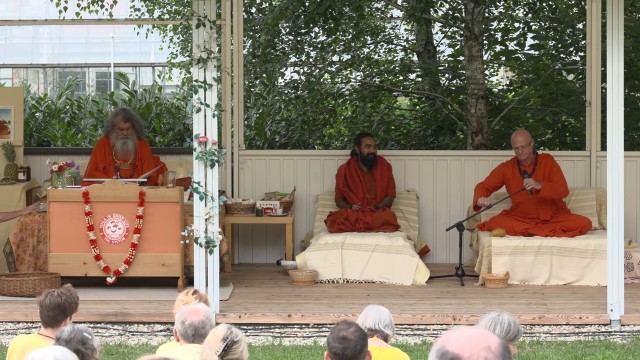
A satsang discourse on the true purpose of spiritual holidays and the importance of guru guidance.
"Coming here to the Ashram... after a whole year of working and school, is truly a holiday."
"The only way for that is to be in satsaṅg, to have darśan with a self-realized person, a guru, and to be in peace."
A speaker addresses attendees at Strelka Ashram, contrasting modern distractions with the ancient value of solitude (ekānta) for reflection. He emphasizes that a spiritual holiday involves satsang, darshan, and unity within the spiritual family. He shares a cautionary tale of a couple who, by listening to others' opinions instead of directly approaching their guru, create conflict, illustrating the need for direct guidance and discernment.
Filming location: Strilky, Czech Republic
Inner awakening: be with the dharma
9:25 - 10:12 (47 min)
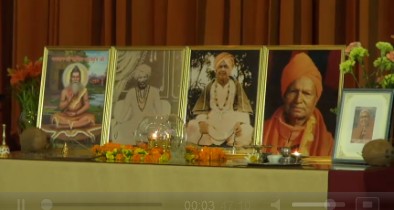
A spiritual discourse on inner awakening and the hidden powers of consciousness, beginning on the Mahāsamādhi day of Holy Mother.
"God has bestowed upon each a kind of talent according to the need or requirement of its life."
"One in all and all in one. That is the reflection of that Ātmā."
The lecturer leads a satsang, explaining the journey of the individual soul (Jīvātmā) through 8.4 million life forms and its relationship with the indestructible Ātmā. He discusses duality, non-duality, and the karmic consequences that define a soul as dharmātmā or pāpātmā. Using the analogies of the moon's reflection and stories of Krishna, Duryodhana, and Vidura, he emphasizes that divine grace comes only through selfless love (prema), not through material offerings.
Filming location: Vép, Hungary
The health of the bones
10:20 - 11:12 (52 min)
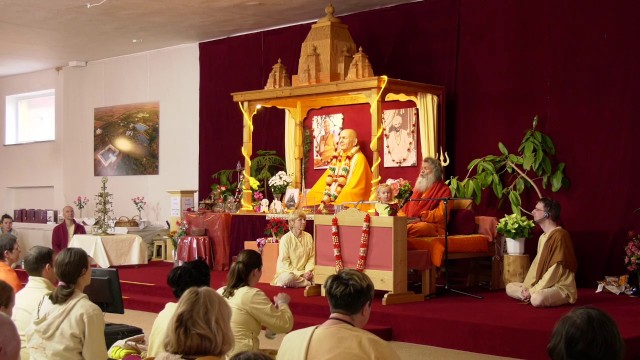
A spiritual talk on the purification of the body and mind, focusing on holy water and natural self-care.
"You can give this, what we call, the holy water. Give this to all your friends and everybody this Christmas."
"So bring the happiness... put a holy, a holy thought within us. 'Holy' means the clean and have a good energy."
Swami Ji offers a wide-ranging discourse, encouraging the use of holy water for purification and harmony during Christmas. He advises on caring for the physical body through natural means—like simple oils, yoga, and avoiding synthetic creams—linking it to the care of the subtle bodies (kośas). The talk includes personal anecdotes about habits and diet, emphasizing a return to simplicity and gratitude.
Filming location: Strilky, Czech Republic
We will go one day
11:00 - 11:43 (43 min)
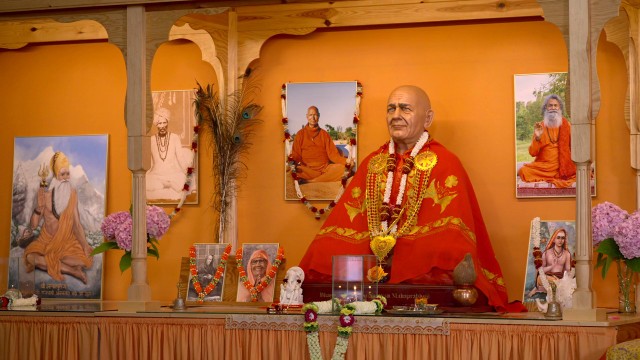
Evening satsang from Strilky Ashram, Czech Republic. We always worry about death. Death is a universal law. Our mind is always restless. We can train it by mantra. Manas is the storehouse of memories. Yogis are not attached to things. Only the bond between the disciple and the Guru is permanent. The story of a man who planned that when Yama came, he would hide somewhere. We should meditate always not only when we are in trouble. We should remember God every day, at least a little bit. Unfortunately present Indian generation is beginning to forget their roots. Birth and death come and go, but remember the name of God.
Respect is important
11:20 - 12:13 (53 min)
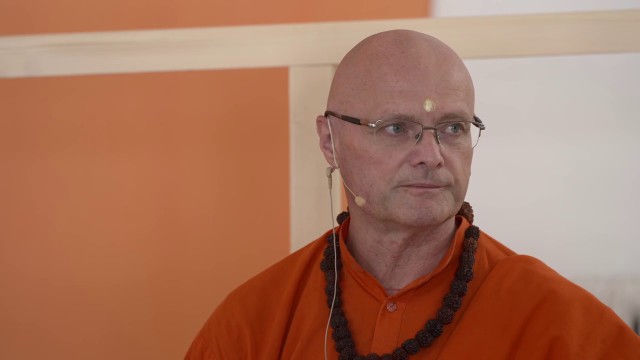
A spiritual discourse and mantra teaching session on the power of language, respect, and energy.
"Spirituality does not mean wholly very slow... But with this different energy inside, just try to be aware of this thing: in which way are we addressing other people?"
"You get from an object only as much as you respect it... If your mālā has some value for you, you will keep it in a safe place... Because of that, you will, from your mālā, get energy when you need it."
A speaker leads a satsang, emphasizing the profound impact of words, gestures, and intention. He discusses how language shapes reality, using examples from addressing others to serving food and respecting spiritual objects like a mala. The talk covers the importance of positive speech, respectful action, and the energy behind our deeds. The session concludes with Swami Avatar Puri teaching and explaining the "Nāma kamala nābhāya" mantra, including its translation and significance.
Filming location: Strilky, Czech Republic
Remain pure
12:20 - 13:09 (49 min)
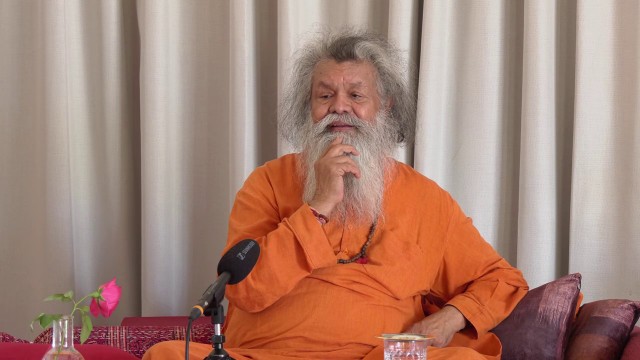
Morning program with Vishwaguruji from Rijeka, Croatia. Vishwaguruji explains problems if one of the parents eats meat. We should take care. He introduces a picture about the nadis. God made women and man, but the whole universe is one.
The Nāḍīs, Cakras, and the Mūlādhāra Foundation
13:15 - 14:12 (57 min)
A spiritual lecture on the nāḍīs, cakras, and the foundational Mūlādhāra Cakra.
"The Mūlādhāra Cakra is at the bottom of the spinal column. It is a border between animal and human consciousness."
"Destiny was created first, and destiny is created individually. We should blame no one. We are ourselves responsible for our destiny."
The speaker continues a discourse from the previous day, focusing on the Mūlādhāra Cakra as the seat of destiny (prārabdha) and divine energy. He explains how this foundational energy influences life and can be purified through the threefold practice of svādhyāya (self-study), manana (contemplation), and abhyāsa (persistent practice), which remove the obstacles of impurity, distraction, and veils. The talk connects these concepts to Kuṇḍalinī Śakti, the role of Kriyā Yoga, and concludes with a symbolic discussion of the tilak mark.
Filming location: Umag, Croatia
Bhajan evening from Strilky Ashram
13:30 - 14:03 (33 min)
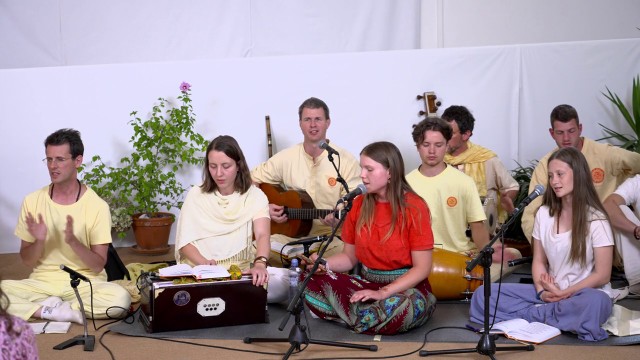
Evening satsang from Strilky Ashram, Czech Republic. Bhajan and kirtan singing.
The Nature of Bhajan and the Journey of the Sūrat
14:20 - 15:03 (43 min)
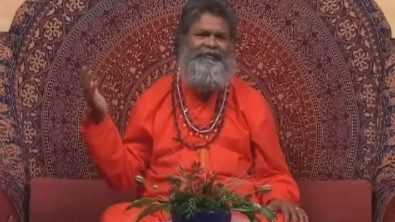
A spiritual discourse explaining the nature of bhajans and the journey of the soul (sūrat).
"In a bhajan, there is the name of God, as well as inspiration, teachings, and answers. The entire philosophy is inside."
"When the sūratā gets a connection to the ātmā, that is the marriage. Marriage means to merge into oneness."
A teacher explains the composition and depth of spiritual songs (bhajans), distinguishing between devotion to form (Saguṇa) and formlessness (Nirguṇa). Using a Rajasthani bhajan as a basis, he describes the sūrat (consciousness) as a virgin girl seeking union with the divine (ātmā). He illustrates this with parables, including a seeker's ultimate surrender to a crow that transforms into Lord Viṣṇu, and discusses relationships and destiny through stories from the Mahābhārata and modern life, concluding with the aim of concentrating all feeling toward Self-knowledge.
Filming location: Vép, Hungary
A Monument for Krishnanaji
15:05 - 15:20 (15 min)
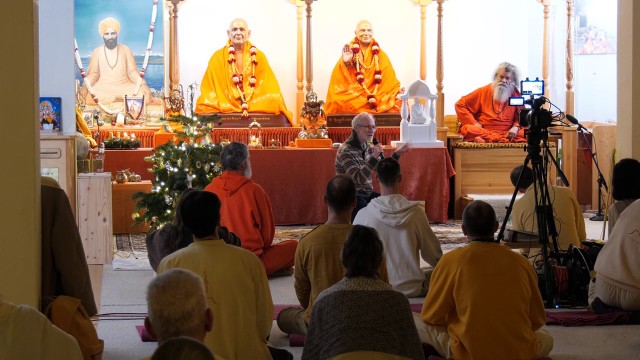
A presentation on the creation of a memorial monument for a senior disciple.
"Swāmījī said... that for dear Krishnanaji... we should do a monument in Vép, in the main square."
"He was really the seed of the seed in Hungary for yoga in life and in the paramparā."
A speaker presents a small model of a planned stone monument for Krishnanaji, a foundational figure for the yoga community in Hungary. He recounts Krishnanaji's devotion, his role in hosting Swāmījī and spreading teachings, and shares Swāmījī's wish for the memorial to be placed in Vép's main square. The narrative later becomes fragmented, touching on disciples' conduct and vague anecdotes.
Filming location: Vienna, Austria
Bhajan evening in Jadan Ashram
15:30 - 16:12 (42 min)
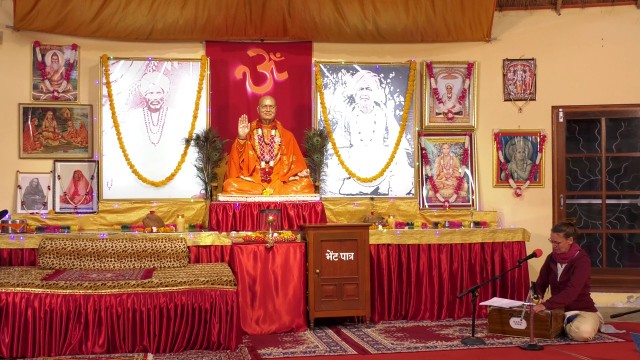
Evening satsang from Jadan Ashram, Rajasthan, India. Bhajan singing
Bhajan singing from Jadan Ashram
16:20 - 17:06 (46 min)
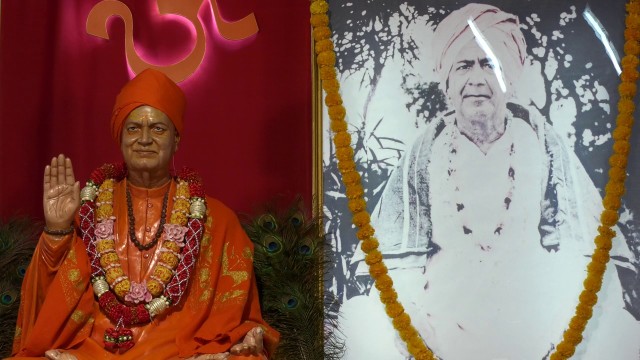
Evening satsang with Vishwaguruji from Jadan Ashram, Rajasthan, India.
Bhajan evening in Strilky Ashram
17:10 - 17:56 (46 min)
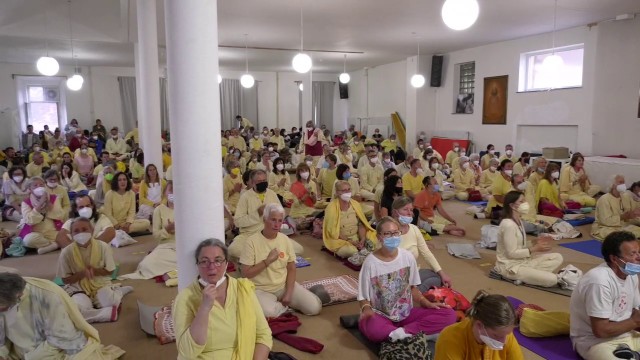
Evening satsang with Vishwaguruji from Strilky Ashram, Czech Republic. Bhajan singing.
Bhajans from Slovenska Vas
18:00 - 18:44 (44 min)
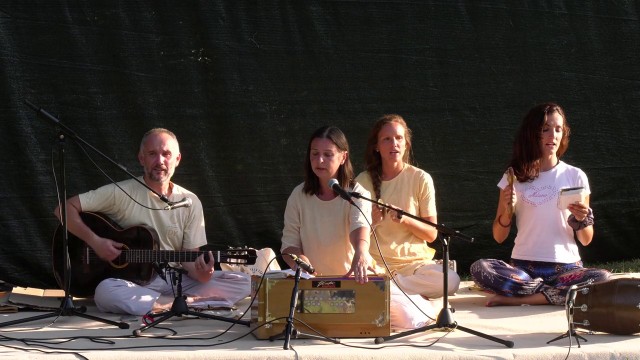
Evening satsang from Slovenska Vas, Slovenia.
Yoga, Āyurveda, and the Journey Beyond: From Vikāra to Turīya
18:50 - 19:45 (55 min)
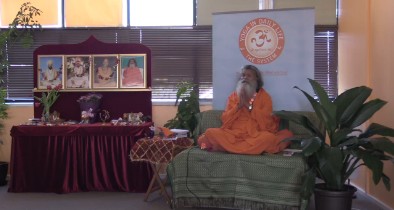
A spiritual discourse on Yoga, Āyurveda, and consciousness, transitioning into teachings on Yoga Nidrā.
"Āyurveda has now again brought this science forward and is very, very helpful."
"Meditation is one of the best ways to realize that this is not a reality now, what I am worrying."
Swami Anand Arun leads a morning satsang, continuing a two-day series. He discusses Āyurveda's approach to physical and mental disease (vikāra), focusing on the destructive nature of worries (cintā) and overthinking (cintan). He explains how unfulfilled desires reside in the subconscious, introducing Yoga Nidrā as a technique to purify these layers and master the states of waking, dreaming, and deep sleep to access higher consciousness.
Filming location: Auckland, New Zealand
Every creature have its karma
19:50 - 20:43 (53 min)
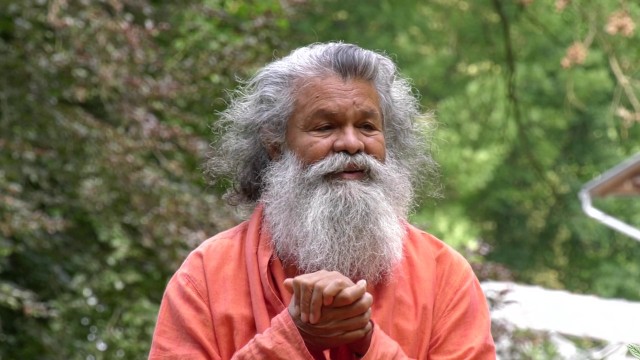
A spiritual discourse on karma, interconnectedness, and human nature.
"Karma is not only for humans; it is for all creatures, any animal."
"So always, our people, our friends, we do not know who is thinking today, now."
The lecturer addresses a gathering, exploring the universal law of karma that binds all life—humans, animals, and even trees. He shares parables, including a story of an ancient tree foretold to die by a yogi, to illustrate how actions interconnect. The talk weaves through themes of compassion, environmental destruction, and personal responsibility, concluding with a call to do good for all.
Filming location: Strilky, Czech Republic
Live in a natural way
20:50 - 21:32 (42 min)
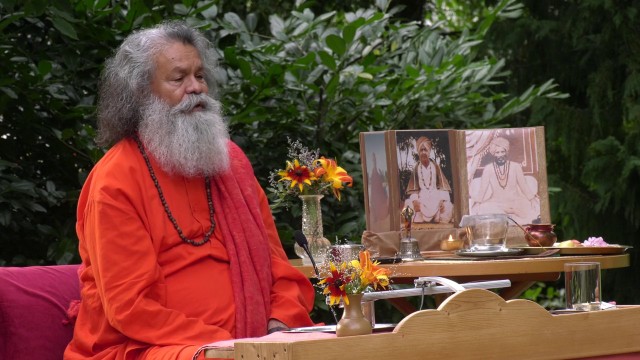
An evening address on the purity of an ashram environment and holistic well-being.
"This is a beautiful, beautiful place. It is full of prāṇa, very much prāṇa."
"We are recovering from all oxygen issues, chemicals, and what we call the Corona."
The lecturer speaks to a gathering at a large ashram, describing its pristine, chemical-free natural environment which promotes health through clean air, water, and earth. He contrasts this with the impurities and financial stresses of the modern world, advocating for a simple, spiritual life centered on meditation, community, and pure food. The talk meanders through topics including the ashram's capacity, the value of money, and the importance of natural seeds.
Filming location: Strilky, Czech Republic
Support your heart
21:40 - 22:19 (39 min)
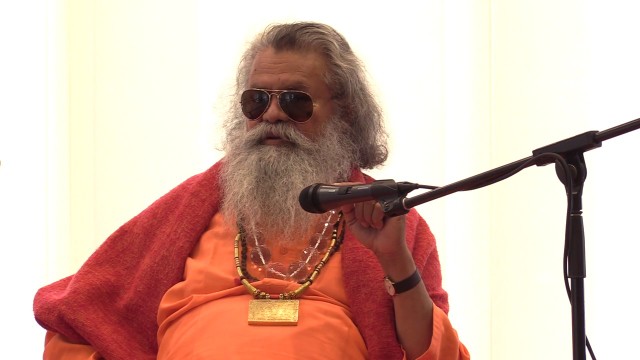
Live webcast from Melbourne, Australia. We all know the heart, the seat of love and life. Many people have problems with their hearts. I want to show you some simple exercises that are very good for the health of the heart. Practice and demonstration.
The Seed Has To Die To Become A Tree
22:25 - 22:58 (33 min)

A spiritual discourse on the endless nature of knowledge and the Manipūra Chakra.
"They ate the butter, not the cow. Feed the cow with love, milk it day and night. So, Sarasvatī Vidyā, knowledge, has no end."
"Our navel is not just our navel; that is the navel of the universe. That is the center of the universe, because you come from there."
The lecturer addresses the assembly, reflecting on a recent collective visual journey to the Himalayas. He shares a parable from his Guruji about knowledge being an endless well, not a finite resource. The discourse then focuses on the profound and limitless nature of the Manipūra Chakra, describing it as the foundational center of life and a storehouse of spiritual jewels, contrasting material poverty with spiritual wealth.
Filming location: Vép, Hungary
The spiritual family
23:05 - 23:56 (51 min)
An opening talk at a spiritual seminar addressing the absence of the guru and the purpose of gathering.
"People are always complaining, 'Oh, Kali Yuga is not good, Kali Yuga is a terrible time.' But if you know how to utilize it, Kali Yuga is also excellent."
"We need to be like a Paramahaṁsa... We should be like that. In this world, we have so many things... we should be like the Haṁsa: take the pearls, take the milk, and leave the water."
A senior disciple addresses the assembled spiritual family at the Vép seminar, acknowledging the physical absence of Viśvagurūjī. He reframes the gathering as a vital opportunity to recharge, strengthen spiritual family bonds, and deepen personal practice. Key themes include extracting the essence from the Kali Yuga, the necessity of a supportive community for sādhanā, and using the seminar for introspection, mauna (silence), and focused practice of āsana and prāṇāyāma to calm the mind.
Filming location: Vép, Hungary
American
Australian