
European
Practising with Vishwaguruji
0:00 - 0:50 (50 min)
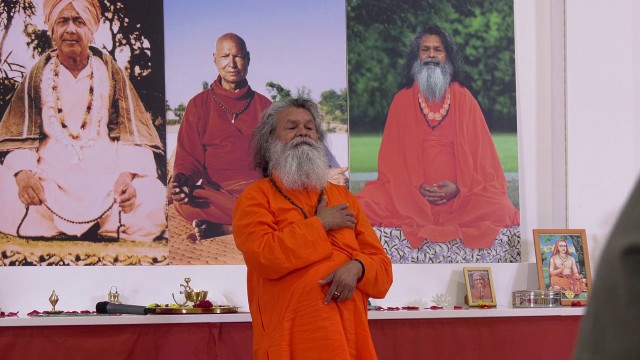
Evening satsang with Vishwaguruji from Rijeka Ashram, Croatia. Concentration on the heart and navel in a standing position. Practising asanas also in a standing position. Practising bhramari pranayama.
The Seed of Practice
0:55 - 1:20 (25 min)
A spiritual discourse on the importance of practice over mere intellectual knowledge.
"Too much reading also leads you nowhere. It’s only intellectual information. Therefore, practicing is very important."
"God is more happy to them, those who are doing with a pure heart, not only with a pure intellect."
The speaker emphasizes the necessity of faithful spiritual practice, critiquing humanity's self-inflicted suffering and disconnect from nature. He illustrates this with a parable of two brothers, a jñāna yogi focused on intellectual correctness and a bhakti yogi devoted to simple worship. The story demonstrates that sincere devotion, not perfect technique, yields spiritual power, a point reinforced by a concluding analogy about a seed growing regardless of how it is planted.
Filming location: Vép, Hungary
Who are we to judge
1:25 - 2:31 (66 min)
Evening satsang from Jadan Ashram. On the begining Swamiji is chanting Om Namah Shivaya.
Remain pure
2:35 - 3:24 (49 min)
Morning program with Vishwaguruji from Rijeka, Croatia. Vishwaguruji explains problems if one of the parents eats meat. We should take care. He introduces a picture about the nadis. God made women and man, but the whole universe is one.
Yoga, Āyurveda, and the Journey Beyond: From Vikāra to Turīya
3:30 - 4:25 (55 min)
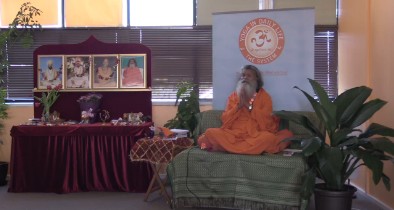
A spiritual discourse on Yoga, Āyurveda, and consciousness, transitioning into teachings on Yoga Nidrā.
"Āyurveda has now again brought this science forward and is very, very helpful."
"Meditation is one of the best ways to realize that this is not a reality now, what I am worrying."
Swami Anand Arun leads a morning satsang, continuing a two-day series. He discusses Āyurveda's approach to physical and mental disease (vikāra), focusing on the destructive nature of worries (cintā) and overthinking (cintan). He explains how unfulfilled desires reside in the subconscious, introducing Yoga Nidrā as a technique to purify these layers and master the states of waking, dreaming, and deep sleep to access higher consciousness.
Filming location: Auckland, New Zealand
Inner awakening: be with the dharma
4:30 - 5:17 (47 min)
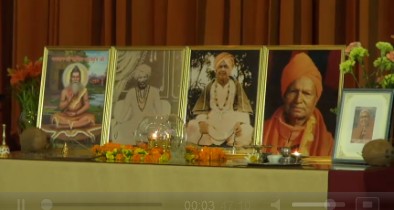
A spiritual discourse on inner awakening and the hidden powers of consciousness, beginning on the Mahāsamādhi day of Holy Mother.
"God has bestowed upon each a kind of talent according to the need or requirement of its life."
"One in all and all in one. That is the reflection of that Ātmā."
The lecturer leads a satsang, explaining the journey of the individual soul (Jīvātmā) through 8.4 million life forms and its relationship with the indestructible Ātmā. He discusses duality, non-duality, and the karmic consequences that define a soul as dharmātmā or pāpātmā. Using the analogies of the moon's reflection and stories of Krishna, Duryodhana, and Vidura, he emphasizes that divine grace comes only through selfless love (prema), not through material offerings.
Filming location: Vép, Hungary
Live webcast from Strilky
5:00 - 6:30 (90 min)
Morning satsang from Strilky Ashram, Czech Republic.
Webcast from Slovenska Vas
5:25 - 6:07 (42 min)
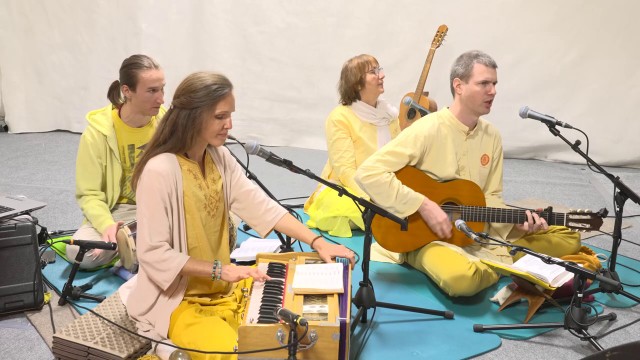
Evening satsang with Vishwaguruji from Slovenska Vas, Slovenia.
Longing for God
6:15 - 7:14 (59 min)
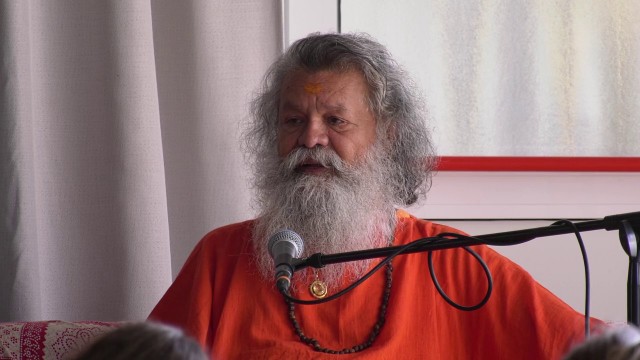
Morning satsang with Vishwaguruji from Rijeka Ashram, Croatia. Bhajan singing. We should be careful with our bodies and we should live very healthily. Our practice is very important and also our good food. We are really yogis. We have learnt many things that are really important in yoga. Real yogis should practise yoga every day. We help other people to become spiritual. Some people eat cats and kill them in a very cruel way. We should feel every creature in our hearts. The story of a man who wanted to see God. The story of an Indian lady living near Rupavas who became a holy person. The other story is of a woman in Gujarat who doesn't eat and doesn't drink anything.
The Seed Has To Die To Become A Tree
7:20 - 7:53 (33 min)

A spiritual discourse on the endless nature of knowledge and the Manipūra Chakra.
"They ate the butter, not the cow. Feed the cow with love, milk it day and night. So, Sarasvatī Vidyā, knowledge, has no end."
"Our navel is not just our navel; that is the navel of the universe. That is the center of the universe, because you come from there."
The lecturer addresses the assembly, reflecting on a recent collective visual journey to the Himalayas. He shares a parable from his Guruji about knowledge being an endless well, not a finite resource. The discourse then focuses on the profound and limitless nature of the Manipūra Chakra, describing it as the foundational center of life and a storehouse of spiritual jewels, contrasting material poverty with spiritual wealth.
Filming location: Vép, Hungary
Shiva is balancing all
8:00 - 8:32 (32 min)
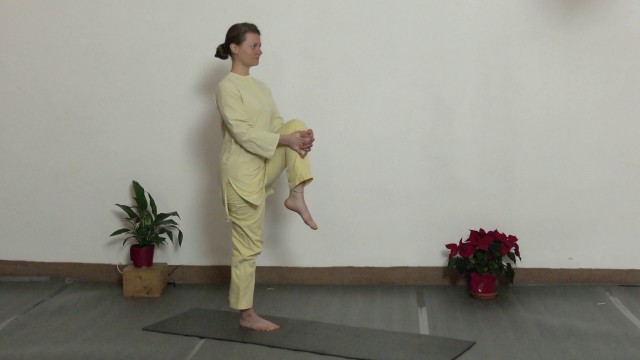
A spiritual discourse and yoga practice session on the theme of cosmic and personal balance.
"In Sanātana Dharma, we worship all because there is only one God."
"Therefore, now is the time... Śiva has opened his eyes... he will bring something again better, balancing."
Swami Anandpuri addresses the global community, discussing the universal nature of divinity and the role of Śiva as the cosmic balancer of positive and negative forces inherent in all life. He then invites Umapurījī to lead practical balancing exercises, including one-legged stands and stretches, to cultivate physical and inner stability, concluding with a moment of meditation and contentment.
Filming location: Strilky, Czech Republic
Without work, nothing can happen
8:40 - 9:38 (58 min)
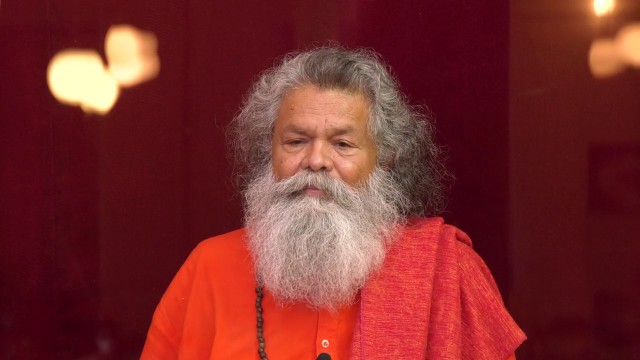
A spiritual discourse weaving ancient creation myths with teachings on dharma and modern life.
"Jīva jīva bhakṣate: all creatures eat other creatures. So that began to move."
"Dharma is spirituality and good, not killing anyone, taking care of everyone. Adharma is the opposite."
A spiritual teacher narrates a syncretic creation story, blending tales of Varāha lifting the earth, Brahmā's emergence from a lotus, and the evolutionary rise of life. He explains the primordial cycle of life consuming life (jīva jīva bhakṣate) and the subsequent establishment of dharma. The discourse shifts to contemporary lessons, advocating for non-violence, mindful consumption, self-reliance, and environmental responsibility, while cautioning against addiction.
Filming location: Strilky, Czech Republic
Sri Devpurijis Gnade
9:45 - 10:47 (62 min)
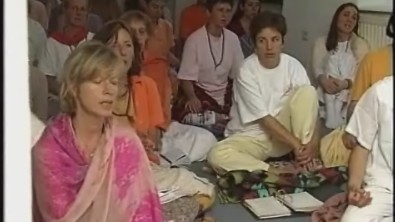
Vienna, June 2000
Around the world - Yoga exercises specifically for women
11:00 - 11:36 (36 min)
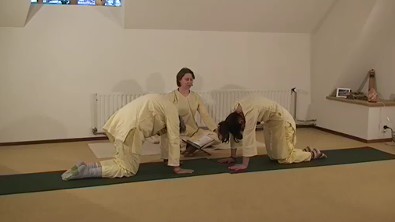
A guided yoga session focused on asanas for menstrual well-being and pelvic health.
"From my own experience, I can confirm it is truly helpful."
"Feel the effect of this exercise; it is also very good to do in the morning for a stiff back."
An instructor leads a gentle sequence designed for menstrual concerns, beginning with relaxation and yogic breathing in Anandāsana. The practice includes apānāsana (for the lower back and pelvic area), marjari (cat pose), hip-opening preparatory poses, and mālāsana (a squatting pose), with a personal anecdote shared about its benefits. The session continues with setu āsana (bridge pose) and a side-lying balance pose, concluding with a short relaxation and a final Om.
How to train our mind?
11:40 - 12:01 (21 min)
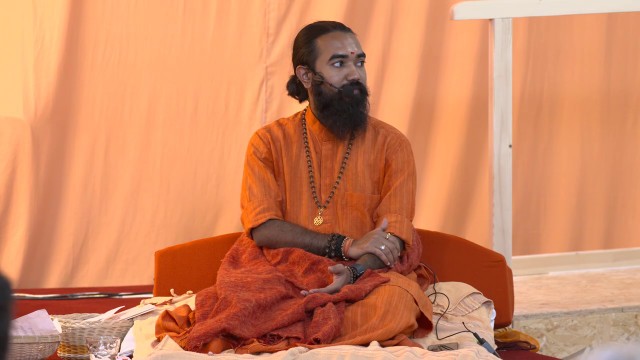
A spiritual discourse on taming the restless mind using a parable from Gurudeva.
"Our mind is chanchal. Chanchal means very restless, and that is normal for a human mind, but you need to learn how to train and tame your mind."
"In the same way, our minds are very restless, running around. We should just let it go; that is its job, to roam around and have thoughts continuously. Then, slowly, slowly, train your mind towards Guru Bhakti."
A speaker recounts Gurudeva's parable of a king's untamable horse and the patient trainer who tamed it through gentle, persistent companionship and reward. The story serves as an analogy for taming the restless mind through devotion to the Guru and the path of Bhakti, rather than forceful suppression. The session concludes with the guided recitation and explanation of a Sanskrit mantra focused on meditating on the Supreme Self within the heart.
Filming location: Strilky, Czech Republic
Who are we to judge
12:05 - 13:11 (66 min)
Evening satsang from Jadan Ashram. On the begining Swamiji is chanting Om Namah Shivaya.
The River of Selfless Service
13:15 - 13:47 (32 min)
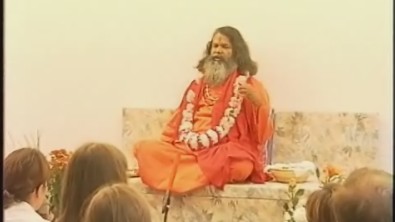
A satsang discourse on karma yoga, selfless service, and spiritual practice.
"Work is the beauty of life, but this work should be positive, selfless service."
"All that he did is for himself, for his soul, for his liberation."
The lecturer addresses ashram residents, praising their recent karma yoga efforts. He explores the nature of selfless service, using the example of Hanuman from the Ramayana to illustrate that all spiritual work ultimately benefits the doer's own soul. He outlines the threefold path of svādhyāya (self-study), manan (contemplation), and abhyāsa (practice), urging attendees to overcome personal likes and dislikes to foster inner harmony and continue flowing like a river in service.
Filming location: Zagreb, Croatia
Live webcast from Strilky
13:30 - 15:00 (90 min)
Evening satsang from Strilky Ashram, Czech Republic.
Morning Lecture from Vep
13:55 - 15:05 (70 min)
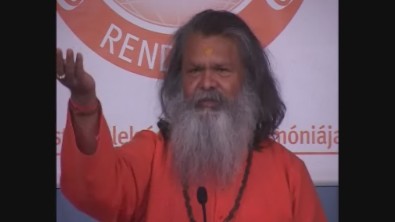
Morning satsang from weekend yoga seminar from Vep, Hungary.
A Monument for Krishnanaji
15:10 - 15:25 (15 min)
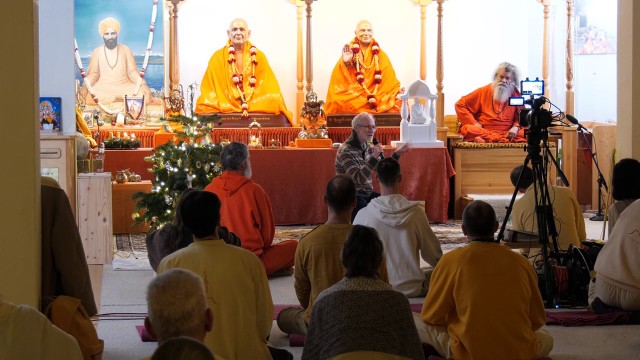
A presentation on the creation of a memorial monument for a senior disciple.
"Swāmījī said... that for dear Krishnanaji... we should do a monument in Vép, in the main square."
"He was really the seed of the seed in Hungary for yoga in life and in the paramparā."
A speaker presents a small model of a planned stone monument for Krishnanaji, a foundational figure for the yoga community in Hungary. He recounts Krishnanaji's devotion, his role in hosting Swāmījī and spreading teachings, and shares Swāmījī's wish for the memorial to be placed in Vép's main square. The narrative later becomes fragmented, touching on disciples' conduct and vague anecdotes.
Filming location: Vienna, Austria
Bhajan singing on the Satsang
15:30 - 15:57 (27 min)
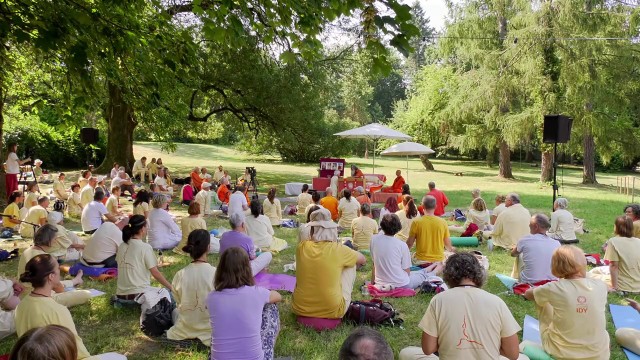
A devotional introduction and singing of a traditional bhajan.
"We can sing a very beautiful bhajan from Swāmī Lālā Nānjī. It is called Manarata Nāma, and it means, 'Oh my mind, repeat the name of God, repeat your mantra.'"
"Give your body and mind to Sāddhā Gurudeva, and he will destroy all your doubts and all your bad qualities. In the holy lotus feet of Satguru Deva reside all holy pilgrimages."
The speaker introduces a lesser-sung bhajan by Swāmī Lālā Nānjī, emphasizing the urgency of spiritual practice in human life. They explain the bhajan's theme of repeating the divine name and extol the glory and essential role of the true Guru in guiding devotees across the ocean of worldly existence. The session includes singing verses from the bhajan and concludes with salutations.
Filming location: Strilky, Czech Republic
Bhajans evening from the Strilky Ashram
16:05 - 17:08 (63 min)
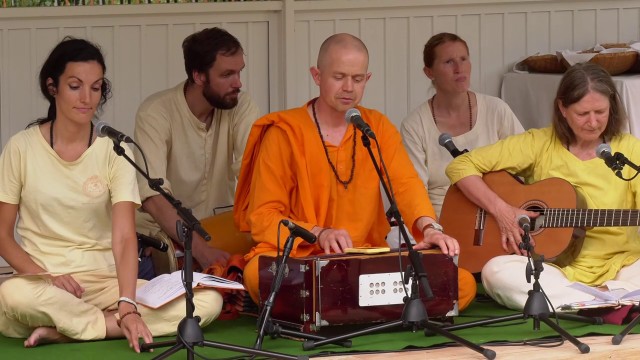
Evening satsang from Strilky Ashram, Czech Republic. Bhajan singing and translation.
Bhajan evening in the Strilky Ashram
17:15 - 18:08 (53 min)
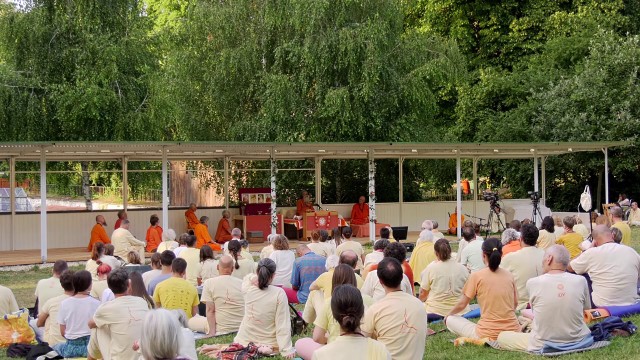
Evening satsang from Strilky Ashram, Czech Republic. Bhajan singing and translations. We shouldn't hold animals in a cage. They feel much pain there. Let them be free. We are also like that bird in the
Bhajan singing from Jadan
18:15 - 18:26 (11 min)
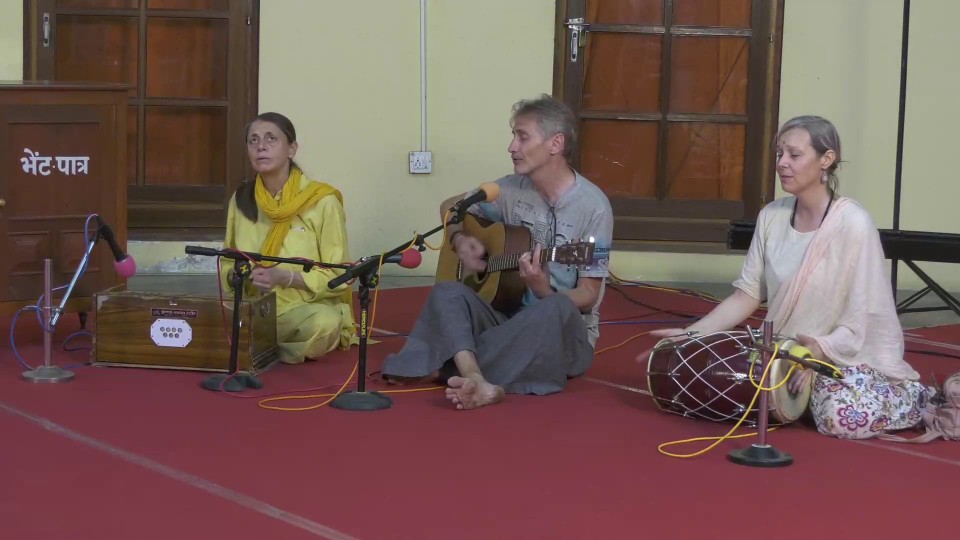
Evening satsang with Vishwaguruji from Jadan Ashram, Rajasthan, India.
Morning Lecture from Vep
18:30 - 19:40 (70 min)
Morning satsang from weekend yoga seminar from Vep, Hungary.
Who are we to judge
19:45 - 20:51 (66 min)
Evening satsang from Jadan Ashram. On the begining Swamiji is chanting Om Namah Shivaya.
To be independent
20:55 - 22:09 (74 min)
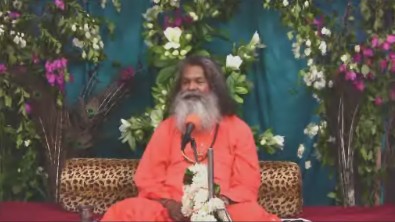
Evening satsang in the occasion of Gurudev's Birthday What means independency to you? Many people where witnessing several wars. The ambition to fight is in any human and animals too. When the human gets the ambition to fight for position, for money and creating or awakening cruel thoughts, to kill or damage properties, that means, that the animal qualities awakens in their body and intellect. That we call the animal instinct. When that awakens, then the human is blinded and focusing only on that illness. There is no remedy to cure such qualities. When the animal instinct comes into the human mind and emotions, means the ambition to fight for the position, or the money and for governing the rules, then only knowledge can give us freedom and liberation. The burning desire to get liberation, this is the independent day in the life.
God is everywhere
22:15 - 23:56 (101 min)
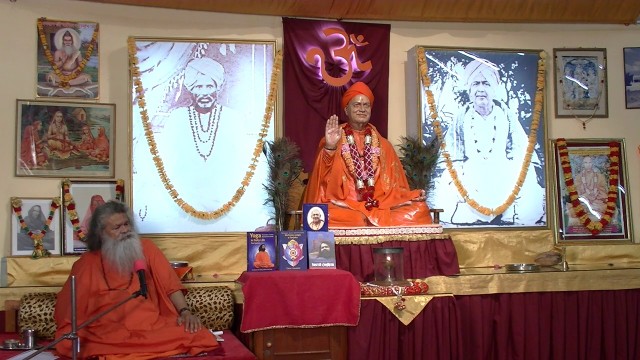
Evening satsang with Vishwaguruji from Jadan Ashram, Rajasthan, India. First Swami Avatarpuri and Swami Premanand are speaking. The sixth day of Navratri is dedicated to Goddess Katyayani. Goddess Katyayani is revered on the sixth day of Navratri. She is an incarnation of Durga, came to protect the whole World against demon Maheesasur. Worship is everywhere. All of our actions becomes worship, we are a part of God. Just allow yourself to get locked in the room if you would like to know the World - said Hafiz. Vishwaguruji is speaking about Bhagwan Ram and Bhagwan Krishna. Many people are not understanding Bhagwan Shiva and do not worship. Yoga means knowledge, Gurudev will make disciple Guru.
American
Australian