
European
Enjoy your life
0:25 - 1:04 (39 min)
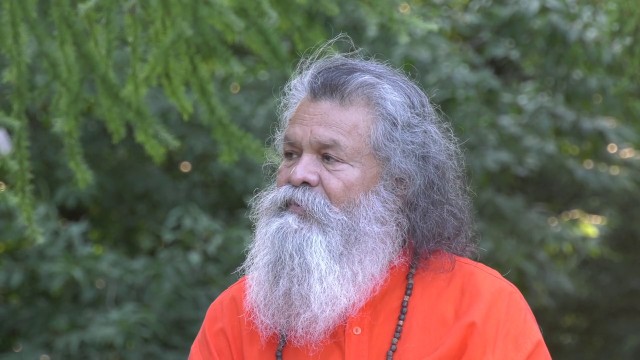
Evening satsang with Vishwaguruji from Strilky Ashram, Czech Republic. Strilky Ashram is not for one it is for all. Many people died by corona. It has many hidden signs. We are the real yoga from the earth till the cosmic. When we leave our body we don't know about how is in the world. God gave us the possibility not to be born again. Sometimes people are afraid of ghosts in the darkness. There is no ghost in reality. We can come back to the earth only through the mother's womb. Nowadays people have many problems with the health of their bodies. Maybe the cause of this is some karma from our past lives. Every creature feels pain and sadness when they die. Sometimes our soul is suffering in this body but we don't want to die. the whole ocean consists of drops. Yogic science knows how it will be afraid we leave this body. So we want to live and enjoy our life.
The Youth for Sustainable Future
1:10 - 1:44 (34 min)
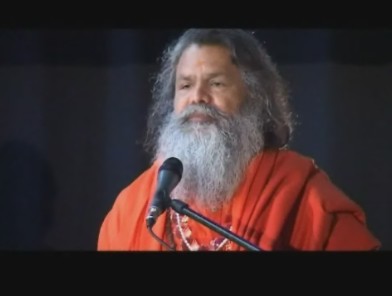
The 4th International Conference of Children and Youth in Zlin 2005 (CZ), The Youth for Sustainable Future.
Interview with Vishwaguruji on Lok Sabha
1:50 - 2:20 (30 min)
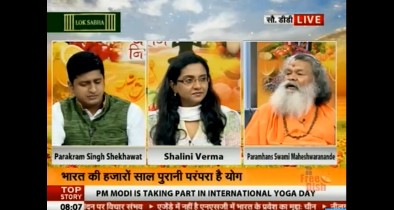
A television panel discussion on International Yoga Day, featuring a host and guests.
"Yoga is the mother of all sciences and arts. It is the science of human origin and evolution to a point where you can overcome the boundaries of space and time."
"Yoga should not be commercial. No. It should be free. A guru gives knowledge to the disciple not because of money or with money, but with blessings."
A host moderates a discussion with senior journalist Gyanendra Bhattaria and Swami Maheshvaranandji on the global celebration of Yoga Day, its origins, and its core principles. The panel addresses the event's scale, the essence of yoga beyond physical postures, the role of a guru, and concerns over commercialization and modern interpretation. The conversation references Prime Minister Narendra Modi's leadership in establishing the day and a live yoga session in Chandigarh.
Filming location: India
The Pearl of Everlasting Bliss
2:25 - 2:46 (21 min)
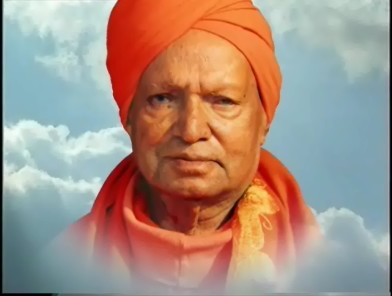
A biographical tribute to the life and legacy of Hindu saint Paramahaṁsa Śrī Svāmī Madhavānandajī.
"My eyes filled with tears, and I fell to my knees. I knew I had found the everlasting light of my life. I was home at last."
"All humans belong to one religion, and that is humanity... ahiṃsā paramo dharma: non-violence is the highest religion."
The narrative chronicles the spiritual journey of Swami Madhavānandaji, from his childhood in Rajasthan and transformative meeting with his guru, Bhagavān Śrīdīp Nārāyaṇa Mahāprabhujī, to his life of devotion, teaching, and global service. It details his initiation, his work establishing ashrams, and his teachings on non-dualism and universal love, culminating in his Mahāsamādhi in 2003 and the continuation of his lineage through his disciple, Swami Māheśvarānandajī.
Filming location: Rajasthan, India; Kathu Ashram, India; Bola Guda Ashram, India; Nepal
We all should get oneness
2:50 - 3:06 (16 min)
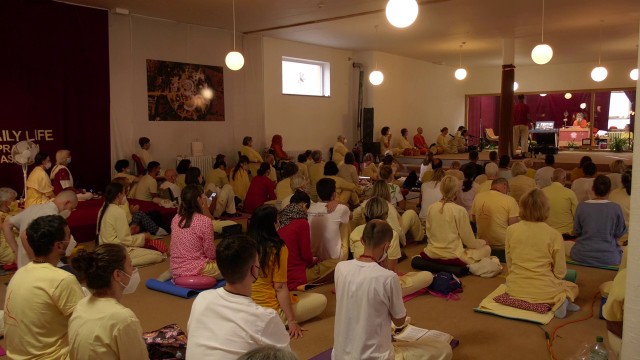
A spiritual discourse on the language of oneness and silence during Guru Purnima.
"The best language is when people from many countries, each with their own language, suddenly all understand."
"Silent means oneness."
A spiritual teacher addresses an international satsang on Guru Purnima, exploring how true communication and unity transcend spoken language. He discusses understanding through sound, vibration, and silence, using examples like music and opera, and contrasts the noisy chaos of worldly festivals with the profound, unifying silence of spiritual gathering.
Filming location: Strilky, Czech Republic
Ayurveda - The science of life
3:10 - 4:56 (106 min)
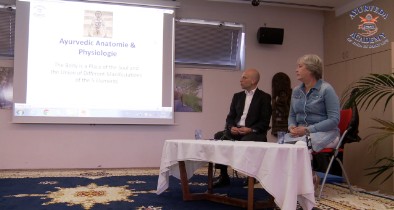
An introductory lecture on the history and scope of Ayurveda.
"Ayurveda is a science that deals with the useful and the harmful, the happy and unhappy life."
"The scope of Ayurveda is to maintain the health of healthy people and to cure those who are afflicted with diseases—two things."
The speaker outlines a lecture on Ayurveda, beginning with its mythological origins from Brahmā through sages like Dhanvantari and its textual compilation in works like the Caraka Saṃhitā. He corrects the notion that it is only 5,000 years old, explaining its vast scope for maintaining health and treating disease, and details its eight traditional branches.
Filming location: Prague, Czech Republic
Sadhana maintains inner harmony
5:00 - 6:03 (63 min)
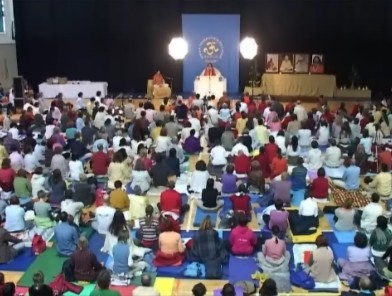
A morning satsang on the Maṇipūra Chakra and spiritual practice.
"Tons of theory are nothing compared to a gram of practice."
"Discipline is your inner master. That best master will lead you twenty-four hours."
Swami Maheshwarananda leads a discourse in Novo Mesto, focusing on the 'city of jewels,' the Maṇipūra Chakra. He emphasizes daily practice as the foundation for health, freedom, and spiritual awakening, explaining how discipline purifies consciousness and overcomes negative qualities. He outlines the riches gained from this center: health, kindness born of non-dependence, devotion, and wisdom, concluding with the protective power of pure consciousness and spiritual community.
Filming location: Slovenia
Practice makes perfect and healthy
6:10 - 7:12 (62 min)
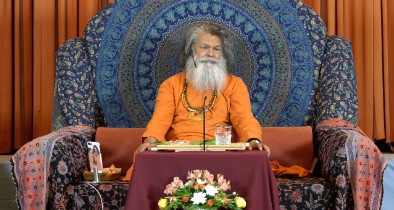
Evening satsang with Vishwaguruji from Summer Yoga Camp in Vep, Hungary. Practice makes perfect. Yoga means and begins with discipline. There are many people suffering from illnesses. Focusing on the target is the main point in archery. Vishwaguruji explains the strory of the Eklavya and Arjuna to illustrate what it means to practice.
Simple living and higher thinking
7:20 - 8:07 (47 min)
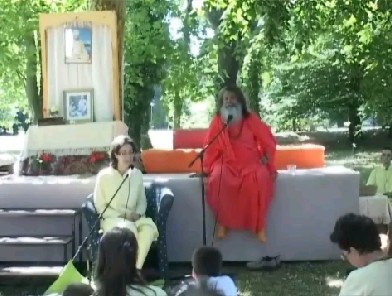
A discourse on Hindu devotional practices and philosophy.
"Why do Indians decorate their gods? The answer is very simple: because we love our God."
"Whatever you are doing for God, you are doing for yourself."
The lecturer addresses devotees, explaining the cultural and spiritual significance of decorating altars and deities as an expression of love and devotion. He explores core Hindu concepts, including the nature of the one supreme God manifesting in many forms, the personal benefits of selfless service and offering, and the importance of cultivating beautiful thoughts and living in the present. The talk weaves together scripture, personal anecdote, and metaphor to illustrate these principles.
Filming location: Vép, Hungary
We have to become one
8:15 - 9:49 (94 min)
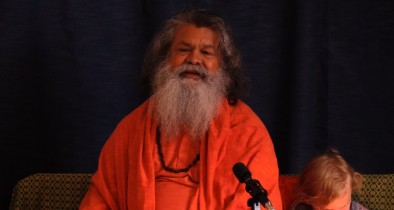
Evening satsang with Vishwaguruji from Auckland, New Zealand. There are many things in the space. We should stop our attachment. Great yogis do not attach to anything and to anybody. Break from the attachment and join to God. Nothing is mine. Explanation of bhadzsan Chidananda Rupam Sivoham Sivoham. Sometimes we can not understand wisdom. Shiva means only space. He is everywhere in everything and nowhere. Explanation of bhadzsan Ragupati Raghava Raj Ram. One in all and all in one. Explanation of bhadzsan Sabda Sanehi Mhari Jatra. A story or a poem can help you to understand knowledge. The knowledge what we have we should understand, realize and give further. Chakras are the major stations in our body. The Earth connected to the Sun. The system of elements and chakras in our body.
The 3rd Sri Swami Maheshwarananda Festival (3/4)
10:00 - 11:07 (67 min)
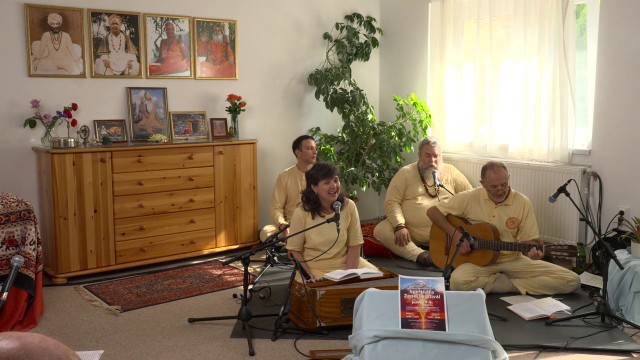
Welcome to the third Sri Swami Maheshwarananda Festival of Spiritual Music, Debrecen, Hungary.
The 3rd Sri Swami Maheshwarananda Festival (4/4)
14:00 - 15:15 (75 min)
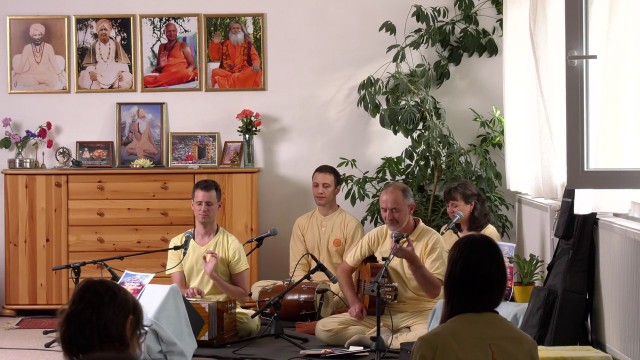
Welcome to the third Sri Swami Maheshwarananda Festival of Spiritual Music, Debrecen, Hungary.
Anahata chakra
14:05 - 14:51 (46 min)
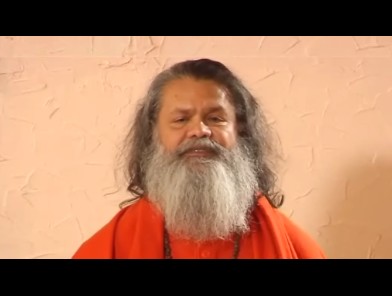
A spiritual discourse on meditation, chakra awakening, and contentment.
"Yoga in Daily Life around the world is doing miraculous work. A lot of work is done towards the protection of the environment, the protection of animals, and supporting poor people."
"When the Anāhata Chakra is pure, then we call it the holy heart. The holy heart means the divine consciousness awakens in your heart."
Swami Paramadvaiti addresses practitioners at a Yoga in Daily Life center, discussing the organization's charitable work before delving into spiritual teachings. He explains the three principles of sound, light, and energy within all phenomena, detailing the awakening of the heart chakra (Anāhata) and the resulting state of supreme contentment (Śāntoṣa). The talk includes a poetic analogy on spiritual wealth and concludes with a practical, step-by-step guided meditation technique focusing on breath and light.
Filming location: Prague, Czech Republic
Interview with Vishwaguruji on Lok Sabha
14:55 - 15:25 (30 min)
A television panel discussion on International Yoga Day, featuring a host and guests.
"Yoga is the mother of all sciences and arts. It is the science of human origin and evolution to a point where you can overcome the boundaries of space and time."
"Yoga should not be commercial. No. It should be free. A guru gives knowledge to the disciple not because of money or with money, but with blessings."
A host moderates a discussion with senior journalist Gyanendra Bhattaria and Swami Maheshvaranandji on the global celebration of Yoga Day, its origins, and its core principles. The panel addresses the event's scale, the essence of yoga beyond physical postures, the role of a guru, and concerns over commercialization and modern interpretation. The conversation references Prime Minister Narendra Modi's leadership in establishing the day and a live yoga session in Chandigarh.
Filming location: India
Bhajan singing from Vep
15:30 - 16:21 (51 min)
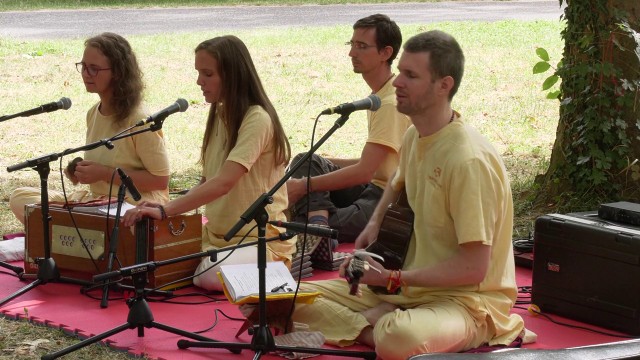
Morning satsang with Vishwaguruji from Vep, Hungary. Bhajan singing.
Bhajans from Strilky Ashram
16:25 - 17:59 (94 min)
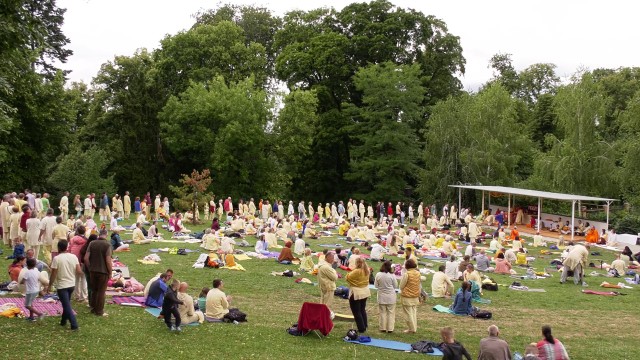
Morning satsang from Strilky Ashram, Czech Republic.
Bhajan singing in the presence of Vishwaguruji
18:05 - 19:40 (95 min)
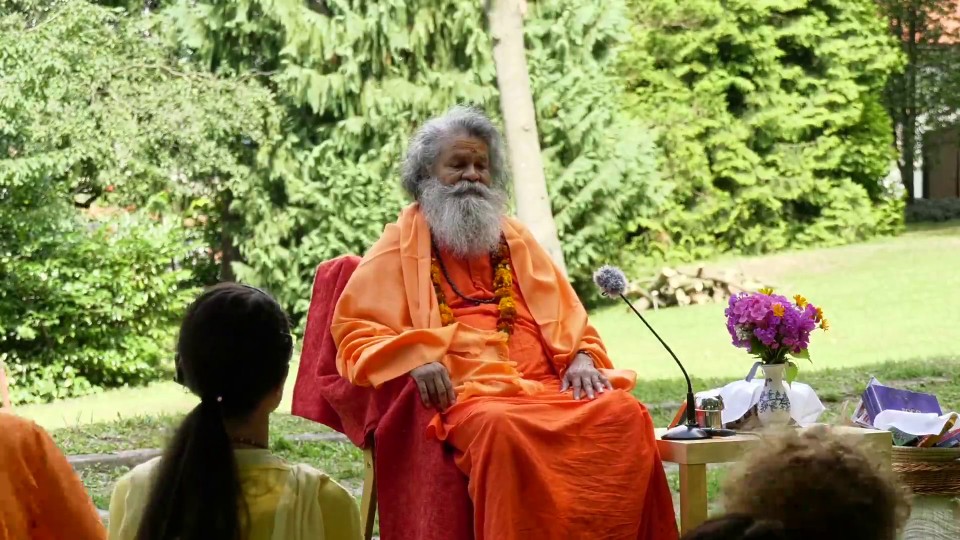
Morning satsang with Vishwaguruji from Strilky Ashram, Czech Republic.
Proper practising of Bhramari
19:45 - 19:45 (0 min)
Morning program with Vishwaguruji from Brisbane, Australia. Moodiji brought India and the whole world towards spirituality. We should practise bhramari regularly but not too much at one time. Explanation and demonstration of different bhramari pranayama technics.
The Presence of the Guru
20:30 - 21:13 (43 min)
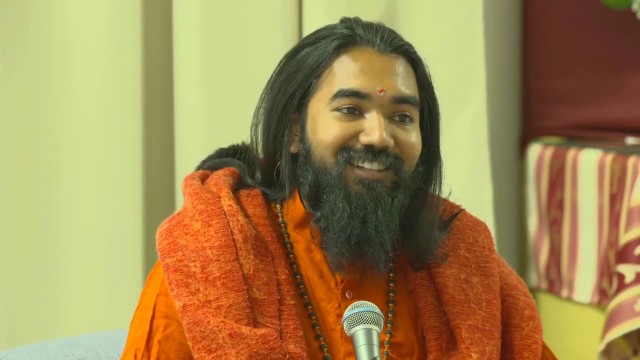
A satsang on devotion, surrender, and relating to the spiritual teacher.
"Gurudev is in the same space, same region, I would say, but we all should know that Gurudev is watching. It doesn’t matter where he is, he is always observing everything."
"If we have that mindset within us, that whatever we are doing, it’s him doing... then nothing is going to stop us in this world."
The lecturer addresses disciples in Slovenia, sharing insights from traveling with Gurudev, Sri Vishwaguru Mahamandaleshwar Paramahamsa Maheshwaranand Puri. He discusses the Guru's omnipresence, the importance of selfless service (seva), and cultivating trust over logic. He advises on etiquette in the Guru's presence, tells a parable about faith, and leads a guided meditation (manasik puja) to feel the Guru's inner presence.
Filming location: Slovenia
Prana is the source of our life
21:20 - 22:04 (44 min)
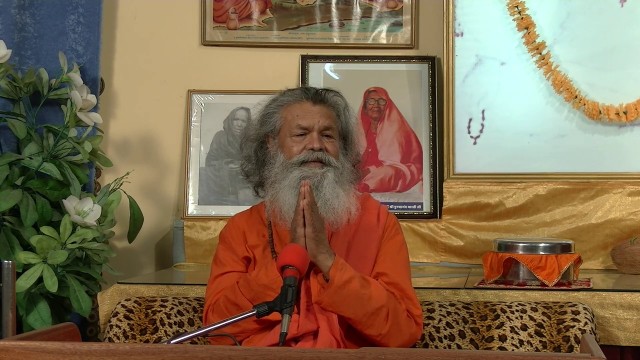
Evening Satsang with Vishwaguruji from Jadan Ashram, Rajasthan, India. We should think first in the morning that we are human. Water is holy because it is the basis of our life. Prana is also holy and necessary for our life. Animals are aware in their sleep also. The story about a yogi and the tigers. We need oxygen for meditation. The story about two friends who went to the Himalayas and try to share their meal. The story about Vishwaguruji Mansadev and a bear in a forest in Kanada. We have to be the winner against corona.
Enjoy your life
22:10 - 22:49 (39 min)
Evening satsang with Vishwaguruji from Strilky Ashram, Czech Republic. Strilky Ashram is not for one it is for all. Many people died by corona. It has many hidden signs. We are the real yoga from the earth till the cosmic. When we leave our body we don't know about how is in the world. God gave us the possibility not to be born again. Sometimes people are afraid of ghosts in the darkness. There is no ghost in reality. We can come back to the earth only through the mother's womb. Nowadays people have many problems with the health of their bodies. Maybe the cause of this is some karma from our past lives. Every creature feels pain and sadness when they die. Sometimes our soul is suffering in this body but we don't want to die. the whole ocean consists of drops. Yogic science knows how it will be afraid we leave this body. So we want to live and enjoy our life.
The Pearl of Everlasting Bliss
22:55 - 23:16 (21 min)
A biographical tribute to the life and legacy of Hindu saint Paramahaṁsa Śrī Svāmī Madhavānandajī.
"My eyes filled with tears, and I fell to my knees. I knew I had found the everlasting light of my life. I was home at last."
"All humans belong to one religion, and that is humanity... ahiṃsā paramo dharma: non-violence is the highest religion."
The narrative chronicles the spiritual journey of Swami Madhavānandaji, from his childhood in Rajasthan and transformative meeting with his guru, Bhagavān Śrīdīp Nārāyaṇa Mahāprabhujī, to his life of devotion, teaching, and global service. It details his initiation, his work establishing ashrams, and his teachings on non-dualism and universal love, culminating in his Mahāsamādhi in 2003 and the continuation of his lineage through his disciple, Swami Māheśvarānandajī.
Filming location: Rajasthan, India; Kathu Ashram, India; Bola Guda Ashram, India; Nepal
Guru is the first
23:20 - 23:56 (36 min)
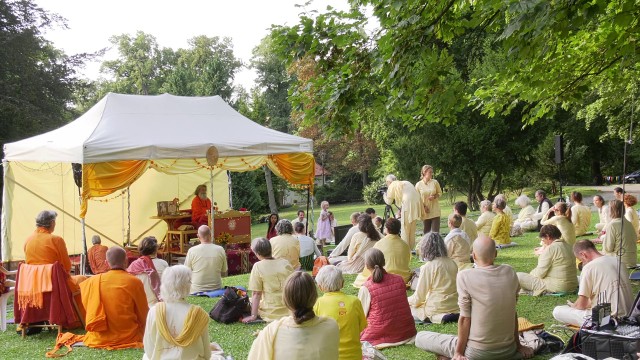
A spiritual discourse on the continuity of sādhanā and the centrality of the Guru.
"Your sādhanā was very beautiful, very good. Many experienced beautiful powers, feelings, and even incarnations. Yes, we should continue this until the end of our life."
"Holy Gurujī, our Swamījī Madhavānandajī Bhagavān, he always said that Seva is all the time with us. We are going, as all goes, to the Cosmic Self."
A teacher addresses students after a spiritual retreat, using the metaphor of a stone creating eternal ripples in a pond to describe the lasting impact of their practice. He emphasizes selfless service (Seva) and explains the Guru's paramount importance, stating all spiritual activities must follow devotion to the Guru. The talk covers the meaning of mantra, the significance of the prayer mala, and outlines the traditional four stages of life (āśramas).
Filming location: Strilky, Czech Republic
American
Australian