
European
A Gentle Yoga Practice
0:00 - 1:07 (67 min)
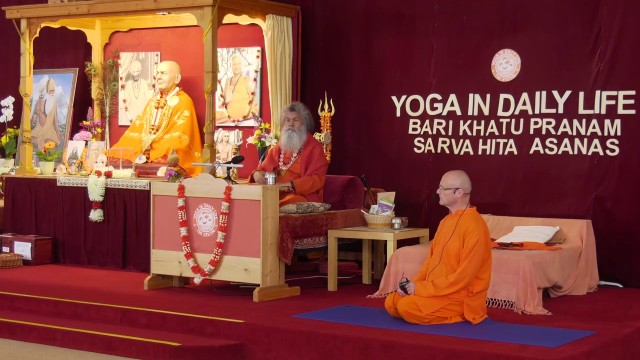
A guided gentle yoga class focusing on breath and alignment.
"Pavanamuktāsana is excellent for digestion." "When we start to breathe a little deeper, we immediately have more energy and less tension."
An instructor leads a group through a sequence of postures, including Pavanamuktāsana on the back and standing, Uttānāsana, and balancing poses like Ekapāda Uttānāsana. The guidance emphasizes anatomical awareness, the benefits for circulation and focus, and connects the physical practice to the cleansing of the nāḍīs for prāṇic flow. The session concludes with Bhujaṅgāsana and relaxation.
Filming location: Strilky, Czech Republic
The Presence of the Guru
1:15 - 1:58 (43 min)
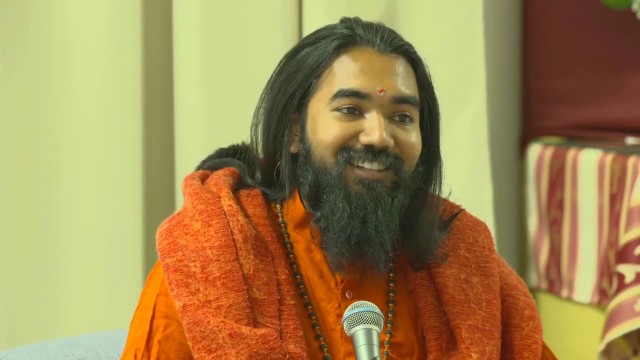
A satsang on devotion, surrender, and relating to the spiritual teacher.
"Gurudev is in the same space, same region, I would say, but we all should know that Gurudev is watching. It doesn’t matter where he is, he is always observing everything."
"If we have that mindset within us, that whatever we are doing, it’s him doing... then nothing is going to stop us in this world."
The lecturer addresses disciples in Slovenia, sharing insights from traveling with Gurudev, Sri Vishwaguru Mahamandaleshwar Paramahamsa Maheshwaranand Puri. He discusses the Guru's omnipresence, the importance of selfless service (seva), and cultivating trust over logic. He advises on etiquette in the Guru's presence, tells a parable about faith, and leads a guided meditation (manasik puja) to feel the Guru's inner presence.
Filming location: Slovenia
Mental food
2:05 - 4:03 (118 min)
Swamiji in Sliac, April 2007
Enjoy your life
4:10 - 4:49 (39 min)
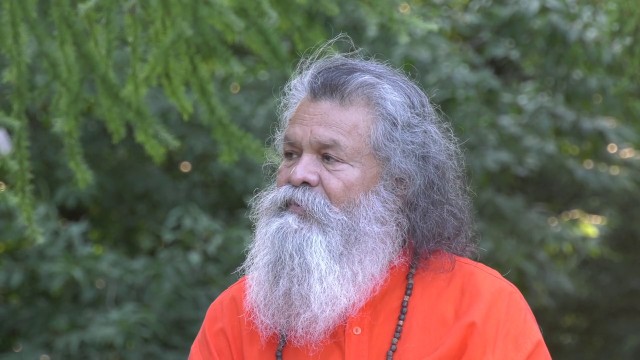
Evening satsang with Vishwaguruji from Strilky Ashram, Czech Republic. Strilky Ashram is not for one it is for all. Many people died by corona. It has many hidden signs. We are the real yoga from the earth till the cosmic. When we leave our body we don't know about how is in the world. God gave us the possibility not to be born again. Sometimes people are afraid of ghosts in the darkness. There is no ghost in reality. We can come back to the earth only through the mother's womb. Nowadays people have many problems with the health of their bodies. Maybe the cause of this is some karma from our past lives. Every creature feels pain and sadness when they die. Sometimes our soul is suffering in this body but we don't want to die. the whole ocean consists of drops. Yogic science knows how it will be afraid we leave this body. So we want to live and enjoy our life.
Your body is the map of your destiny
4:55 - 5:40 (45 min)
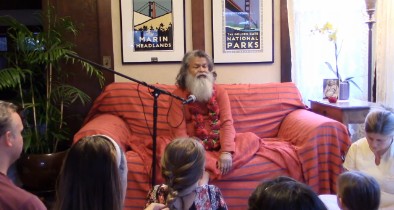
A final evening satsang on destiny, karma, and the possibility of spiritual intervention.
"Destiny is written; it cannot be changed."
"Rekh Parmek Gurudev: your destiny can change only by the guru."
Swami Avatarpuri concludes a program by elaborating on the concepts of janma-bhūmi, karma-bhūmi, and dharma-bhūmi. He narrates the story of Oedipus to illustrate inescapable fate, then explains how destiny is mapped on the human body through lines on the forehead, palms, and fingers. He contrasts the fixed nature of karma with the potential for change through spiritual practice (sādhanā) and, ultimately, the grace of a true guru, who acts as a divine navigator.
Filming location: San Francisco, USA
Prana is the source of our life
5:45 - 6:29 (44 min)
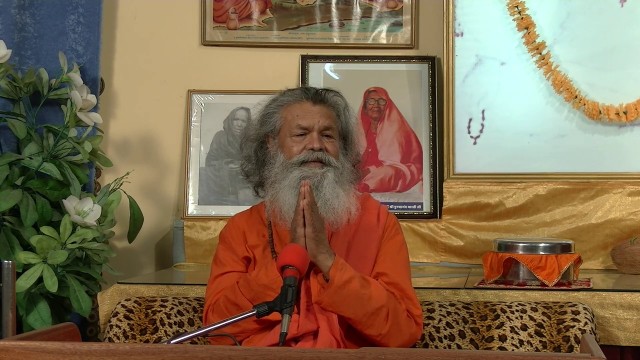
Evening Satsang with Vishwaguruji from Jadan Ashram, Rajasthan, India. We should think first in the morning that we are human. Water is holy because it is the basis of our life. Prana is also holy and necessary for our life. Animals are aware in their sleep also. The story about a yogi and the tigers. We need oxygen for meditation. The story about two friends who went to the Himalayas and try to share their meal. The story about Vishwaguruji Mansadev and a bear in a forest in Kanada. We have to be the winner against corona.
The Principles and Power of Sādhanā
6:35 - 7:20 (45 min)
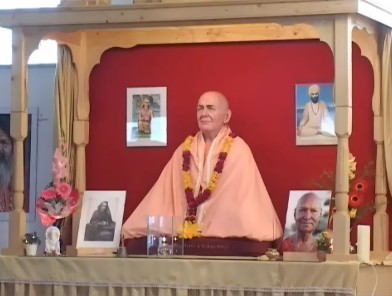
A spiritual discourse on the principles of sādhanā and the significance of the Maṇipūra Chakra.
"Any kind of sādhanā requires perfect technique and discipline. One must follow the principles."
"That energy, which is located in the maṇipūra cakra, is called hara-śakti. That is the life force, the energy that keeps you moving."
A teacher explains the necessity of disciplined practice, using the analogy of fueling a car correctly. He delves into the esoteric importance of the Maṇipūra Chakra as the seat of life force (hara-śakti) and the junction of vital energies, connecting its functions to immunity, sound resonance (nāda), and mythological symbolism involving Vishnu. The talk covers related practices like Śabda Sañjālan and Khaṭupranām, emphasizing that authentic practice requires devotion, a spiritual lineage, and following a master's instructions to awaken inner energy and burn karmic seeds.
Filming location: Strilky, Czech Republic
Ayurveda - The science of life
7:25 - 9:11 (106 min)
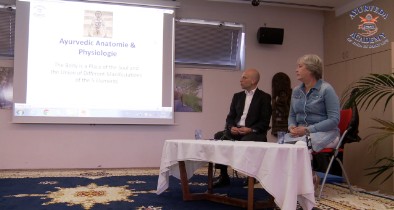
An introductory lecture on the history and scope of Ayurveda.
"Ayurveda is a science that deals with the useful and the harmful, the happy and unhappy life."
"The scope of Ayurveda is to maintain the health of healthy people and to cure those who are afflicted with diseases—two things."
The speaker outlines a lecture on Ayurveda, beginning with its mythological origins from Brahmā through sages like Dhanvantari and its textual compilation in works like the Caraka Saṃhitā. He corrects the notion that it is only 5,000 years old, explaining its vast scope for maintaining health and treating disease, and details its eight traditional branches.
Filming location: Prague, Czech Republic
Proper practising of Bhramari
9:15 - 9:15 (0 min)
Morning program with Vishwaguruji from Brisbane, Australia. Moodiji brought India and the whole world towards spirituality. We should practise bhramari regularly but not too much at one time. Explanation and demonstration of different bhramari pranayama technics.
A Prayer for the Immortal Soul
10:00 - 10:42 (42 min)
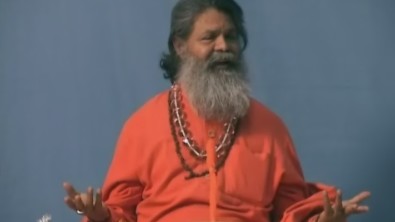
A satsang dedicated to a prayer for the departed.
"Let me sing day and night this name of thine."
"At the end of my life, when I renounce this body, I have only one wish, that you are standing in front of me."
The lecturer leads a prayer satsang in Prague for the late Milena Hypsmanova, recounting her final trip to South Africa. He reflects on the mystery of destiny, time, and mortality, using the story of Oedipus to illustrate how fate unfolds. The discourse explores how spiritual practice and remembrance of God's name prepare the soul for the final transition from life to death.
Filming location: Prague, Czech Republic
Organic farming in Netherlands
10:45 - 10:57 (12 min)
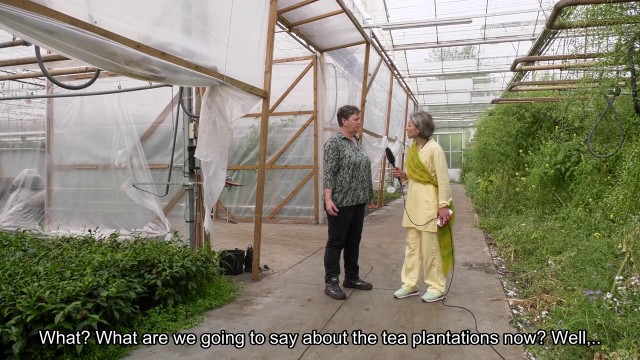
A tour of an organic farm and food forest in the Netherlands.
"Our own products, of course. We have peppers, cucumbers, tomatoes, and lettuce."
"It doesn’t feel like work anymore. It’s just much nicer because you’re doing something good."
The owner gives a comprehensive tour of Natuurlijk Tomaat, showcasing the organic shop, greenhouses, and a large permaculture food forest. She explains the transition from conventional to organic farming, detailing biological pest control, rainwater harvesting, and the philosophy of working with nature. The tour highlights diverse crops, a pioneering tea plantation, and the future-oriented planting of a nut garden.
Filming locations: Dongen, North Brabant, Netherlands.
Opening Address: Yoga for World Peace and Non-Violence
11:00 - 11:07 (7 min)
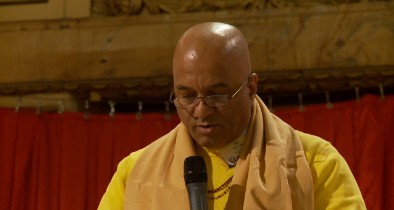
An opening address for the "Yoga for World Peace and Non-Violence" International Conference in Prague.
"Yoga is not a religion. It represents the original balancing principle that promotes nonviolence and peacefulness."
"To achieve peace in the world, we must start by achieving inner peace ourselves."
A representative of the Czech Hindu Religious Society, Vishwaguru Deep Hindu Mandir, welcomes attendees and explains his organization's role in co-organizing the conference. He honors the spiritual lineage of Swami Madhavanandaji and Swami Maheshvaranandaji, detailing global humanitarian projects and drawing a direct connection between yogic principles like non-violence (ahimsa) and the universal pursuit of peace. The speech emphasizes inner peace as the foundation for world peace.
Filming location: Prague, Czech Republic
The Path of Yoga for Universal Peace
11:15 - 11:38 (23 min)
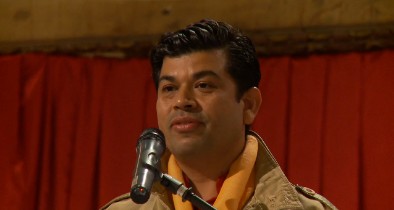
A keynote address advocating for yoga as a universal path to global peace.
"If you want a result in one year, plant crops; in ten years, plant fruit trees; if you want a result forever, practice yoga."
"Yoga is less than 30% physical; it is more than that—it is emotional, mental, and spiritual. For humankind, it is the interconnection from the individual to people, from people to nature, and from nature to the planet."
A speaker from Nepal addresses a World Peace Council conference, framing yoga as a non-religious, practical solution to violence and unrest. He argues for its integration into global education and diplomacy, urging governments to invest in yoga over military spending. The talk blends philosophical teachings from multiple faiths with calls for personal and political action, concluding with a collective peace chant and meditation.
Filming location: Prague, Czech Republic
We all should get oneness
11:45 - 12:01 (16 min)
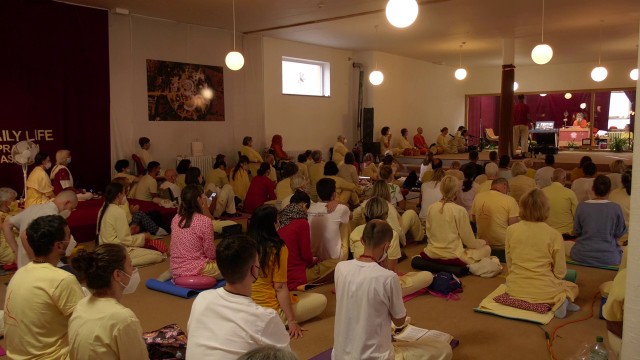
A spiritual discourse on the language of oneness and silence during Guru Purnima.
"The best language is when people from many countries, each with their own language, suddenly all understand."
"Silent means oneness."
A spiritual teacher addresses an international satsang on Guru Purnima, exploring how true communication and unity transcend spoken language. He discusses understanding through sound, vibration, and silence, using examples like music and opera, and contrasts the noisy chaos of worldly festivals with the profound, unifying silence of spiritual gathering.
Filming location: Strilky, Czech Republic
Interview with Vishwaguruji
12:05 - 12:29 (24 min)
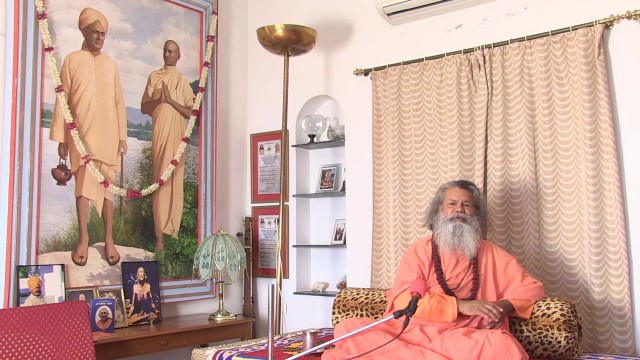
A live interview with His Holiness Vishwaguru Mahāmaṇḍaleśwar Paramahaṁsa Maheśvarānand Gurujī, founder of the "Yoga in Daily Life" system.
"It doesn’t matter if one is in a little village or a big city. It depends on the parents. When parents are full of love, harmony, and good education, and are very spiritual, they will always tell you what God is."
"Yoga is not only the physical body; it is more than that... Yoga is within human consciousness, in the human heart, in human humbleness, in a humble way of looking at everything."
The host, a disciple, introduces the guru's lineage before asking about his spiritual journey from childhood. Gurujī describes his upbringing, perpetual childlike purity, and his view of yoga. He discusses the ongoing construction of the O-Māśram monument, his first travels to Europe, and the essential guru-disciple relationship, emphasizing oneness and equal love for all.
The Youth for Sustainable Future
12:35 - 13:09 (34 min)
The 4th International Conference of Children and Youth in Zlin 2005 (CZ), The Youth for Sustainable Future.
The Science of Yoga and the Awakening of Inner Energy
13:15 - 14:30 (75 min)
A lecture on the science of Kundalini yoga, consciousness, and world peace.
"Yoga is a balancing principle that harmonizes our body, mind, consciousness, emotions, and intellect."
"The most terrible tragedy that can befall a human is to die without God-realization. But God-realization cannot take place unless you realize yourself."
Swami Maheshwarananda delivers an extensive discourse, beginning with the cosmic origins of yoga and the nature of consciousness. He explains the human energy system, including the 72,000 nadis and eight main chakras, and leads a brief practical demonstration to awaken energy in the palms. The talk covers karma, destiny, the goal of liberation, and concludes with a call for religious tolerance and global harmony, announcing a film from the United Nations.
Filming location: Zagreb, Croatia
Practical guide to meditation (10/11)
14:31 - 16:30 (119 min)
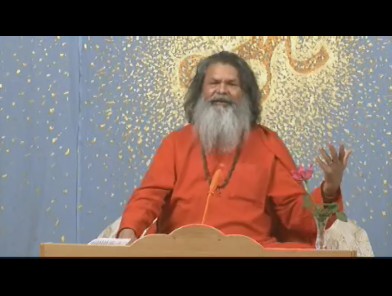
Webcast of evening satsang from Strilky, Czech Republic on 21st February 2009.
Bhajan singing in the presence of the Master
16:32 - 17:19 (47 min)
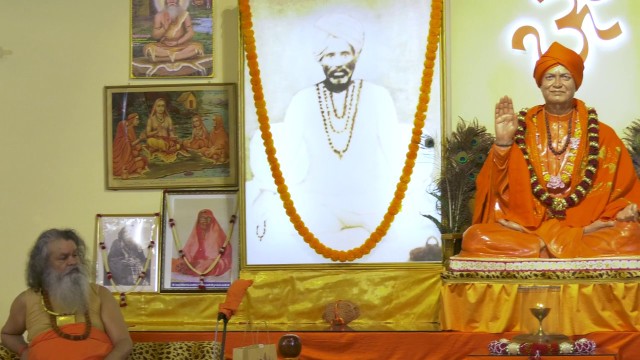
Evening satsang from Jadan Ashram, Rajasthan, India. Bhajan singing from Jadan. Including He nath ab to, Suno sakhi Sataguru aya, Guru carano me arasatha tiratha he
Guru bhakta jagata me na rahe
17:25 - 18:08 (43 min)
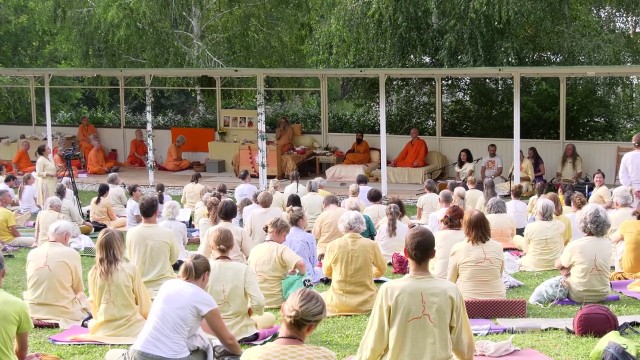
Evening satsang with Vishwaguruji from Strilky Ashram, Czech Republic. Bhajan singing on satsang, including bahajan Guru bhakta jagata me na rahe, Prema ka pyala Hari
Pyare darashana diyo aj
18:15 - 18:18 (3 min)
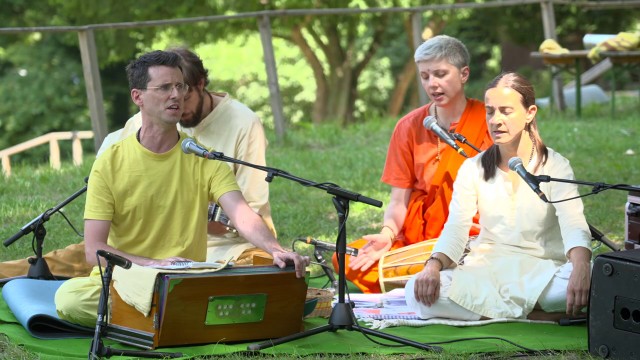
A spiritual song expressing longing for divine vision, followed by analytical remarks on the text's structure.
"Ākula vyākula fero re na dhinna" and "Darśan na dī chokhā. Darśan sannakā nindā, Nairin divasannā."
The content consists of poetic lyrics lamenting the agony of separation and the unfulfilled desire for divine sight (Darśan). This is followed by a separate section of critical remarks that analyze the song's text, pointing out its abrupt language shift, unclear referents, and narrative discontinuity.
Filming location: Strilky, Czech Republic
Bhajans from Vep
18:25 - 18:49 (24 min)
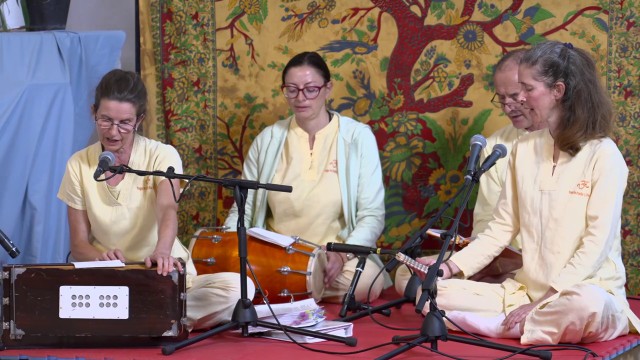
Yoga Summer Retreat from Vep, Hungary. Bhajan singing including Guruvara me cal usa una des.
Practice makes perfect and healthy
18:55 - 19:57 (62 min)
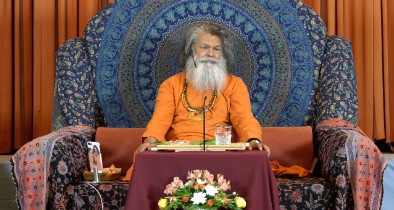
Evening satsang with Vishwaguruji from Summer Yoga Camp in Vep, Hungary. Practice makes perfect. Yoga means and begins with discipline. There are many people suffering from illnesses. Focusing on the target is the main point in archery. Vishwaguruji explains the strory of the Eklavya and Arjuna to illustrate what it means to practice.
Proper practising of Bhramari
20:05 - 20:05 (0 min)
Morning program with Vishwaguruji from Brisbane, Australia. Moodiji brought India and the whole world towards spirituality. We should practise bhramari regularly but not too much at one time. Explanation and demonstration of different bhramari pranayama technics.
Mantra is in the Hearth
20:50 - 21:57 (67 min)
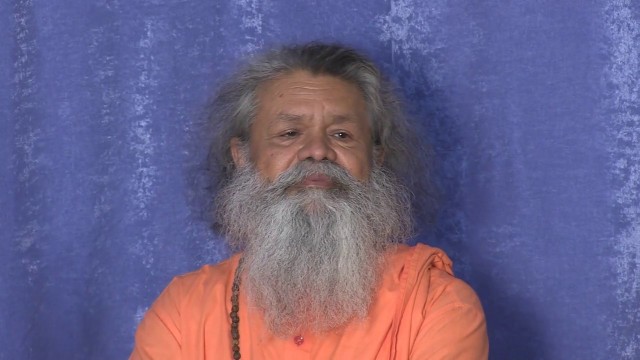
Evening satsang with Vishwaguruji from Jadan Ashram, Rajasthan, India. We should give up selfish thinking like I am the best. The story of Abhymanju gives an example of the qualities of a disciple. Jealous means burning fire in the body. Mantra within our hearth, even in a very hard situation we can develop spirituality.
Ayurveda - The science of life
22:05 - 23:51 (106 min)
An introductory lecture on the history and scope of Ayurveda.
"Ayurveda is a science that deals with the useful and the harmful, the happy and unhappy life."
"The scope of Ayurveda is to maintain the health of healthy people and to cure those who are afflicted with diseases—two things."
The speaker outlines a lecture on Ayurveda, beginning with its mythological origins from Brahmā through sages like Dhanvantari and its textual compilation in works like the Caraka Saṃhitā. He corrects the notion that it is only 5,000 years old, explaining its vast scope for maintaining health and treating disease, and details its eight traditional branches.
Filming location: Prague, Czech Republic
American
Australian