
European
Practising with Vishwaguruji
0:00 - 0:57 (57 min)
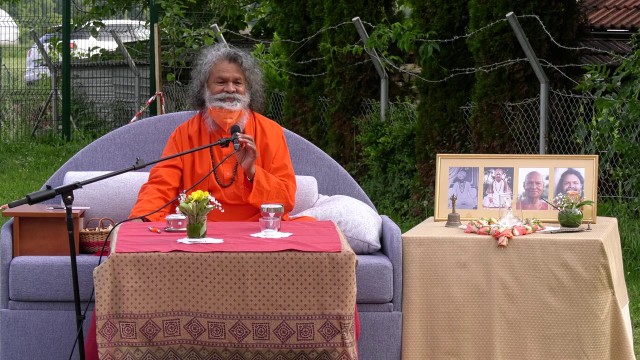
Evening Satsang with Vishwaguruji from Slovenia. Relaxation and bhajan singing. Vajra nadi gives the power of our whole body. Vajra nadi is like a tree it has a root and some branches. Practising sarva hita asanas and bhramari pranayama. If we practise asanas lifelong we will die very easy without pain.
Proper practising of Bhramari
1:05 - 1:05 (0 min)
Morning program with Vishwaguruji from Brisbane, Australia. Moodiji brought India and the whole world towards spirituality. We should practise bhramari regularly but not too much at one time. Explanation and demonstration of different bhramari pranayama technics.
Mental food
1:50 - 3:48 (118 min)
Swamiji in Sliac, April 2007
Prana is the source of our life
3:55 - 4:39 (44 min)
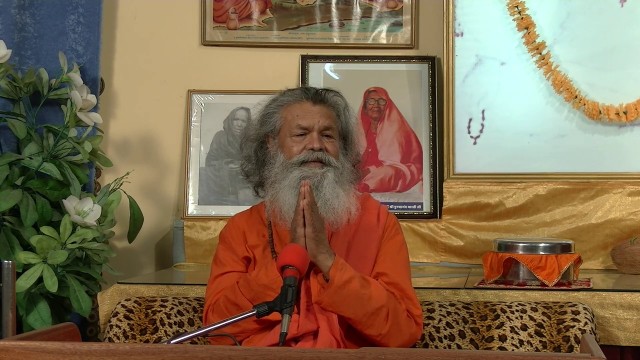
Evening Satsang with Vishwaguruji from Jadan Ashram, Rajasthan, India. We should think first in the morning that we are human. Water is holy because it is the basis of our life. Prana is also holy and necessary for our life. Animals are aware in their sleep also. The story about a yogi and the tigers. We need oxygen for meditation. The story about two friends who went to the Himalayas and try to share their meal. The story about Vishwaguruji Mansadev and a bear in a forest in Kanada. We have to be the winner against corona.
We all should get oneness
4:45 - 5:01 (16 min)
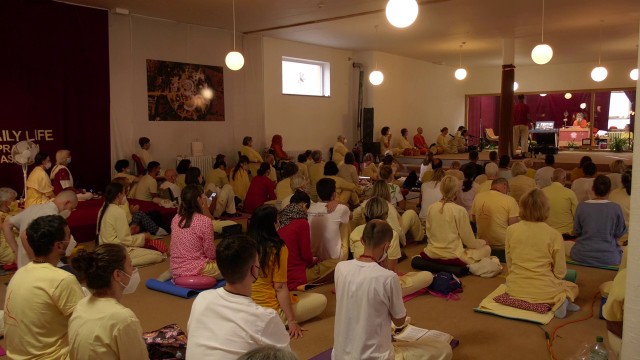
A spiritual discourse on the language of oneness and silence during Guru Purnima.
"The best language is when people from many countries, each with their own language, suddenly all understand."
"Silent means oneness."
A spiritual teacher addresses an international satsang on Guru Purnima, exploring how true communication and unity transcend spoken language. He discusses understanding through sound, vibration, and silence, using examples like music and opera, and contrasts the noisy chaos of worldly festivals with the profound, unifying silence of spiritual gathering.
Filming location: Strilky, Czech Republic
Mantra is in the Hearth
5:05 - 6:12 (67 min)
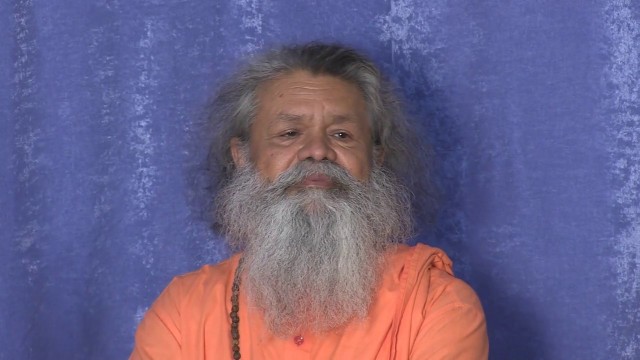
Evening satsang with Vishwaguruji from Jadan Ashram, Rajasthan, India. We should give up selfish thinking like I am the best. The story of Abhymanju gives an example of the qualities of a disciple. Jealous means burning fire in the body. Mantra within our hearth, even in a very hard situation we can develop spirituality.
Your body is the map of your destiny
6:20 - 7:05 (45 min)
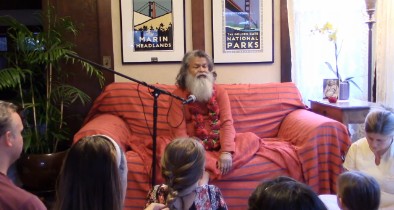
A final evening satsang on destiny, karma, and the possibility of spiritual intervention.
"Destiny is written; it cannot be changed."
"Rekh Parmek Gurudev: your destiny can change only by the guru."
Swami Avatarpuri concludes a program by elaborating on the concepts of janma-bhūmi, karma-bhūmi, and dharma-bhūmi. He narrates the story of Oedipus to illustrate inescapable fate, then explains how destiny is mapped on the human body through lines on the forehead, palms, and fingers. He contrasts the fixed nature of karma with the potential for change through spiritual practice (sādhanā) and, ultimately, the grace of a true guru, who acts as a divine navigator.
Filming location: San Francisco, USA
A Prayer for the Immortal Soul
7:10 - 7:52 (42 min)
A satsang dedicated to a prayer for the departed.
"Let me sing day and night this name of thine."
"At the end of my life, when I renounce this body, I have only one wish, that you are standing in front of me."
The lecturer leads a prayer satsang in Prague for the late Milena Hypsmanova, recounting her final trip to South Africa. He reflects on the mystery of destiny, time, and mortality, using the story of Oedipus to illustrate how fate unfolds. The discourse explores how spiritual practice and remembrance of God's name prepare the soul for the final transition from life to death.
Filming location: Prague, Czech Republic
As you do, you will get
8:00 - 8:54 (54 min)
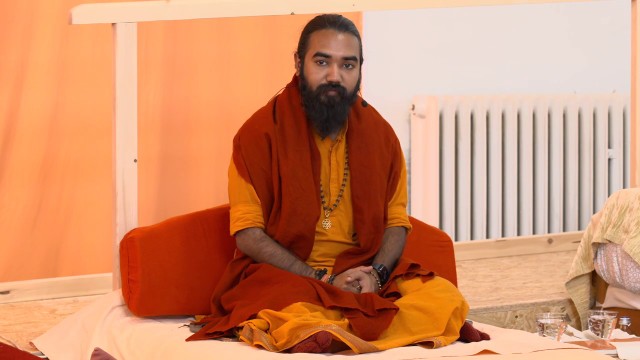
A satsang discourse on the importance of sāttvic food, strong digestive fire (agni), and the karmic effects of our actions.
"In yoga, it is very important to know cooking. I heard from Viśvagurujī that it will be excellent if we are able to cook for ourselves—not to go to restaurants, not fast food, but to prepare food for yourself."
"That is such a great lesson to us, that we, like a Yogī, should have such a kind of digesting fire, that kind of agni, jāṭharāgni, to be able to dissolve everything."
Swami Vivek Puri and another speaker lead a satsang, emphasizing the spiritual and practical importance of cooking and consuming sāttvic, vegetarian food prepared with good intent. They explain how strong agni, cultivated through Haṭha Yoga practices like Agniśa Kriyā and Bhastrikā prāṇāyāma, allows one to digest not only food but also negative experiences. Several illustrative stories are shared, including a yogi defeating a demon through his digestive power, a woman whose poisoned food karmically affects her own family, and a thief whose negative intent temporarily influences a guru through offered food. The discourse consistently links diet to mental state, karma, and safe spiritual practice within the Yoga in Daily Life system.
Filming location: Strilky, Czech Republic
The Presence of the Guru
9:00 - 9:43 (43 min)
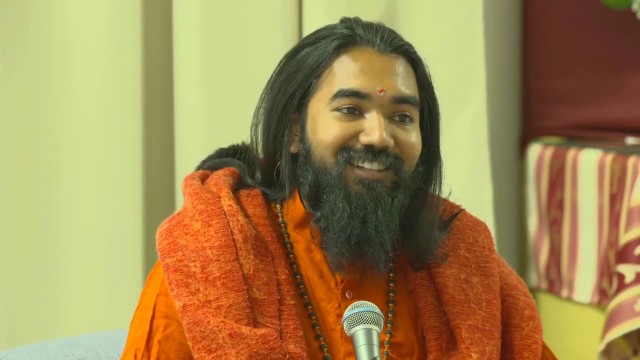
A satsang on devotion, surrender, and relating to the spiritual teacher.
"Gurudev is in the same space, same region, I would say, but we all should know that Gurudev is watching. It doesn’t matter where he is, he is always observing everything."
"If we have that mindset within us, that whatever we are doing, it’s him doing... then nothing is going to stop us in this world."
The lecturer addresses disciples in Slovenia, sharing insights from traveling with Gurudev, Sri Vishwaguru Mahamandaleshwar Paramahamsa Maheshwaranand Puri. He discusses the Guru's omnipresence, the importance of selfless service (seva), and cultivating trust over logic. He advises on etiquette in the Guru's presence, tells a parable about faith, and leads a guided meditation (manasik puja) to feel the Guru's inner presence.
Filming location: Slovenia
Chakras and Nadis
9:50 - 10:53 (63 min)
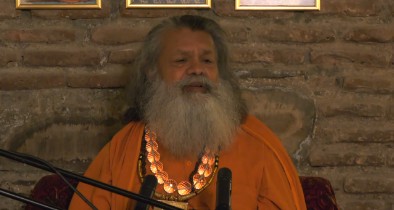
A spiritual lecture on the Mūlādhāra chakra and the nature of haṭha yoga.
"Haṭha means that you try very hard; you use willpower. We must have the willpower to achieve something. Don't give up. Try, try, try."
"Therefore it is: renounce and enjoy. If you want to be happy, if you want to enjoy life, then renounce."
A teacher explains the foundational Mūlādhāra chakra as the root of energy and the seat of the dormant Kuṇḍalinī. He details the three primary nāḍīs (Iḍā, Piṅgalā, Suṣumṇā) and defines true haṭha yoga as the forceful application of willpower for spiritual union, distinct from common physical practice. Through stories—including an ant's perseverance and a Haṭha Yogī who renounces even Śiva's offer—he emphasizes themes of relentless practice, renunciation of desire, and the ultimate goal of awakening energy to unite with divine consciousness.
The Healing Bridge: Integrating Yoga into Modern Medicine
11:00 - 11:09 (9 min)

A medical doctor shares his experience integrating the Yoga in Daily Life system into his clinical practice.
"After each surgery I perform... a quiet question always arises within me: 'What more could I have done for these patients beforehand?'"
"I advise them: 'Practice the Yoga in Daily Life system as a complete system.'... By engaging with the system as a whole, they resolve their own issues."
An orthopedic surgeon and yoga teacher addresses a spiritual gathering, explaining how he applies yogic principles on three levels: as preventive healthcare, as a supportive adjunct to surgery, and as a primary treatment for psychosomatic conditions. He argues that the modern world's rapid, restless pace creates ailments that a holistic yoga system can effectively address, sharing anecdotal evidence from his patients and expressing deep gratitude to the spiritual teachers who brought the system to his country.
Filming location: Prague, Czech Republic
The Silent Revolution: Yoga as the Antidote to Mind Pollution and Failed Leadership
11:15 - 11:38 (23 min)
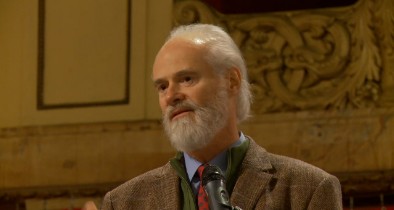
A keynote address proposing yoga as a solution to global leadership crises and mind pollution.
"The most dangerous threat to humanity today is not violence or terrorism, as the media suggests. The greatest damage comes from what I call mind pollution."
"Yoga is a systematic, conscious science of human development. Its main technique is gaining mastery over the mind, stopping the internal dialogue."
The speaker diagnoses widespread leadership failures—citing a lack of self-awareness and emotional intelligence—and argues that media sensationalism creates disproportionate fear. Presenting comparative mortality statistics, he contends that "mind pollution" is a greater threat than terrorism. He defines yoga as a holistic science for mastering the mind and accelerating human evolution, concluding with a call to integrate comprehensive yoga systems into global education and leadership training to foster peace.
Filming location: Prague, Czech Republic
Enjoy your life
11:45 - 12:24 (39 min)
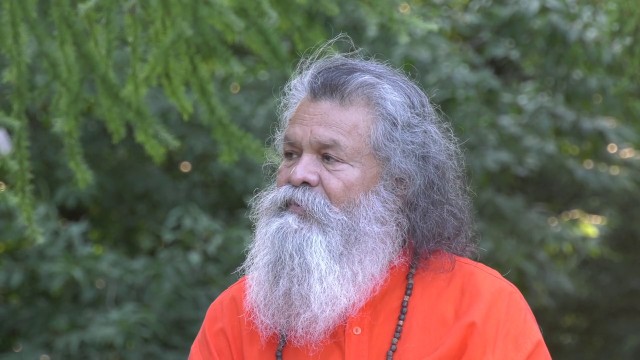
Evening satsang with Vishwaguruji from Strilky Ashram, Czech Republic. Strilky Ashram is not for one it is for all. Many people died by corona. It has many hidden signs. We are the real yoga from the earth till the cosmic. When we leave our body we don't know about how is in the world. God gave us the possibility not to be born again. Sometimes people are afraid of ghosts in the darkness. There is no ghost in reality. We can come back to the earth only through the mother's womb. Nowadays people have many problems with the health of their bodies. Maybe the cause of this is some karma from our past lives. Every creature feels pain and sadness when they die. Sometimes our soul is suffering in this body but we don't want to die. the whole ocean consists of drops. Yogic science knows how it will be afraid we leave this body. So we want to live and enjoy our life.
The Youth for Sustainable Future
12:30 - 13:04 (34 min)
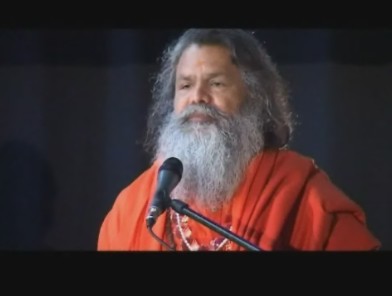
The 4th International Conference of Children and Youth in Zlin 2005 (CZ), The Youth for Sustainable Future.
The wish-tree Puja
13:05 - 13:13 (8 min)
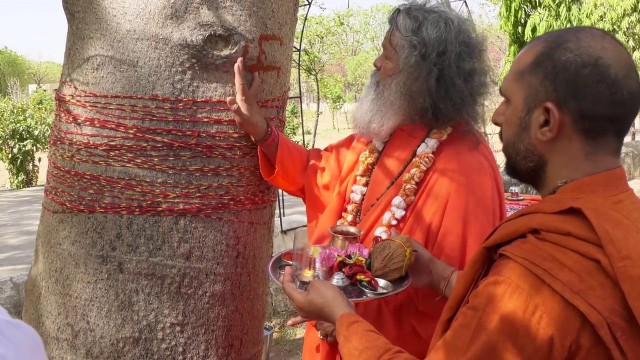
The wish-tree Puja from Jadan Ashram, Rajasthan, India.
The River of Selfless Service
13:15 - 13:47 (32 min)
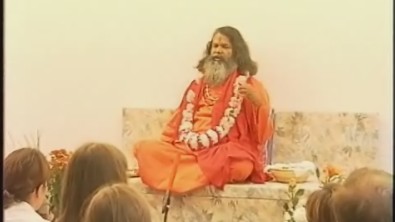
A satsang discourse on karma yoga, selfless service, and spiritual practice.
"Work is the beauty of life, but this work should be positive, selfless service."
"All that he did is for himself, for his soul, for his liberation."
The lecturer addresses ashram residents, praising their recent karma yoga efforts. He explores the nature of selfless service, using the example of Hanuman from the Ramayana to illustrate that all spiritual work ultimately benefits the doer's own soul. He outlines the threefold path of svādhyāya (self-study), manan (contemplation), and abhyāsa (practice), urging attendees to overcome personal likes and dislikes to foster inner harmony and continue flowing like a river in service.
Filming location: Zagreb, Croatia
Interview with Vishwaguruji on Lok Sabha
13:55 - 14:25 (30 min)
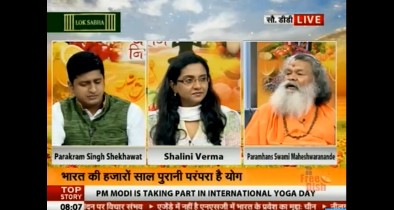
A television panel discussion on International Yoga Day, featuring a host and guests.
"Yoga is the mother of all sciences and arts. It is the science of human origin and evolution to a point where you can overcome the boundaries of space and time."
"Yoga should not be commercial. No. It should be free. A guru gives knowledge to the disciple not because of money or with money, but with blessings."
A host moderates a discussion with senior journalist Gyanendra Bhattaria and Swami Maheshvaranandji on the global celebration of Yoga Day, its origins, and its core principles. The panel addresses the event's scale, the essence of yoga beyond physical postures, the role of a guru, and concerns over commercialization and modern interpretation. The conversation references Prime Minister Narendra Modi's leadership in establishing the day and a live yoga session in Chandigarh.
Filming location: India
Interview with Vishwaguruji
14:30 - 14:54 (24 min)
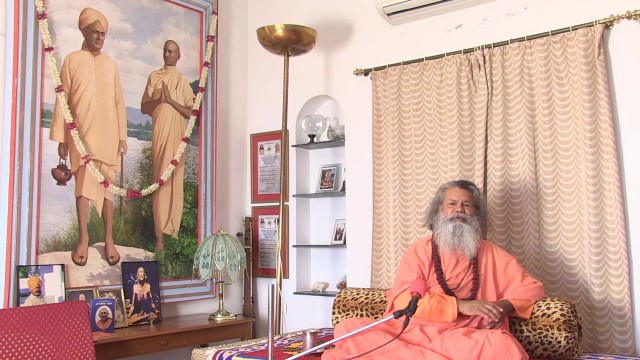
A live interview with His Holiness Vishwaguru Mahāmaṇḍaleśwar Paramahaṁsa Maheśvarānand Gurujī, founder of the "Yoga in Daily Life" system.
"It doesn’t matter if one is in a little village or a big city. It depends on the parents. When parents are full of love, harmony, and good education, and are very spiritual, they will always tell you what God is."
"Yoga is not only the physical body; it is more than that... Yoga is within human consciousness, in the human heart, in human humbleness, in a humble way of looking at everything."
The host, a disciple, introduces the guru's lineage before asking about his spiritual journey from childhood. Gurujī describes his upbringing, perpetual childlike purity, and his view of yoga. He discusses the ongoing construction of the O-Māśram monument, his first travels to Europe, and the essential guru-disciple relationship, emphasizing oneness and equal love for all.
Interview with Vishwaguruji
15:00 - 15:24 (24 min)
A live interview with His Holiness Vishwaguru Mahāmaṇḍaleśwar Paramahaṁsa Maheśvarānand Gurujī, founder of the "Yoga in Daily Life" system.
"It doesn’t matter if one is in a little village or a big city. It depends on the parents. When parents are full of love, harmony, and good education, and are very spiritual, they will always tell you what God is."
"Yoga is not only the physical body; it is more than that... Yoga is within human consciousness, in the human heart, in human humbleness, in a humble way of looking at everything."
The host, a disciple, introduces the guru's lineage before asking about his spiritual journey from childhood. Gurujī describes his upbringing, perpetual childlike purity, and his view of yoga. He discusses the ongoing construction of the O-Māśram monument, his first travels to Europe, and the essential guru-disciple relationship, emphasizing oneness and equal love for all.
Bhajan singing from Strilky Ashram
15:30 - 16:03 (33 min)
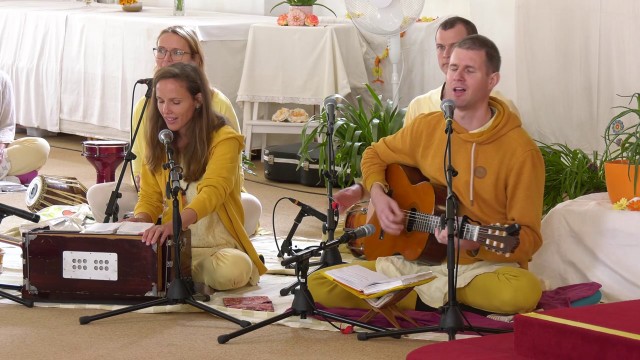
Morning satsang with Vishwaguruji from Strilky Ashram, Czech Republic.
Bhajan evening from Strilky
16:10 - 16:24 (14 min)
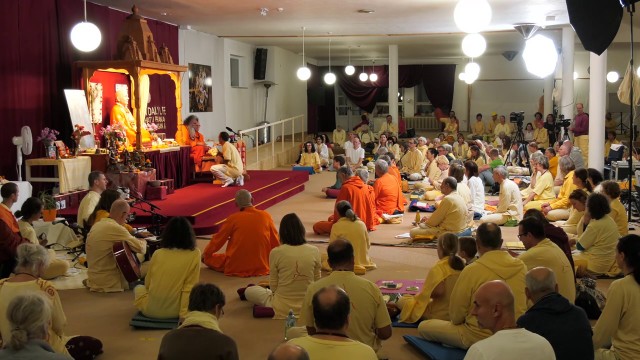
Evening satsang with Vishwaguruji from Strilky Ashram, Czech Republic.
Hymns of Adoration and the Nirvāṇa Ṣaṭkam
16:30 - 16:53 (23 min)
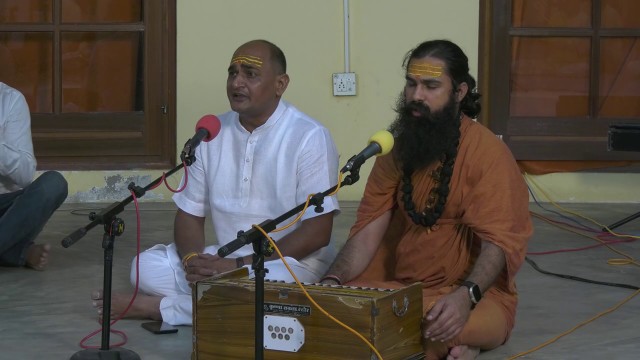
A devotional video featuring the chanting of Sanskrit hymns dedicated to Lord Shiva.
"Na me dveṣa rāgau. Na me lobho, na mādo, neva me neva sāryabhā. Na dharmo, na cārtho, na kāmo, na mokṣaḥ. Cidānanda-rūpaḥ śivo'ham, śivo'ham."
"Brahmā Murārī Surārchitaliṅgam, Nirmalabhāśita Śobhitaliṅgam, Janmajaḍukha Vināśakaliṅgam, Tat praṇamāmi Sadāśivaliṅgam."
The video consists of a continuous recitation of three primary hymns: the Rudrāṣṭakam, the Nirvāṇa Ṣaṭkam (a declaration of the true Self as consciousness and bliss), and the Liṅgāṣṭakam. The chanting is interspersed with and concluded by energetic salutations (jaya) to a lineage of spiritual masters, including Śrī Alakhpurīṣa Mahādeva, Śrī Devapurījī, Śrī Dīp Nārāyaṇa Mahāprabhujī, and others.
Filming location: Jadan, Rajasthan, India
Bhajan singing from Jadan
17:00 - 17:17 (17 min)
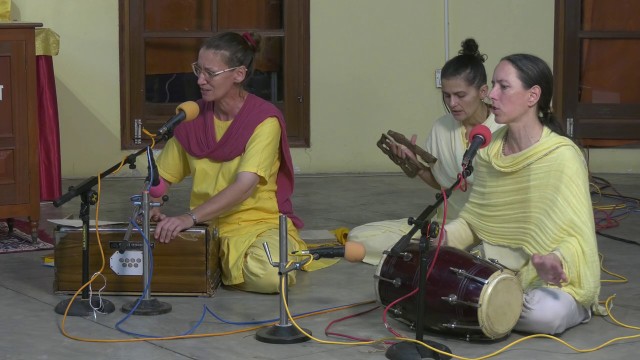
Evening satsang with Vishwaguruji from Jadan Ashram, Rajasthan, India.
Bhajan singing from Strilky Ashram
17:25 - 18:06 (41 min)
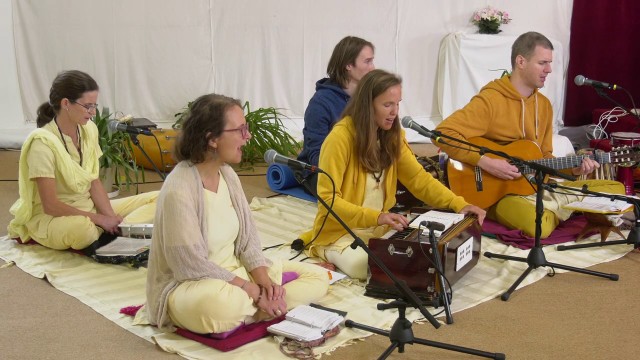
Morning program from Strilky, Czech Republic. Bhajan singing.
Bhajans on the Satsang
18:10 - 19:00 (50 min)
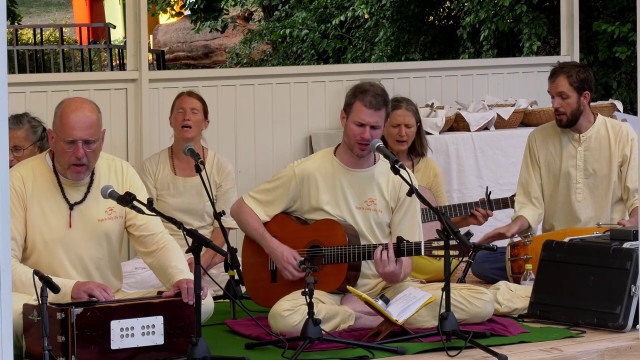
Evening satsang with Vishwaguruji. Bhajan singing.
Mental food
19:05 - 21:03 (118 min)
Swamiji in Sliac, April 2007
As you do, you will get
21:10 - 22:04 (54 min)
A satsang discourse on the importance of sāttvic food, strong digestive fire (agni), and the karmic effects of our actions.
"In yoga, it is very important to know cooking. I heard from Viśvagurujī that it will be excellent if we are able to cook for ourselves—not to go to restaurants, not fast food, but to prepare food for yourself."
"That is such a great lesson to us, that we, like a Yogī, should have such a kind of digesting fire, that kind of agni, jāṭharāgni, to be able to dissolve everything."
Swami Vivek Puri and another speaker lead a satsang, emphasizing the spiritual and practical importance of cooking and consuming sāttvic, vegetarian food prepared with good intent. They explain how strong agni, cultivated through Haṭha Yoga practices like Agniśa Kriyā and Bhastrikā prāṇāyāma, allows one to digest not only food but also negative experiences. Several illustrative stories are shared, including a yogi defeating a demon through his digestive power, a woman whose poisoned food karmically affects her own family, and a thief whose negative intent temporarily influences a guru through offered food. The discourse consistently links diet to mental state, karma, and safe spiritual practice within the Yoga in Daily Life system.
Filming location: Strilky, Czech Republic
Ayurveda - The science of life
22:10 - 23:56 (106 min)
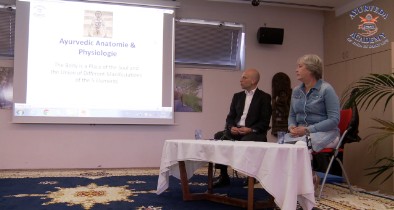
An introductory lecture on the history and scope of Ayurveda.
"Ayurveda is a science that deals with the useful and the harmful, the happy and unhappy life."
"The scope of Ayurveda is to maintain the health of healthy people and to cure those who are afflicted with diseases—two things."
The speaker outlines a lecture on Ayurveda, beginning with its mythological origins from Brahmā through sages like Dhanvantari and its textual compilation in works like the Caraka Saṃhitā. He corrects the notion that it is only 5,000 years old, explaining its vast scope for maintaining health and treating disease, and details its eight traditional branches.
Filming location: Prague, Czech Republic
American
Australian