
European
A Guided Yoga Practice
0:00 - 0:21 (21 min)
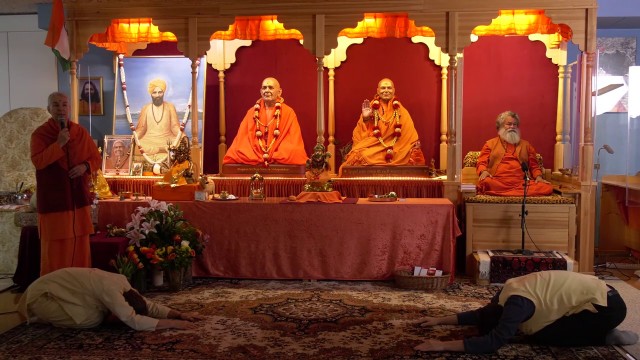
A guided yoga practice with instructions for postures and movement.
"Please, vajrāsana, vajrāsana. And very slowly, do not go quickly."
"Everybody has to know his or her body, so according to this, we should practice."
An instructor leads a group through a slow, detailed yoga sequence, calling out numbered steps and offering posture adjustments. The guidance emphasizes slow movement, stretching the back and legs, and adapting poses for individual limitations like back pain or high blood pressure. The session concludes with relaxation instructions.
Filming location: Khatu, Rajasthan, India
We all should get oneness
0:25 - 0:41 (16 min)
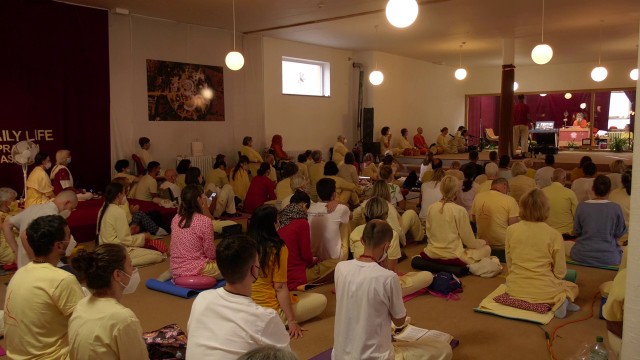
A spiritual discourse on the language of oneness and silence during Guru Purnima.
"The best language is when people from many countries, each with their own language, suddenly all understand."
"Silent means oneness."
A spiritual teacher addresses an international satsang on Guru Purnima, exploring how true communication and unity transcend spoken language. He discusses understanding through sound, vibration, and silence, using examples like music and opera, and contrasts the noisy chaos of worldly festivals with the profound, unifying silence of spiritual gathering.
Filming location: Strilky, Czech Republic
Chakras and Nadis
0:45 - 1:48 (63 min)
A spiritual lecture on the Mūlādhāra chakra and the nature of haṭha yoga.
"Haṭha means that you try very hard; you use willpower. We must have the willpower to achieve something. Don't give up. Try, try, try."
"Therefore it is: renounce and enjoy. If you want to be happy, if you want to enjoy life, then renounce."
A teacher explains the foundational Mūlādhāra chakra as the root of energy and the seat of the dormant Kuṇḍalinī. He details the three primary nāḍīs (Iḍā, Piṅgalā, Suṣumṇā) and defines true haṭha yoga as the forceful application of willpower for spiritual union, distinct from common physical practice. Through stories—including an ant's perseverance and a Haṭha Yogī who renounces even Śiva's offer—he emphasizes themes of relentless practice, renunciation of desire, and the ultimate goal of awakening energy to unite with divine consciousness.
Real health comes from Nature
1:55 - 2:54 (59 min)
A satsang on health, natural remedies, and gentle yoga practice.
"I am not a doctor, yes? Please. I am Swami. I am a yogī. And I am you, a natural."
"So many things we do not know. We do not know that one has. If you know exactly, then everything is gone."
Swami Maheshvaranand leads a satsang, discussing the limitations of conventional medicine and praising natural, holistic approaches to health. He shares anecdotes about medicinal tree bark and the work of Yogī Ramdev, while also critiquing how doctors often manage rather than cure illness. The session concludes with instructions for a gentle, supine yoga exercise intended for digestive health.
Filming location: Strilky, Czech Republic
Around the world - Khatu pranam
3:00 - 3:34 (34 min)
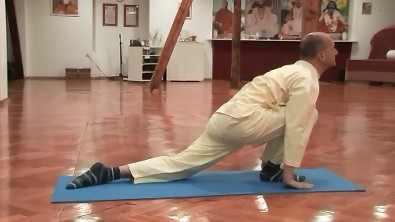
The story of Sri Mahaprabhuji and Khatu Pranam exercise. Produced by Sri Devpuriji Ashram in Zagreb, Croatia. Partially subtitled in Engish.
A Divine Call and the Search for a True Guru
3:35 - 4:23 (48 min)
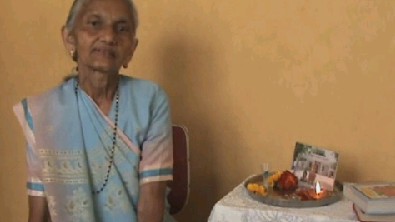
A devotee recounts her spiritual journey, from a divine call to finding her Guru.
"I turned to my right side, and I could see Śrī Kṛṣṇa in my heart, holding a small bowl... and asking for kheer." "He looked into my eyes and said, 'You are looking for a true guru, haven’t you?'"
Rukhswani, an Indian woman living in New Zealand, describes a 1992 vision of Lord Krishna compelling her to make a milk pudding, which leads her to a satsang with Swāmī Śrī Māheśvarañjī. She expresses her search for a true guru and later travels to India, where she meets Holy Gurujī, receives mantra-dīkṣā, and undertakes translation work for him. She shares stories of divine grace, obedience, and her profound emotional connection to her Guru over subsequent years.
Filming location: Wellington, New Zealand
Around the world - Satsang Mexico
4:25 - 5:03 (38 min)
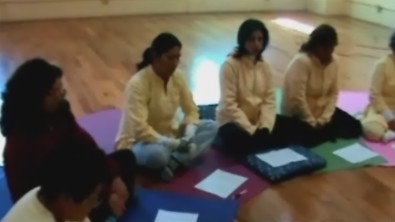
Evening satsang with meditation.
Vegetarian cooking lesson 5
5:05 - 5:46 (41 min)

A Falahārī cooking class at a Yoga in Daily Life summer seminar.
"Falahārī nutrition does not involve much cooking; everything is already perfect as it grows."
"Becoming a vegetarian is one of the greatest gifts for me through Yoga in Daily Life, inspired by Swāmījī."
Erna Buchinger (Annapurna) from Austria leads a class on preparing a raw and living foods menu. She demonstrates making a vegetable soup, a cabbage and herb sabjī, an olive herb pesto, a salad, and an unbaked apple cake with vanilla sauce. Throughout, she explains the principles and personal benefits of the Falahārī diet, emphasizing the vitality of raw fruits and vegetables, the importance of listening to one's body, and her inspiration from vegetarianism.
Filming location: Vép, Hungary
The Presence of the Guru
5:50 - 6:33 (43 min)
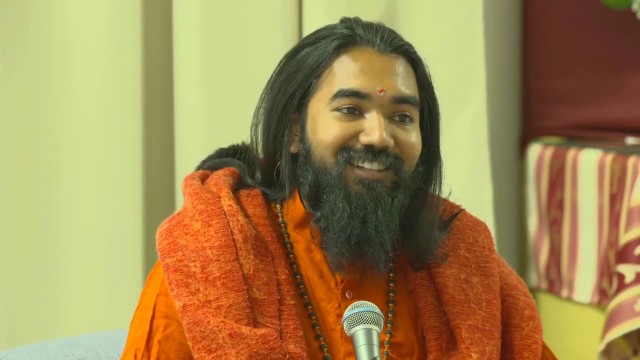
A satsang on devotion, surrender, and relating to the spiritual teacher.
"Gurudev is in the same space, same region, I would say, but we all should know that Gurudev is watching. It doesn’t matter where he is, he is always observing everything."
"If we have that mindset within us, that whatever we are doing, it’s him doing... then nothing is going to stop us in this world."
The lecturer addresses disciples in Slovenia, sharing insights from traveling with Gurudev, Sri Vishwaguru Mahamandaleshwar Paramahamsa Maheshwaranand Puri. He discusses the Guru's omnipresence, the importance of selfless service (seva), and cultivating trust over logic. He advises on etiquette in the Guru's presence, tells a parable about faith, and leads a guided meditation (manasik puja) to feel the Guru's inner presence.
Filming location: Slovenia
Try to know what we should do
6:35 - 7:26 (51 min)
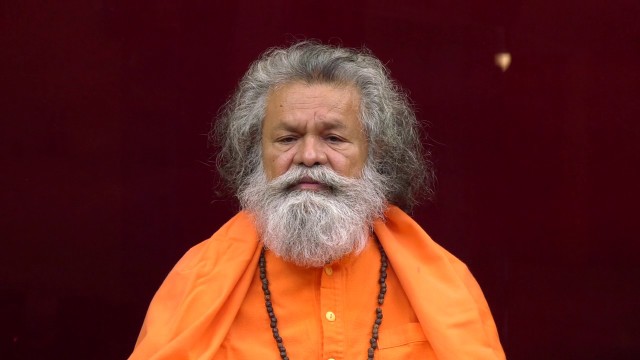
An evening satsang on the soul's journey and human responsibility.
"Life in which the soul—the soul cannot say yes or no. It is coming like a bird in a nest, sitting in the nest. In the morning it will fly out."
"Our soul is the same, be it in humans, animals, birds, or fish. Each one has a life, and we should not disturb the life of anyone."
The lecturer addresses a global audience, explaining the nature of the soul (jīva) using metaphors of water droplets and a bird in a cage. He discusses the cycle of life, death, and rebirth, emphasizing ethical conduct, compassion for all beings, and the soul's liberation from the physical body. The talk includes anecdotes and reflections on modern life.
Filming location: Strilky, Czech Republic
The Principles and Power of Sādhanā
7:30 - 8:15 (45 min)
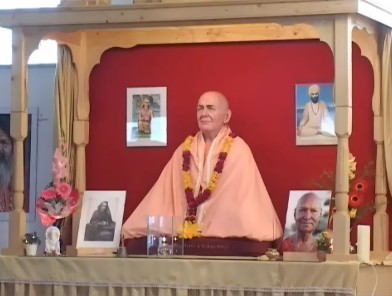
A spiritual discourse on the principles of sādhanā and the significance of the Maṇipūra Chakra.
"Any kind of sādhanā requires perfect technique and discipline. One must follow the principles."
"That energy, which is located in the maṇipūra cakra, is called hara-śakti. That is the life force, the energy that keeps you moving."
A teacher explains the necessity of disciplined practice, using the analogy of fueling a car correctly. He delves into the esoteric importance of the Maṇipūra Chakra as the seat of life force (hara-śakti) and the junction of vital energies, connecting its functions to immunity, sound resonance (nāda), and mythological symbolism involving Vishnu. The talk covers related practices like Śabda Sañjālan and Khaṭupranām, emphasizing that authentic practice requires devotion, a spiritual lineage, and following a master's instructions to awaken inner energy and burn karmic seeds.
Filming location: Strilky, Czech Republic
Prana is the source of our life
8:20 - 9:04 (44 min)
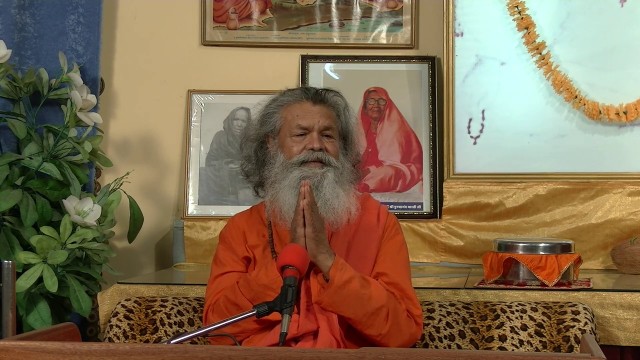
Evening Satsang with Vishwaguruji from Jadan Ashram, Rajasthan, India. We should think first in the morning that we are human. Water is holy because it is the basis of our life. Prana is also holy and necessary for our life. Animals are aware in their sleep also. The story about a yogi and the tigers. We need oxygen for meditation. The story about two friends who went to the Himalayas and try to share their meal. The story about Vishwaguruji Mansadev and a bear in a forest in Kanada. We have to be the winner against corona.
As you do, you will get
9:10 - 10:04 (54 min)
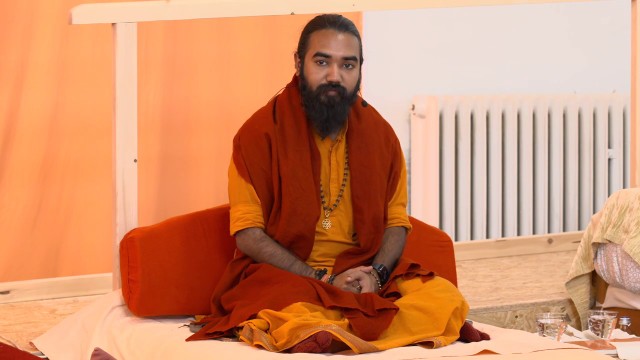
A satsang discourse on the importance of sāttvic food, strong digestive fire (agni), and the karmic effects of our actions.
"In yoga, it is very important to know cooking. I heard from Viśvagurujī that it will be excellent if we are able to cook for ourselves—not to go to restaurants, not fast food, but to prepare food for yourself."
"That is such a great lesson to us, that we, like a Yogī, should have such a kind of digesting fire, that kind of agni, jāṭharāgni, to be able to dissolve everything."
Swami Vivek Puri and another speaker lead a satsang, emphasizing the spiritual and practical importance of cooking and consuming sāttvic, vegetarian food prepared with good intent. They explain how strong agni, cultivated through Haṭha Yoga practices like Agniśa Kriyā and Bhastrikā prāṇāyāma, allows one to digest not only food but also negative experiences. Several illustrative stories are shared, including a yogi defeating a demon through his digestive power, a woman whose poisoned food karmically affects her own family, and a thief whose negative intent temporarily influences a guru through offered food. The discourse consistently links diet to mental state, karma, and safe spiritual practice within the Yoga in Daily Life system.
Filming location: Strilky, Czech Republic
Your body is the map of your destiny
10:10 - 10:55 (45 min)
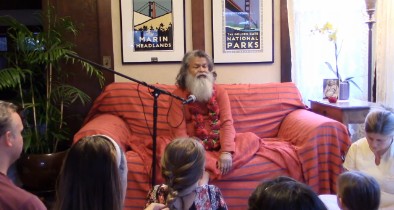
A final evening satsang on destiny, karma, and the possibility of spiritual intervention.
"Destiny is written; it cannot be changed."
"Rekh Parmek Gurudev: your destiny can change only by the guru."
Swami Avatarpuri concludes a program by elaborating on the concepts of janma-bhūmi, karma-bhūmi, and dharma-bhūmi. He narrates the story of Oedipus to illustrate inescapable fate, then explains how destiny is mapped on the human body through lines on the forehead, palms, and fingers. He contrasts the fixed nature of karma with the potential for change through spiritual practice (sādhanā) and, ultimately, the grace of a true guru, who acts as a divine navigator.
Filming location: San Francisco, USA
World Peace is in Our Hands
11:00 - 11:05 (5 min)

A keynote address on global responsibility and the path to world peace.
"A world without peace will not survive. A world without distributing wealth will not survive. A world without taking care of our beautiful planet will not survive."
"World peace is in our hands... Peace is never achieved without good intentions and cooperation with others. Even more importantly, it requires coherence or balance with one’s self."
The speaker, representing Slovenia, addresses an international conference, arguing that creating resilient societies and active global citizenship is essential for survival. They share Slovenia's initiative to co-create a national vision aligned with the UN Sustainable Development Goals as a model of responsible action. The speech concludes by linking outer peace to inner balance, proposing yoga as a means to achieve it.
Filming location: Prague, Czech Republic
Yoga, Health, and Peace: A Medical Perspective
11:10 - 11:22 (12 min)

A medical doctor presents a scientific perspective on yoga's role in holistic health and peace.
"To create a healthy world, we must be healthy ourselves."
"Yoga techniques influence us on all levels: physical, mental, social, and spiritual."
The speaker, addressing an audience including Vishwa Guruji, explains how modern lifestyles cause stress and disease, contrasting this with the integrated approach of the Yoga in Daily Life system. He details how specific yoga practices—like meditation, prāṇāyāma, and āsanas—scientifically support health by influencing the brain's cortical and subcortical levels and peripheral organs. The talk covers preventing memory loss and depression, advocates for a vegetarian diet, and concludes that balanced self-realization through yoga fosters global peace.
Filming location: Prague, Czech Republic
Mantra is in the Hearth
11:30 - 12:37 (67 min)
Evening satsang with Vishwaguruji from Jadan Ashram, Rajasthan, India. We should give up selfish thinking like I am the best. The story of Abhymanju gives an example of the qualities of a disciple. Jealous means burning fire in the body. Mantra within our hearth, even in a very hard situation we can develop spirituality.
Proper practising of Bhramari
12:45 - 12:45 (0 min)
Morning program with Vishwaguruji from Brisbane, Australia. Moodiji brought India and the whole world towards spirituality. We should practise bhramari regularly but not too much at one time. Explanation and demonstration of different bhramari pranayama technics.
A Prayer for the Immortal Soul
13:30 - 14:12 (42 min)
A satsang dedicated to a prayer for the departed.
"Let me sing day and night this name of thine."
"At the end of my life, when I renounce this body, I have only one wish, that you are standing in front of me."
The lecturer leads a prayer satsang in Prague for the late Milena Hypsmanova, recounting her final trip to South Africa. He reflects on the mystery of destiny, time, and mortality, using the story of Oedipus to illustrate how fate unfolds. The discourse explores how spiritual practice and remembrance of God's name prepare the soul for the final transition from life to death.
Filming location: Prague, Czech Republic
Enjoy your life
14:20 - 14:59 (39 min)
Evening satsang with Vishwaguruji from Strilky Ashram, Czech Republic. Strilky Ashram is not for one it is for all. Many people died by corona. It has many hidden signs. We are the real yoga from the earth till the cosmic. When we leave our body we don't know about how is in the world. God gave us the possibility not to be born again. Sometimes people are afraid of ghosts in the darkness. There is no ghost in reality. We can come back to the earth only through the mother's womb. Nowadays people have many problems with the health of their bodies. Maybe the cause of this is some karma from our past lives. Every creature feels pain and sadness when they die. Sometimes our soul is suffering in this body but we don't want to die. the whole ocean consists of drops. Yogic science knows how it will be afraid we leave this body. So we want to live and enjoy our life.
Sat sanga
15:00 - 15:27 (27 min)
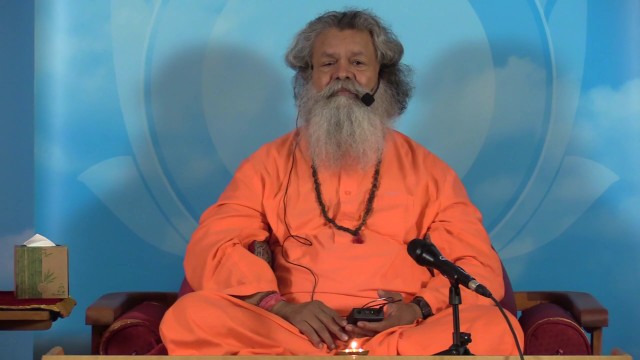
A spiritual discourse on the meaning and power of satsaṅga.
"It was very hard, very hard. I think in your country it was also, no? It was very much."
"Sat means truth. Satsaṅga, truth. Each and every word should be such that we should know the truth."
The lecturer addresses a gathering, reflecting on the global difficulties of the past years, including pandemic-related travel disruptions. He explores the concept of satsaṅga, defining "sat" as truth and emphasizing the importance of truthful company and spiritual practice. The talk meanders through themes of guru lineages, the impermanence of the body compared to the lasting nature of one's name, and the unifying principle of truth amidst worldly distinctions.
Filming location: Brisbane, Australia
Bhajans for World Peace (2/3)
15:30 - 16:36 (66 min)
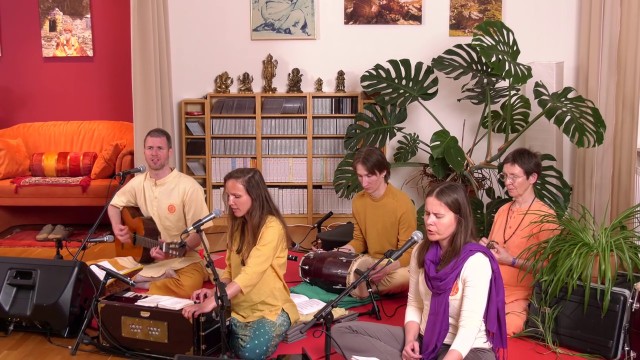
For world peace, first we need to find peace within ourselves. A recording of a live concert for world peace in YIDL center in Villach, Austria. Public concert lasted 6h with uninterrupted Bhajans. The concert was a part of a 24h of Bhajan Anushtana.
Bhajans for World Peace (3/3)
16:40 - 17:55 (75 min)
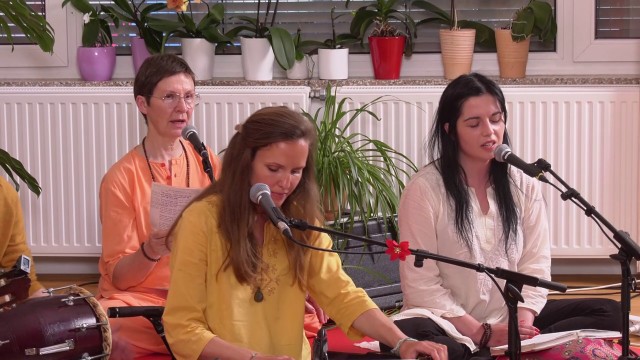
For world peace, first we need to find peace within ourselves. A recording of a live concert for world peace in YIDL center in Villach, Austria. Public concert lasted 6h with uninterrupted Bhajans. The concert was a part of a 24h of Bhajan Anushtana.
Bhajan evening from Vienna 1
18:00 - 18:28 (28 min)
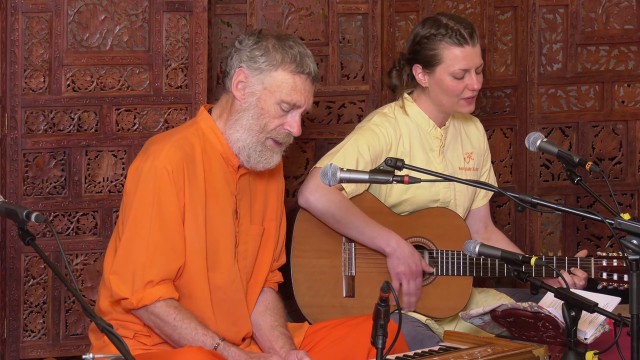
Evening Satsang with H.H.Vishwaguruji from Vienna, Austria. Bhajan singing.
Mantra is in the Hearth
18:35 - 19:42 (67 min)
Evening satsang with Vishwaguruji from Jadan Ashram, Rajasthan, India. We should give up selfish thinking like I am the best. The story of Abhymanju gives an example of the qualities of a disciple. Jealous means burning fire in the body. Mantra within our hearth, even in a very hard situation we can develop spirituality.
Chakras and Nadis
19:50 - 20:53 (63 min)
A spiritual lecture on the Mūlādhāra chakra and the nature of haṭha yoga.
"Haṭha means that you try very hard; you use willpower. We must have the willpower to achieve something. Don't give up. Try, try, try."
"Therefore it is: renounce and enjoy. If you want to be happy, if you want to enjoy life, then renounce."
A teacher explains the foundational Mūlādhāra chakra as the root of energy and the seat of the dormant Kuṇḍalinī. He details the three primary nāḍīs (Iḍā, Piṅgalā, Suṣumṇā) and defines true haṭha yoga as the forceful application of willpower for spiritual union, distinct from common physical practice. Through stories—including an ant's perseverance and a Haṭha Yogī who renounces even Śiva's offer—he emphasizes themes of relentless practice, renunciation of desire, and the ultimate goal of awakening energy to unite with divine consciousness.
Real health comes from Nature
21:00 - 21:59 (59 min)
A satsang on health, natural remedies, and gentle yoga practice.
"I am not a doctor, yes? Please. I am Swami. I am a yogī. And I am you, a natural."
"So many things we do not know. We do not know that one has. If you know exactly, then everything is gone."
Swami Maheshvaranand leads a satsang, discussing the limitations of conventional medicine and praising natural, holistic approaches to health. He shares anecdotes about medicinal tree bark and the work of Yogī Ramdev, while also critiquing how doctors often manage rather than cure illness. The session concludes with instructions for a gentle, supine yoga exercise intended for digestive health.
Filming location: Strilky, Czech Republic
Introduction to the science of Chakras
22:05 - 23:25 (80 min)
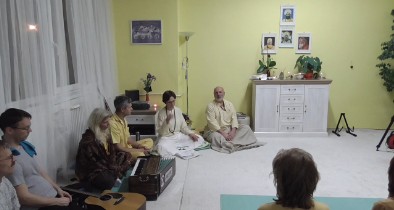
Introduction to Chakras, Presov, Slovak Republic. Muladhara stores much karmic information about us. What is dormant in Muladhara is sprouting in Svadisthana. This is the place of kriya shakti and iccha shakti. If we purify this chakra, half way to our final goal is behind us. Manipura is the powerhouse of our body. Anahat is the place of our feelings. Vishuddhi is the door to the astral world.
Interview with Vishwaguruji
23:30 - 23:54 (24 min)
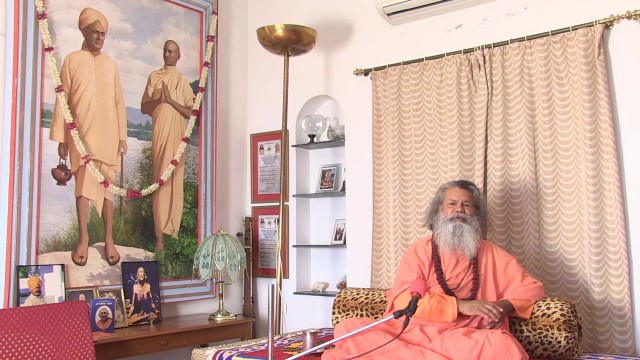
A live interview with His Holiness Vishwaguru Mahāmaṇḍaleśwar Paramahaṁsa Maheśvarānand Gurujī, founder of the "Yoga in Daily Life" system.
"It doesn’t matter if one is in a little village or a big city. It depends on the parents. When parents are full of love, harmony, and good education, and are very spiritual, they will always tell you what God is."
"Yoga is not only the physical body; it is more than that... Yoga is within human consciousness, in the human heart, in human humbleness, in a humble way of looking at everything."
The host, a disciple, introduces the guru's lineage before asking about his spiritual journey from childhood. Gurujī describes his upbringing, perpetual childlike purity, and his view of yoga. He discusses the ongoing construction of the O-Māśram monument, his first travels to Europe, and the essential guru-disciple relationship, emphasizing oneness and equal love for all.
American
Australian