
European
Morning Yoga practice, Umag, Croatia (1/9)
0:00 - 1:37 (97 min)
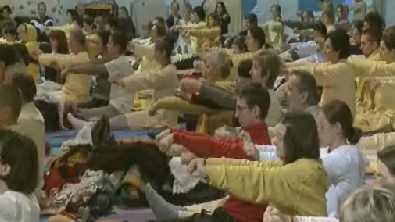
Morning Yoga practice from the international Yoga retreat Umag, Croatia on the 25th of September 2010
Webcast from Strilky
1:45 - 3:01 (76 min)
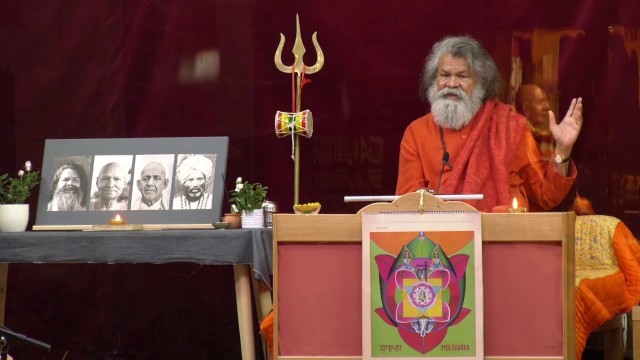
Evening satsang with Vishwaguruji from Strilky, Czech Republic.
Opening of inner eyes
3:05 - 3:42 (37 min)
A spiritual discourse on the inner light and the practice of trāṭaka.
"Our soul, our ātmā, comes into our body from the cosmic energies. It is like water from the ocean that rises to become clouds, and from the clouds, dripping water falls to the earth and flows onward."
"Even the green grass, even any trees, bushes, all creatures—everyone has eyes, and they are all looking with their light toward their destination. Therefore, all our trees also have their eyes, and that is concentration, what we call trāṭaka."
The speaker addresses a gathering of practitioners, explaining the journey of the soul and the universal presence of inner sight. He shares teachings received from his Gurudeva, using the metaphor of a seed's growth and a story about a guru's astral rescue of a devotee to illustrate the power of focused awareness (trāṭaka) and the spiritual significance of the navel (nābhi) as a point of energy and re-entry.
Filming location: Strilky, Czech Republic
Eat healthy food and live as a human
3:50 - 4:33 (43 min)
A spiritual discourse on prayer, lifestyle, and simple daily remembrance.
"Morning, midday, evening—always the whole family, women, men, and children. When they sat at the table to eat, they would pray."
"When we open our eyes, then tell, 'I am human.'... And then, second, don't look at animals and this and that first. Mother, mother. So see our mother."
The lecturer reflects on the decline of traditional prayer across religions and its connection to modern societal problems. He discusses dietary shifts, including the rise of veganism, and critiques modern agriculture's impact on the earth. He concludes with a simple daily practice: upon waking, remember "I am human," honor Mother Earth, and reverence water as life.
Filming location: Strilky, Czech Republic
Overview of practicing yoga
4:40 - 5:28 (48 min)
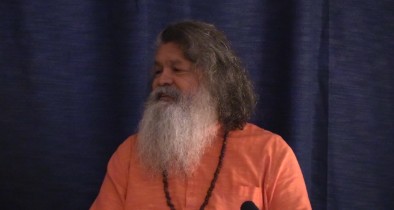
A lecture on the essence and practice of yoga in daily life.
"Yoga in Daily Life has eight steps and is very simple."
"Help is one of the best yogas... your soul, your life, your heart, and your body will bless you."
Swami Maheshwarananda (Swāmījī) delivers a talk on his global "Yoga in Daily Life" system. He clarifies the true meaning of Haṭha Yoga as the six purification techniques (ṣaṭkarma) and outlines the main paths: Karma Yoga (selfless service), Haṭha Yoga, Rāja Yoga, and Jñāna Yoga. He emphasizes daily practice, dedicating time for health and harmony, and explains specific techniques like Netī for sinus health.
Filming location: Auckland, New Zealand
The Holy Land
5:35 - 6:27 (52 min)
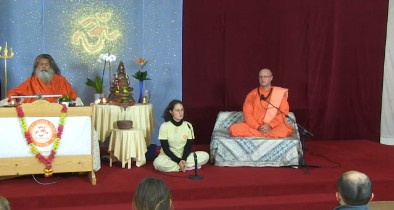
An explanatory discourse on the significance and organization of the Kumbh Mela at Prayagraj.
"Prayāgarāj is considered the king of all holy places, where many ṛṣis reside and numerous yajñas have been performed."
"The Mahāmaṇḍaleśvaras are designated solely to look after all sannyāsīs and ashrams... to solve their problems, protect them, look after them."
The speaker describes the sacred origins of Prayagraj (Allahabad) as a nectar-drop site and a river confluence. He details the annual and quadrennial Kumbh Melas, their timing at Makar Saṅkrānti, and the purposes of pilgrimage, ritual bathing, and societal discourse. The talk concludes with an explanation of the administrative structure established by the monastic orders (akhāṛās), including the role of Mahāmaṇḍaleśvaras as caretakers and a governing committee that selects an Ācārya.
Filming location: Maha Kumbha Mela, India
Heaven and Hell
6:30 - 7:21 (51 min)
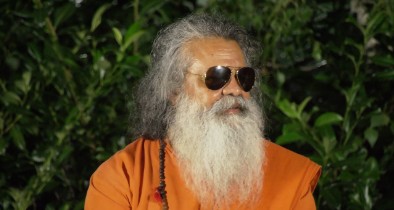
An evening satsang on the illusory nature of time and the urgency of spiritual practice.
"In reality, there is no time. Who created time? Animals do not count it. We humans made time."
"Use it or lose it. This was my mantra, and so I was practicing. Till now, I am 103 years, I am still like this."
The lecturer leads the discourse, exploring the human construct of time and its unstoppable flow. He shares parables, including one of a Himalayan rishi who learns his vast knowledge is but a handful of sand compared to the whole, and another of a yogi whose pride ruins his sādhanā. The key theme is that our limited time must be used for sincere practice and humility, lest it be lost.
Filming location: Strilky, Czech Republic
First is the Guru
7:25 - 8:17 (52 min)
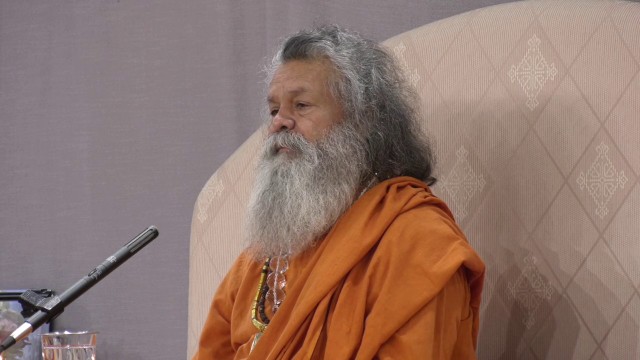
Evening satsang with Vishwaguruji from Zagreb, Croatia. In ancient times, rishis in their ashrams had many cows and their disciples had a job in the ashram. A Guru can notice if a disciple is a real follower or not. The story of Abhimanyu a very young disciple and his Guru and God. It is more than a simple story. In a satsang we all get energy. First is the Guru and then God. The story of Paramhansa Yoganand and his Guru when Yoganand went from India to America.
The reality is within you
8:25 - 9:02 (37 min)
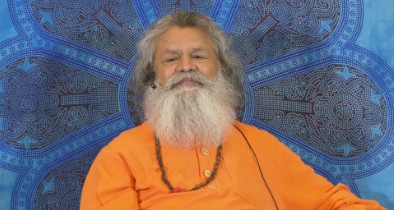
A spiritual discourse on discipline, grace, and the enduring nature of authentic practice.
"Yoga in Daily Life did not become different. That is its quality."
"Gurujī always said, 'Guru Kṛpā Hi Kevalam.' As long as you have the mercy, the Kṛpā, of Gurudeva, you will be on the good path."
The lecturer addresses a gathering, emphasizing unwavering discipline in spiritual practice and loyalty to one's guru. He explains the unique, unchanging quality of the Yoga in Daily Life system over decades, using the analogy of a single flame to represent the soul. The talk covers themes of oneness in Sanātana Dharma, the importance of family, and the need for inner work amidst life's impermanence.
Filming location: Vép, Hungary
Our origin is in God
9:10 - 9:51 (41 min)
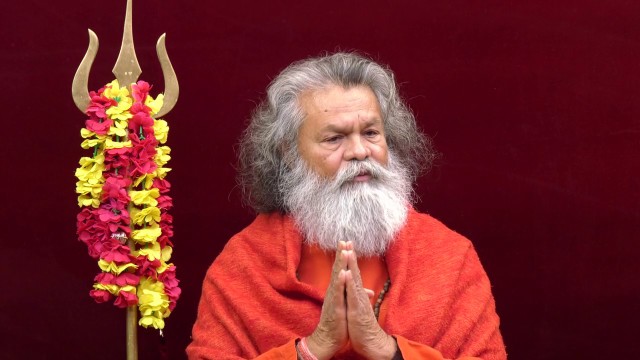
A spiritual discourse on the five sheaths of existence and the nature of life.
"God has given us this body. When the soul, the ātmā, enters the body, it comes into this world, to Earth."
"These five kośas, one after the other, Annamaya kośa, prāṇamaya kośa, manomaya kośa, vijñānamaya kośa, ānandamaya kośa."
A speaker, conveying blessings from Gurudeva Swāmī Madhavānanda, explores the journey of the soul into the human body and the five energetic sheaths (kośas) that surround it. The talk contemplates the cycle of life, the nature of God across traditions, and ethical principles like non-violence and forgiveness, weaving in references to Jesus and a parable about a fruit tree. The session concludes with a tribute to Satguru Dev on the anniversary of his Mahāsamādhi, honoring his life and teachings.
Filming location: Strilky, Czech Republic
Recharging the spiritual energy
9:55 - 10:42 (47 min)
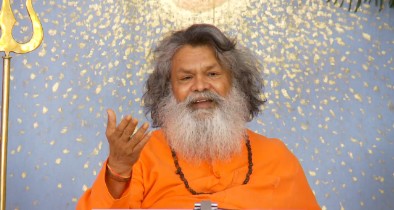
A spiritual discourse on Śiva consciousness, discernment in companionship, and a teaching parable.
"You are called Śivamaya, and many problems disappear. At home, many conditions arise, but here they vanish."
"A wise one will never put a question, because the wise are wise. Who puts the question? The ignorant, because they do not know."
The lecturer leads a satsang, explaining how entering a sacred space like Strelky during Śivarātri fills one with a divine aura. He emphasizes the importance of keeping company with spiritual people and avoiding negative influences (kusanga). He shares a long, illustrative parable about a princess seeking a wise husband, which involves a shepherd, a game of chess, and a mystical cat, ultimately conveying lessons on wisdom, silence, and destiny. The talk concludes with a promotion for an upcoming pilgrimage to Ujjain.
Filming location: Strilky, Czech Republic
Vishwaguruji in Khatu
10:45 - 10:58 (13 min)
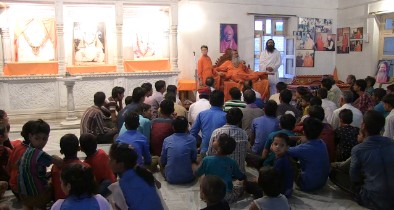
Evening program from India
Around the world - Yoga for senior HU
11:00 - 11:22 (22 min)
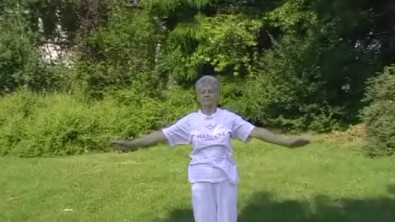
Yoga Asanas, Pranayam and meditation presented by 78 years old Hack Antalne and her expirences with practising Yoga in daily life. Production in August 2010 by Tata YIDL group, Nyergesujfalu, Hungary.
We are Humans
11:30 - 11:58 (28 min)
A spiritual discourse exploring the nature of self and practice through contemplative inquiry.
"All that is moving is not you; it is that." "We are human. But what does it mean to be human? It is important to see what we are and what we are not."
A speaker leads a satsang, questioning the identity of the practitioner within yoga and life. Using a stream-of-consciousness style, they contemplate the names of yoga postures, the elements composing the body, and phenomena like airplanes and light to point toward a transcendent Self. The talk oscillates between deconstructing the doer and advocating a yogic lifestyle, concluding with blessings for oneness and enjoyment.
Filming location: Strilky, Czech Republic
Mantra is with you for your whole life
12:05 - 12:27 (22 min)
A spiritual discourse on life's two paths, illustrated through a parable about marriage and communication.
"You know very well... And there are two paths." "Spiritual human life is everything. This is what it is, and for that we are thinking."
The speaker presents two life paths: a worldly, professional path and a spiritual path centered on relationships and conscious living. He emphasizes the spiritual path through a lengthy parable about a married couple whose 50-year resentment stems from miscommunication over sharing bread, illustrating how small, unspoken issues can define a life. The talk concludes with the imparting of a lifelong mantra and instructions for a disciplined lifestyle, including vegetarianism.
Filming location: Salzburg, Austria
Holi Festival
12:35 - 13:09 (34 min)
A discourse on the mythological story of Prahlāda and Narasiṁha, explaining the origins of the Holi festival.
"There is a God, whether one believes or one doesn't believe. God incarnates, and there are two kinds of God's presence."
"The story we are discussing is from several million years ago. Long ago, there was a king who went to the forest to perform austerities to realize God."
The speaker narrates the tale of the demon king Hiraṇyakaśipu, who obtained a powerful boon and declared himself the only god. His son, Prahlāda, remained a devoted devotee of Lord Viṣṇu despite the king's violent attempts to kill him. The story details Prahlāda's miraculous survivals and culminates in the appearance of the Narasiṁha Avatāra from a pillar to kill the king at twilight, fulfilling the conditions of the boon. The discourse connects this to the celebration of Holi, marking the burning of the king's sister, Holikā.
Filming location: USA
Live webcast from Vienna
13:10 - 14:40 (90 min)
Evening satsang from Guruji Ashram, Vienna, Austria.
The Nāḍīs, Cakras, and the Mūlādhāra Foundation
13:15 - 14:12 (57 min)
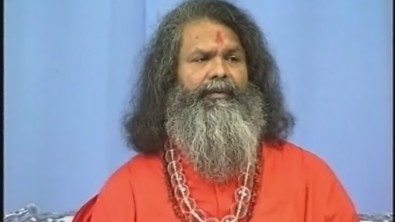
A spiritual lecture on the nāḍīs, cakras, and the foundational Mūlādhāra Cakra.
"The Mūlādhāra Cakra is at the bottom of the spinal column. It is a border between animal and human consciousness."
"Destiny was created first, and destiny is created individually. We should blame no one. We are ourselves responsible for our destiny."
The speaker continues a discourse from the previous day, focusing on the Mūlādhāra Cakra as the seat of destiny (prārabdha) and divine energy. He explains how this foundational energy influences life and can be purified through the threefold practice of svādhyāya (self-study), manana (contemplation), and abhyāsa (persistent practice), which remove the obstacles of impurity, distraction, and veils. The talk connects these concepts to Kuṇḍalinī Śakti, the role of Kriyā Yoga, and concludes with a symbolic discussion of the tilak mark.
Filming location: Umag, Croatia
Try to live in a natural way
14:20 - 15:22 (62 min)
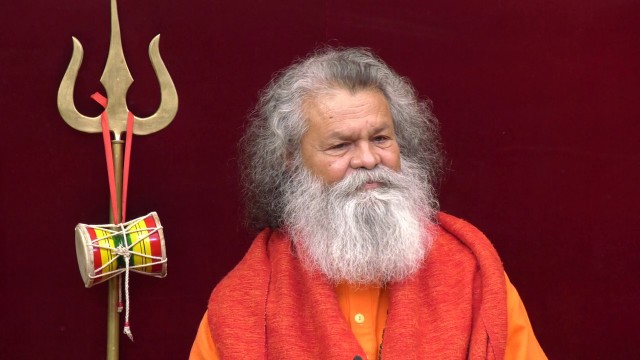
A satsang discourse reflecting on an eight-month spiritual retreat (Anushthana) and sharing teachings on health and lifestyle.
"In this Kali Yuga, yoga is coming more and more to bring light and peace."
"Mahāprabhujī said, 'A man should not drink tea and coffee. Coffee is bad for both male and female liver, and tea, for men, will make it difficult to have a child.'"
Swami Vishwaguruji addresses a global audience, recounting the recent eight-month Anushthana at the Sattva ashram in Střílky. He discusses the ashram's holy history, the importance of satsang, and shares traditional teachings from Mahāprabhujī and his own Guru on diet, health, and disciplined living. He contrasts modern habits with a purer past, advocating for simple food, periodic fasting, and a return to family and home. The ashram's president then offers thanks, noting the pandemic allowed for an extended, blessed stay with Gurudev.
Filming location: Bari Khatu, Rajasthan, India
Bhajan evening from Vep
15:30 - 16:25 (55 min)
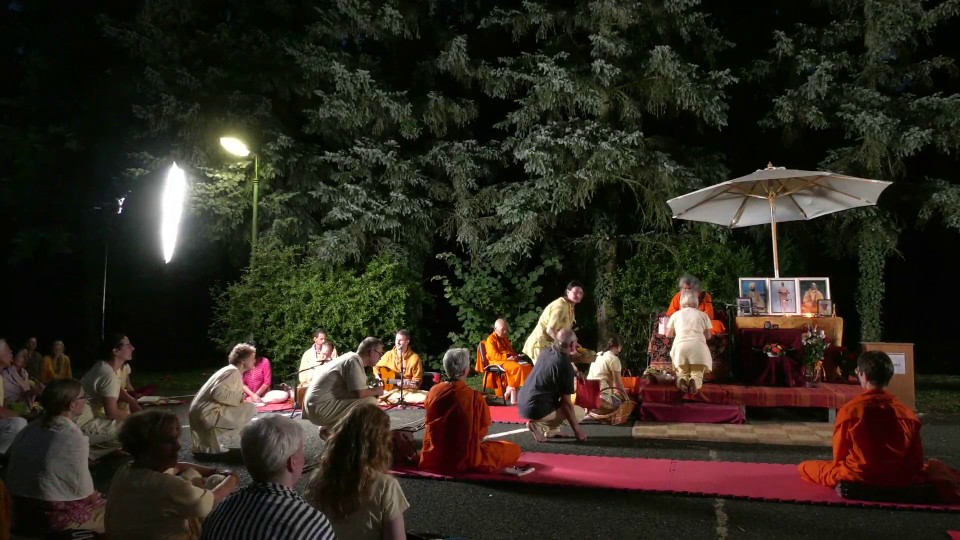
Evening satsang with Vishwaguruji from Vep, Hungary. Bhajan singing.
Bhajan evening from Jadan Ashram
16:30 - 17:09 (39 min)
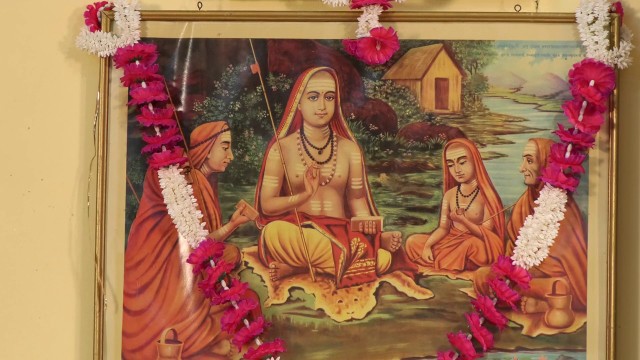
Evening satsang with Vishwaguruji from Jadan Ashram, Rajasthan, India. Singing bhajans.
Bhajan - Dhyan Karo
17:15 - 17:25 (10 min)
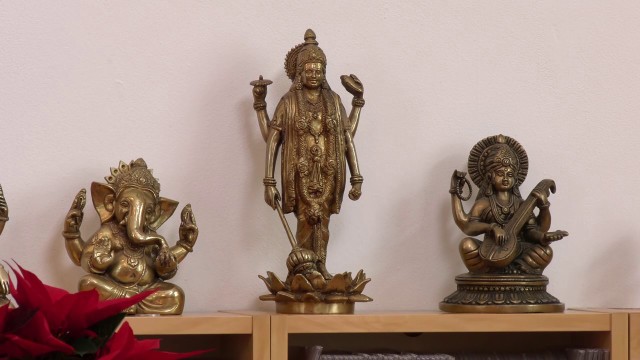
Recording from the morning satsang with Vishwaguruji in Villach, Austria.
Bhajan Singing from from Strilky
17:30 - 18:22 (52 min)
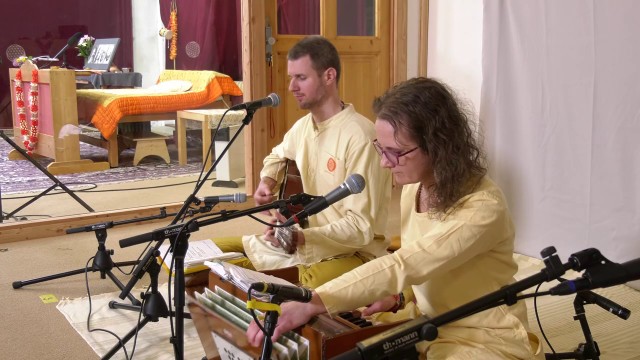
Evening satsang with Vishwaguruji from Strilky Ashram, Czech Republic.
The Journey Beyond Duality: Life, Self, and the Path to Oneness
18:30 - 19:42 (72 min)
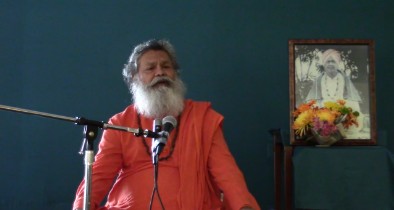
A spiritual discourse on yoga philosophy, the nature of the self, and the path to oneness.
"Our life, as we said, is a destiny and a journey. It is a journey; the destination is still not there."
"In Ātmā, in the self, there are no dualities; there is only oneness. So where there is heaven and hell, there is life and death... that's what we want to come out of, to become one with the highest, with our Self."
Swami Anand Arun delivers an extensive teaching, exploring the journey beyond dualities like life/death and divine/demonic energies. He explains core concepts of Ātmā, karma, and the three guṇas, detailing the system of senses (indriyas), vital energies (prāṇas), and channels (nāḍīs). The talk defines yoga as union, clarifies traditional Haṭha Yoga, and maps the subtle body's chakras, concluding with anecdotes about advanced practices like Khecharī Mudrā and the nectar of immortality.
Filming location: USA
Our origin is in God
19:50 - 20:31 (41 min)
A spiritual discourse on the five sheaths of existence and the nature of life.
"God has given us this body. When the soul, the ātmā, enters the body, it comes into this world, to Earth."
"These five kośas, one after the other, Annamaya kośa, prāṇamaya kośa, manomaya kośa, vijñānamaya kośa, ānandamaya kośa."
A speaker, conveying blessings from Gurudeva Swāmī Madhavānanda, explores the journey of the soul into the human body and the five energetic sheaths (kośas) that surround it. The talk contemplates the cycle of life, the nature of God across traditions, and ethical principles like non-violence and forgiveness, weaving in references to Jesus and a parable about a fruit tree. The session concludes with a tribute to Satguru Dev on the anniversary of his Mahāsamādhi, honoring his life and teachings.
Filming location: Strilky, Czech Republic
Advice for good health
20:35 - 21:43 (68 min)
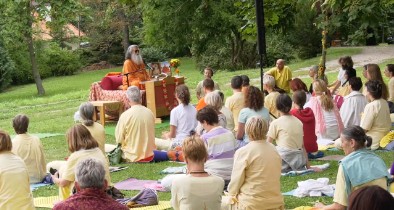
A satsang on Haṭha Yoga practices and natural wisdom, blending personal anecdotes with traditional teachings.
"Gurujī said, 'I am now in Mumbai, and I am going tomorrow morning by train. What is the constellation? If it is not good, then should we stop the train?'"
"Better to die, but with the salt. Yes, so Āyurveda, and Āyurveda is saying senda salt."
The lecturer leads the session, sharing stories about his Gurujī and the practical applications of Haṭha Yoga. He explains the importance of salt for health, details cleansing techniques like netī and kuñjal kriyā, and emphasizes learning from nature, illustrated by a folk tale about the origin of ocean salt. The talk connects yogic purification with Āyurvedic principles found in plants and natural elements.
Filming location: Strilky, Czech Republic
Respect is important
21:50 - 22:43 (53 min)
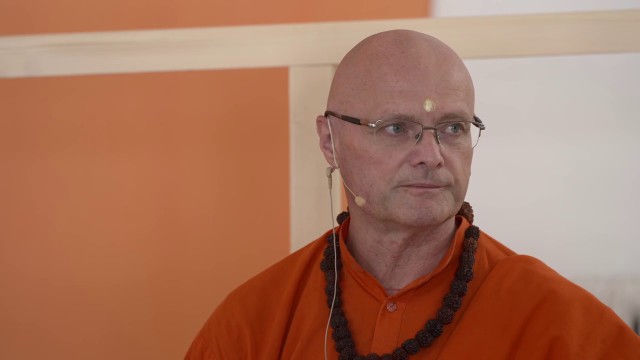
A spiritual discourse and mantra teaching session on the power of language, respect, and energy.
"Spirituality does not mean wholly very slow... But with this different energy inside, just try to be aware of this thing: in which way are we addressing other people?"
"You get from an object only as much as you respect it... If your mālā has some value for you, you will keep it in a safe place... Because of that, you will, from your mālā, get energy when you need it."
A speaker leads a satsang, emphasizing the profound impact of words, gestures, and intention. He discusses how language shapes reality, using examples from addressing others to serving food and respecting spiritual objects like a mala. The talk covers the importance of positive speech, respectful action, and the energy behind our deeds. The session concludes with Swami Avatar Puri teaching and explaining the "Nāma kamala nābhāya" mantra, including its translation and significance.
Filming location: Strilky, Czech Republic
Try to live in a natural way
22:50 - 23:52 (62 min)
A satsang discourse reflecting on an eight-month spiritual retreat (Anushthana) and sharing teachings on health and lifestyle.
"In this Kali Yuga, yoga is coming more and more to bring light and peace."
"Mahāprabhujī said, 'A man should not drink tea and coffee. Coffee is bad for both male and female liver, and tea, for men, will make it difficult to have a child.'"
Swami Vishwaguruji addresses a global audience, recounting the recent eight-month Anushthana at the Sattva ashram in Střílky. He discusses the ashram's holy history, the importance of satsang, and shares traditional teachings from Mahāprabhujī and his own Guru on diet, health, and disciplined living. He contrasts modern habits with a purer past, advocating for simple food, periodic fasting, and a return to family and home. The ashram's president then offers thanks, noting the pandemic allowed for an extended, blessed stay with Gurudev.
Filming location: Bari Khatu, Rajasthan, India
American
Australian