
European
Practising Asanas from Vep
0:00 - 0:57 (57 min)
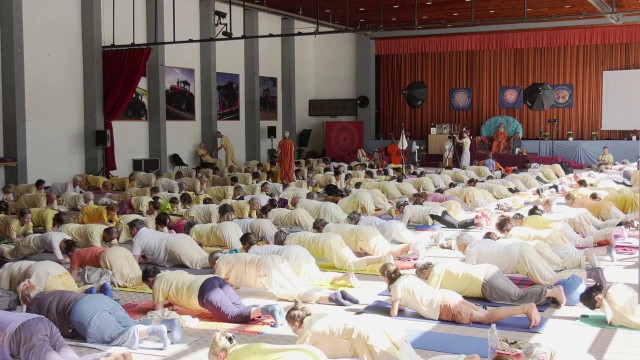
A guided yoga session with detailed instructions and corrections for group synchronization.
"Make your neck long; do not shorten it. Stabilize your lower back with your belly muscles."
"Śaśāṅkāsana is very, very good for our digestion. It works immediately, also for children."
An instructor leads a group through a series of yoga poses, including leg lifts, Śaśāṅkāsana (Rabbit Pose), Uttānapṛṣṭhāsana (a trunk-lifting pose), and a variation of Marjari (Cat Pose) on the forearms. The session focuses on precise alignment, breath coordination, and repeatedly attempts to get all participants to move in unison. It concludes with relaxation and permission to drink water.
Filming location: Vép, Hungary
Our origin is in God
1:05 - 1:46 (41 min)
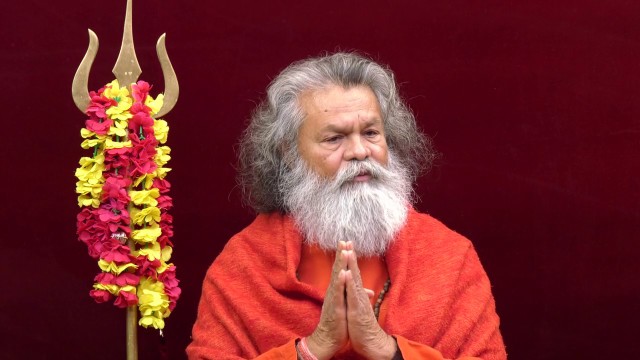
A spiritual discourse on the five sheaths of existence and the nature of life.
"God has given us this body. When the soul, the ātmā, enters the body, it comes into this world, to Earth."
"These five kośas, one after the other, Annamaya kośa, prāṇamaya kośa, manomaya kośa, vijñānamaya kośa, ānandamaya kośa."
A speaker, conveying blessings from Gurudeva Swāmī Madhavānanda, explores the journey of the soul into the human body and the five energetic sheaths (kośas) that surround it. The talk contemplates the cycle of life, the nature of God across traditions, and ethical principles like non-violence and forgiveness, weaving in references to Jesus and a parable about a fruit tree. The session concludes with a tribute to Satguru Dev on the anniversary of his Mahāsamādhi, honoring his life and teachings.
Filming location: Strilky, Czech Republic
Eat healthy food and live as a human
1:50 - 2:33 (43 min)
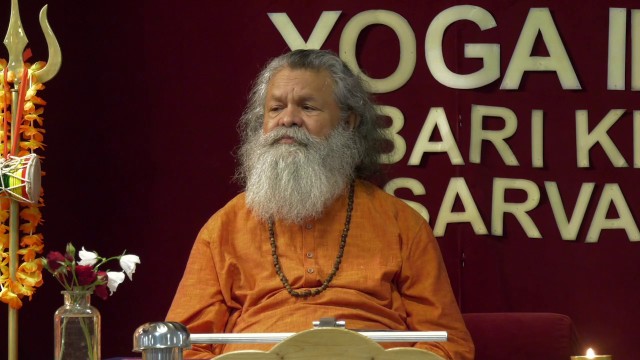
A spiritual discourse on prayer, lifestyle, and simple daily remembrance.
"Morning, midday, evening—always the whole family, women, men, and children. When they sat at the table to eat, they would pray."
"When we open our eyes, then tell, 'I am human.'... And then, second, don't look at animals and this and that first. Mother, mother. So see our mother."
The lecturer reflects on the decline of traditional prayer across religions and its connection to modern societal problems. He discusses dietary shifts, including the rise of veganism, and critiques modern agriculture's impact on the earth. He concludes with a simple daily practice: upon waking, remember "I am human," honor Mother Earth, and reverence water as life.
Filming location: Strilky, Czech Republic
What means Satsang
2:40 - 3:56 (76 min)
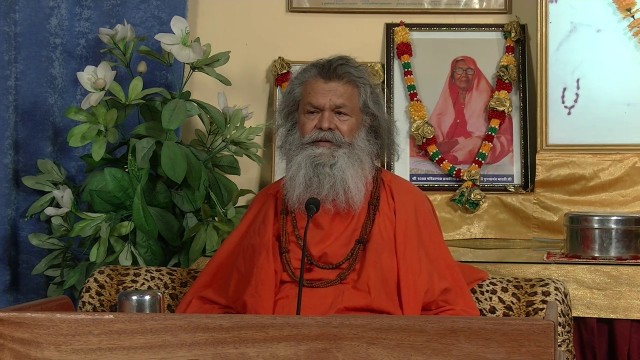
Evening satsang with Vishwaguruji from Jadan, Rajasthan, India. Nearly one-hour bhajan singing. Without prayers, meditation and singing bhajans humans life is not complete. When we are coming to the prayer we are in oneness again. In Satsang, we are in the truth. Do not continue with negative thinking. That one is lost.
Chakras, Nadis and Kundalini
4:00 - 4:39 (39 min)
A discourse on the subtle energy systems of yoga, including chakras, nāḍīs, and the mind.
"The chakras are a methodological representation. You will not see this exact picture if you look within your own body, so do not try to see it literally."
"The mind is a river; we should not block it. If we block a dam, we must provide an outlet. Without an outlet, the dam will break and cause greater harm. The mind needs direction."
The teacher provides a detailed explanation of the chakra and nāḍī (energy channel) system, relating it to human physiology, the elements, and life metaphors like a leaf separating from a tree. Key themes include the symbolic nature of chakras, the function of the Iḍā and Piṅgalā nāḍīs, the dangers of improperly awakening kuṇḍalinī energy, and how suppressed emotions manifest as physical ailments. The talk integrates concepts of the five sheaths (kośas), the role of the guru, and the purpose of spiritual practice for holistic health.
Filming location: London, UK
Supporters on the Spiritual Path
4:45 - 5:53 (68 min)
A spiritual discourse on the chakra system and the qualities needed for self-realization.
"Spiritual practice means not only just to sit and meditate and practice mantras, but to change inner feelings. Humbleness is one of the best parts of spirituality."
"Dayā dharam kā mūl hai, pāp mūl hai abhimān... the roots of the dharma, right-house-ness, is the mercy. And the roots of the sins is the ego."
Swami Brahmapuri leads a satsang, continuing a series on the chakras. He transitions from discussing the foundational Mūlādhāra Chakra to explaining the Svādhiṣṭhāna Chakra. The core teaching outlines five spiritual qualities—Vairāgya (detachment), Tyāga (renunciation), Bhakti (devotion), Jñāna (knowledge), and Dayā (mercy)—as the means to overcome negative obstacles like desire and anger. He illustrates these principles with stories of Krishna and Shiva, and gives practical advice, including how to care for a rudrākṣa bead.
Filming location: Vancouver, Canada
The hatha yogi wants to live a long and healthy life
6:00 - 6:51 (51 min)

A satsang on herbal remedies and the principles of Haṭha Yoga.
"You take only a little of this babool fruit... Shake it in the water... By morning, it is ready. You drink the water, and you eat that."
"The biggest enemy of the human is laziness. Where there is laziness, there is tamas guṇa."
Swami Ji leads a session beginning with practical uses for neem and babool plants, sharing recipes and a disciple's testimony about neem healing a wound. The talk transitions into the philosophy of a Haṭha Yogī, emphasizing the conquest of laziness, dietary practices including the defense of garlic, and internal cleansing. The session concludes with a live demonstration of the Agni Sāra Kriyā by a disciple.
Filming location: Vép, Hungary
Mind and chakras
6:55 - 7:20 (25 min)
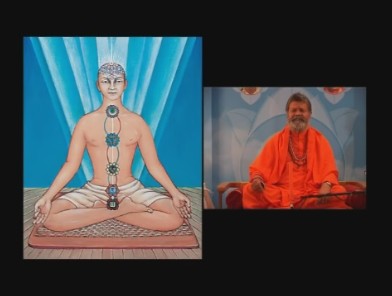
A lecture on the nature of the mind, subconscious impressions, and yogic philosophy.
"Our senses are mostly connected to and work with the consciousness, the awakened state."
"The mind is that principle which functions between the conscious and subconscious, pendling up and down."
The teacher provides a detailed explanation of how sensory impressions become stored desires in the subconscious, using the analogy of an unfulfilled ice cream craving manifesting in a dream. He describes the mind as a pendulum between conscious and subconscious levels, warning against blocking mental energy and instead advocating for directing it through self-discipline. The talk expands into the relationship between emotion, intellect, consciousness, and the nadis (Ida, Pingala, Sushumna), linking psychological concepts to the chakra system and the dormant energy of kundalini.
Filming location: Brisbane, Australia
Don't kill animals, remain clean
7:25 - 8:38 (73 min)
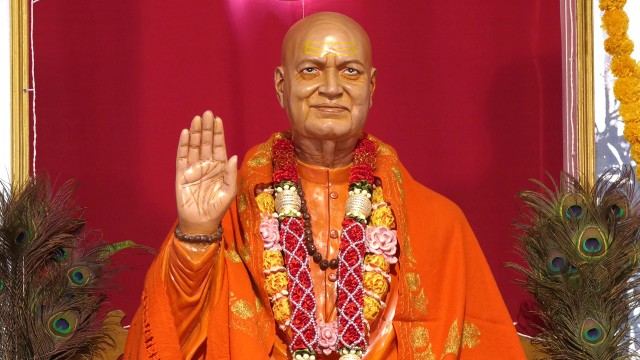
Evening sastang from Jadan Ashram, Rajasthan, India. When it rains, it feeds all the vegetation. The sea, the grass, the trees need water. Only humans can reach the highest. Those who don't use drugs or drink alcohol. Today, the whole world, all religions and cultures are right in the palm of our hands, accessible by mobile phone. With the help of yoga, meditation and ancient sacred scriptures, spirituality can be realized. Outer purity means inner purity.Chemical pollution is a big problem all over the Earth.
Purify your prana
8:45 - 9:49 (64 min)
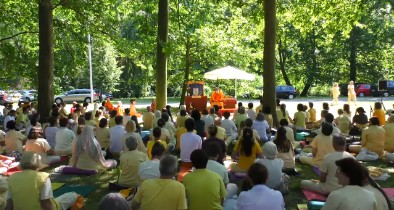
Morning satsang with Vishwaguruji from Summer Retreat in Vep, Hungary. We should protect every creature, not only humans. Bad smell indicates impurities in the prana. Sattvic nourishment and practicing yoga exercises cleans the prana and energies in the body.
We have to go on that path
9:55 - 10:52 (57 min)
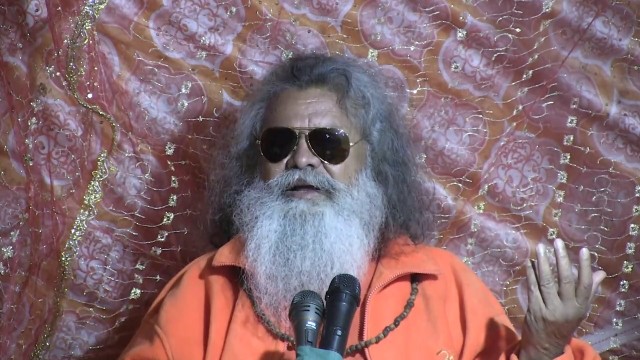
Evening satsang with Vishwaguruji from Himalaya. Sri Alakhpuriji Cave. Here is the place of peace and happiness. Alakhpuriji has given us his carana amrit. Bhagirati's disciple was Ganga and Alakhpuriji's disciple was Nanda Devi. Singing and explanation of bhajan or arati Sri Guru Atma Paramatma. Alakh means we can not write we can not speak about. In reality, Alakhpuruji created this arati through Sivanandji and he brought it to us Vishwaguruji. We have to follow Alkhpuriji's path with concentration. This path drives us to Brahma Loka. We are those souls who can give this blessing and energy. Singing bhajan Sabda Sanehi Mhari Jatra, Guru carano me, Manv Dhire Dhire and Sataguru Satasangi.
Yoga in Daily Life: Health Promotion in the Czech Republic
11:00 - 11:13 (13 min)

A presentation on the integration of yoga into national health strategy in the Czech Republic.
"The main message of Yoga in Daily Life is the constant endeavor to support health promotion systematically through yoga training on four levels: the physical, mental, social, and spiritual."
"Today, we are the biggest yoga association in the Czech Republic... this harmonizing of the physical, mental, social, and spiritual level, is truly the only chance to keep peace and development in our society."
A representative of the Czech Association of Yoga in Daily Life addresses a conference, detailing the organization's role in national health promotion since 1973. He aligns the yoga system's four-level approach with the Czech government's National Health Strategy 2020, highlighting specific action plans where yoga can contribute, such as promoting physical activity and mental health. The presentation concludes with statistical growth and a tribute to the founding inspiration of Vishwaguruji.
Filming location: Prague, Czech Republic
Proper exercise is important to us
11:20 - 11:52 (32 min)
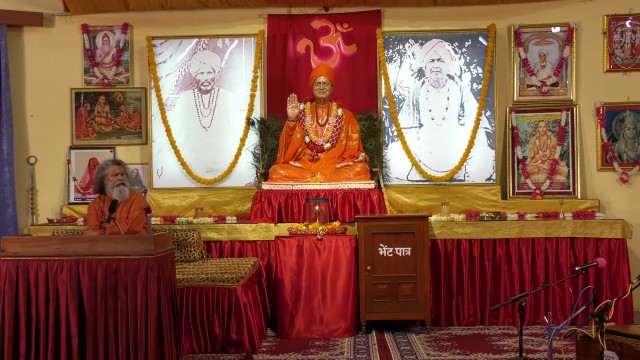
Evening satsang from Jadan Ashram, Rajsthan, India. Two things are important in our lives. What we eat and what we breathe. Yoga in Daily Life are practiced all over the world. Sarva Hitta asanas are good for everyone. Proper exercise is as important to us as food.
Yoga is One
12:00 - 12:31 (31 min)
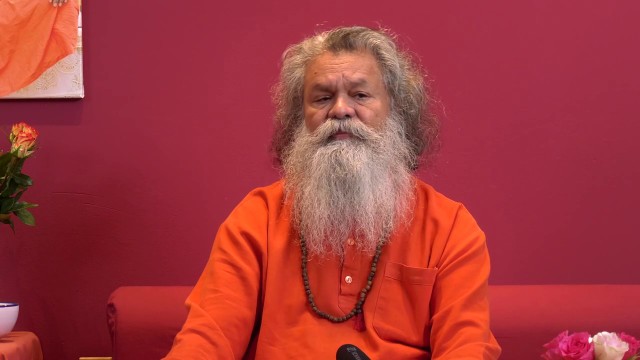
A spiritual talk on the principles and practice of yoga in daily life.
"Yoga is the yoga. It’s the yoga, that’s all then. There’s nothing else."
"Yoga in daily life... means we should practice every day. That’s all. And that is for everyone, whether they are Hindus, Muslims, Christians, or anybody."
The speaker addresses a group, holding up the system's foundational book. He emphasizes that true yoga requires daily practice according to these teachings, not just theoretical knowledge. He discusses the importance of ethical living, notably vegetarianism, criticizes the dilution of yoga by other systems, and urges a return to disciplined, foundational practice. The talk meanders through topics including dietary rules, the global spread of yoga, and personal anecdotes.
Filming location: Austria
Learning in the Gurukul
12:35 - 13:11 (36 min)
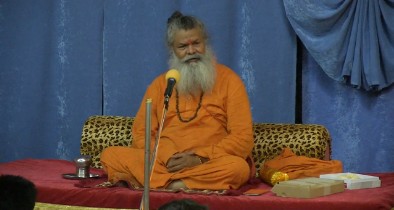
A presentation on the Gurukul education system and its philosophical foundations.
"In our Gurukul, we have a different education. Not this modern education where they only want to work and earn money, earn money, earn money."
"The knowledge that has been taught in the Gurukul, according to the culture of India and according to the knowledge of the sages of India, we will do it."
A spiritual teacher speaks from the Om Shri Visva Dip Gurukul in Rajasthan, outlining the history and purpose of the traditional Gurukul system. He emphasizes education as a sacred, cultural duty focused on knowledge and morality over material gain, introduces the Gyān Putra scholarship project, and explains the significance of the students' Pitāmbara (yellow) uniforms. The talk is followed by an address from Mahāmaṇḍaleśvar Śrī Gyāneśvar Purī Jī Mahārāj, who discusses the logistical and ethical challenges of education in India, contrasting the Gurukul's holistic approach with modern, commercialized systems.
Filming location: Jadan, Rajasthan, India
Self is happiness
13:15 - 13:53 (38 min)
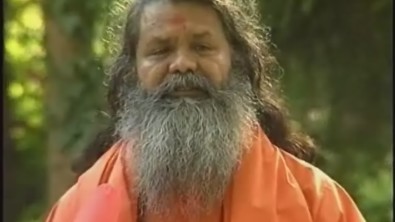
A satsang discourse on the purpose of life, self-realization, and divine incarnation.
"The sense of life is to become happy and successful, to overcome all the suffering of past lives, and to become free from karmas."
"Yoga means union, which unites our self to the Cosmic Self, which unites our thoughts with the Cosmic One, our feelings with the Supreme."
A speaker leads a spiritual gathering, explaining that the pursuit of happiness is the search for one's true Self, which is a part of God. He emphasizes satsang and scripture as the path to understanding, discusses yoga as union with the divine, and explores the nature of God's incarnation, including the puzzling story from the Ramayana about the sage Narada cursing Lord Vishnu. The talk concludes with a prayer for positive intellect and devotional chanting.
Filming location: Vép, Hungary
Yoga for the physical body and beyond
14:00 - 14:22 (22 min)
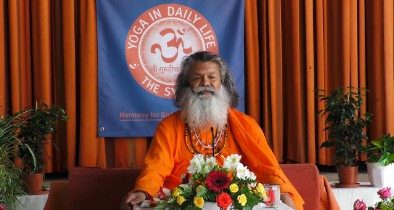
A morning satsang at a summer retreat discussing the modern practice of yoga and a return to spiritual roots.
"Spirituality does not mean religious practice. Spirituality means not only doing meditation, but encompasses everything."
"Yoga is from the mother’s womb until liberation, and it should be a very easy practice. Everyone can do it."
The teacher addresses the assembly, reflecting on the global spread of yoga since International Yoga Day. He cautions against practices focused solely on physical fitness or difficult postures, which he links to future injuries, and criticizes the commercialization of yoga. Emphasizing the need for a genuine guru lineage, he shares the discovery of their spiritual ancestor, Ālagpurījī, in the Himalayas, and concludes with remarks on environmental protection and a blessing for practice.
Filming location: Vép, Hungary
The hatha yogi wants to live a long and healthy life
14:30 - 15:21 (51 min)
A satsang on herbal remedies and the principles of Haṭha Yoga.
"You take only a little of this babool fruit... Shake it in the water... By morning, it is ready. You drink the water, and you eat that."
"The biggest enemy of the human is laziness. Where there is laziness, there is tamas guṇa."
Swami Ji leads a session beginning with practical uses for neem and babool plants, sharing recipes and a disciple's testimony about neem healing a wound. The talk transitions into the philosophy of a Haṭha Yogī, emphasizing the conquest of laziness, dietary practices including the defense of garlic, and internal cleansing. The session concludes with a live demonstration of the Agni Sāra Kriyā by a disciple.
Filming location: Vép, Hungary
Bhajan evening from Strilky Ashram
15:30 - 16:18 (48 min)
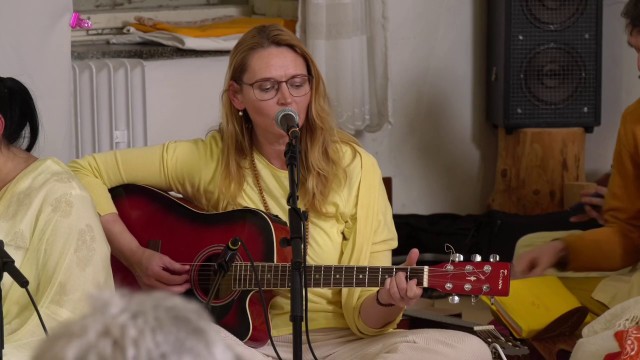
Evening satsang with Vishwaguruji from Strilky Ashram, Czech Republic. Bhajan singing.
The calling of Sri Alakhpuriji
16:25 - 16:36 (11 min)
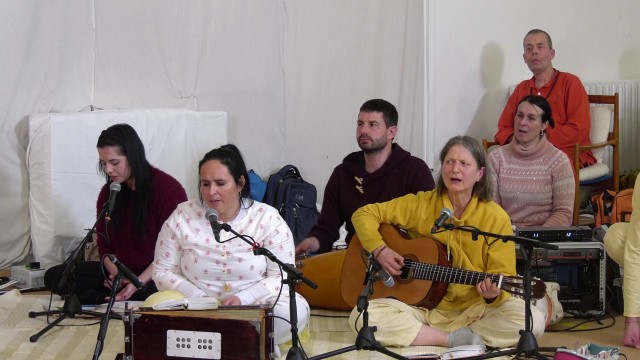
Evening satsang with Vishwaguruji from Strilky Ashram, Czech Republic. Bhajan Sataguru Alakha Puriji Avo.
Bhajans from Oosterhout
16:40 - 17:45 (65 min)
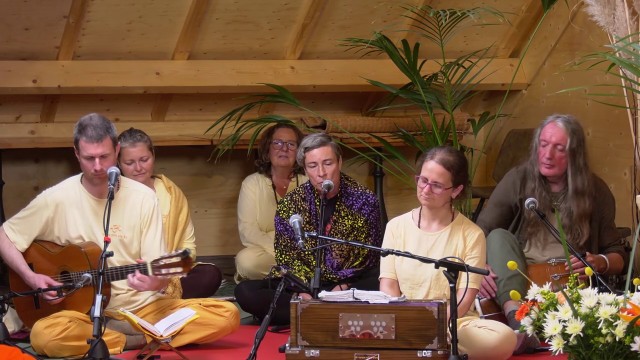
Evening satsang with Vishwaguruji from Oosterhout, Noord-Brabant, The Netherlands.
Bhajans for World Peace (1/3)
17:50 - 19:47 (117 min)
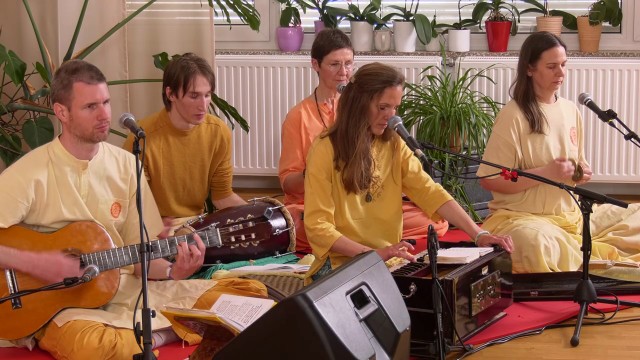
For world peace, first we need to find peace within ourselves. A recording of a live concert for world peace in YIDL center in Villach, Austria. Public concert lasted 6h with uninterrupted Bhajans. The concert was a part of a 24h of Bhajan Anushtana.
We should have God in our heart
19:55 - 21:16 (81 min)
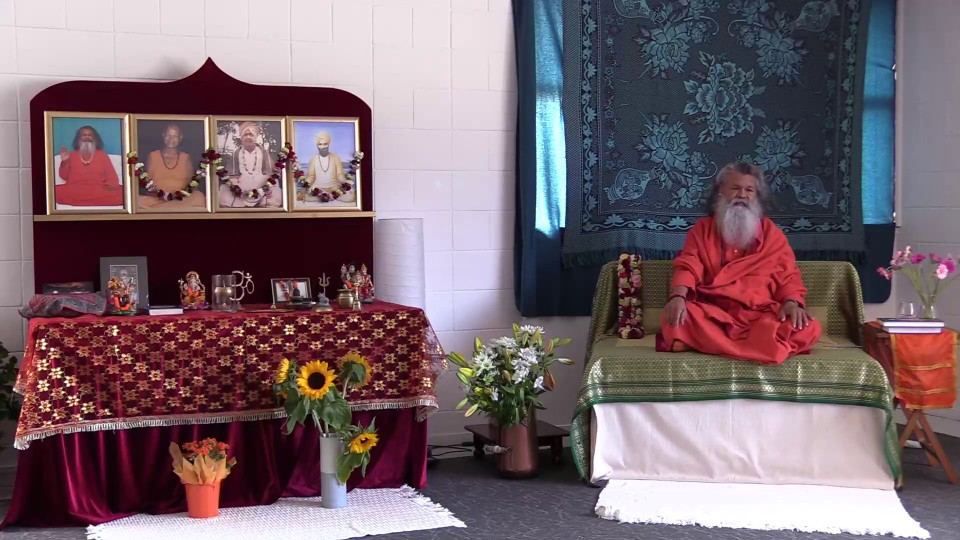
A spiritual discourse weaving stories and observations on faith, tradition, and true knowledge.
"Any lecture we hear... for one and a half or two and a half minutes we have concentration, then we don't have concentration... but that story is there; that story will never forget."
"We must not have a thousand, but even a hundred is enough, or one is enough. My Gurujī said, 'A hundred goats and one tiger is more than enough.'"
The lecturer delivers an evening satsang, moving from observations on preparation and cultural greetings into profound spiritual parables. He shares stories including a Pope testing devotees' faith, a devoted brother walking on water, and the mythological tales of Śiva, Śakti, and the sage Śukadeva, all illustrating that heartfelt devotion surpasses mere intellectual knowledge. The talk concludes with reflections on the enduring power of stories and the core principles of yoga.
Filming location: Auckland, New Zealand
Satsang from Strilky
21:20 - 22:37 (77 min)
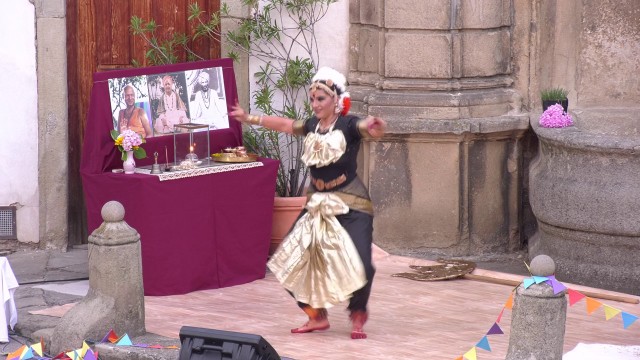
Evening satsang from Strilky Ashram, Czech Republic. Explanation and singing bhajans. Bharatanatyam dance by Bhaktidevi. The glory of Devpuriji Bhagawan is around the whole world. He was the incarnation of Bhagawan Shiva.
Supporters on the Spiritual Path
22:45 - 23:53 (68 min)
A spiritual discourse on the chakra system and the qualities needed for self-realization.
"Spiritual practice means not only just to sit and meditate and practice mantras, but to change inner feelings. Humbleness is one of the best parts of spirituality."
"Dayā dharam kā mūl hai, pāp mūl hai abhimān... the roots of the dharma, right-house-ness, is the mercy. And the roots of the sins is the ego."
Swami Brahmapuri leads a satsang, continuing a series on the chakras. He transitions from discussing the foundational Mūlādhāra Chakra to explaining the Svādhiṣṭhāna Chakra. The core teaching outlines five spiritual qualities—Vairāgya (detachment), Tyāga (renunciation), Bhakti (devotion), Jñāna (knowledge), and Dayā (mercy)—as the means to overcome negative obstacles like desire and anger. He illustrates these principles with stories of Krishna and Shiva, and gives practical advice, including how to care for a rudrākṣa bead.
Filming location: Vancouver, Canada
American
Australian