
European
Tvameva Mata Ca Pita Tvameva
0:15 - 1:31 (76 min)
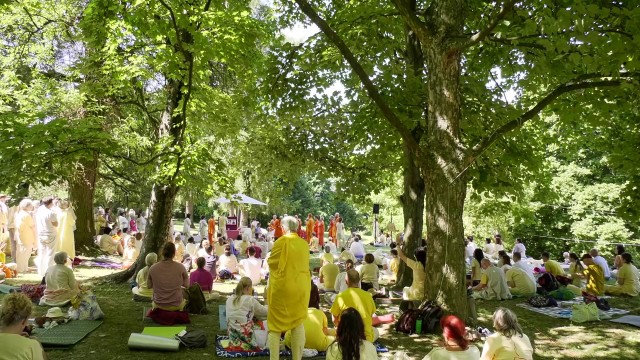
Morning satsang with Viswhaguruji from Strilky Ashram, Czech Republic. Bhajan singing from Strilky. Including He Nata Aba To, Itna to Karana Guruji
The aim of human life
1:35 - 2:31 (56 min)
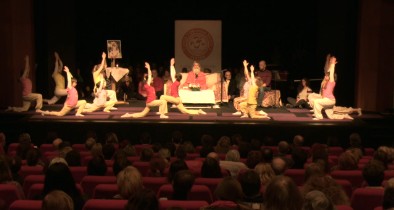
Public lecture with Vishwaguruji from Martin, Slovakia. Yoga means uniting, harmonizing and balancing. Our earth is a living planet, in each and every cell of the body there is an immense amount of energy. The aim of the human life is to achieve liberation. Nourishment, breath, behavior and practicing yoga exercises, are the main points if we would like to be healthy and keep ourselves pure.
Purify your body from poison
2:35 - 3:49 (74 min)
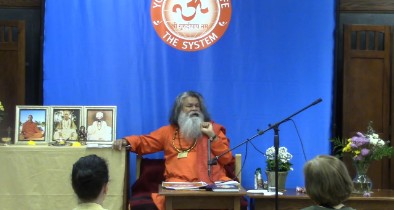
A spiritual discourse on the Viśuddhi chakra, happiness, and internal purification.
"Happiness is within ourselves. Peace is within ourselves. And unhappiness is from outside."
"It is said that in life, when we walk... beside you is walking your death. You can see it is like the shadow, the shadow of your body."
Swami Anand Arun leads an evening satsang, exploring the sources of happiness and unhappiness through analogies and stories. He uses the parable of a couple's 50-year misunderstanding over a piece of bread to illustrate how unspoken resentments act as a poison, stored in the Viśuddhi (purification) chakra. The talk connects this to the myth of Shiva consuming the cosmic poison, advocating for forgiveness, clear communication, and daily pranayama to purify this negative energy and prevent physical and emotional ailments.
Filming location: USA
Active and passive meditation
3:55 - 4:49 (54 min)
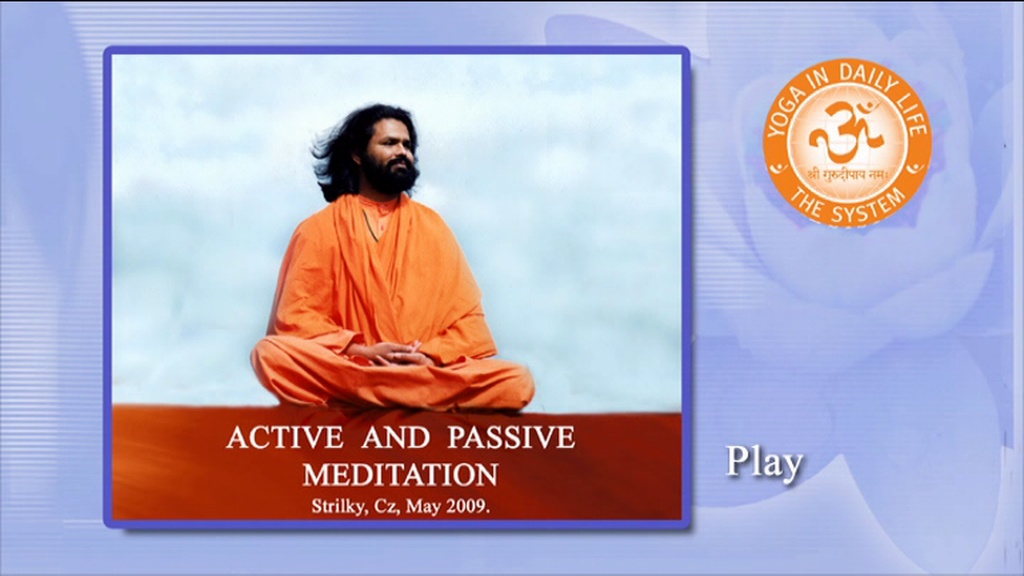
A satsang on meditation, karma yoga, and humanity's relationship with nature.
"Yogaḥ karmasu kauśalam. Through the practice of karma yoga, you will be successful in your yoga practice."
"Mother Nature has enough for everyone's need, but not for the greed."
Swami Avatarpuri, speaking from Střelky Ashram, explains the two types of meditation: active (karma yoga) and passive. He critiques humanity's destructive selfishness, contrasting the imperfect man-made world with the perfect God-made world, and urges harmonious work and simpler living. He concludes with teachings on surrender and the story of Mīrābāī to illustrate divine perception.
Filming locations: Střelky Ashram, Czech Republic.
DVD 524
The Nature of Attachment, the Curse of Knowledge, and the Immortal Parrot
4:55 - 5:55 (60 min)
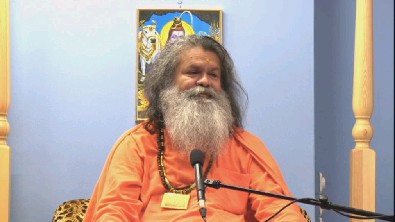
A spiritual discourse exploring attachment, divine knowledge, and a mythological story about immortality.
"Love is the greatest. That love is God, and God is love. Our love for our dear ones, parents, ancestors, sisters, brothers, friends, animals, house pets, even our car."
"Therefore, moha. Moha means ignorance, and moha means attachment."
The speaker delivers an evening satsang, weaving together philosophical teachings on attachment (moha) with the story of Shiva, Parvati, and the quest for immortal wisdom. He explains how attachment leads to suffering, illustrating this with the tale of Sati's self-immolation and Shiva's grief. The narrative then focuses on Parvati's insistence that Shiva teach her the secret of immortality, a secret that is accidentally overheard by a clever parrot, leading to the birth of the sage Shukadeva. The talk emphasizes the challenges of spiritual practice and the need for a true Guru.
Filming location: Vienna, Austria
Morning Yoga practice, Umag, Croatia (6/9)
6:00 - 7:56 (116 min)
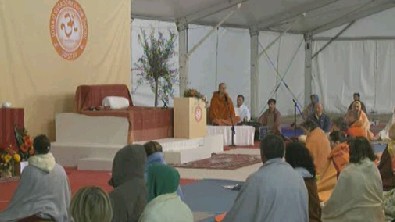
Morning Yoga practice from the international Yoga retreat Umag, Croatia on 30th of September
Practice and try to purify your karma
8:00 - 8:50 (50 min)
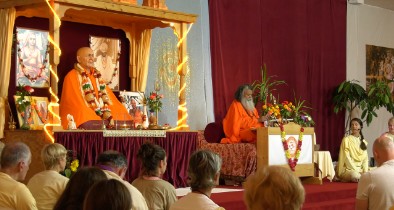
Evening satsang from Strilky Ashram, Czech Republic. There are many beautiful apples, but some of them are rotten because a wasp infected them. When a person is spoiled, the wisdom that he got is lost. In the shelter of Gurudev, if the faith is not strong enough, some problems immediately come. A story about Kabir Das and the butcher. Those who are doing, will get the karma. The story of a man who wants to make problems for someone. Children have truth in their heart. We have to give a good message to the world. The fruit will show the condition of the tree. Karuna from Czech Republic speaks about Yoga in Daily Life helping biathlon athletes.
Yoga, the inner engineering
8:55 - 9:47 (52 min)
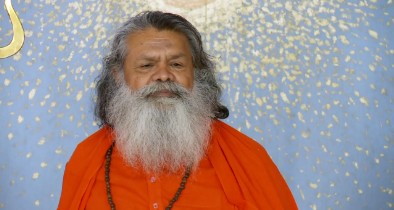
Satsang with Vishwaguruji, summer retreat in Strilky Ashram, Czech Republic. There are different levels of our being such as: Atma, Jivatma, consciousness/awareness, mind, emotion, senses, desires, physical body and energy body. There is an inner balancing mechanism to distribute energy to the whole body. With proper inner engineering we should avoid destroying our system. We need healthy seasonal eating and enhanced practice such as Pranayam.
The Sole Necessity of Guru's Grace
9:55 - 10:42 (47 min)
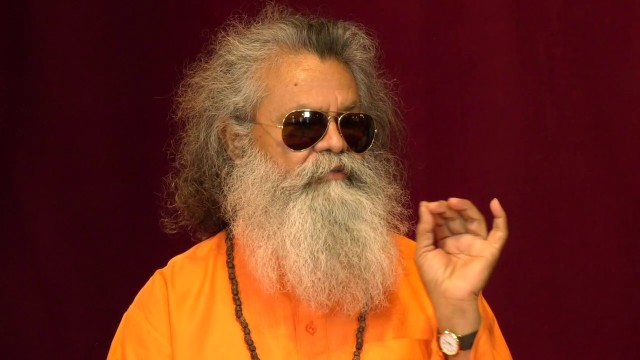
A spiritual discourse on the absolute necessity of the Guru's grace, illustrated with parables and observations on life.
"Without the grace of the Guru, nothing can be. We may think we can do without it and believe we are okay, but that is not how it is."
"Guru kṛpā hi kevalam. Guru’s grace... When Gurudeva’s blessing is there, then everything is possible."
The speaker, likely a swami, delivers a satsang emphasizing that all spiritual progress and worldly harmony depend solely on the Guru's grace. He expands the concept of Guru to include parents and the supportive community of village life, using anecdotes about street dogs and a detailed parable about a devoted disciple, his wife, and a test of sacrifice to illustrate the depth of true devotion and the singular source of blessing.
Filming location: Strilky, Czech Republic
Learning from Guruji
10:50 - 12:29 (99 min)
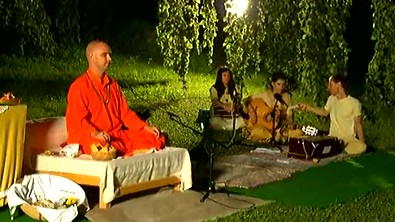
Evening Satsang with Mahamandaleshwar Swami Jasrajpuriji at Strilky Ashram, Czech Republic
How can I love myself?
12:35 - 13:08 (33 min)
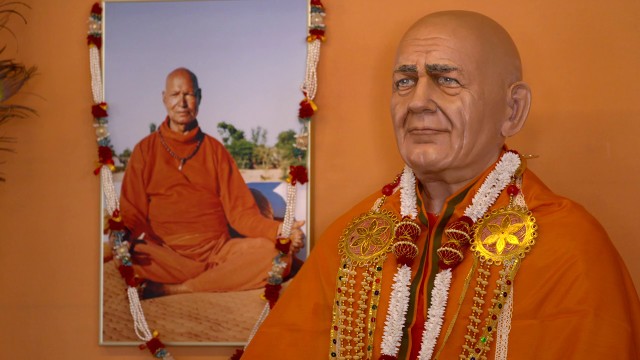
A satsang exploring the concept of self-love through the framework of the four aspects of divine grace (kripa).
"Swāmījī did not really use this word, but I know it comes from Holī Gurujī; he is always using that."
"Love each and every living being, if not more, then at least as much as yourself."
Guru Lilā, addressing the community, explains the four aspects of kripa: Deva Kripa (grace of the gods), Śāstra Kripa (grace of the scriptures), Guru Kripa (the Guru's grace), and Kuṭkī Kripa (self-grace). He focuses on Kuṭkī Kripa as self-love, arguing it is a prerequisite for loving others. He outlines a practical path to self-love through self-acceptance, self-understanding, and self-giving, linking it to core teachings. He shares an anecdote about a woman healing from ALS through self-love and concludes with a traditional story about Guru Nānak illustrating the complex workings of karma.
Filming location: Strilky, Czech Republic
Useful technics for problem solving
13:15 - 14:01 (46 min)
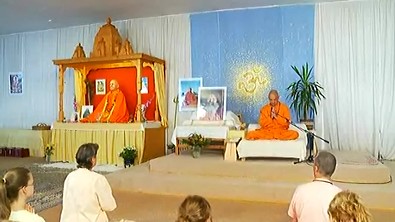
Morning lecture with Mahamandaleshwar Swami Jasrajpuriji at Strilky Ashram, Czech Republic
The Journey of the Soul: From the Ocean to the Drop
14:05 - 14:59 (54 min)
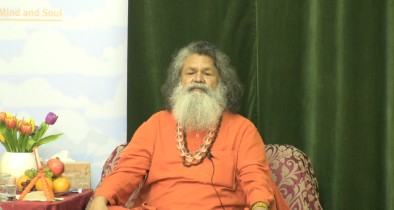
A spiritual discourse using the water cycle as a metaphor for the soul's journey.
"This jīvā, the soul, is on the journey of the eternal."
"When this drop falls into the ocean, the Jīva becomes the Ātmā. This drop becomes the ocean."
Swami Avatarpuri gives a satsang, explaining the soul's separation from and longing to return to the divine source through an extended analogy of evaporation and rainfall. He emphasizes the purifying role of satsang and the Guru, shares anecdotes about introducing mantra in Eastern Europe and criticizes modern chemical pollution and vanity as spiritual impediments, concluding with a call for natural living and collective chanting.
Filming location: London, UK
The Soul's Journey
15:05 - 15:58 (53 min)
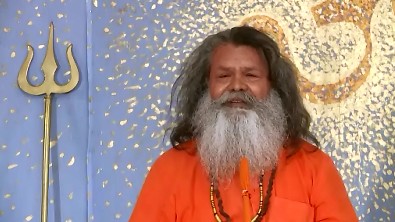
A spiritual discourse on the journey of the soul through birth, death, and karma.
"Our soul—not the Ātmā, but the soul... the soul is individual, not universal."
"Only two will follow us: our good or bad karmas. And that becomes destiny. And against destiny we have no power."
A spiritual teacher explains the nature of the individual soul (Jīvātmā) as a wave of the universal resonance. He describes its journey through time, bound by karma, its entry into a physical body, and the rare opportunity of human birth. He emphasizes the inescapable law of karma governed by body, mind, speech, and wealth, and concludes that liberation comes through spiritual practice and the Guru's grace, which dissolves the soul back into the Supreme.
Filming location: Strilky, Czech Republic
Diwali Celebration
16:06 - 16:50 (44 min)
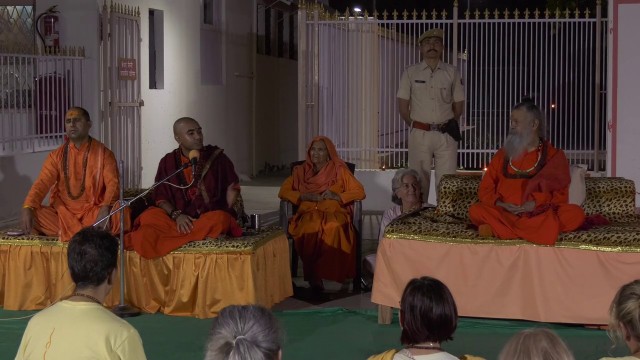
Jadan Ashram, District Pali, Rajasthan, India. Lecture by Swami Avatarpuriji. Explanation of the meaning of the world ashram.
Around the world - Opening of new YIDL center in Ptuj, Slovenia
17:00 - 17:38 (38 min)
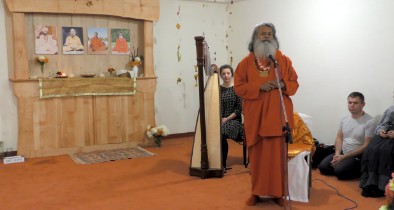
A ceremony marking the 25th anniversary of a yoga center and its inauguration as an ashram in Ptuj.
"Yoga in Daily Life is the authentic school of yoga from India. We, the teachers... carry this out as our mission. We do this voluntarily; we do not make a business of yoga."
"Yoga is the science of body, mind, and soul. Two very important things to know are yoga and Āyurveda."
A representative of the yoga center opens by recounting its 25-year history of community service. Swami Maheshwarananda (Swamiji) then delivers the main address, blessing the new ashram. He speaks on the ancient origins and holistic benefits of yoga and Ayurveda, sharing the story of Hanuman from the Ramayana to illustrate a point. The Indian Ambassador and local officials also offer congratulations. The event includes a mantra chanting and the presentation of a Shiva Lingam to the center.
Filming locations: Ptuj, Slovenia.
Master should have equal vision
17:45 - 18:10 (25 min)
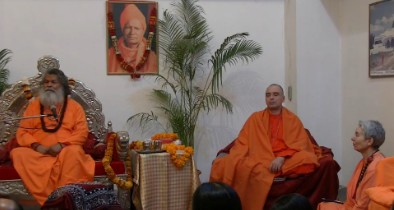
A discourse on a guru's non-discriminatory teaching methods, using a parable from the Mahabharata.
"If yoga is in your blood, then yoga is in your blood. It means it is a home tradition, a home culture."
"Masters have equal vision and no differences. If there are differences, then they are not masters."
In response to a question about teaching Indians versus Europeans differently, the speaker explains that while foundational knowledge is the same, the method must suit the student's cultural background, like learning to cook at home versus from scratch. He then narrates the story of Eklavya, who, though rejected by the teacher Dronacharya, honored him as his guru from afar and offered his thumb as guru dakshina, illustrating that true teaching and devotion transcend physical presence and formal instruction. The master's love, like sunlight, shines on all disciples equally without favoritism.
Filming location: Jaipur, Rajasthan, India
Unity, love, forgiveness, and devotion
18:15 - 18:58 (43 min)

An evening satsang on unity, awareness, and forgiveness.
"Whenever Bhaktas come, unite, and sit together, that is Dīvālī, that is Christmas."
"More than anything, there is forgiveness. When we forgive people for what they have done, it's not for them, it's for us."
A swami addresses a full hall, emphasizing the power of collective devotion to transform the age. He discusses the importance of awareness in daily life, using personal anecdotes about zoning out while driving and reducing phone use. He stresses that selfless service (seva) requires devotion (bhava) and explains unity through the metaphor of beads on a thread of Guru Bhakti. He shares a story from the Ramayana about a dog seeking justice to illustrate forgiveness and the dangers of ego, concluding with teachings on living in the present and protecting dharma.
Filming location: Strilky, Czech Republic
Raksha Bandhan is a promise we made to ourselves and others
18:59 - 19:14 (15 min)
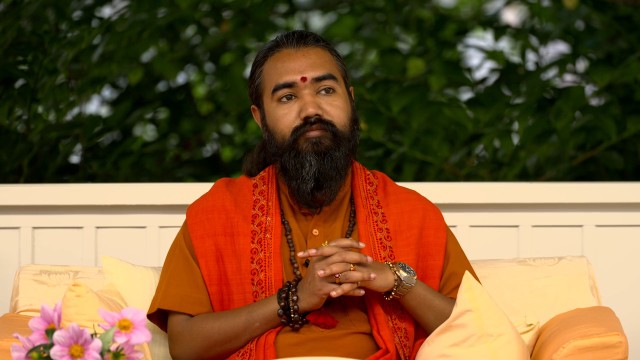
A satsang reflecting on the deeper meaning of Raksha Bandhan.
"The promises and vows we make during Rakṣābandhan are not only between brothers and sisters. It is also us telling ourselves to protect our mind from negativity, to protect our tongue from harsh words, and to protect our actions from adharma."
"Gurudev always said, 'Helping hands are better than folded hands.' So when we can, we promise to ourselves, we promise to our siblings, we promise to our friends, we promise to everyone, our guru. Then we must keep those promises and those vows."
Following morning celebrations, a speaker expands on the festival of Raksha Bandhan, explaining it as a universal vow of protection that extends beyond siblings to include oneself and one's guru. The talk emphasizes protecting one's mind and actions from negativity, and the importance of keeping one's vows through tangible action, illustrated by a story about a brother and sister. The discourse concludes with blessings for peace and unity.
F
In the home of the soul
19:15 - 20:18 (63 min)
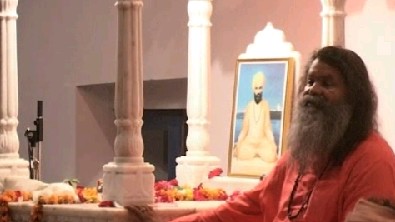
Summer 2003. in India with presentation of Yoga In Daily Life projects and Swamijis lecture
The Nature of Attachment, the Curse of Knowledge, and the Immortal Parrot
20:25 - 21:25 (60 min)
A spiritual discourse exploring attachment, divine knowledge, and a mythological story about immortality.
"Love is the greatest. That love is God, and God is love. Our love for our dear ones, parents, ancestors, sisters, brothers, friends, animals, house pets, even our car."
"Therefore, moha. Moha means ignorance, and moha means attachment."
The speaker delivers an evening satsang, weaving together philosophical teachings on attachment (moha) with the story of Shiva, Parvati, and the quest for immortal wisdom. He explains how attachment leads to suffering, illustrating this with the tale of Sati's self-immolation and Shiva's grief. The narrative then focuses on Parvati's insistence that Shiva teach her the secret of immortality, a secret that is accidentally overheard by a clever parrot, leading to the birth of the sage Shukadeva. The talk emphasizes the challenges of spiritual practice and the need for a true Guru.
Filming location: Vienna, Austria
Sri Deep Narayan Mahaprahuji
21:30 - 21:37 (7 min)
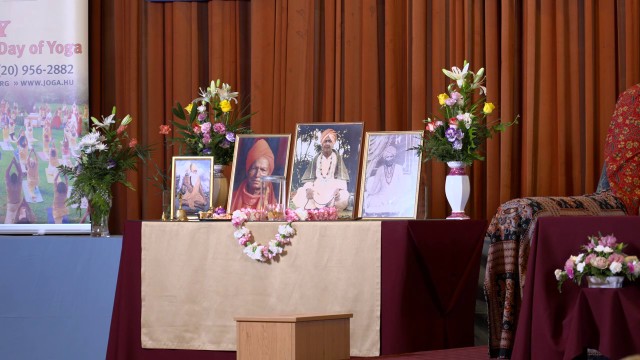
A devotional discourse on the power of the divine name and Guru's grace.
"For the beings of the world—the jīvas and jinn—His name itself is the boat to cross the ocean of existence."
"By always contemplating His name with grace, desire, anger, and greed are cut down."
The speaker offers praise to Śrī Dīp Nārāyaṇa Mahāprabhujī, described as a divine incarnation. The central theme is that constant remembrance and contemplation of this divine name serves as a vehicle for liberation, protecting devotees from worldly afflictions and illusion, and immersing them in divine absorption. The Guru's grace is presented as the essential means for this crossing.
Filming location: Vép, Hungary
Dhyan Karo
21:45 - 21:57 (12 min)
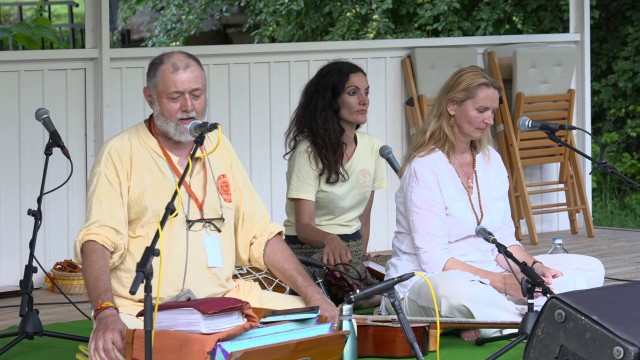
Evening satsang with Vishwaguruji from Strilky Ashram, Czech Republic. Bhajan singing from Strilky, including Dhyan Karo and Kyu Rakhte Ho Parada Ham Se
Ab Sop Diya Is Jivan Ka
22:05 - 22:20 (15 min)
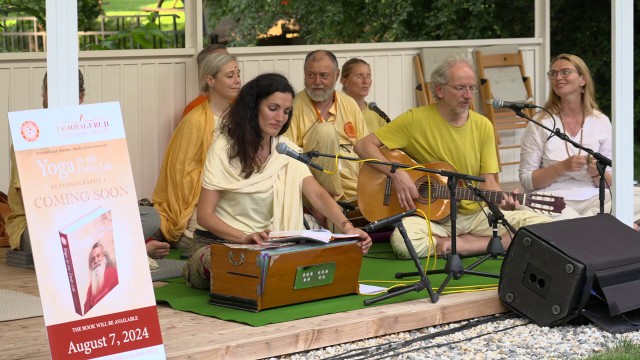
Evening satsang from Strilky Ashram, Czech Republic. Bhajan singing fron Strilky. Ab Sop Diya, Aba Hama
Without Gurudev the whole world cries
22:25 - 22:41 (16 min)
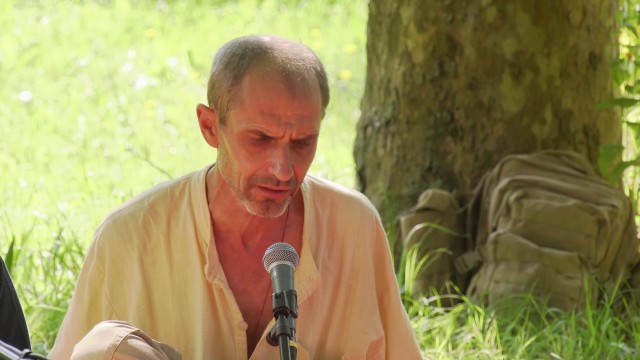
A devotee shares an interpretation and sings a devotional bhajan.
"I was wandering around the world. I searched the entire world but could not find a friend like Gurudev."
"Satguru āye, mera mana harṣāye. Dhanyabhāga mere Satguru āye. (My Satguru has come, my mind is delighted. Fortunate am I, my Satguru has come.)"
The speaker expresses a deep longing for the Guru, offering a personal interpretation of a hymn's meaning before clarifying it is not a proper translation. He then sings the bhajan "Dhania Bagha Mere Sat Guru Aya," which praises the arrival of the Satguru and the joy and liberation it brings. The session concludes with extended devotional chanting.
Filming location: Vép, Hungary
Cetana Ka Cilka Swami Ne
22:45 - 23:11 (26 min)
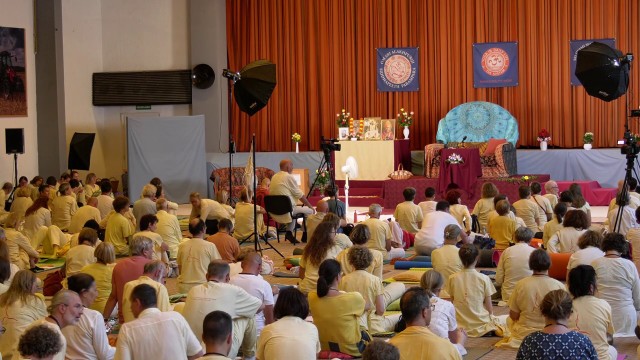
Evening satsang from Vep, Hungary. Bhajan singing from Vep.
Bhajan singing from Strilky
23:15 - 23:30 (15 min)
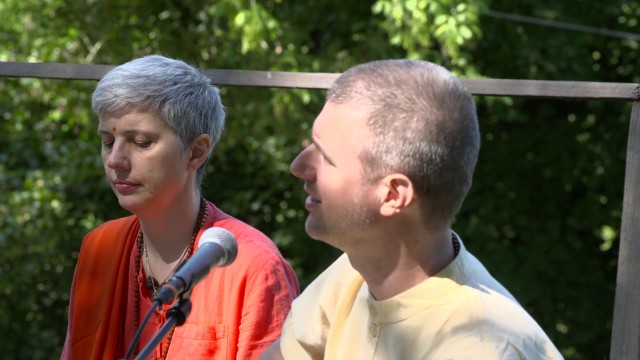
Morning satsang from Summer Yoga Retreat in Strilky, Czech Republic. Bhajan singing.
Bhajan evening from Strilky
23:35 - 0:14 (39 min)
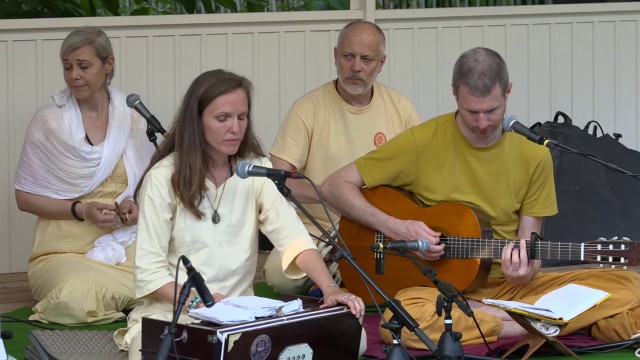
Evening satsang from Summer Yoga Retreat in Strilky, Czech Republic. Singing bhajan Sri Puja Deepa Dayalu Data, Sataguru Alakhpuriji Avo, Kya Tuma Jano Hala Hamara, Tera Sataguru Rakho Laj, Bhajo Re Manva
American
How can I love myself?
0:35 - 1:08 (33 min)
A satsang exploring the concept of self-love through the framework of the four aspects of divine grace (kripa).
"Swāmījī did not really use this word, but I know it comes from Holī Gurujī; he is always using that."
"Love each and every living being, if not more, then at least as much as yourself."
Guru Lilā, addressing the community, explains the four aspects of kripa: Deva Kripa (grace of the gods), Śāstra Kripa (grace of the scriptures), Guru Kripa (the Guru's grace), and Kuṭkī Kripa (self-grace). He focuses on Kuṭkī Kripa as self-love, arguing it is a prerequisite for loving others. He outlines a practical path to self-love through self-acceptance, self-understanding, and self-giving, linking it to core teachings. He shares an anecdote about a woman healing from ALS through self-love and concludes with a traditional story about Guru Nānak illustrating the complex workings of karma.
Filming location: Strilky, Czech Republic
The Nāḍīs, Cakras, and the Mūlādhāra Foundation
1:15 - 2:12 (57 min)
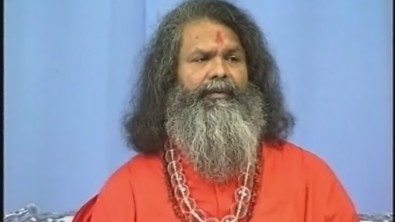
A spiritual lecture on the nāḍīs, cakras, and the foundational Mūlādhāra Cakra.
"The Mūlādhāra Cakra is at the bottom of the spinal column. It is a border between animal and human consciousness."
"Destiny was created first, and destiny is created individually. We should blame no one. We are ourselves responsible for our destiny."
The speaker continues a discourse from the previous day, focusing on the Mūlādhāra Cakra as the seat of destiny (prārabdha) and divine energy. He explains how this foundational energy influences life and can be purified through the threefold practice of svādhyāya (self-study), manana (contemplation), and abhyāsa (persistent practice), which remove the obstacles of impurity, distraction, and veils. The talk connects these concepts to Kuṇḍalinī Śakti, the role of Kriyā Yoga, and concludes with a symbolic discussion of the tilak mark.
Filming location: Umag, Croatia
The truth is tapas
2:20 - 3:26 (66 min)
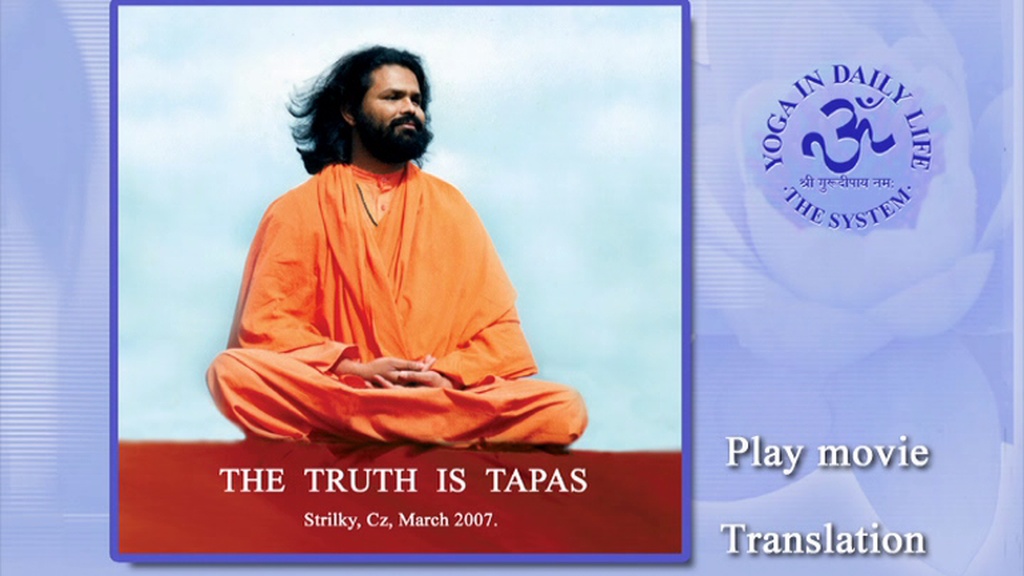
A spiritual discourse reflecting on the Kumbh Mela and warning against false spiritual powers.
"If you bathe during that constellation, the nectar still has an effect on you—meaning it cleans your karmas and blesses you with immortality."
"There is no austerity more than truth. To follow the truth is the biggest austerity, tapasyā—and no greater sin than to lie."
Swami Avatarpuri begins by describing his profound experience at the Kumbh Mela in Prayagraj, taking a sacred bath for all devotees. He then shifts to a cautionary theme, recounting stories of Holy Guruji exposing fraudulent fortune tellers and so-called healers. He warns devotees against those who claim siddhis (powers) like seeing auras or predicting futures, arguing these are obstacles to true spiritual progress. He advises focusing on genuine devotion and practice, sharing a personal story where Mahaprabhuji counseled him to be like a steadfast banyan tree, free from expectation.
Filming locations: Strelky Ashram, Czech Republic.
DVD 326
Bhajan singing in the presence of the Master
3:30 - 4:17 (47 min)
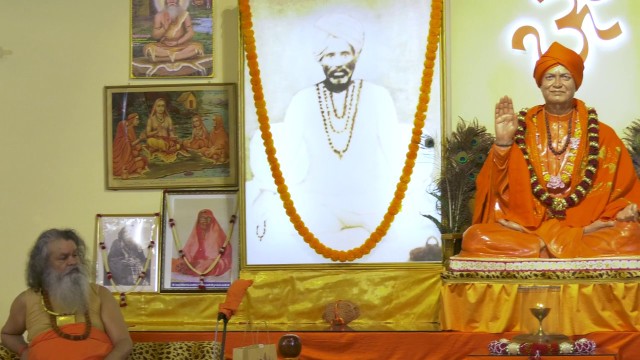
Evening satsang from Jadan Ashram, Rajasthan, India. Bhajan singing from Jadan. Including He nath ab to, Suno sakhi Sataguru aya, Guru carano me arasatha tiratha he
Guru bhakta jagata me na rahe
4:25 - 5:08 (43 min)
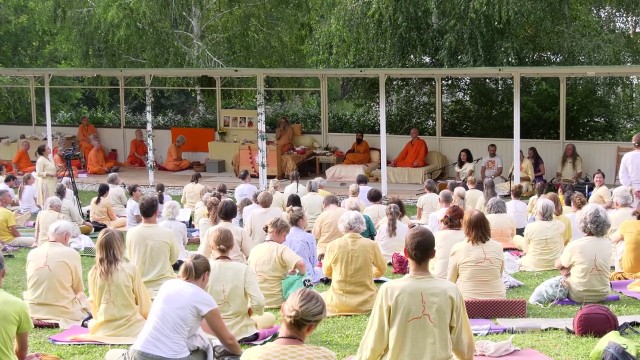
Evening satsang with Vishwaguruji from Strilky Ashram, Czech Republic. Bhajan singing on satsang, including bahajan Guru bhakta jagata me na rahe, Prema ka pyala Hari
Pyare darashana diyo aj
5:15 - 5:18 (3 min)
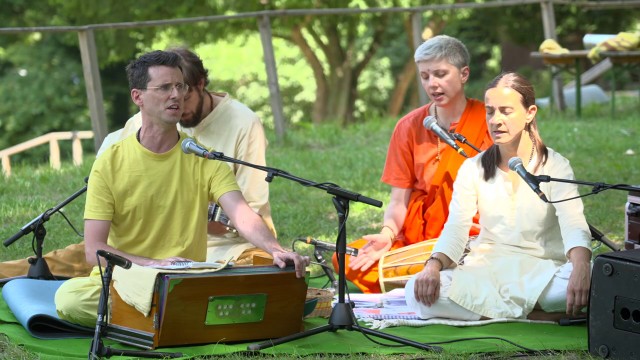
A spiritual song expressing longing for divine vision, followed by analytical remarks on the text's structure.
"Ākula vyākula fero re na dhinna" and "Darśan na dī chokhā. Darśan sannakā nindā, Nairin divasannā."
The content consists of poetic lyrics lamenting the agony of separation and the unfulfilled desire for divine sight (Darśan). This is followed by a separate section of critical remarks that analyze the song's text, pointing out its abrupt language shift, unclear referents, and narrative discontinuity.
Filming location: Strilky, Czech Republic
Bhajans from Vep
5:25 - 5:49 (24 min)
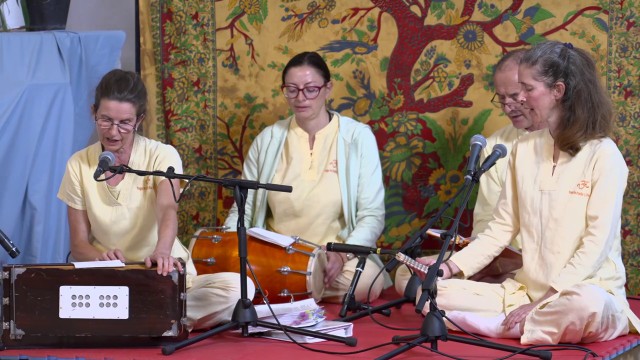
Yoga Summer Retreat from Vep, Hungary. Bhajan singing including Guruvara me cal usa una des.
The Guru's name is a priceless diamond
5:55 - 6:11 (16 min)
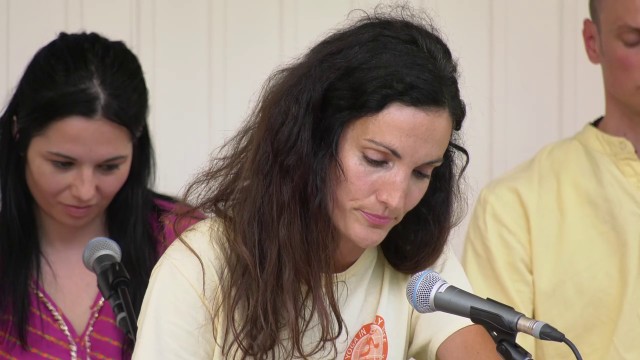
Evening satsang with Vishwaguruji from Strilky Ashram, Czech Republic. Bhajan singing from Strilky. Including bhajan "Ho Guru Sukha Dama Swami"
Tvameva Mata Ca Pita Tvameva
6:15 - 7:31 (76 min)
Morning satsang with Viswhaguruji from Strilky Ashram, Czech Republic. Bhajan singing from Strilky. Including He Nata Aba To, Itna to Karana Guruji
The aim of human life
7:35 - 8:31 (56 min)
Public lecture with Vishwaguruji from Martin, Slovakia. Yoga means uniting, harmonizing and balancing. Our earth is a living planet, in each and every cell of the body there is an immense amount of energy. The aim of the human life is to achieve liberation. Nourishment, breath, behavior and practicing yoga exercises, are the main points if we would like to be healthy and keep ourselves pure.
Purify your body from poison
8:35 - 9:49 (74 min)
A spiritual discourse on the Viśuddhi chakra, happiness, and internal purification.
"Happiness is within ourselves. Peace is within ourselves. And unhappiness is from outside."
"It is said that in life, when we walk... beside you is walking your death. You can see it is like the shadow, the shadow of your body."
Swami Anand Arun leads an evening satsang, exploring the sources of happiness and unhappiness through analogies and stories. He uses the parable of a couple's 50-year misunderstanding over a piece of bread to illustrate how unspoken resentments act as a poison, stored in the Viśuddhi (purification) chakra. The talk connects this to the myth of Shiva consuming the cosmic poison, advocating for forgiveness, clear communication, and daily pranayama to purify this negative energy and prevent physical and emotional ailments.
Filming location: USA
Active and passive meditation
9:55 - 10:49 (54 min)
A satsang on meditation, karma yoga, and humanity's relationship with nature.
"Yogaḥ karmasu kauśalam. Through the practice of karma yoga, you will be successful in your yoga practice."
"Mother Nature has enough for everyone's need, but not for the greed."
Swami Avatarpuri, speaking from Střelky Ashram, explains the two types of meditation: active (karma yoga) and passive. He critiques humanity's destructive selfishness, contrasting the imperfect man-made world with the perfect God-made world, and urges harmonious work and simpler living. He concludes with teachings on surrender and the story of Mīrābāī to illustrate divine perception.
Filming locations: Střelky Ashram, Czech Republic.
DVD 524
The Nature of Attachment, the Curse of Knowledge, and the Immortal Parrot
10:55 - 11:55 (60 min)
A spiritual discourse exploring attachment, divine knowledge, and a mythological story about immortality.
"Love is the greatest. That love is God, and God is love. Our love for our dear ones, parents, ancestors, sisters, brothers, friends, animals, house pets, even our car."
"Therefore, moha. Moha means ignorance, and moha means attachment."
The speaker delivers an evening satsang, weaving together philosophical teachings on attachment (moha) with the story of Shiva, Parvati, and the quest for immortal wisdom. He explains how attachment leads to suffering, illustrating this with the tale of Sati's self-immolation and Shiva's grief. The narrative then focuses on Parvati's insistence that Shiva teach her the secret of immortality, a secret that is accidentally overheard by a clever parrot, leading to the birth of the sage Shukadeva. The talk emphasizes the challenges of spiritual practice and the need for a true Guru.
Filming location: Vienna, Austria
Morning Yoga practice, Umag, Croatia (6/9)
12:00 - 13:56 (116 min)
Morning Yoga practice from the international Yoga retreat Umag, Croatia on 30th of September
Practice and try to purify your karma
14:00 - 14:50 (50 min)
Evening satsang from Strilky Ashram, Czech Republic. There are many beautiful apples, but some of them are rotten because a wasp infected them. When a person is spoiled, the wisdom that he got is lost. In the shelter of Gurudev, if the faith is not strong enough, some problems immediately come. A story about Kabir Das and the butcher. Those who are doing, will get the karma. The story of a man who wants to make problems for someone. Children have truth in their heart. We have to give a good message to the world. The fruit will show the condition of the tree. Karuna from Czech Republic speaks about Yoga in Daily Life helping biathlon athletes.
Yoga, the inner engineering
14:55 - 15:47 (52 min)
Satsang with Vishwaguruji, summer retreat in Strilky Ashram, Czech Republic. There are different levels of our being such as: Atma, Jivatma, consciousness/awareness, mind, emotion, senses, desires, physical body and energy body. There is an inner balancing mechanism to distribute energy to the whole body. With proper inner engineering we should avoid destroying our system. We need healthy seasonal eating and enhanced practice such as Pranayam.
The Sole Necessity of Guru's Grace
15:55 - 16:42 (47 min)
A spiritual discourse on the absolute necessity of the Guru's grace, illustrated with parables and observations on life.
"Without the grace of the Guru, nothing can be. We may think we can do without it and believe we are okay, but that is not how it is."
"Guru kṛpā hi kevalam. Guru’s grace... When Gurudeva’s blessing is there, then everything is possible."
The speaker, likely a swami, delivers a satsang emphasizing that all spiritual progress and worldly harmony depend solely on the Guru's grace. He expands the concept of Guru to include parents and the supportive community of village life, using anecdotes about street dogs and a detailed parable about a devoted disciple, his wife, and a test of sacrifice to illustrate the depth of true devotion and the singular source of blessing.
Filming location: Strilky, Czech Republic
Learning from Guruji
16:50 - 18:29 (99 min)
Evening Satsang with Mahamandaleshwar Swami Jasrajpuriji at Strilky Ashram, Czech Republic
How can I love myself?
18:35 - 19:08 (33 min)
A satsang exploring the concept of self-love through the framework of the four aspects of divine grace (kripa).
"Swāmījī did not really use this word, but I know it comes from Holī Gurujī; he is always using that."
"Love each and every living being, if not more, then at least as much as yourself."
Guru Lilā, addressing the community, explains the four aspects of kripa: Deva Kripa (grace of the gods), Śāstra Kripa (grace of the scriptures), Guru Kripa (the Guru's grace), and Kuṭkī Kripa (self-grace). He focuses on Kuṭkī Kripa as self-love, arguing it is a prerequisite for loving others. He outlines a practical path to self-love through self-acceptance, self-understanding, and self-giving, linking it to core teachings. He shares an anecdote about a woman healing from ALS through self-love and concludes with a traditional story about Guru Nānak illustrating the complex workings of karma.
Filming location: Strilky, Czech Republic
Useful technics for problem solving
19:15 - 20:01 (46 min)
Morning lecture with Mahamandaleshwar Swami Jasrajpuriji at Strilky Ashram, Czech Republic
The Journey of the Soul: From the Ocean to the Drop
20:05 - 20:59 (54 min)
A spiritual discourse using the water cycle as a metaphor for the soul's journey.
"This jīvā, the soul, is on the journey of the eternal."
"When this drop falls into the ocean, the Jīva becomes the Ātmā. This drop becomes the ocean."
Swami Avatarpuri gives a satsang, explaining the soul's separation from and longing to return to the divine source through an extended analogy of evaporation and rainfall. He emphasizes the purifying role of satsang and the Guru, shares anecdotes about introducing mantra in Eastern Europe and criticizes modern chemical pollution and vanity as spiritual impediments, concluding with a call for natural living and collective chanting.
Filming location: London, UK
The Soul's Journey
21:05 - 21:58 (53 min)
A spiritual discourse on the journey of the soul through birth, death, and karma.
"Our soul—not the Ātmā, but the soul... the soul is individual, not universal."
"Only two will follow us: our good or bad karmas. And that becomes destiny. And against destiny we have no power."
A spiritual teacher explains the nature of the individual soul (Jīvātmā) as a wave of the universal resonance. He describes its journey through time, bound by karma, its entry into a physical body, and the rare opportunity of human birth. He emphasizes the inescapable law of karma governed by body, mind, speech, and wealth, and concludes that liberation comes through spiritual practice and the Guru's grace, which dissolves the soul back into the Supreme.
Filming location: Strilky, Czech Republic
Diwali Celebration
22:06 - 22:50 (44 min)
Jadan Ashram, District Pali, Rajasthan, India. Lecture by Swami Avatarpuriji. Explanation of the meaning of the world ashram.
Around the world - Opening of new YIDL center in Ptuj, Slovenia
23:00 - 23:38 (38 min)
A ceremony marking the 25th anniversary of a yoga center and its inauguration as an ashram in Ptuj.
"Yoga in Daily Life is the authentic school of yoga from India. We, the teachers... carry this out as our mission. We do this voluntarily; we do not make a business of yoga."
"Yoga is the science of body, mind, and soul. Two very important things to know are yoga and Āyurveda."
A representative of the yoga center opens by recounting its 25-year history of community service. Swami Maheshwarananda (Swamiji) then delivers the main address, blessing the new ashram. He speaks on the ancient origins and holistic benefits of yoga and Ayurveda, sharing the story of Hanuman from the Ramayana to illustrate a point. The Indian Ambassador and local officials also offer congratulations. The event includes a mantra chanting and the presentation of a Shiva Lingam to the center.
Filming locations: Ptuj, Slovenia.
Master should have equal vision
23:45 - 0:10 (25 min)
A discourse on a guru's non-discriminatory teaching methods, using a parable from the Mahabharata.
"If yoga is in your blood, then yoga is in your blood. It means it is a home tradition, a home culture."
"Masters have equal vision and no differences. If there are differences, then they are not masters."
In response to a question about teaching Indians versus Europeans differently, the speaker explains that while foundational knowledge is the same, the method must suit the student's cultural background, like learning to cook at home versus from scratch. He then narrates the story of Eklavya, who, though rejected by the teacher Dronacharya, honored him as his guru from afar and offered his thumb as guru dakshina, illustrating that true teaching and devotion transcend physical presence and formal instruction. The master's love, like sunlight, shines on all disciples equally without favoritism.
Filming location: Jaipur, Rajasthan, India
Australian
Purify your body from poison
0:50 - 2:04 (74 min)
A spiritual discourse on the Viśuddhi chakra, happiness, and internal purification.
"Happiness is within ourselves. Peace is within ourselves. And unhappiness is from outside."
"It is said that in life, when we walk... beside you is walking your death. You can see it is like the shadow, the shadow of your body."
Swami Anand Arun leads an evening satsang, exploring the sources of happiness and unhappiness through analogies and stories. He uses the parable of a couple's 50-year misunderstanding over a piece of bread to illustrate how unspoken resentments act as a poison, stored in the Viśuddhi (purification) chakra. The talk connects this to the myth of Shiva consuming the cosmic poison, advocating for forgiveness, clear communication, and daily pranayama to purify this negative energy and prevent physical and emotional ailments.
Filming location: USA
Diwali Celebration
2:10 - 2:54 (44 min)
Jadan Ashram, District Pali, Rajasthan, India. Lecture by Swami Avatarpuriji. Explanation of the meaning of the world ashram.
Learning from Guruji
3:00 - 4:39 (99 min)
Evening Satsang with Mahamandaleshwar Swami Jasrajpuriji at Strilky Ashram, Czech Republic
Raksha Bandhan is a promise we made to ourselves and others
4:44 - 4:59 (15 min)
A satsang reflecting on the deeper meaning of Raksha Bandhan.
"The promises and vows we make during Rakṣābandhan are not only between brothers and sisters. It is also us telling ourselves to protect our mind from negativity, to protect our tongue from harsh words, and to protect our actions from adharma."
"Gurudev always said, 'Helping hands are better than folded hands.' So when we can, we promise to ourselves, we promise to our siblings, we promise to our friends, we promise to everyone, our guru. Then we must keep those promises and those vows."
Following morning celebrations, a speaker expands on the festival of Raksha Bandhan, explaining it as a universal vow of protection that extends beyond siblings to include oneself and one's guru. The talk emphasizes protecting one's mind and actions from negativity, and the importance of keeping one's vows through tangible action, illustrated by a story about a brother and sister. The discourse concludes with blessings for peace and unity.
F
Around the world - Opening of new YIDL center in Nadlac, Romania
5:00 - 5:40 (40 min)
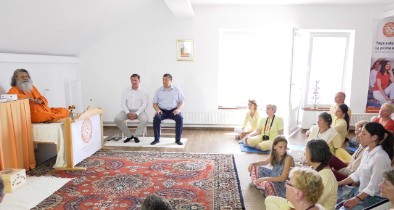
Morning satsang with Vishwaguruji from Nadlac, Romania.
Unity, love, forgiveness, and devotion
5:45 - 6:28 (43 min)
An evening satsang on unity, awareness, and forgiveness.
"Whenever Bhaktas come, unite, and sit together, that is Dīvālī, that is Christmas."
"More than anything, there is forgiveness. When we forgive people for what they have done, it's not for them, it's for us."
A swami addresses a full hall, emphasizing the power of collective devotion to transform the age. He discusses the importance of awareness in daily life, using personal anecdotes about zoning out while driving and reducing phone use. He stresses that selfless service (seva) requires devotion (bhava) and explains unity through the metaphor of beads on a thread of Guru Bhakti. He shares a story from the Ramayana about a dog seeking justice to illustrate forgiveness and the dangers of ego, concluding with teachings on living in the present and protecting dharma.
Filming location: Strilky, Czech Republic
How can I love myself?
6:35 - 7:08 (33 min)
A satsang exploring the concept of self-love through the framework of the four aspects of divine grace (kripa).
"Swāmījī did not really use this word, but I know it comes from Holī Gurujī; he is always using that."
"Love each and every living being, if not more, then at least as much as yourself."
Guru Lilā, addressing the community, explains the four aspects of kripa: Deva Kripa (grace of the gods), Śāstra Kripa (grace of the scriptures), Guru Kripa (the Guru's grace), and Kuṭkī Kripa (self-grace). He focuses on Kuṭkī Kripa as self-love, arguing it is a prerequisite for loving others. He outlines a practical path to self-love through self-acceptance, self-understanding, and self-giving, linking it to core teachings. He shares an anecdote about a woman healing from ALS through self-love and concludes with a traditional story about Guru Nānak illustrating the complex workings of karma.
Filming location: Strilky, Czech Republic
The Nāḍīs, Cakras, and the Mūlādhāra Foundation
7:15 - 8:12 (57 min)
A spiritual lecture on the nāḍīs, cakras, and the foundational Mūlādhāra Cakra.
"The Mūlādhāra Cakra is at the bottom of the spinal column. It is a border between animal and human consciousness."
"Destiny was created first, and destiny is created individually. We should blame no one. We are ourselves responsible for our destiny."
The speaker continues a discourse from the previous day, focusing on the Mūlādhāra Cakra as the seat of destiny (prārabdha) and divine energy. He explains how this foundational energy influences life and can be purified through the threefold practice of svādhyāya (self-study), manana (contemplation), and abhyāsa (persistent practice), which remove the obstacles of impurity, distraction, and veils. The talk connects these concepts to Kuṇḍalinī Śakti, the role of Kriyā Yoga, and concludes with a symbolic discussion of the tilak mark.
Filming location: Umag, Croatia
The truth is tapas
8:20 - 9:26 (66 min)
A spiritual discourse reflecting on the Kumbh Mela and warning against false spiritual powers.
"If you bathe during that constellation, the nectar still has an effect on you—meaning it cleans your karmas and blesses you with immortality."
"There is no austerity more than truth. To follow the truth is the biggest austerity, tapasyā—and no greater sin than to lie."
Swami Avatarpuri begins by describing his profound experience at the Kumbh Mela in Prayagraj, taking a sacred bath for all devotees. He then shifts to a cautionary theme, recounting stories of Holy Guruji exposing fraudulent fortune tellers and so-called healers. He warns devotees against those who claim siddhis (powers) like seeing auras or predicting futures, arguing these are obstacles to true spiritual progress. He advises focusing on genuine devotion and practice, sharing a personal story where Mahaprabhuji counseled him to be like a steadfast banyan tree, free from expectation.
Filming locations: Strelky Ashram, Czech Republic.
DVD 326
Bhajan singing in the presence of the Master
9:30 - 10:17 (47 min)
Evening satsang from Jadan Ashram, Rajasthan, India. Bhajan singing from Jadan. Including He nath ab to, Suno sakhi Sataguru aya, Guru carano me arasatha tiratha he
Guru bhakta jagata me na rahe
10:25 - 11:08 (43 min)
Evening satsang with Vishwaguruji from Strilky Ashram, Czech Republic. Bhajan singing on satsang, including bahajan Guru bhakta jagata me na rahe, Prema ka pyala Hari
Pyare darashana diyo aj
11:15 - 11:18 (3 min)
A spiritual song expressing longing for divine vision, followed by analytical remarks on the text's structure.
"Ākula vyākula fero re na dhinna" and "Darśan na dī chokhā. Darśan sannakā nindā, Nairin divasannā."
The content consists of poetic lyrics lamenting the agony of separation and the unfulfilled desire for divine sight (Darśan). This is followed by a separate section of critical remarks that analyze the song's text, pointing out its abrupt language shift, unclear referents, and narrative discontinuity.
Filming location: Strilky, Czech Republic
Bhajans from Vep
11:25 - 11:49 (24 min)
Yoga Summer Retreat from Vep, Hungary. Bhajan singing including Guruvara me cal usa una des.
The Guru's name is a priceless diamond
11:55 - 12:11 (16 min)
Evening satsang with Vishwaguruji from Strilky Ashram, Czech Republic. Bhajan singing from Strilky. Including bhajan "Ho Guru Sukha Dama Swami"
Tvameva Mata Ca Pita Tvameva
12:15 - 13:31 (76 min)
Morning satsang with Viswhaguruji from Strilky Ashram, Czech Republic. Bhajan singing from Strilky. Including He Nata Aba To, Itna to Karana Guruji
The aim of human life
13:35 - 14:31 (56 min)
Public lecture with Vishwaguruji from Martin, Slovakia. Yoga means uniting, harmonizing and balancing. Our earth is a living planet, in each and every cell of the body there is an immense amount of energy. The aim of the human life is to achieve liberation. Nourishment, breath, behavior and practicing yoga exercises, are the main points if we would like to be healthy and keep ourselves pure.
Purify your body from poison
14:35 - 15:49 (74 min)
A spiritual discourse on the Viśuddhi chakra, happiness, and internal purification.
"Happiness is within ourselves. Peace is within ourselves. And unhappiness is from outside."
"It is said that in life, when we walk... beside you is walking your death. You can see it is like the shadow, the shadow of your body."
Swami Anand Arun leads an evening satsang, exploring the sources of happiness and unhappiness through analogies and stories. He uses the parable of a couple's 50-year misunderstanding over a piece of bread to illustrate how unspoken resentments act as a poison, stored in the Viśuddhi (purification) chakra. The talk connects this to the myth of Shiva consuming the cosmic poison, advocating for forgiveness, clear communication, and daily pranayama to purify this negative energy and prevent physical and emotional ailments.
Filming location: USA
Active and passive meditation
15:55 - 16:49 (54 min)
A satsang on meditation, karma yoga, and humanity's relationship with nature.
"Yogaḥ karmasu kauśalam. Through the practice of karma yoga, you will be successful in your yoga practice."
"Mother Nature has enough for everyone's need, but not for the greed."
Swami Avatarpuri, speaking from Střelky Ashram, explains the two types of meditation: active (karma yoga) and passive. He critiques humanity's destructive selfishness, contrasting the imperfect man-made world with the perfect God-made world, and urges harmonious work and simpler living. He concludes with teachings on surrender and the story of Mīrābāī to illustrate divine perception.
Filming locations: Střelky Ashram, Czech Republic.
DVD 524
The Nature of Attachment, the Curse of Knowledge, and the Immortal Parrot
16:55 - 17:55 (60 min)
A spiritual discourse exploring attachment, divine knowledge, and a mythological story about immortality.
"Love is the greatest. That love is God, and God is love. Our love for our dear ones, parents, ancestors, sisters, brothers, friends, animals, house pets, even our car."
"Therefore, moha. Moha means ignorance, and moha means attachment."
The speaker delivers an evening satsang, weaving together philosophical teachings on attachment (moha) with the story of Shiva, Parvati, and the quest for immortal wisdom. He explains how attachment leads to suffering, illustrating this with the tale of Sati's self-immolation and Shiva's grief. The narrative then focuses on Parvati's insistence that Shiva teach her the secret of immortality, a secret that is accidentally overheard by a clever parrot, leading to the birth of the sage Shukadeva. The talk emphasizes the challenges of spiritual practice and the need for a true Guru.
Filming location: Vienna, Austria
Morning Yoga practice, Umag, Croatia (6/9)
18:00 - 19:56 (116 min)
Morning Yoga practice from the international Yoga retreat Umag, Croatia on 30th of September
Practice and try to purify your karma
20:00 - 20:50 (50 min)
Evening satsang from Strilky Ashram, Czech Republic. There are many beautiful apples, but some of them are rotten because a wasp infected them. When a person is spoiled, the wisdom that he got is lost. In the shelter of Gurudev, if the faith is not strong enough, some problems immediately come. A story about Kabir Das and the butcher. Those who are doing, will get the karma. The story of a man who wants to make problems for someone. Children have truth in their heart. We have to give a good message to the world. The fruit will show the condition of the tree. Karuna from Czech Republic speaks about Yoga in Daily Life helping biathlon athletes.
Yoga, the inner engineering
20:55 - 21:47 (52 min)
Satsang with Vishwaguruji, summer retreat in Strilky Ashram, Czech Republic. There are different levels of our being such as: Atma, Jivatma, consciousness/awareness, mind, emotion, senses, desires, physical body and energy body. There is an inner balancing mechanism to distribute energy to the whole body. With proper inner engineering we should avoid destroying our system. We need healthy seasonal eating and enhanced practice such as Pranayam.
The Sole Necessity of Guru's Grace
21:55 - 22:42 (47 min)
A spiritual discourse on the absolute necessity of the Guru's grace, illustrated with parables and observations on life.
"Without the grace of the Guru, nothing can be. We may think we can do without it and believe we are okay, but that is not how it is."
"Guru kṛpā hi kevalam. Guru’s grace... When Gurudeva’s blessing is there, then everything is possible."
The speaker, likely a swami, delivers a satsang emphasizing that all spiritual progress and worldly harmony depend solely on the Guru's grace. He expands the concept of Guru to include parents and the supportive community of village life, using anecdotes about street dogs and a detailed parable about a devoted disciple, his wife, and a test of sacrifice to illustrate the depth of true devotion and the singular source of blessing.
Filming location: Strilky, Czech Republic
Learning from Guruji
22:50 - 0:29 (99 min)
Evening Satsang with Mahamandaleshwar Swami Jasrajpuriji at Strilky Ashram, Czech Republic