
European
Practising Asanas 1
0:00 - 1:12 (72 min)
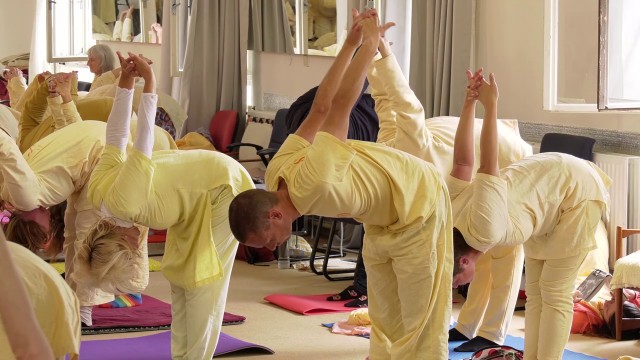
Morning satsang with Vishwaguruji from Strilky Ashram, Czech Republic. Pavanamuktasan, Marjari, Sasanka Asana, Shoulder cycling, Exercises for the foot, Ashva Sanchalanasan, Meru Akaranasan, Bhunamanasan, Meru Prishthasan, Dvikonasan, Setu Asan, Half Butterfly variations, Butterfly. Demonstration and explanation of the benefits of the exercise.
We have to become one
1:20 - 2:54 (94 min)
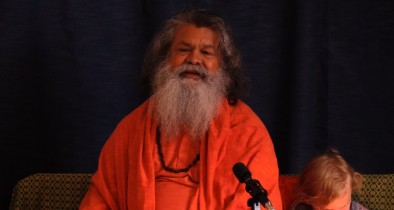
Evening satsang with Vishwaguruji from Auckland, New Zealand. There are many things in the space. We should stop our attachment. Great yogis do not attach to anything and to anybody. Break from the attachment and join to God. Nothing is mine. Explanation of bhadzsan Chidananda Rupam Sivoham Sivoham. Sometimes we can not understand wisdom. Shiva means only space. He is everywhere in everything and nowhere. Explanation of bhadzsan Ragupati Raghava Raj Ram. One in all and all in one. Explanation of bhadzsan Sabda Sanehi Mhari Jatra. A story or a poem can help you to understand knowledge. The knowledge what we have we should understand, realize and give further. Chakras are the major stations in our body. The Earth connected to the Sun. The system of elements and chakras in our body.
International Yoga festival 2017, 21st of November
3:00 - 4:13 (73 min)
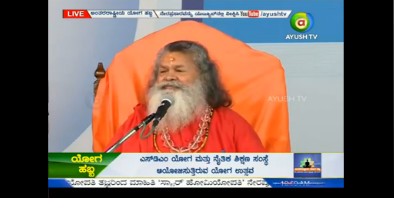
The International Yoga festival 2017 organized by Shanthivana Trust in Dharmasthala, India. The program was set to last from 21st to 24th of November 2017. The sponsors include: Yoga Federation of India, Asian Yoga Federation, Yoga Sports Association and others... Chief guest – Sri Shripad Yesso Naik (Honourable minister of state for AYUSH independent charge, Govt. of India.). Guests of Honour – Dr. H. R. Nagendra (SVYASA Yoga university, Bangalore)
Guru is eternal
4:15 - 4:57 (42 min)
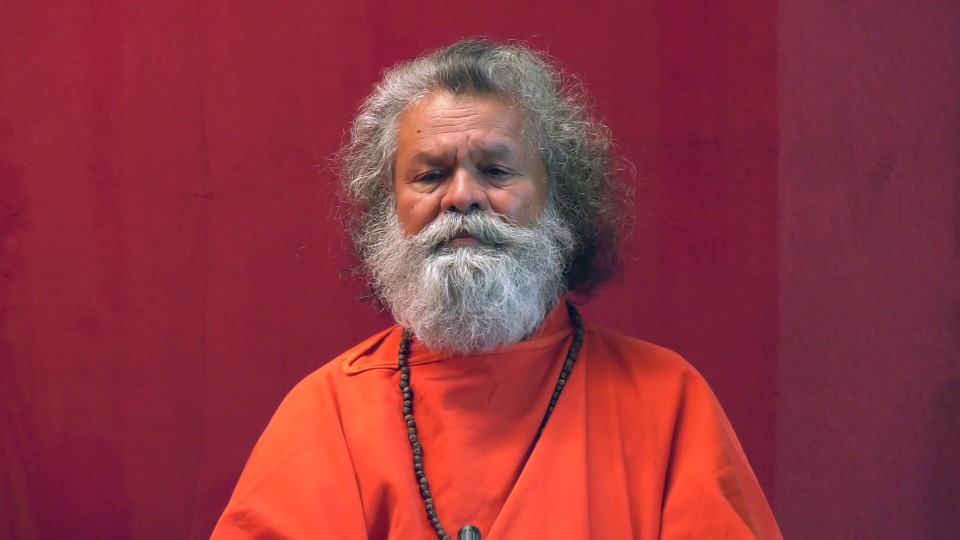
A spiritual discourse on the eternal Guru principle, divine cycles, and spiritual lineage.
"Brahmā, Viṣṇu, and Śiva will change, but the Guru will remain."
"One should not sit on that chair... I am taking care of this Gāḍī (seat)."
The lecturer delivers an evening talk, exploring the timeless nature of the Guru compared to the cyclical roles of the Hindu trinity. He discusses the concept of the Guru's seat (Gāḍī) in a lineage, emphasizing humility and service, and shares personal reflections on his teachers, including Gurujī and Shanti. The talk weaves together cosmology, caste as spiritual heritage, and the importance of spiritual practice.
Filming location: Vienna, Austria
Raksha Bandhan
5:00 - 5:12 (12 min)
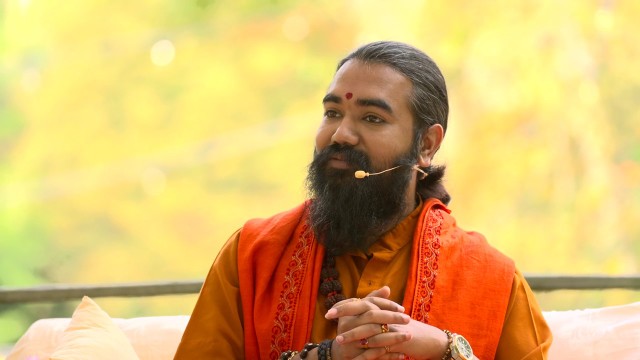
A satsang discourse on the spiritual significance of Raksha Bandhan.
"We are all scared of bandhanas. Bandhan means to get bound or stuck into something. But Rakṣā Bandhan is a good bandhan. Because in that bond, in that binding, you are not getting stuck; you are being protected."
"Vasudeva Kuṭumbakam means the world is one. All the people in the world are one family. As for us, we are one family, all in one, one in all."
A spiritual teacher addresses a gathering, explaining Raksha Bandhan as a sacred bond of protection and love that transcends biological siblingship. He describes it as a spiritual and emotional reunion that cultivates gratitude and blessings. The talk illustrates this with stories from the Mahabharata, where Draupadi and Lord Krishna become spiritual siblings, and the historical tale of Rani Karnavati and Humayun. The core theme is the expansion of familial love into a universal principle of dharma and protection.
Filming location: Strilky, Czech Republic
Vegetarian cooking lesson 15
5:00 - 5:11 (11 min)

Vegetarian cooking lesson
Listen to only ourselves and our Gurudev
5:15 - 5:55 (40 min)
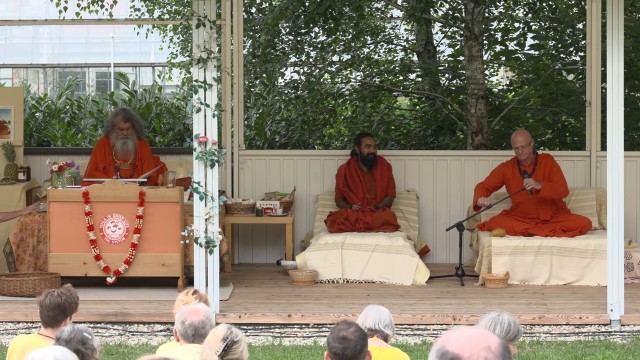
A satsang discourse on the true purpose of spiritual holidays and the importance of guru guidance.
"Coming here to the Ashram... after a whole year of working and school, is truly a holiday."
"The only way for that is to be in satsaṅg, to have darśan with a self-realized person, a guru, and to be in peace."
A speaker addresses attendees at Strelka Ashram, contrasting modern distractions with the ancient value of solitude (ekānta) for reflection. He emphasizes that a spiritual holiday involves satsang, darshan, and unity within the spiritual family. He shares a cautionary tale of a couple who, by listening to others' opinions instead of directly approaching their guru, create conflict, illustrating the need for direct guidance and discernment.
Filming location: Strilky, Czech Republic
The health of the bones
6:00 - 6:52 (52 min)
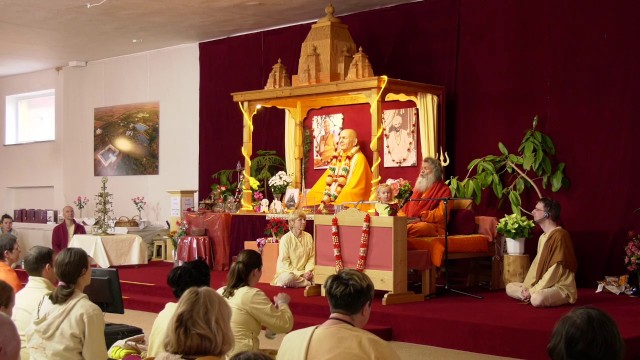
A spiritual talk on the purification of the body and mind, focusing on holy water and natural self-care.
"You can give this, what we call, the holy water. Give this to all your friends and everybody this Christmas."
"So bring the happiness... put a holy, a holy thought within us. 'Holy' means the clean and have a good energy."
Swami Ji offers a wide-ranging discourse, encouraging the use of holy water for purification and harmony during Christmas. He advises on caring for the physical body through natural means—like simple oils, yoga, and avoiding synthetic creams—linking it to the care of the subtle bodies (kośas). The talk includes personal anecdotes about habits and diet, emphasizing a return to simplicity and gratitude.
Filming location: Strilky, Czech Republic
Yoga, Āyurveda, and the Journey Beyond: From Vikāra to Turīya
7:00 - 7:55 (55 min)
A spiritual discourse on Yoga, Āyurveda, and consciousness, transitioning into teachings on Yoga Nidrā.
"Āyurveda has now again brought this science forward and is very, very helpful."
"Meditation is one of the best ways to realize that this is not a reality now, what I am worrying."
Swami Anand Arun leads a morning satsang, continuing a two-day series. He discusses Āyurveda's approach to physical and mental disease (vikāra), focusing on the destructive nature of worries (cintā) and overthinking (cintan). He explains how unfulfilled desires reside in the subconscious, introducing Yoga Nidrā as a technique to purify these layers and master the states of waking, dreaming, and deep sleep to access higher consciousness.
Filming location: Auckland, New Zealand
Respect is important
8:00 - 8:53 (53 min)
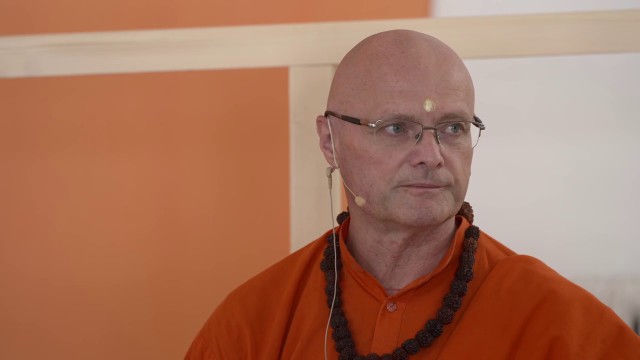
A spiritual discourse and mantra teaching session on the power of language, respect, and energy.
"Spirituality does not mean wholly very slow... But with this different energy inside, just try to be aware of this thing: in which way are we addressing other people?"
"You get from an object only as much as you respect it... If your mālā has some value for you, you will keep it in a safe place... Because of that, you will, from your mālā, get energy when you need it."
A speaker leads a satsang, emphasizing the profound impact of words, gestures, and intention. He discusses how language shapes reality, using examples from addressing others to serving food and respecting spiritual objects like a mala. The talk covers the importance of positive speech, respectful action, and the energy behind our deeds. The session concludes with Swami Avatar Puri teaching and explaining the "Nāma kamala nābhāya" mantra, including its translation and significance.
Filming location: Strilky, Czech Republic
Don't kill Animals!
9:00 - 9:58 (58 min)
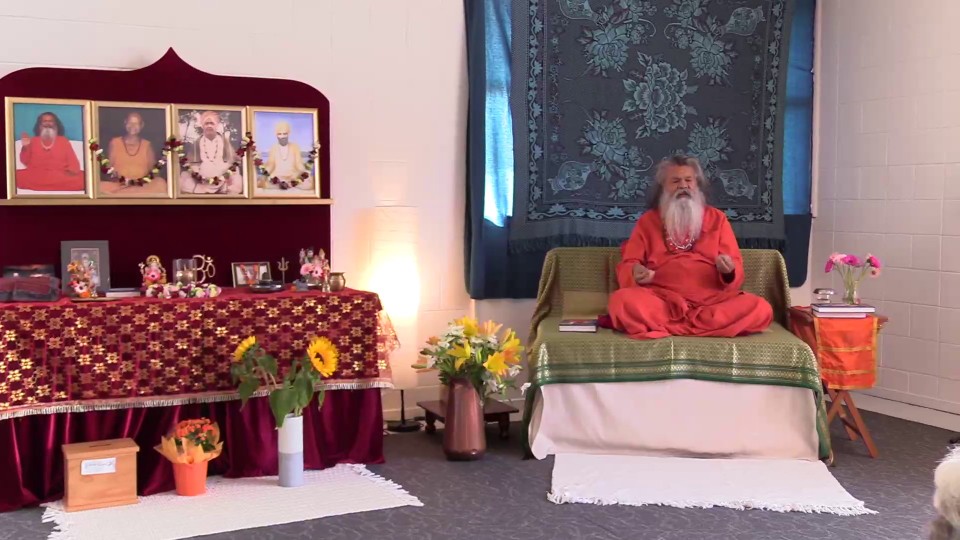
Morning satsang with Vishwaguruji from Auckland, New Zealand. The origin of many diseases is in our relationships. We can solve problems if we are practicing yoga. Advice from Vishwaguruji for good health. Search your Guru in the heart. We have to follow the words of the Saint's. Do not kill animals and eat them. Humans cause immense pain to innocent animals. That is why viruses are coming as a strike-back.
The spiritual family
10:05 - 10:56 (51 min)
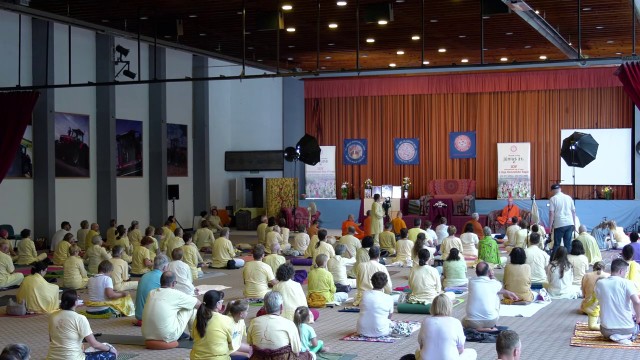
An opening talk at a spiritual seminar addressing the absence of the guru and the purpose of gathering.
"People are always complaining, 'Oh, Kali Yuga is not good, Kali Yuga is a terrible time.' But if you know how to utilize it, Kali Yuga is also excellent."
"We need to be like a Paramahaṁsa... We should be like that. In this world, we have so many things... we should be like the Haṁsa: take the pearls, take the milk, and leave the water."
A senior disciple addresses the assembled spiritual family at the Vép seminar, acknowledging the physical absence of Viśvagurūjī. He reframes the gathering as a vital opportunity to recharge, strengthen spiritual family bonds, and deepen personal practice. Key themes include extracting the essence from the Kali Yuga, the necessity of a supportive community for sādhanā, and using the seminar for introspection, mauna (silence), and focused practice of āsana and prāṇāyāma to calm the mind.
Filming location: Vép, Hungary
Around the world - Yoga in Slovakia
11:00 - 12:37 (97 min)
Yoga practice in Slovaka, the city of Presov
Support your heart
12:45 - 13:24 (39 min)
Live webcast from Melbourne, Australia. We all know the heart, the seat of love and life. Many people have problems with their hearts. I want to show you some simple exercises that are very good for the health of the heart. Practice and demonstration.
Raksha Bandhan is a promise we made to ourselves and others
13:30 - 13:45 (15 min)
A satsang reflecting on the deeper meaning of Raksha Bandhan.
"The promises and vows we make during Rakṣābandhan are not only between brothers and sisters. It is also us telling ourselves to protect our mind from negativity, to protect our tongue from harsh words, and to protect our actions from adharma."
"Gurudev always said, 'Helping hands are better than folded hands.' So when we can, we promise to ourselves, we promise to our siblings, we promise to our friends, we promise to everyone, our guru. Then we must keep those promises and those vows."
Following morning celebrations, a speaker expands on the festival of Raksha Bandhan, explaining it as a universal vow of protection that extends beyond siblings to include oneself and one's guru. The talk emphasizes protecting one's mind and actions from negativity, and the importance of keeping one's vows through tangible action, illustrated by a story about a brother and sister. The discourse concludes with blessings for peace and unity.
Filming location: Strilky, Czech Republic
Make a clear decision
13:30 - 14:12 (42 min)
A spiritual talk on the power of resolve and authentic yoga practice.
"What you wish for in your inner self will come true through God’s blessings. Positive wishes and positive thoughts will come true."
"Yoga should be part of our life. We eat and drink every day because that is our life. And so, yoga is also a part of our food. It is spiritual food."
Swami Satyanarayana addresses devotees, reflecting on the growth of the Yoga in Daily Life system since his arrival in Austria in 1973. He emphasizes the importance of a firm spiritual resolve (Saṅkalpa) and disciplined practice, distinguishing authentic, holistic yoga from commercialized physical exercise. He discusses the proper approach to āsana, prāṇāyāma, and relaxation, using anecdotes and observations on the global spread of yoga.
Filming location: Austria
Learn to renounce
14:15 - 15:03 (48 min)
Evening satsang with Vishwaguruji from Atlanta, Georgia, USA. As time is passing we are getting old and feeling inside threatened by this situation, it is not easy to retire. Some people are afraid about the death, or about the way how one will die. We can’t avoid this, but it can be very nice. For that we have to change our thoughts and learn to renounce, but not from the good things like freedom, happiness.
How to train our mind?
15:05 - 15:26 (21 min)
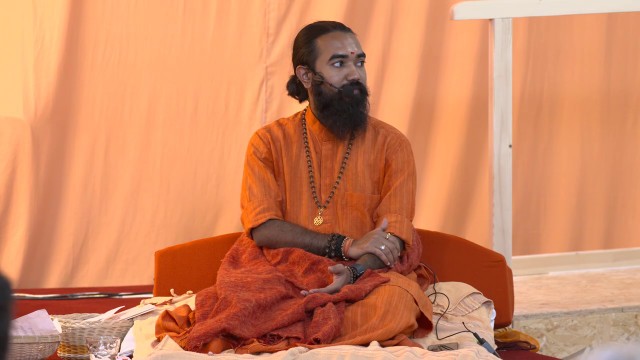
A spiritual discourse on taming the restless mind using a parable from Gurudeva.
"Our mind is chanchal. Chanchal means very restless, and that is normal for a human mind, but you need to learn how to train and tame your mind."
"In the same way, our minds are very restless, running around. We should just let it go; that is its job, to roam around and have thoughts continuously. Then, slowly, slowly, train your mind towards Guru Bhakti."
A speaker recounts Gurudeva's parable of a king's untamable horse and the patient trainer who tamed it through gentle, persistent companionship and reward. The story serves as an analogy for taming the restless mind through devotion to the Guru and the path of Bhakti, rather than forceful suppression. The session concludes with the guided recitation and explanation of a Sanskrit mantra focused on meditating on the Supreme Self within the heart.
Filming location: Strilky, Czech Republic
Singing bhajans by Swami Gajanandji
15:30 - 16:07 (37 min)
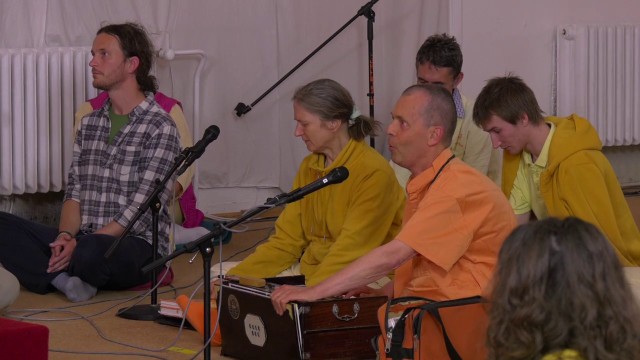
Evening satsang with Vishwaguruji from Strilky Ashram, Czech Republic. Singing bhajans by Swami Gajanandji.
Bhajan evening from Vep
16:15 - 17:10 (55 min)
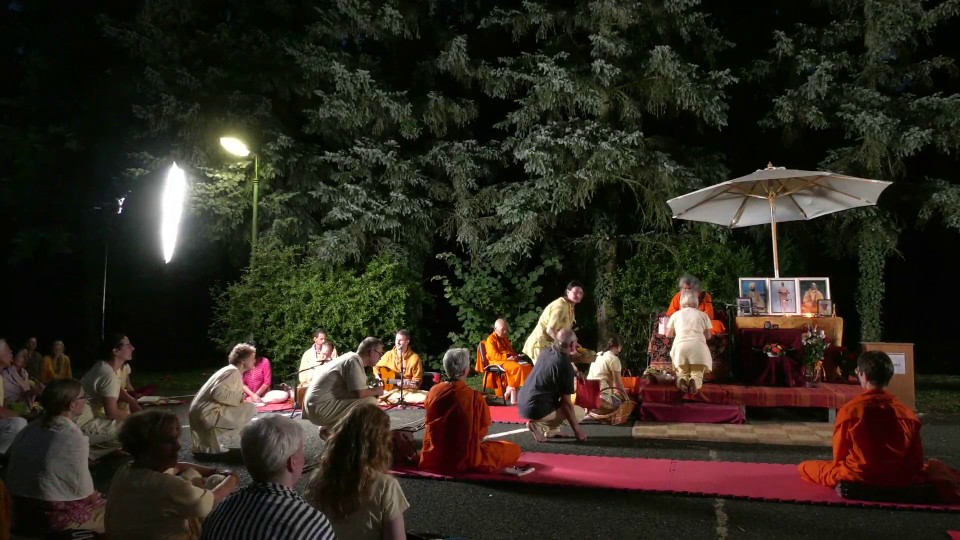
Evening satsang with Vishwaguruji from Vep, Hungary. Bhajan singing.
Bhajan singing from Vep
17:15 - 18:06 (51 min)
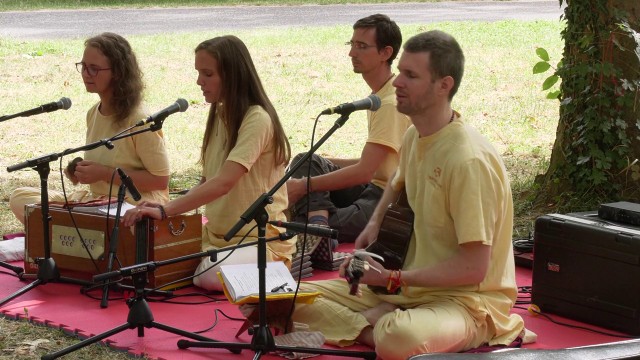
Morning satsang with Vishwaguruji from Vep, Hungary. Bhajan singing.
Bhajans from Strilky Ashram
18:10 - 19:44 (94 min)
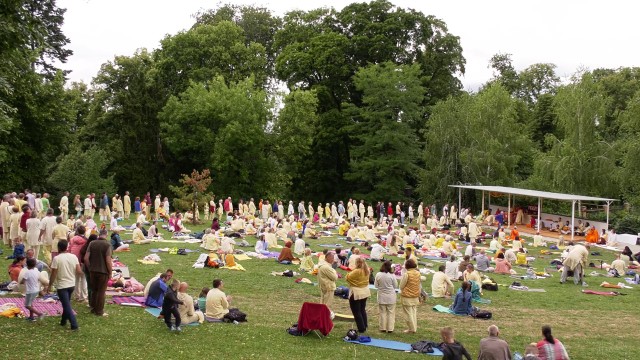
Morning satsang from Strilky Ashram, Czech Republic.
Longing for God
19:50 - 20:49 (59 min)
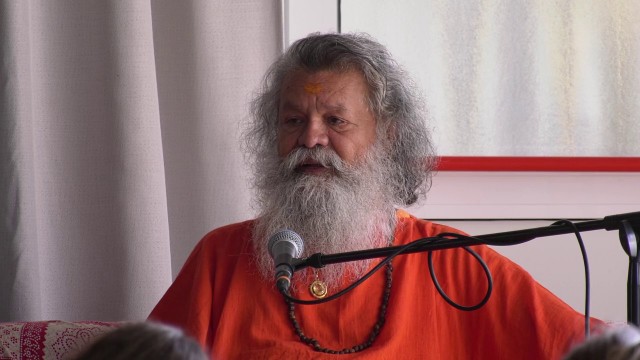
Morning satsang with Vishwaguruji from Rijeka Ashram, Croatia. Bhajan singing. We should be careful with our bodies and we should live very healthily. Our practice is very important and also our good food. We are really yogis. We have learnt many things that are really important in yoga. Real yogis should practise yoga every day. We help other people to become spiritual. Some people eat cats and kill them in a very cruel way. We should feel every creature in our hearts. The story of a man who wanted to see God. The story of an Indian lady living near Rupavas who became a holy person. The other story is of a woman in Gujarat who doesn't eat and doesn't drink anything.
Remain pure
20:55 - 21:44 (49 min)
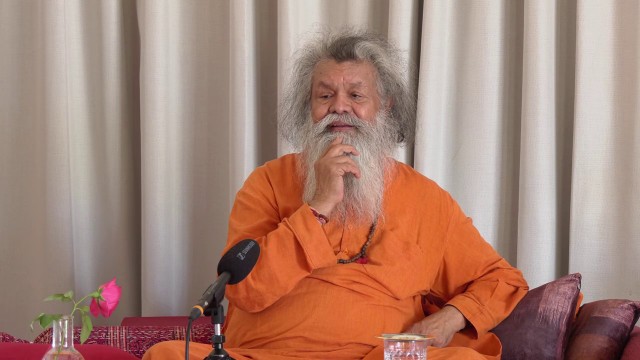
Morning program with Vishwaguruji from Rijeka, Croatia. Vishwaguruji explains problems if one of the parents eats meat. We should take care. He introduces a picture about the nadis. God made women and man, but the whole universe is one.
Inner awakening: be with the dharma
21:50 - 22:37 (47 min)
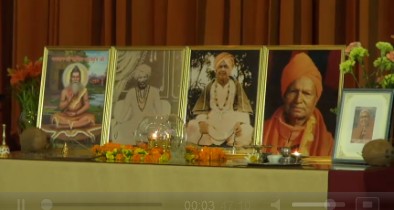
A spiritual discourse on inner awakening and the hidden powers of consciousness, beginning on the Mahāsamādhi day of Holy Mother.
"God has bestowed upon each a kind of talent according to the need or requirement of its life."
"One in all and all in one. That is the reflection of that Ātmā."
The lecturer leads a satsang, explaining the journey of the individual soul (Jīvātmā) through 8.4 million life forms and its relationship with the indestructible Ātmā. He discusses duality, non-duality, and the karmic consequences that define a soul as dharmātmā or pāpātmā. Using the analogies of the moon's reflection and stories of Krishna, Duryodhana, and Vidura, he emphasizes that divine grace comes only through selfless love (prema), not through material offerings.
Filming location: Vép, Hungary
Webcast from Slovenska Vas
22:45 - 23:27 (42 min)
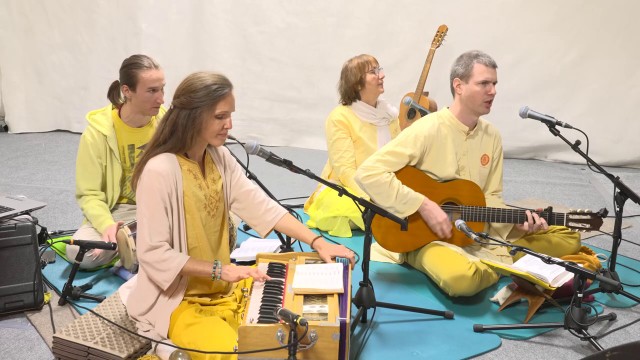
Evening satsang with Vishwaguruji from Slovenska Vas, Slovenia.
The Seed Has To Die To Become A Tree
23:35 - 0:08 (33 min)

A spiritual discourse on the endless nature of knowledge and the Manipūra Chakra.
"They ate the butter, not the cow. Feed the cow with love, milk it day and night. So, Sarasvatī Vidyā, knowledge, has no end."
"Our navel is not just our navel; that is the navel of the universe. That is the center of the universe, because you come from there."
The lecturer addresses the assembly, reflecting on a recent collective visual journey to the Himalayas. He shares a parable from his Guruji about knowledge being an endless well, not a finite resource. The discourse then focuses on the profound and limitless nature of the Manipūra Chakra, describing it as the foundational center of life and a storehouse of spiritual jewels, contrasting material poverty with spiritual wealth.
Filming location: Vép, Hungary
American
Australian