
European
Practice well
0:40 - 1:22 (42 min)
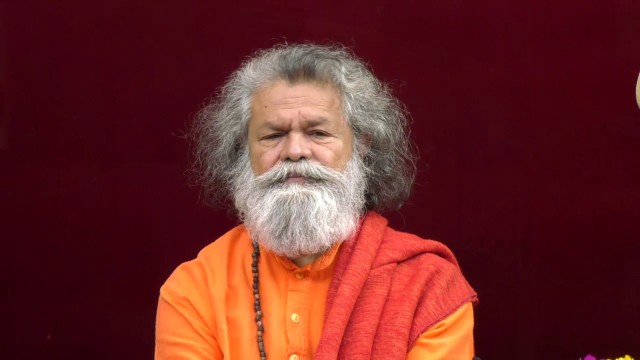
A discourse on Haṭha Yoga practice and the ideal of the true yogī.
"A Hatha yogī, he will not take when I give him... He doesn't want anything, no money, nothing."
"Yoga is the greatest. And in that Hatha Yoga, Hatha Yoga is the best."
Swami Ji teaches a satsang, continuing a series on Haṭha Yoga cleansing techniques (kriyas) like nauli and basti. He emphasizes proper diet, discipline, and learning from a true master. He narrates a story of Lord Śiva, Pārvatī, and a self-sufficient Haṭha yogī at a cremation ground to illustrate ultimate non-attachment, and shares a parable about a Himalayan sage to caution against endless theoretical learning without realization. The talk concludes with practical advice on group purification practices.
Filming location: Strilky, Czech Republic
We need Gurudev
1:30 - 2:24 (54 min)
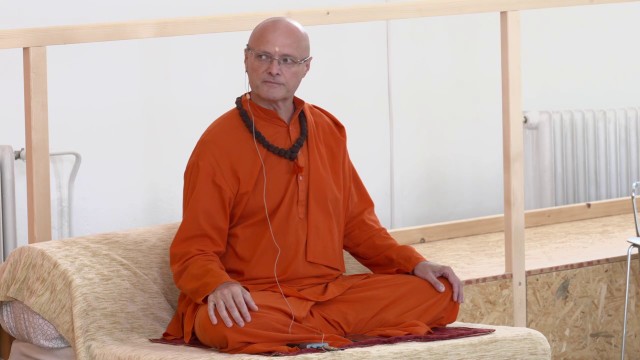
A satsang discourse on the necessity of the guru and the goal of Advaita philosophy.
"The moment you begin to think you have already heard and know everything, in that moment your free fall begins."
"Understand from this that the guru is not the physical body. It is most important to understand that the guru is that Guru-Tattva, the element of the guru."
A speaker leads a satsang, emphasizing the eternal student's attitude and the critical role of the embodied spiritual master (Guru-Tattva) as the essential guide. Using stories and analogies—such as the matchbox with a diamond, the friend with a boat, and the river merging into the ocean—the talk explains the guru's function and explores the ultimate goal of yoga: to transcend the cycle of rebirth and realize the Advaita (non-dual) union of the individual self with the cosmic Self.
Filming location: Strilky, Czech Republic
Instructions for mantra practicing
2:30 - 3:27 (57 min)
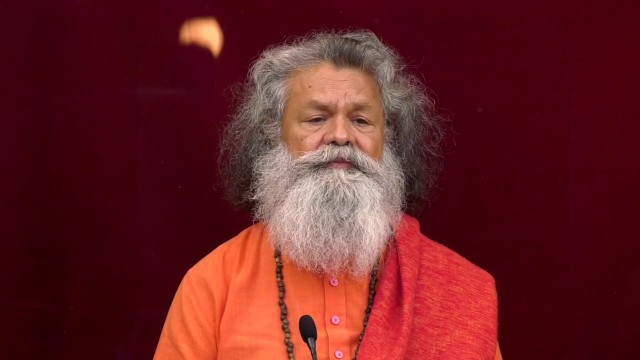
A spiritual seminar on the guru-disciple relationship and spiritual practice.
"Guru Kṛpā Hi Kevalam—the Gurudeva's blessings. And śiṣya kī ānanda maṅgalam. The disciples have happiness, joy."
"When we get mantra, guru mantra, then you should have that cloth. We are also going through the mantra. Then it means you have already taken your seat."
A spiritual teacher addresses a gathering, expounding on the principle that the guru's grace is everything and the disciple's state is one of auspicious joy. He discusses the nature of a true guru, the importance of the guru lineage (paramparā), and the correct use of a personal meditation seat (āsana). He shares a story about two disciples to illustrate the importance of following a guru's instructions without mental attachment, and concludes with practical advice for daily practice.
Filming location: Strilky, Czech Republic
Eat well and practice
3:35 - 4:15 (40 min)
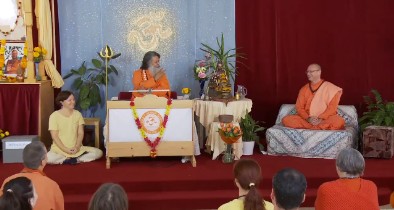
A satsang on integrating yoga into daily life for natural beauty and health.
"If you want to see the beauty of life, then do not put color in your hair. Why do we put color? There must be some desire we still have."
"Yoga regenerates our body, the cells, our skin. It is great support for our gland systems, organs, and blood circulation."
The lecturer addresses a gathering, using the colorful autumn landscape as a metaphor for accepting the natural aging process. He advises reducing chemical cosmetics and processed foods, advocating instead for daily yoga practice, natural oils, and a balanced diet including ghee and sugar in moderation. He shares personal anecdotes about breaking dependency on skin cream and discusses the health impacts of diet, concluding with well-wishes for the Diwali season and his travel plans.
Filming location: Strilky, Czech Republic
The Soil of Sandalwood
4:20 - 4:50 (30 min)
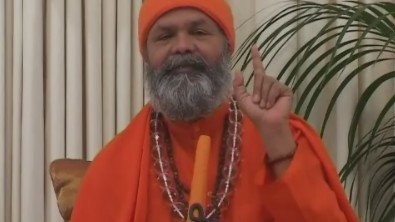
A spiritual discourse on meditation and cosmic creation.
"Meditation is the way; there is no other way to the self and to God."
"Ichcha (desire) is the root of all problems. That’s all. As soon as the desire began, the complication began day by day."
The speaker presents meditation as the essential spiritual path before delving into the nature of primordial reality. He describes the formless cosmic consciousness (Chaitanya) within endless space, using the analogy of a salt statue dissolving in the ocean to illustrate non-dual realization. The discourse explains creation as emanating from a divine desire ("I am one; I shall become many"), detailing the manifestation of elemental principles (tattvas) like fire and air, and concluding that Lord Śiva is the source of all spiritual science, including meditation.
Filming location: Sydney, Australia
Satsang is like a hospital for mental illness
4:30 - 5:00 (30 min)
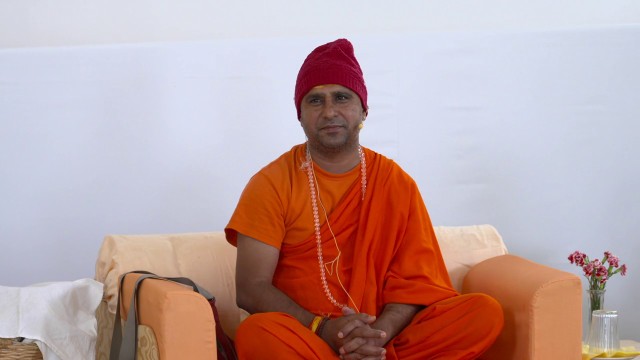
Morning satsang from Strilky Ashram, Czech Republic. Where the saints walk, that place becomes sandal powder. Satsang removes mental illness from people. Satsang is like a supreme court. Our heart can only open with the blessing of a divine Guru. People who regularly attend satsang slowly become spiritual. Explanation of bhajan Soba vo satasangari.
The Earth of Sandalwood
4:55 - 5:21 (26 min)
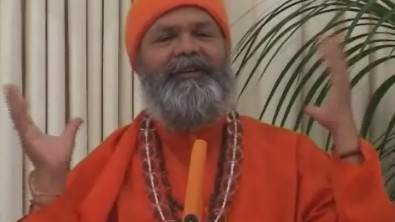
A spiritual discourse on meditation, self-inquiry, and navigating modern life.
"Your consciousness is a peaceful, beautiful lake. And suddenly, some thought comes in your mind. Bang!"
"Meditation will give us the strength, so meditation is the way. Meditation is asking."
The speaker guides listeners through the challenges of calming the mind's fluctuations (citta-vṛtti) in the modern world. He contrasts theoretical spiritual knowledge with practical reality, emphasizing the need for devotion, a spiritual guide, and self-inquiry focused on correcting one's behavior. The talk covers accepting natural law, digesting life's difficult truths, and the ultimate goal of realizing the fearless, immortal Self.
Filming location: Sydney, Australia
Live spiritual life
5:30 - 6:03 (33 min)
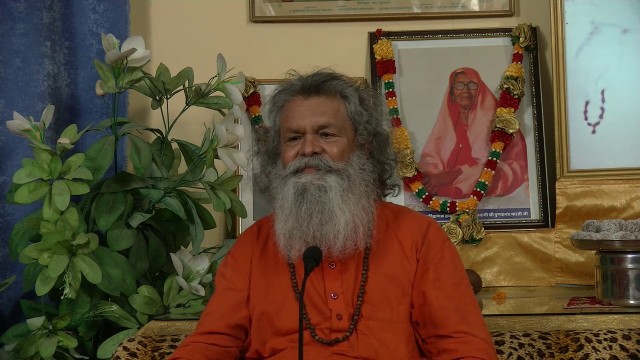
Evening satsang with Vishwaguruji from Jadan Ashram, Rajasthan, India. India is closed for four days because of the corona. It has more time to overthink our life. Spirituality is in our mind in our heart and in our feelings. Spiritual people are praying for others and animals also. Birds can trust in the tiger and lion but not in the human. The story about some sadhu from Gujarat and a tiger. Bhajan singing.
Shiva is balancing all
6:05 - 6:37 (32 min)
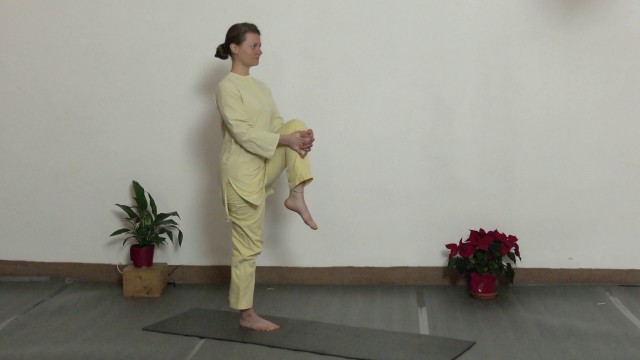
A spiritual discourse and yoga practice session on the theme of cosmic and personal balance.
"In Sanātana Dharma, we worship all because there is only one God."
"Therefore, now is the time... Śiva has opened his eyes... he will bring something again better, balancing."
Swami Anandpuri addresses the global community, discussing the universal nature of divinity and the role of Śiva as the cosmic balancer of positive and negative forces inherent in all life. He then invites Umapurījī to lead practical balancing exercises, including one-legged stands and stretches, to cultivate physical and inner stability, concluding with a moment of meditation and contentment.
Filming location: Strilky, Czech Republic
Repeat the name of Gurudev
6:45 - 7:12 (27 min)
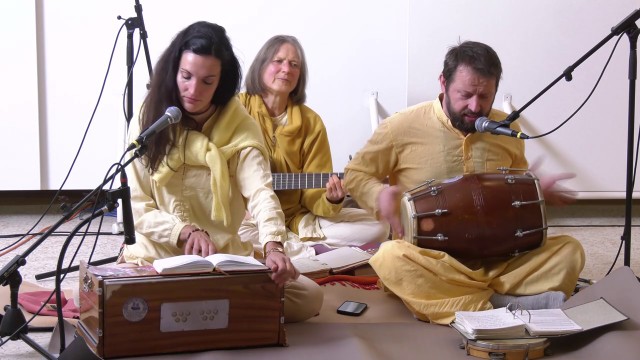
Evening satsang with Vishwaguruji from Vienna, Austria. Bhajan singinig to the Guru. Guru carano me arasatha tiratha he
Shivaratri Satsang with Vishwaguruji
7:20 - 7:55 (35 min)
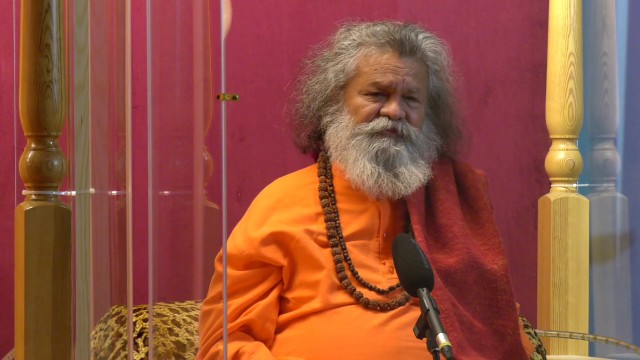
A spiritual discourse on the unity of consciousness, the elements, and the nature of the guru.
"And so it is that we are never separate. We are always with one and one and one."
"You are all guru. Guru means who is giving us. What means giving us? Training, etc."
An elder teacher addresses a gathering, weaving together cosmological concepts of Śiva and Śakti, the five elements, and the pervasive presence of the ātmā (soul). He explains fundamental oneness using the metaphor of a drop merging with the ocean, and expansively defines the guru as any source of knowledge, from a parent to a driving instructor. The talk touches on comparative religion, personal anecdotes, and concludes with an invitation for future meditation.
Filming location: Vienna, Austria
We all will come to oneness
8:00 - 8:39 (39 min)
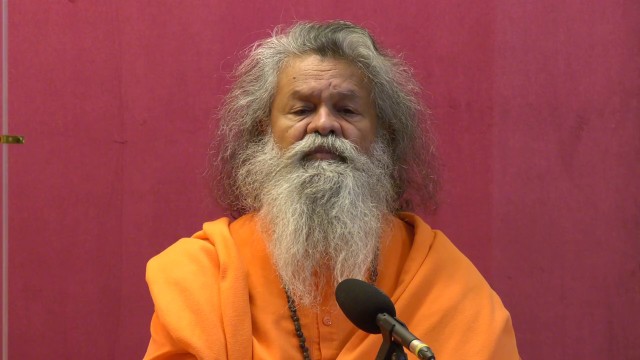
A satsang discourse on spiritual equality, service, and the soul's journey.
"Everyone, without exception, is equal in the eyes of our Gurujī, Mahāprabhujī."
"And when this ātmā, the soul, will go, then it is completely there. There is nothing; there is only one."
The lecturer addresses the community, emphasizing that all disciples—regardless of background or role—should be included in practices like pūjā. He teaches that service and respect form a spiritual family, illustrates oneness with an ocean metaphor for the soul, and shares an anecdote about Holy Gurujī and Mahāprabhujī to illustrate humble service.
Filming location: Vienna, Austria
Our heart is very great
8:45 - 9:18 (33 min)
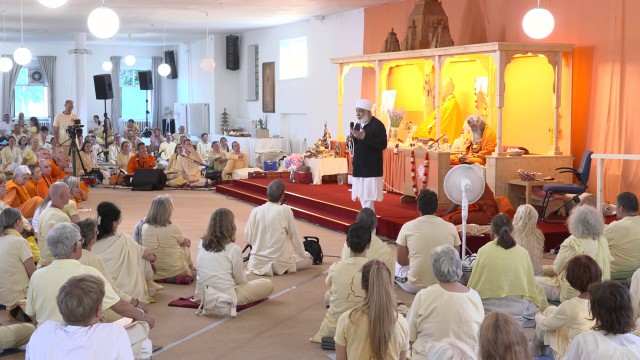
A satsang discourse on the universal sound of Om and the spiritual practice of surrender.
"In India, a name changes with region. In North India, you have Rāma. In Middle India, it becomes Rāma. In South India, it becomes Rāmaṇ."
"The easiest option is to let go, put it down, and allow the mind to become peaceful. The happiest thing is simply to let it be, to release it calmly and let it flow."
A speaker first explains the universality of Om, linking it to the words 'Amen' and 'Amin', and discusses his work promoting Indian traditional sciences in European parliaments. Swami Maheshvaranand then shares a teaching story about a restless monkey to illustrate how surrendering thoughts leads to peace, emphasizing meditation and devotion to the Guru.
Filming location: Strilky, Czech Republic
Without work, nothing can happen
9:25 - 10:23 (58 min)
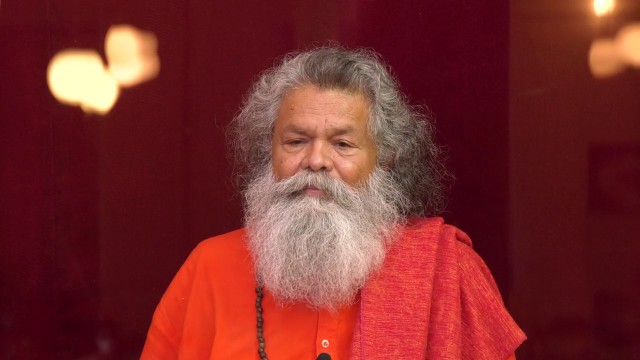
A spiritual discourse weaving ancient creation myths with teachings on dharma and modern life.
"Jīva jīva bhakṣate: all creatures eat other creatures. So that began to move."
"Dharma is spirituality and good, not killing anyone, taking care of everyone. Adharma is the opposite."
A spiritual teacher narrates a syncretic creation story, blending tales of Varāha lifting the earth, Brahmā's emergence from a lotus, and the evolutionary rise of life. He explains the primordial cycle of life consuming life (jīva jīva bhakṣate) and the subsequent establishment of dharma. The discourse shifts to contemporary lessons, advocating for non-violence, mindful consumption, self-reliance, and environmental responsibility, while cautioning against addiction.
Filming location: Strilky, Czech Republic
The Seed of Practice
10:30 - 10:55 (25 min)
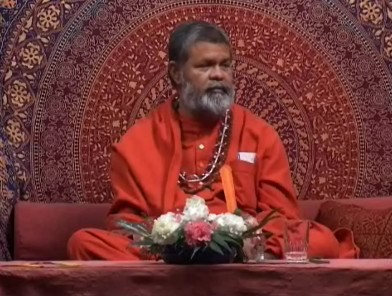
A spiritual discourse on the importance of practice over mere intellectual knowledge.
"Too much reading also leads you nowhere. It’s only intellectual information. Therefore, practicing is very important."
"God is more happy to them, those who are doing with a pure heart, not only with a pure intellect."
The speaker emphasizes the necessity of faithful spiritual practice, critiquing humanity's self-inflicted suffering and disconnect from nature. He illustrates this with a parable of two brothers, a jñāna yogi focused on intellectual correctness and a bhakti yogi devoted to simple worship. The story demonstrates that sincere devotion, not perfect technique, yields spiritual power, a point reinforced by a concluding analogy about a seed growing regardless of how it is planted.
Filming location: Vép, Hungary
The Healing Bridge: Integrating Yoga into Modern Medicine
11:00 - 11:09 (9 min)

A medical doctor shares his experience integrating the Yoga in Daily Life system into his clinical practice.
"After each surgery I perform... a quiet question always arises within me: 'What more could I have done for these patients beforehand?'"
"I advise them: 'Practice the Yoga in Daily Life system as a complete system.'... By engaging with the system as a whole, they resolve their own issues."
An orthopedic surgeon and yoga teacher addresses a spiritual gathering, explaining how he applies yogic principles on three levels: as preventive healthcare, as a supportive adjunct to surgery, and as a primary treatment for psychosomatic conditions. He argues that the modern world's rapid, restless pace creates ailments that a holistic yoga system can effectively address, sharing anecdotal evidence from his patients and expressing deep gratitude to the spiritual teachers who brought the system to his country.
Filming location: Prague, Czech Republic
The Silent Revolution: Yoga as the Antidote to Mind Pollution and Failed Leadership
11:15 - 11:38 (23 min)
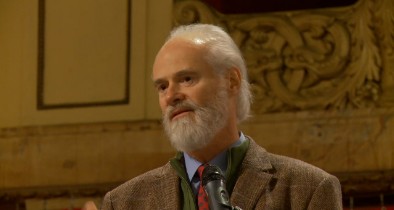
A keynote address proposing yoga as a solution to global leadership crises and mind pollution.
"The most dangerous threat to humanity today is not violence or terrorism, as the media suggests. The greatest damage comes from what I call mind pollution."
"Yoga is a systematic, conscious science of human development. Its main technique is gaining mastery over the mind, stopping the internal dialogue."
The speaker diagnoses widespread leadership failures—citing a lack of self-awareness and emotional intelligence—and argues that media sensationalism creates disproportionate fear. Presenting comparative mortality statistics, he contends that "mind pollution" is a greater threat than terrorism. He defines yoga as a holistic science for mastering the mind and accelerating human evolution, concluding with a call to integrate comprehensive yoga systems into global education and leadership training to foster peace.
Filming location: Prague, Czech Republic
Repeat the name of Gurudev
11:45 - 12:12 (27 min)
Evening satsang with Vishwaguruji from Vienna, Austria. Bhajan singinig to the Guru. Guru carano me arasatha tiratha he
Yoga Nidra: The Yogi's Conscious Sleep
12:20 - 13:11 (51 min)
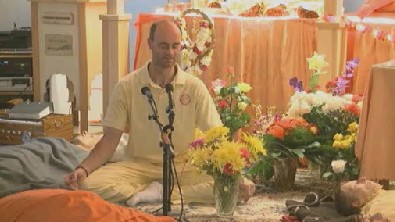
A guided Yoga Nidra (yogic sleep) meditation session.
"Yoga Nidra, the sleep of the yogi, is a deep relaxation technique... You remain completely aware, completely relaxed, yet at the same time completely conscious."
"At the beginning of Yoga Nidra, you have the opportunity to make a Śaṅkalpa... Make a brief Śaṅkalpa with a short sentence."
An instructor guides practitioners through a complete Yoga Nidra practice. The session begins with creating a personal resolution (Śaṅkalpa), followed by a detailed body scan for physical relaxation. The guide then leads awareness to the breath and prāṇa (energy) in the abdominal, chest, and throat areas, incorporating the mantra so'ham. The practice concludes by reaffirming the Śaṅkalpa, gently returning awareness to the room, and ending with a collective chant.
Filming location: Vienna, Austria
Build your intellect supportive
13:15 - 14:31 (76 min)
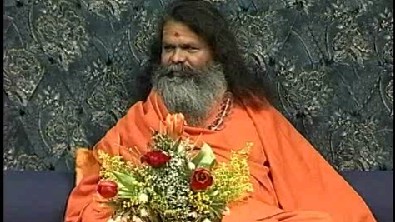
A spiritual discourse on maintaining clarity of purpose and guarding against negative influences.
"Your aim should be clear. Nothing can change me. The sun and moon can change their direction, but I will not change my direction."
"One stupid thought, one stupid person can destroy all your spiritual sādhanā, which you made years and years long with great confidence and with great love."
Swami Ji addresses the community, explaining how a lack of clear aim allows the intellect to be distracted and how negative gossip and jealousy can spoil one's spiritual practice, like lemon curdling milk. He narrates the story of Nārada creating doubt between Śiva and Pārvatī to illustrate the destructive power of negative talk, and emphasizes the need for humility, love, and avoiding harmful company to protect one's spiritual progress.
Filming location: Vép, Hungary
Live webcast from Strilky
13:30 - 15:00 (90 min)
Evening satsang from Strilky Ashram, Czech Republic.
The Universal Embrace of Yoga and Spirituality
14:35 - 15:34 (59 min)
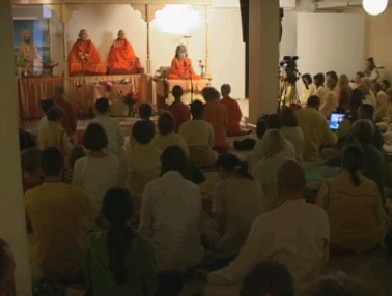
An evening satsang on the universal principles of yoga, karma, and selfless service.
"Yoga means unity. Yoga means harmony. Yoga means union. And Yoga also means balance."
"Through Sādhana and through Sevā—these two—spirituality grows."
Swami Ji from the Sri H. G. Ashram leads a discourse from Vienna, explaining yoga as a scientific path for harmony that connects the individual to the entire cosmos. He teaches that spiritual growth comes from balancing personal practice (Sādhana) with selfless service (Sevā), illustrating this with a story of Pārvatī's sacrifice. The talk covers interconnectedness, compassion, and overcoming the ego, concluding with a meditation.
Filming location: Vienna, Austria
The 3rd Sri Swami Maheshwarananda Festival (4/4)
15:35 - 16:50 (75 min)
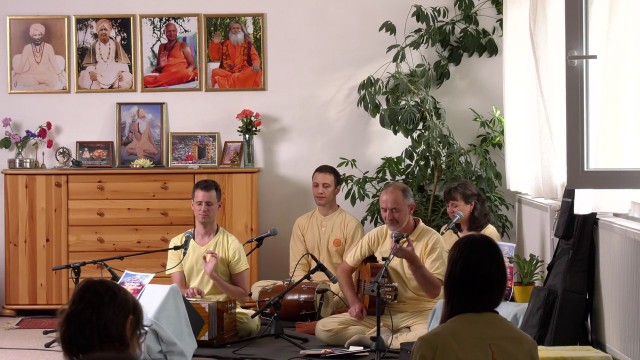
Welcome to the third Sri Swami Maheshwarananda Festival of Spiritual Music, Debrecen, Hungary.
Sri Swami Maheshwarananda Festival from Vienna
16:51 - 18:38 (107 min)
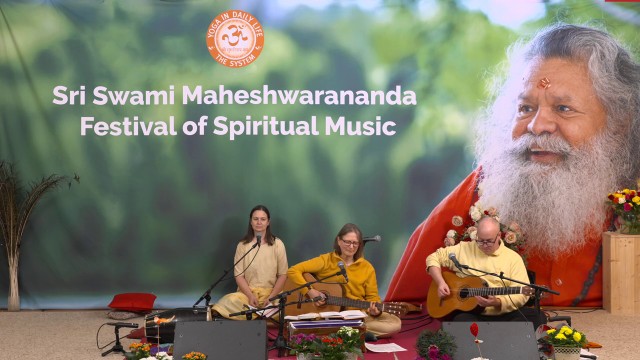
Welcome to the first Sri Swami Maheshwarananda Festival of Spiritual Music. This first event of its kind will take place in Guruji Ashram, Vienna, Austria. You are most welcome to join also in person for a 15 EUR entry fee.
Dharma and Satsang
18:45 - 19:54 (69 min)
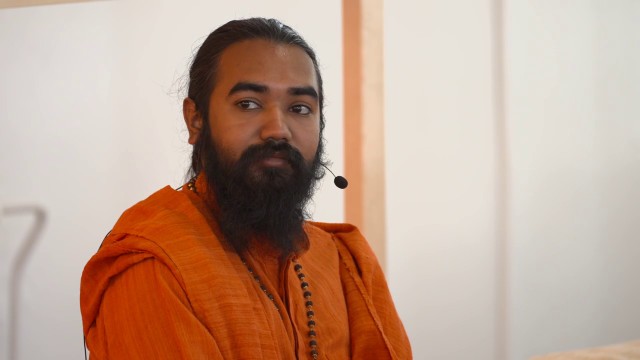
A satsang discourse on dharma, spiritual practice, and the importance of community.
"We always try to find the shortcuts, and we always try to find the easy way out."
"In the satsaṅg, on the full moon, usually we listen to Guru Gītā. Try to really listen to Guru Gītā. I have listened to Guru Gītā for more than 40 years, and I must say that every time I hear something new inside."
Following traditional invocations, a speaker addresses a gathering, weaving teachings on personal duty (dharma) with illustrative stories, including a sādhu persistently saving a scorpion and Nārada's lesson from Lord Viṣṇu. The talk emphasizes perseverance in one's path, learning from failures, and the critical role of regular satsang and deep, repetitive study of core teachings like the Guru Gītā over seeking novel techniques. A letter from the Indian Prime Minister congratulating the opening of Om Ashram is read. The session includes chanting and concludes with a universal peace mantra and final salutations.
Filming location: Strilky, Czech Republic
You are free to choose good or bad
20:00 - 20:44 (44 min)
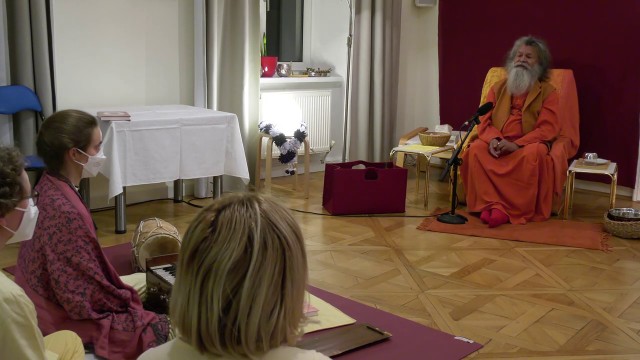
Evening satsang with Vishwaguruji from Linz, Austria. An instrument is a simple construction, but it can give very beautiful sounds. Our body is also like an instrument. We are free to do good or bad things. From our childhood we can develop in good or bad direction also. The story of a tiger baby who mixed among the sheeps. Everybody should know why we shouldn't to eat meat. Bhajan singing.
The Purifying Path of Haṭha Yoga: An Introduction to Ṣaṭkarma
20:50 - 21:37 (47 min)

An instructional webcast introducing the Haṭha Yoga purification techniques (Ṣaṭkarma).
"Haṭha Yoga is not only that we clean and purify our whole system, our whole body, but it also has a very great effect on our nervous system."
"Haṭha means willpower to do these Haṭha Yoga techniques. And with this, you also get the willpower, the strength to persevere, to continue, to get rid of the laziness."
A teacher from the Śrīkī Ashram, joined by assistants, explains the purpose and benefits of the six purification acts. The session features a detailed, practical demonstration of Jala Netī (nasal cleansing with salt water) and Kapāla Bhāti, followed by an introduction to Agni Sāra and the Naulī Kriyā for digestive health. The instruction emphasizes using natural elements, proper technique, and the holistic effects on physical and energetic systems.
Filming location: Strilky, Czech Republic
Practice well
21:45 - 22:27 (42 min)
A discourse on Haṭha Yoga practice and the ideal of the true yogī.
"A Hatha yogī, he will not take when I give him... He doesn't want anything, no money, nothing."
"Yoga is the greatest. And in that Hatha Yoga, Hatha Yoga is the best."
Swami Ji teaches a satsang, continuing a series on Haṭha Yoga cleansing techniques (kriyas) like nauli and basti. He emphasizes proper diet, discipline, and learning from a true master. He narrates a story of Lord Śiva, Pārvatī, and a self-sufficient Haṭha yogī at a cremation ground to illustrate ultimate non-attachment, and shares a parable about a Himalayan sage to caution against endless theoretical learning without realization. The talk concludes with practical advice on group purification practices.
Filming location: Strilky, Czech Republic
Eat well and practice
22:35 - 23:15 (40 min)
A satsang on integrating yoga into daily life for natural beauty and health.
"If you want to see the beauty of life, then do not put color in your hair. Why do we put color? There must be some desire we still have."
"Yoga regenerates our body, the cells, our skin. It is great support for our gland systems, organs, and blood circulation."
The lecturer addresses a gathering, using the colorful autumn landscape as a metaphor for accepting the natural aging process. He advises reducing chemical cosmetics and processed foods, advocating instead for daily yoga practice, natural oils, and a balanced diet including ghee and sugar in moderation. He shares personal anecdotes about breaking dependency on skin cream and discusses the health impacts of diet, concluding with well-wishes for the Diwali season and his travel plans.
Filming location: Strilky, Czech Republic
Yoga Nidra or bhajan singing is like meditation
23:20 - 0:35 (75 min)
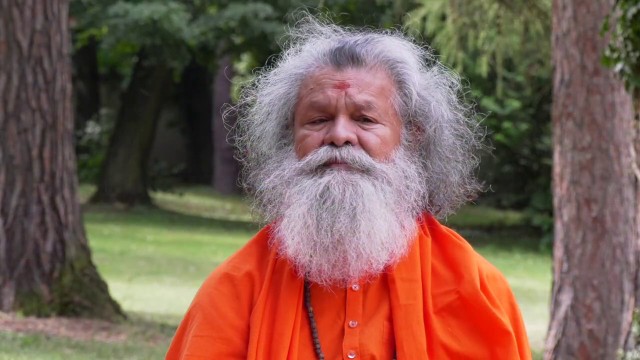
Morning satsang with Vishwaguruji from Strilky Ashram, Czech Republic. Singing bhajan Yogi jano ki Yoga Nidra. Bhajans sometimes are like meditation. We are awakened but in that state, it is very good to do yoga nidra or sing bhajans. There is a difference between yogi and rogi. The story of a great yogi and a young girl in Jaipur. The other story of an Italian professor and Vishwaguruji. The story of why Vishwaguruji changed the name of savasana to anandasana. Practising relaxation and bhramari pranayama.
American
Australian