
European
Practicing from Strilky
0:00 - 0:41 (41 min)
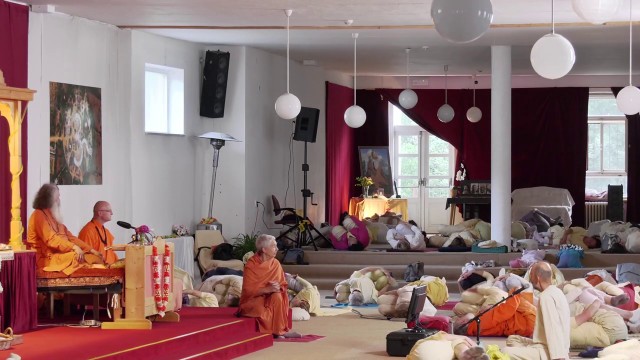
Evening satsang from Strilky Ashram, Czech Republic. Practice with Vishwaguruji and Swami Umapuriji.
Simple living and higher thinking
0:45 - 1:32 (47 min)
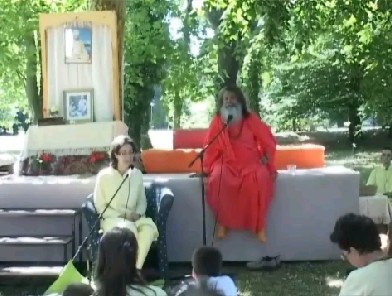
A discourse on Hindu devotional practices and philosophy.
"Why do Indians decorate their gods? The answer is very simple: because we love our God."
"Whatever you are doing for God, you are doing for yourself."
The lecturer addresses devotees, explaining the cultural and spiritual significance of decorating altars and deities as an expression of love and devotion. He explores core Hindu concepts, including the nature of the one supreme God manifesting in many forms, the personal benefits of selfless service and offering, and the importance of cultivating beautiful thoughts and living in the present. The talk weaves together scripture, personal anecdote, and metaphor to illustrate these principles.
Filming location: Vép, Hungary
We all should get oneness
1:40 - 1:56 (16 min)
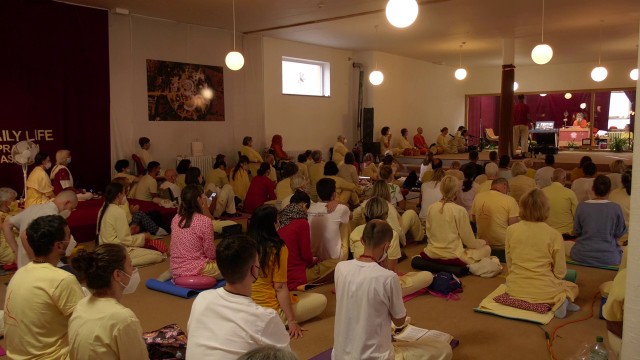
A spiritual discourse on the language of oneness and silence during Guru Purnima.
"The best language is when people from many countries, each with their own language, suddenly all understand."
"Silent means oneness."
A spiritual teacher addresses an international satsang on Guru Purnima, exploring how true communication and unity transcend spoken language. He discusses understanding through sound, vibration, and silence, using examples like music and opera, and contrasts the noisy chaos of worldly festivals with the profound, unifying silence of spiritual gathering.
Filming location: Strilky, Czech Republic
The way how yoga is helping us
2:00 - 3:03 (63 min)
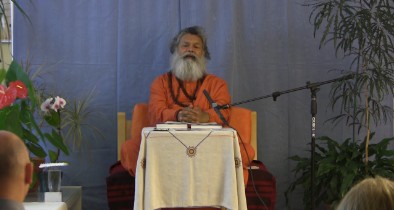
A lecture on the chakra system and spiritual purification.
"The human birth and human body possess very special abilities and a most powerful tool: the intellect. Through our intellect, we can discover all our hidden powers."
"Before we awake or open the chapter of the chakra... [there are] three negative points to address... mala, vikṣepa, and āvaraṇa."
Swami Paramananda leads an evening satsang from the Yoga and Life Ashram, continuing a series on the chakras. He explains the human body's subtle anatomy, including the 72,000 nerves and the three primary nāḍīs (Iḍā, Piṅgalā, Suṣumṇā). The core teaching focuses on the three obstacles to spiritual awakening: impurities (mala), mental disturbances (vikṣepa), and the veil of ignorance (āvaraṇa). He details methods for purification through Haṭha Yoga techniques, control of the senses, and satsang, weaving in stories and analogies about the mind, karma, and the goal of liberation beyond the cycle of birth and death.
Filming location: New York, USA
Practice makes perfect and healthy
3:10 - 4:12 (62 min)
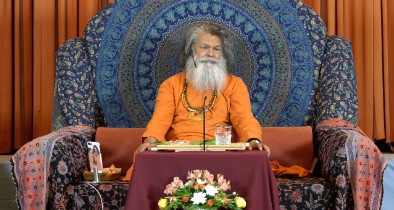
Evening satsang with Vishwaguruji from Summer Yoga Camp in Vep, Hungary. Practice makes perfect. Yoga means and begins with discipline. There are many people suffering from illnesses. Focusing on the target is the main point in archery. Vishwaguruji explains the strory of the Eklavya and Arjuna to illustrate what it means to practice.
Interview with Vishwaguruji on Lok Sabha
4:20 - 4:50 (30 min)

A television panel discussion on International Yoga Day, featuring a host and guests.
"Yoga is the mother of all sciences and arts. It is the science of human origin and evolution to a point where you can overcome the boundaries of space and time."
"Yoga should not be commercial. No. It should be free. A guru gives knowledge to the disciple not because of money or with money, but with blessings."
A host moderates a discussion with senior journalist Gyanendra Bhattaria and Swami Maheshvaranandji on the global celebration of Yoga Day, its origins, and its core principles. The panel addresses the event's scale, the essence of yoga beyond physical postures, the role of a guru, and concerns over commercialization and modern interpretation. The conversation references Prime Minister Narendra Modi's leadership in establishing the day and a live yoga session in Chandigarh.
Filming location: India
Sat sanga
4:55 - 5:22 (27 min)
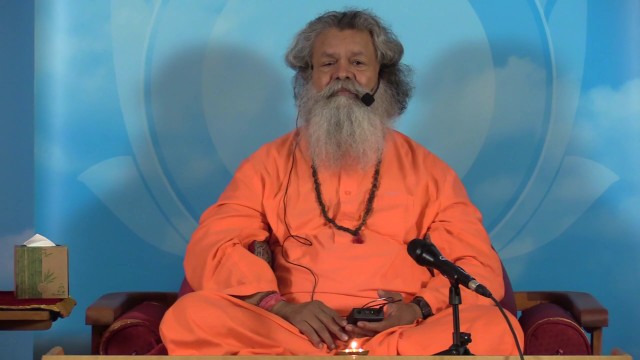
A spiritual discourse on the meaning and power of satsaṅga.
"It was very hard, very hard. I think in your country it was also, no? It was very much."
"Sat means truth. Satsaṅga, truth. Each and every word should be such that we should know the truth."
The lecturer addresses a gathering, reflecting on the global difficulties of the past years, including pandemic-related travel disruptions. He explores the concept of satsaṅga, defining "sat" as truth and emphasizing the importance of truthful company and spiritual practice. The talk meanders through themes of guru lineages, the impermanence of the body compared to the lasting nature of one's name, and the unifying principle of truth amidst worldly distinctions.
Filming location: Brisbane, Australia
Prana in food
5:30 - 6:20 (50 min)
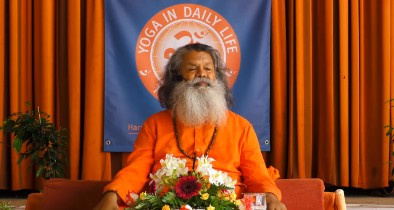
A satsang discourse on prāṇa, diet, and Haṭha Yoga practices.
"Prāṇāyāma means 'āyāma'—exercise or regulation. Like āsanas are yoga Vyāyāma (yogic exercise), this Vyāyāma is for every joint, muscle, ligament, and tissue in the body."
"Haṭha Yoga is a most powerful technique. It is said even God adores the Haṭha Yogī. But a Haṭha Yogī has no moha (attachment), no desires, no rāga and dveṣa."
The lecturer continues teachings on prāṇa, explaining the three parts of prāṇāyāma and warning against premature practice of breath retention. He links prāṇa to nourishment, advocating for fresh, sattvic food and criticizing alcohol, old food, and cheese. He outlines the six techniques of Haṭha Yoga—Netī, Dhautī, Bastī, Naulī, Trāṭak, and Kapālabhātī—describing their benefits and promoting group practice. The talk distinguishes between physical preparation and the ultimate goal of yoga, concluding with the importance of the Guru's grace in attaining liberation.
Filming location: Vép, Hungary
Guru is the first
6:25 - 7:01 (36 min)
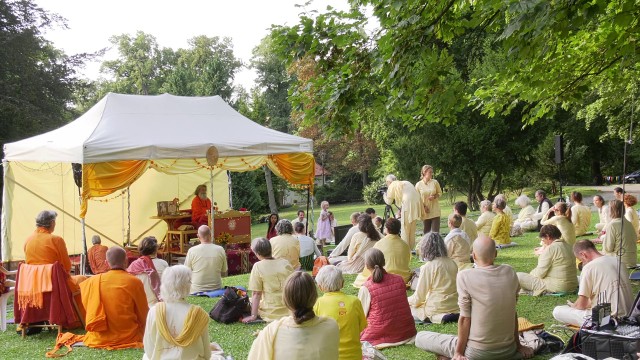
A spiritual discourse on the continuity of sādhanā and the centrality of the Guru.
"Your sādhanā was very beautiful, very good. Many experienced beautiful powers, feelings, and even incarnations. Yes, we should continue this until the end of our life."
"Holy Gurujī, our Swamījī Madhavānandajī Bhagavān, he always said that Seva is all the time with us. We are going, as all goes, to the Cosmic Self."
A teacher addresses students after a spiritual retreat, using the metaphor of a stone creating eternal ripples in a pond to describe the lasting impact of their practice. He emphasizes selfless service (Seva) and explains the Guru's paramount importance, stating all spiritual activities must follow devotion to the Guru. The talk covers the meaning of mantra, the significance of the prayer mala, and outlines the traditional four stages of life (āśramas).
Filming location: Strilky, Czech Republic
Proper practising of Bhramari
7:05 - 7:05 (0 min)
Morning program with Vishwaguruji from Brisbane, Australia. Moodiji brought India and the whole world towards spirituality. We should practise bhramari regularly but not too much at one time. Explanation and demonstration of different bhramari pranayama technics.
Your body is the map of your destiny
7:50 - 8:35 (45 min)
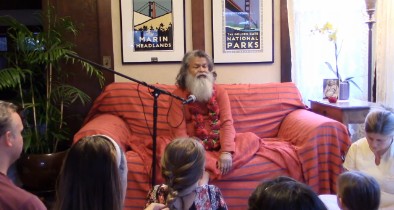
A final evening satsang on destiny, karma, and the possibility of spiritual intervention.
"Destiny is written; it cannot be changed."
"Rekh Parmek Gurudev: your destiny can change only by the guru."
Swami Avatarpuri concludes a program by elaborating on the concepts of janma-bhūmi, karma-bhūmi, and dharma-bhūmi. He narrates the story of Oedipus to illustrate inescapable fate, then explains how destiny is mapped on the human body through lines on the forehead, palms, and fingers. He contrasts the fixed nature of karma with the potential for change through spiritual practice (sādhanā) and, ultimately, the grace of a true guru, who acts as a divine navigator.
Filming location: San Francisco, USA
Introduction to Jadan Ashram
8:40 - 9:39 (59 min)
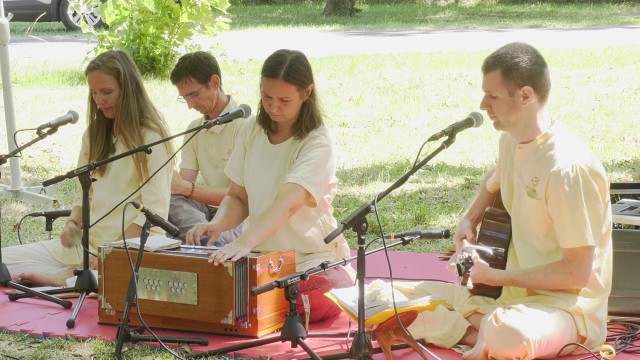
Morning satsang with Vishwaguruji from Vep, Hungary. Swami premanand talks about the special blessing of being together with Gurudeva at Vep. Explaining the significance of the Jadani Ashram. The Jadan Ashram is the embodiment of Gurudeva's plan, the Master's playground. Everyone who comes here will find their way. The practice of Bhramari pranayam.
The Pearl of Everlasting Bliss
9:45 - 10:06 (21 min)
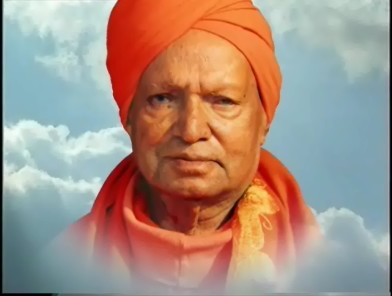
A biographical tribute to the life and legacy of Hindu saint Paramahaṁsa Śrī Svāmī Madhavānandajī.
"My eyes filled with tears, and I fell to my knees. I knew I had found the everlasting light of my life. I was home at last."
"All humans belong to one religion, and that is humanity... ahiṃsā paramo dharma: non-violence is the highest religion."
The narrative chronicles the spiritual journey of Swami Madhavānandaji, from his childhood in Rajasthan and transformative meeting with his guru, Bhagavān Śrīdīp Nārāyaṇa Mahāprabhujī, to his life of devotion, teaching, and global service. It details his initiation, his work establishing ashrams, and his teachings on non-dualism and universal love, culminating in his Mahāsamādhi in 2003 and the continuation of his lineage through his disciple, Swami Māheśvarānandajī.
Filming location: Rajasthan, India; Kathu Ashram, India; Bola Guda Ashram, India; Nepal
How to think of black magic
10:10 - 10:57 (47 min)
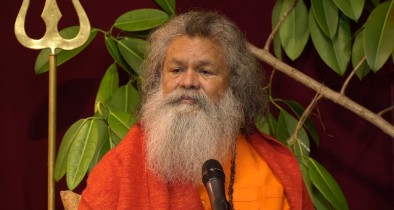
A satsang discourse debunking fear-based beliefs around black magic and ghosts through storytelling.
"People are very much frightened. They speak of ghosts and such things, and many claim they can take away the black magic which is supposedly on you."
"If we believe in God, then believe in God. God will give everything. God will never do anything negative for us."
Swami Ji narrates two cautionary tales to illustrate how fear and superstition are exploited. The first story tells of a village magician who manipulates a grieving widow, and the second describes a 'ghost' that turns out to be a moonlit chimney. He emphasizes that true spiritual practice, such as having a Guru Mantra and faith, offers protection, concluding that it is one's own fear, not external forces, that causes suffering.
Filming location: Strilky, Czech Republic
Around the world - Bhajans from Kailash(1/3)
11:00 - 11:48 (48 min)
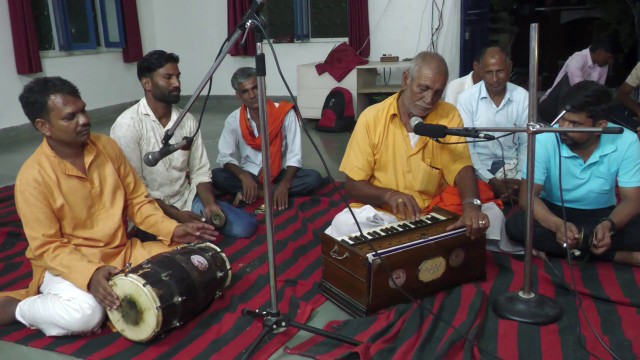
Evening satsang from Kaliash Ashram, Rajasthan, India. Bhajans on the occasion of Sri Devpuriji Mahasamadhi.
The Pearl of Everlasting Bliss
11:55 - 12:16 (21 min)
A biographical tribute to the life and legacy of Hindu saint Paramahaṁsa Śrī Svāmī Madhavānandajī.
"My eyes filled with tears, and I fell to my knees. I knew I had found the everlasting light of my life. I was home at last."
"All humans belong to one religion, and that is humanity... ahiṃsā paramo dharma: non-violence is the highest religion."
The narrative chronicles the spiritual journey of Swami Madhavānandaji, from his childhood in Rajasthan and transformative meeting with his guru, Bhagavān Śrīdīp Nārāyaṇa Mahāprabhujī, to his life of devotion, teaching, and global service. It details his initiation, his work establishing ashrams, and his teachings on non-dualism and universal love, culminating in his Mahāsamādhi in 2003 and the continuation of his lineage through his disciple, Swami Māheśvarānandajī.
Filming location: Rajasthan, India; Kathu Ashram, India; Bola Guda Ashram, India; Nepal
Prana in food
12:20 - 13:10 (50 min)
A satsang discourse on prāṇa, diet, and Haṭha Yoga practices.
"Prāṇāyāma means 'āyāma'—exercise or regulation. Like āsanas are yoga Vyāyāma (yogic exercise), this Vyāyāma is for every joint, muscle, ligament, and tissue in the body."
"Haṭha Yoga is a most powerful technique. It is said even God adores the Haṭha Yogī. But a Haṭha Yogī has no moha (attachment), no desires, no rāga and dveṣa."
The lecturer continues teachings on prāṇa, explaining the three parts of prāṇāyāma and warning against premature practice of breath retention. He links prāṇa to nourishment, advocating for fresh, sattvic food and criticizing alcohol, old food, and cheese. He outlines the six techniques of Haṭha Yoga—Netī, Dhautī, Bastī, Naulī, Trāṭak, and Kapālabhātī—describing their benefits and promoting group practice. The talk distinguishes between physical preparation and the ultimate goal of yoga, concluding with the importance of the Guru's grace in attaining liberation.
Filming location: Vép, Hungary
Part 1: The Awakening of Consciousness: Kuṇḍalinī and Cakras
13:15 - 15:09 (114 min)
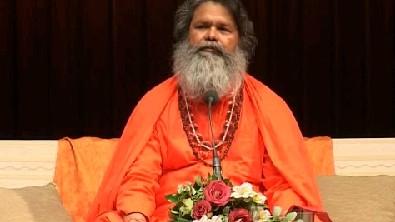
A lecture on Kundalini, chakras, and the science of yoga.
"Yoga is not a religion, it is not a philosophy, it is not a dogma, but it is the eternal principle in this universe, like the cosmic consciousness itself."
"The awakening of the Kuṇḍalinī is a divine process; you don't feel it as a physical sensation. You feel happy, as if in the lap of the mother."
Swami Maheshwarananda delivers an extensive discourse on the awakening of consciousness through Kundalini and the chakra system. He explains yogic anatomy, including the 72,000 nāḍīs (energy channels) and the major chakras, describing their roles in physical, mental, and spiritual development. The talk covers the interplay of mind, intellect, and subconscious impressions, the importance of dharma, and the ultimate goal of uniting individual consciousness with the Cosmic Consciousness.
Filming location: Zagreb, Croatia
Do you know if you stay sanyas?
15:10 - 15:26 (16 min)
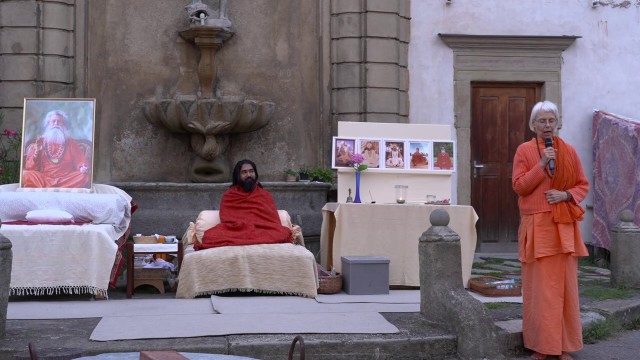
A personal reflection on the mantra of fullness and formative encounters with a guru.
"That is full, this is full. From fullness, fullness proceeds. Taking fullness from fullness, fullness alone remains."
"You are so happy now, but you don't even know if you will remain a sannyāsī."
The lecturer begins by chanting the Pūrṇatā mantra, linking it to a memory of Gurudev. She shares stories from her early days in India, detailing her initial nervousness around Holī Gurujī and their subsequent, wordless connections. She recounts a pivotal moment after her sannyās initiation when Gurujī's prophetic warning later provided crucial guidance during a personal crisis years later.
Filming location: Jadan, Rajasthan, India
Bhajan evening from Vep
15:30 - 16:25 (55 min)
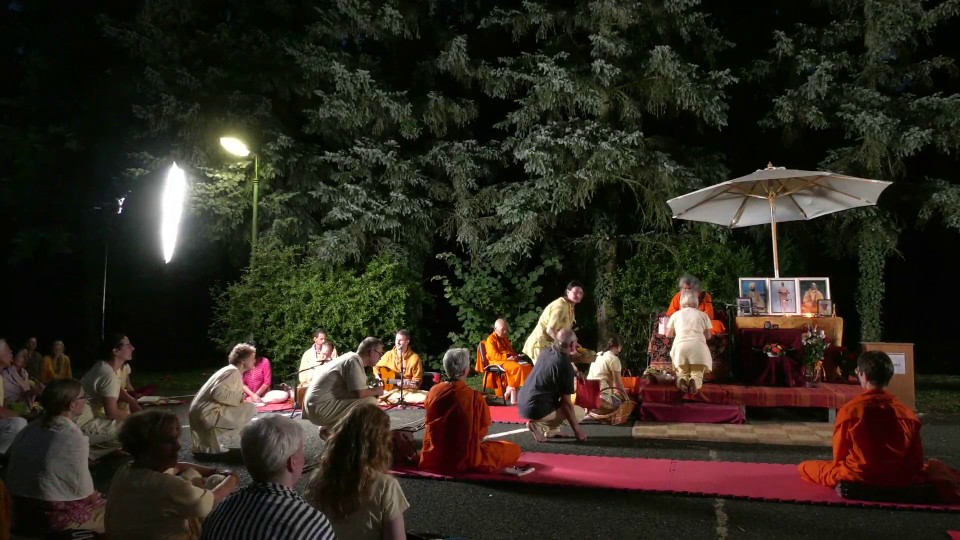
Evening satsang with Vishwaguruji from Vep, Hungary. Bhajan singing.
Bhajan evening from Jadan Ashram
16:30 - 17:09 (39 min)
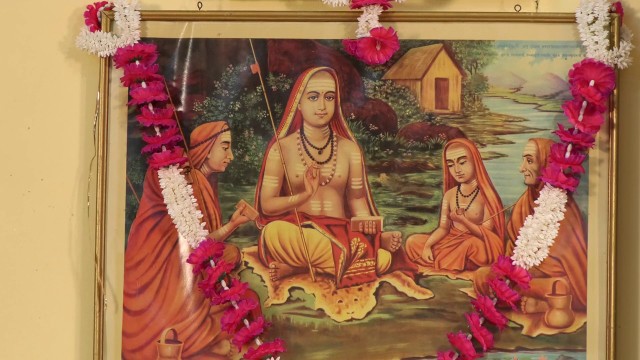
Evening satsang with Vishwaguruji from Jadan Ashram, Rajasthan, India. Singing bhajans.
Bhajan - Dhyan Karo
17:15 - 17:25 (10 min)
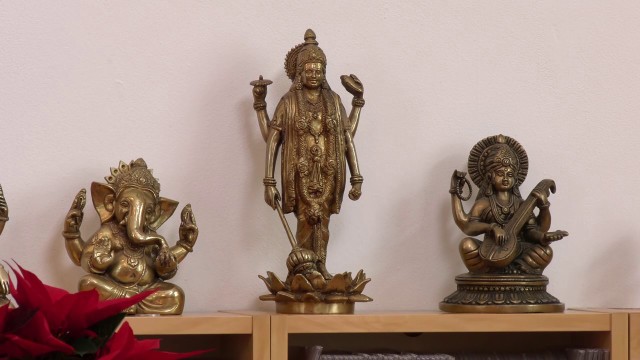
Recording from the morning satsang with Vishwaguruji in Villach, Austria.
Bhajan Singing from from Strilky
17:30 - 18:22 (52 min)
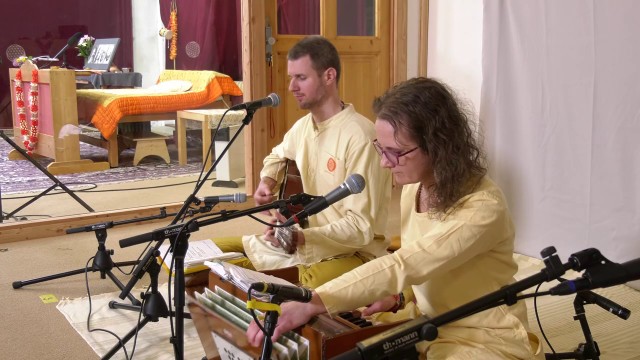
Evening satsang with Vishwaguruji from Strilky Ashram, Czech Republic.
Sadhana maintains inner harmony
18:30 - 19:33 (63 min)
A morning satsang on the Maṇipūra Chakra and spiritual practice.
"Tons of theory are nothing compared to a gram of practice."
"Discipline is your inner master. That best master will lead you twenty-four hours."
Swami Maheshwarananda leads a discourse in Novo Mesto, focusing on the 'city of jewels,' the Maṇipūra Chakra. He emphasizes daily practice as the foundation for health, freedom, and spiritual awakening, explaining how discipline purifies consciousness and overcomes negative qualities. He outlines the riches gained from this center: health, kindness born of non-dependence, devotion, and wisdom, concluding with the protective power of pure consciousness and spiritual community.
Filming location: Slovenia
The way how yoga is helping us
19:40 - 20:43 (63 min)
A lecture on the chakra system and spiritual purification.
"The human birth and human body possess very special abilities and a most powerful tool: the intellect. Through our intellect, we can discover all our hidden powers."
"Before we awake or open the chapter of the chakra... [there are] three negative points to address... mala, vikṣepa, and āvaraṇa."
Swami Paramananda leads an evening satsang from the Yoga and Life Ashram, continuing a series on the chakras. He explains the human body's subtle anatomy, including the 72,000 nerves and the three primary nāḍīs (Iḍā, Piṅgalā, Suṣumṇā). The core teaching focuses on the three obstacles to spiritual awakening: impurities (mala), mental disturbances (vikṣepa), and the veil of ignorance (āvaraṇa). He details methods for purification through Haṭha Yoga techniques, control of the senses, and satsang, weaving in stories and analogies about the mind, karma, and the goal of liberation beyond the cycle of birth and death.
Filming location: New York, USA
Prana in food
20:50 - 21:40 (50 min)
A satsang discourse on prāṇa, diet, and Haṭha Yoga practices.
"Prāṇāyāma means 'āyāma'—exercise or regulation. Like āsanas are yoga Vyāyāma (yogic exercise), this Vyāyāma is for every joint, muscle, ligament, and tissue in the body."
"Haṭha Yoga is a most powerful technique. It is said even God adores the Haṭha Yogī. But a Haṭha Yogī has no moha (attachment), no desires, no rāga and dveṣa."
The lecturer continues teachings on prāṇa, explaining the three parts of prāṇāyāma and warning against premature practice of breath retention. He links prāṇa to nourishment, advocating for fresh, sattvic food and criticizing alcohol, old food, and cheese. He outlines the six techniques of Haṭha Yoga—Netī, Dhautī, Bastī, Naulī, Trāṭak, and Kapālabhātī—describing their benefits and promoting group practice. The talk distinguishes between physical preparation and the ultimate goal of yoga, concluding with the importance of the Guru's grace in attaining liberation.
Filming location: Vép, Hungary
Introduction to Jadan Ashram
21:45 - 22:44 (59 min)
Morning satsang with Vishwaguruji from Vep, Hungary. Swami premanand talks about the special blessing of being together with Gurudeva at Vep. Explaining the significance of the Jadani Ashram. The Jadan Ashram is the embodiment of Gurudeva's plan, the Master's playground. Everyone who comes here will find their way. The practice of Bhramari pranayam.
Practice makes perfect and healthy
22:50 - 23:52 (62 min)
Evening satsang with Vishwaguruji from Summer Yoga Camp in Vep, Hungary. Practice makes perfect. Yoga means and begins with discipline. There are many people suffering from illnesses. Focusing on the target is the main point in archery. Vishwaguruji explains the strory of the Eklavya and Arjuna to illustrate what it means to practice.
American
Australian