
European
Practicing of the system 'Yoga in Daily Life', Level 2 - Part 2
0:00 - 1:11 (71 min)
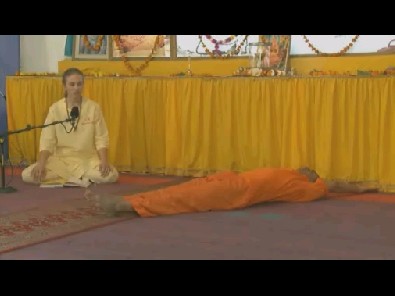
A guided yoga practice session for Level Two of the "Yoga in Daily Life" system.
"This light has been transferred through the centuries from one master to another without any interruption."
"Āsana means, except for other meanings, also comfortable. So āsana should be a comfortable position."
An instructor leads a comprehensive yoga class at Parananda Ashram, systematically guiding practitioners through the second level of the "Yoga in Daily Life" system. The session begins with relaxation and breath awareness (full yoga breath), followed by a series of āsanas including Meru Pṛṣṭhāsana, Catuṣpada Āsana, Cakrāsana, Dvikoṇāsana, Bhūta Āsana, Setu Āsana, Hastapādāṅguṣṭhāsana, Sumeru Āsana, and Meruvakrāsana. Each posture is explained with detailed alignment cues and its physical and energetic benefits. The practice concludes with deep relaxation, a prāṇāyāma (alternate nostril breathing) exercise, and a closing meditation with Oṁ and Śānti chants.
Filming location: Jadan, Rajasthan, India
Our origin is in God
1:15 - 1:56 (41 min)
A spiritual discourse on the five sheaths of existence and the nature of life.
"God has given us this body. When the soul, the ātmā, enters the body, it comes into this world, to Earth."
"These five kośas, one after the other, Annamaya kośa, prāṇamaya kośa, manomaya kośa, vijñānamaya kośa, ānandamaya kośa."
A speaker, conveying blessings from Gurudeva Swāmī Madhavānanda, explores the journey of the soul into the human body and the five energetic sheaths (kośas) that surround it. The talk contemplates the cycle of life, the nature of God across traditions, and ethical principles like non-violence and forgiveness, weaving in references to Jesus and a parable about a fruit tree. The session concludes with a tribute to Satguru Dev on the anniversary of his Mahāsamādhi, honoring his life and teachings.
Filming location: Strilky, Czech Republic
Candle meditation - Tratak
2:00 - 2:18 (18 min)
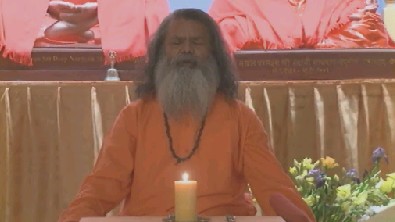
Candle meditation - Tratak. A very effective technique for stress release and improving the eye sight. Specially for the people spending a lot of time in the front of the computer. With explanation and practice. Recorded on 18th May 2010 in Vienna, Austria.
We should have God in our heart
2:25 - 3:46 (81 min)
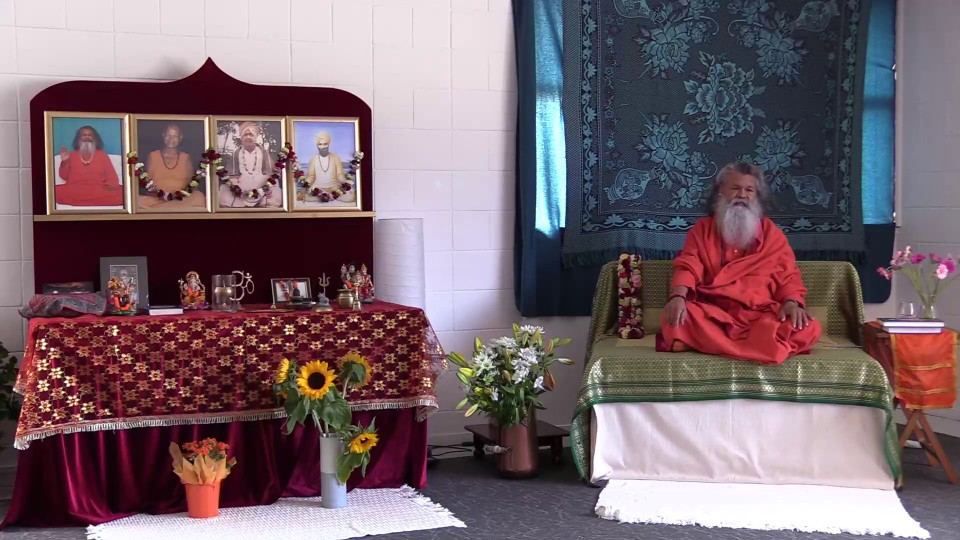
A spiritual discourse weaving stories and observations on faith, tradition, and true knowledge.
"Any lecture we hear... for one and a half or two and a half minutes we have concentration, then we don't have concentration... but that story is there; that story will never forget."
"We must not have a thousand, but even a hundred is enough, or one is enough. My Gurujī said, 'A hundred goats and one tiger is more than enough.'"
The lecturer delivers an evening satsang, moving from observations on preparation and cultural greetings into profound spiritual parables. He shares stories including a Pope testing devotees' faith, a devoted brother walking on water, and the mythological tales of Śiva, Śakti, and the sage Śukadeva, all illustrating that heartfelt devotion surpasses mere intellectual knowledge. The talk concludes with reflections on the enduring power of stories and the core principles of yoga.
Filming location: Auckland, New Zealand
Satsang from Strilky
3:50 - 5:07 (77 min)
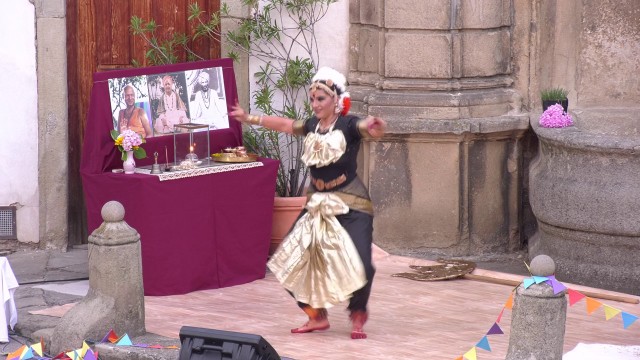
Evening satsang from Strilky Ashram, Czech Republic. Explanation and singing bhajans. Bharatanatyam dance by Bhaktidevi. The glory of Devpuriji Bhagawan is around the whole world. He was the incarnation of Bhagawan Shiva.
Webcast from Strilky
5:15 - 6:31 (76 min)
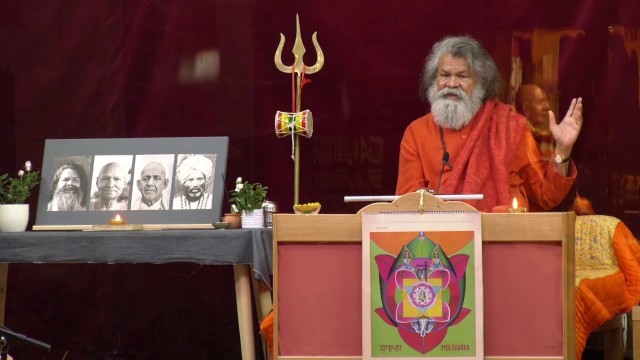
Evening satsang with Vishwaguruji from Strilky, Czech Republic.
The Holy Land
6:35 - 7:27 (52 min)
An explanatory discourse on the significance and organization of the Kumbh Mela at Prayagraj.
"Prayāgarāj is considered the king of all holy places, where many ṛṣis reside and numerous yajñas have been performed."
"The Mahāmaṇḍaleśvaras are designated solely to look after all sannyāsīs and ashrams... to solve their problems, protect them, look after them."
The speaker describes the sacred origins of Prayagraj (Allahabad) as a nectar-drop site and a river confluence. He details the annual and quadrennial Kumbh Melas, their timing at Makar Saṅkrānti, and the purposes of pilgrimage, ritual bathing, and societal discourse. The talk concludes with an explanation of the administrative structure established by the monastic orders (akhāṛās), including the role of Mahāmaṇḍaleśvaras as caretakers and a governing committee that selects an Ācārya.
Filming location: Maha Kumbha Mela, India
The hatha yogi wants to live a long and healthy life
7:35 - 8:26 (51 min)
A satsang on herbal remedies and the principles of Haṭha Yoga.
"You take only a little of this babool fruit... Shake it in the water... By morning, it is ready. You drink the water, and you eat that."
"The biggest enemy of the human is laziness. Where there is laziness, there is tamas guṇa."
Swami Ji leads a session beginning with practical uses for neem and babool plants, sharing recipes and a disciple's testimony about neem healing a wound. The talk transitions into the philosophy of a Haṭha Yogī, emphasizing the conquest of laziness, dietary practices including the defense of garlic, and internal cleansing. The session concludes with a live demonstration of the Agni Sāra Kriyā by a disciple.
Filming location: Vép, Hungary
Overview of practicing yoga
8:30 - 9:18 (48 min)
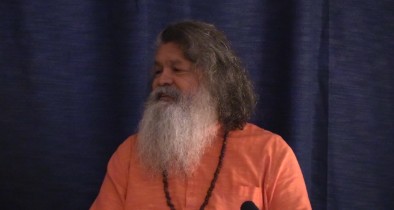
A lecture on the essence and practice of yoga in daily life.
"Yoga in Daily Life has eight steps and is very simple."
"Help is one of the best yogas... your soul, your life, your heart, and your body will bless you."
Swami Maheshwarananda (Swāmījī) delivers a talk on his global "Yoga in Daily Life" system. He clarifies the true meaning of Haṭha Yoga as the six purification techniques (ṣaṭkarma) and outlines the main paths: Karma Yoga (selfless service), Haṭha Yoga, Rāja Yoga, and Jñāna Yoga. He emphasizes daily practice, dedicating time for health and harmony, and explains specific techniques like Netī for sinus health.
Filming location: Auckland, New Zealand
Recharging the spiritual energy
9:25 - 10:12 (47 min)
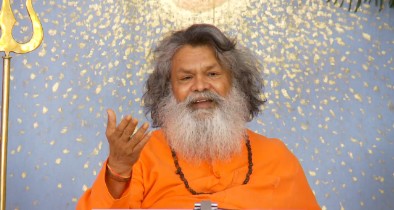
A spiritual discourse on Śiva consciousness, discernment in companionship, and a teaching parable.
"You are called Śivamaya, and many problems disappear. At home, many conditions arise, but here they vanish."
"A wise one will never put a question, because the wise are wise. Who puts the question? The ignorant, because they do not know."
The lecturer leads a satsang, explaining how entering a sacred space like Strelky during Śivarātri fills one with a divine aura. He emphasizes the importance of keeping company with spiritual people and avoiding negative influences (kusanga). He shares a long, illustrative parable about a princess seeking a wise husband, which involves a shepherd, a game of chess, and a mystical cat, ultimately conveying lessons on wisdom, silence, and destiny. The talk concludes with a promotion for an upcoming pilgrimage to Ujjain.
Filming location: Strilky, Czech Republic
Eat healthy food and live as a human
10:20 - 11:03 (43 min)
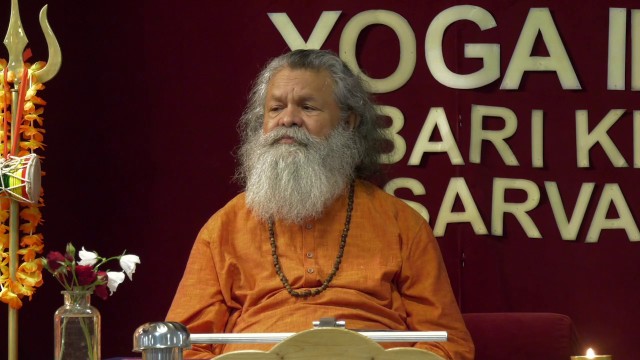
A spiritual discourse on prayer, lifestyle, and simple daily remembrance.
"Morning, midday, evening—always the whole family, women, men, and children. When they sat at the table to eat, they would pray."
"When we open our eyes, then tell, 'I am human.'... And then, second, don't look at animals and this and that first. Mother, mother. So see our mother."
The lecturer reflects on the decline of traditional prayer across religions and its connection to modern societal problems. He discusses dietary shifts, including the rise of veganism, and critiques modern agriculture's impact on the earth. He concludes with a simple daily practice: upon waking, remember "I am human," honor Mother Earth, and reverence water as life.
Filming location: Strilky, Czech Republic
Opening of inner eyes
11:10 - 11:47 (37 min)
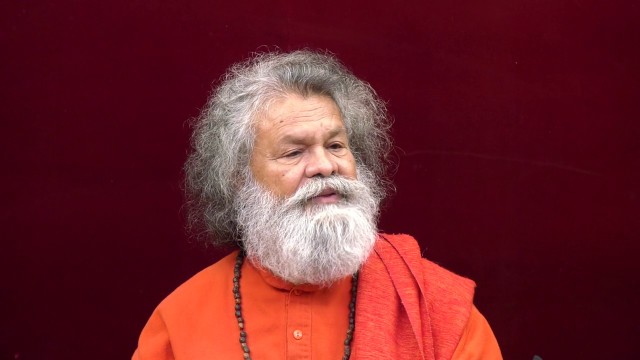
A spiritual discourse on the inner light and the practice of trāṭaka.
"Our soul, our ātmā, comes into our body from the cosmic energies. It is like water from the ocean that rises to become clouds, and from the clouds, dripping water falls to the earth and flows onward."
"Even the green grass, even any trees, bushes, all creatures—everyone has eyes, and they are all looking with their light toward their destination. Therefore, all our trees also have their eyes, and that is concentration, what we call trāṭaka."
The speaker addresses a gathering of practitioners, explaining the journey of the soul and the universal presence of inner sight. He shares teachings received from his Gurudeva, using the metaphor of a seed's growth and a story about a guru's astral rescue of a devotee to illustrate the power of focused awareness (trāṭaka) and the spiritual significance of the navel (nābhi) as a point of energy and re-entry.
Filming location: Strilky, Czech Republic
Holi Festival
11:55 - 12:29 (34 min)
A discourse on the mythological story of Prahlāda and Narasiṁha, explaining the origins of the Holi festival.
"There is a God, whether one believes or one doesn't believe. God incarnates, and there are two kinds of God's presence."
"The story we are discussing is from several million years ago. Long ago, there was a king who went to the forest to perform austerities to realize God."
The speaker narrates the tale of the demon king Hiraṇyakaśipu, who obtained a powerful boon and declared himself the only god. His son, Prahlāda, remained a devoted devotee of Lord Viṣṇu despite the king's violent attempts to kill him. The story details Prahlāda's miraculous survivals and culminates in the appearance of the Narasiṁha Avatāra from a pillar to kill the king at twilight, fulfilling the conditions of the boon. The discourse connects this to the celebration of Holi, marking the burning of the king's sister, Holikā.
Filming location: USA
We are Humans
12:35 - 13:03 (28 min)
A spiritual discourse exploring the nature of self and practice through contemplative inquiry.
"All that is moving is not you; it is that." "We are human. But what does it mean to be human? It is important to see what we are and what we are not."
A speaker leads a satsang, questioning the identity of the practitioner within yoga and life. Using a stream-of-consciousness style, they contemplate the names of yoga postures, the elements composing the body, and phenomena like airplanes and light to point toward a transcendent Self. The talk oscillates between deconstructing the doer and advocating a yogic lifestyle, concluding with blessings for oneness and enjoyment.
Filming location: Strilky, Czech Republic
Mantra is with you for your whole life
13:10 - 13:32 (22 min)
A spiritual discourse on life's two paths, illustrated through a parable about marriage and communication.
"You know very well... And there are two paths." "Spiritual human life is everything. This is what it is, and for that we are thinking."
The speaker presents two life paths: a worldly, professional path and a spiritual path centered on relationships and conscious living. He emphasizes the spiritual path through a lengthy parable about a married couple whose 50-year resentment stems from miscommunication over sharing bread, illustrating how small, unspoken issues can define a life. The talk concludes with the imparting of a lifelong mantra and instructions for a disciplined lifestyle, including vegetarianism.
Filming location: Salzburg, Austria
Webcast from Strilky
13:40 - 14:56 (76 min)
Evening satsang with Vishwaguruji from Strilky, Czech Republic.
Mantra is with you for your whole life
15:00 - 15:22 (22 min)
A spiritual discourse on life's two paths, illustrated through a parable about marriage and communication.
"You know very well... And there are two paths." "Spiritual human life is everything. This is what it is, and for that we are thinking."
The speaker presents two life paths: a worldly, professional path and a spiritual path centered on relationships and conscious living. He emphasizes the spiritual path through a lengthy parable about a married couple whose 50-year resentment stems from miscommunication over sharing bread, illustrating how small, unspoken issues can define a life. The talk concludes with the imparting of a lifelong mantra and instructions for a disciplined lifestyle, including vegetarianism.
Filming location: Salzburg, Austria
Bhajan singing from Vep
15:30 - 16:21 (51 min)
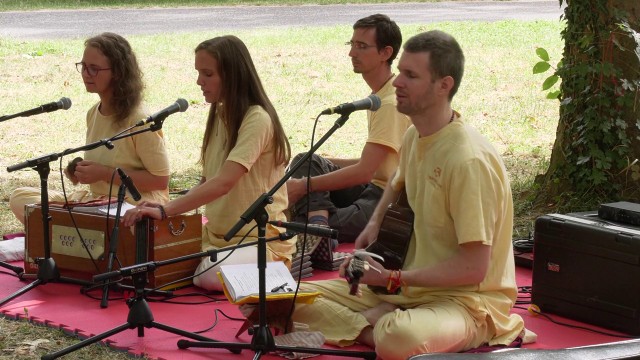
Morning satsang with Vishwaguruji from Vep, Hungary. Bhajan singing.
Bhajans from Strilky Ashram
16:25 - 17:59 (94 min)
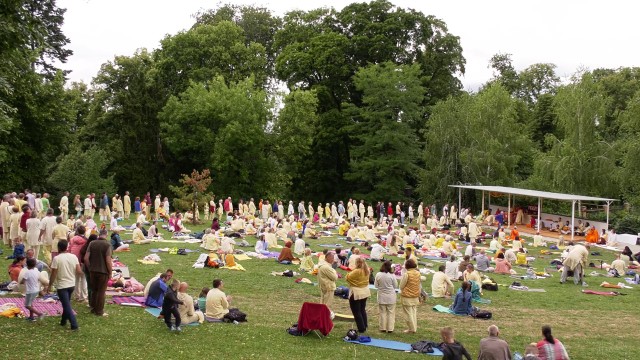
Morning satsang from Strilky Ashram, Czech Republic.
Bhajan singing in the presence of Vishwaguruji
18:05 - 19:40 (95 min)
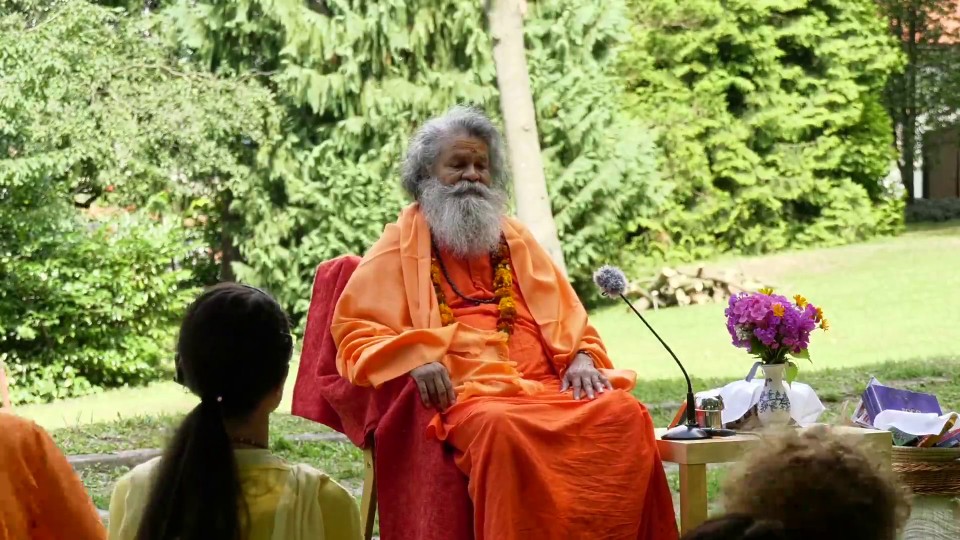
Morning satsang with Vishwaguruji from Strilky Ashram, Czech Republic.
The Journey Beyond Duality: Life, Self, and the Path to Oneness
19:45 - 20:57 (72 min)
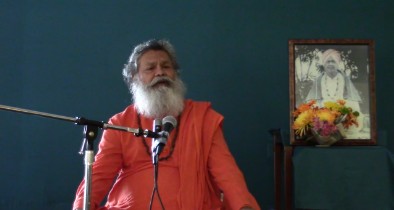
A spiritual discourse on yoga philosophy, the nature of the self, and the path to oneness.
"Our life, as we said, is a destiny and a journey. It is a journey; the destination is still not there."
"In Ātmā, in the self, there are no dualities; there is only oneness. So where there is heaven and hell, there is life and death... that's what we want to come out of, to become one with the highest, with our Self."
Swami Anand Arun delivers an extensive teaching, exploring the journey beyond dualities like life/death and divine/demonic energies. He explains core concepts of Ātmā, karma, and the three guṇas, detailing the system of senses (indriyas), vital energies (prāṇas), and channels (nāḍīs). The talk defines yoga as union, clarifies traditional Haṭha Yoga, and maps the subtle body's chakras, concluding with anecdotes about advanced practices like Khecharī Mudrā and the nectar of immortality.
Filming location: USA
Respect is important
21:05 - 21:58 (53 min)
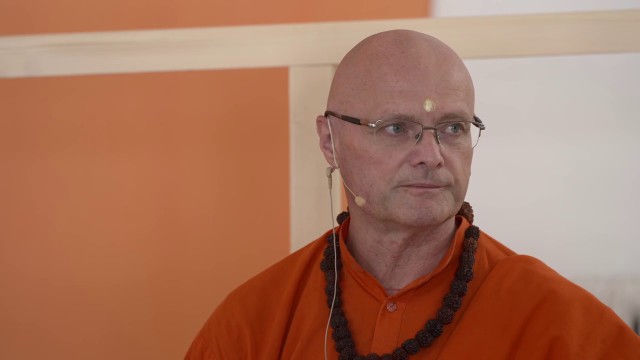
A spiritual discourse and mantra teaching session on the power of language, respect, and energy.
"Spirituality does not mean wholly very slow... But with this different energy inside, just try to be aware of this thing: in which way are we addressing other people?"
"You get from an object only as much as you respect it... If your mālā has some value for you, you will keep it in a safe place... Because of that, you will, from your mālā, get energy when you need it."
A speaker leads a satsang, emphasizing the profound impact of words, gestures, and intention. He discusses how language shapes reality, using examples from addressing others to serving food and respecting spiritual objects like a mala. The talk covers the importance of positive speech, respectful action, and the energy behind our deeds. The session concludes with Swami Avatar Puri teaching and explaining the "Nāma kamala nābhāya" mantra, including its translation and significance.
Filming location: Strilky, Czech Republic
What means Satsang
22:05 - 23:21 (76 min)
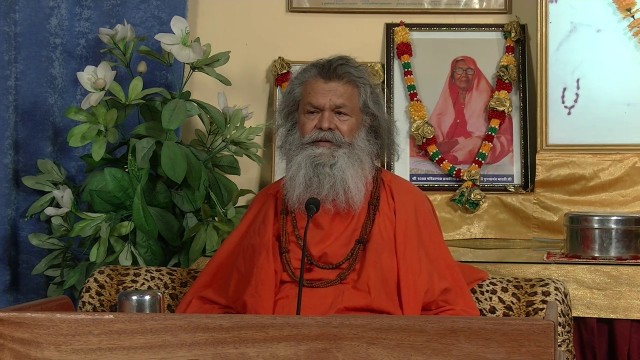
Evening satsang with Vishwaguruji from Jadan, Rajasthan, India. Nearly one-hour bhajan singing. Without prayers, meditation and singing bhajans humans life is not complete. When we are coming to the prayer we are in oneness again. In Satsang, we are in the truth. Do not continue with negative thinking. That one is lost.
We are Humans
23:25 - 23:53 (28 min)
A spiritual discourse exploring the nature of self and practice through contemplative inquiry.
"All that is moving is not you; it is that." "We are human. But what does it mean to be human? It is important to see what we are and what we are not."
A speaker leads a satsang, questioning the identity of the practitioner within yoga and life. Using a stream-of-consciousness style, they contemplate the names of yoga postures, the elements composing the body, and phenomena like airplanes and light to point toward a transcendent Self. The talk oscillates between deconstructing the doer and advocating a yogic lifestyle, concluding with blessings for oneness and enjoyment.
Filming location: Strilky, Czech Republic
American
Australian