
European
Practicing of the system 'Yoga in Daily Life', Level 2 - Part 1
0:00 - 1:03 (63 min)
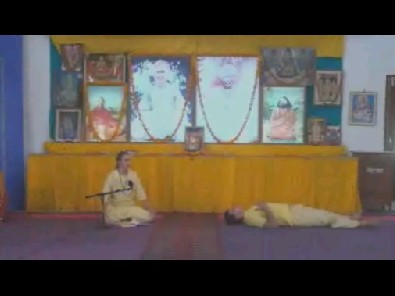
A guided yoga practice session for Level 2 of the Yoga in Daily Life system.
"The difference between the first level and the second level is significant. In the second level, we engage with the real āsanas."
"The breathing can guide you very deep inside towards your inner self."
An instructor leads a comprehensive session at the ashram, beginning with deep relaxation and the full yoga breath before progressing through several Level 2 āsanas such as Śaśāṅkāsana and Meru Ākaraṇa Āsana. The practice emphasizes precise movement linked to breath, detailed relaxation techniques, and concludes with prāṇāyāma and OṂ chanting.
Filming location: Jadan, Rajasthan, India
What means Satsang
1:10 - 2:26 (76 min)
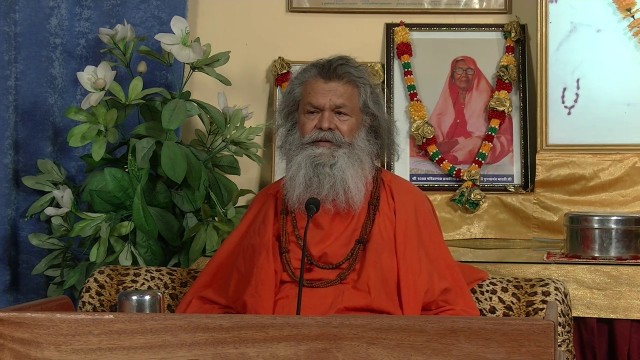
Evening satsang with Vishwaguruji from Jadan, Rajasthan, India. Nearly one-hour bhajan singing. Without prayers, meditation and singing bhajans humans life is not complete. When we are coming to the prayer we are in oneness again. In Satsang, we are in the truth. Do not continue with negative thinking. That one is lost.
Mantra is with you for your whole life
2:30 - 2:52 (22 min)
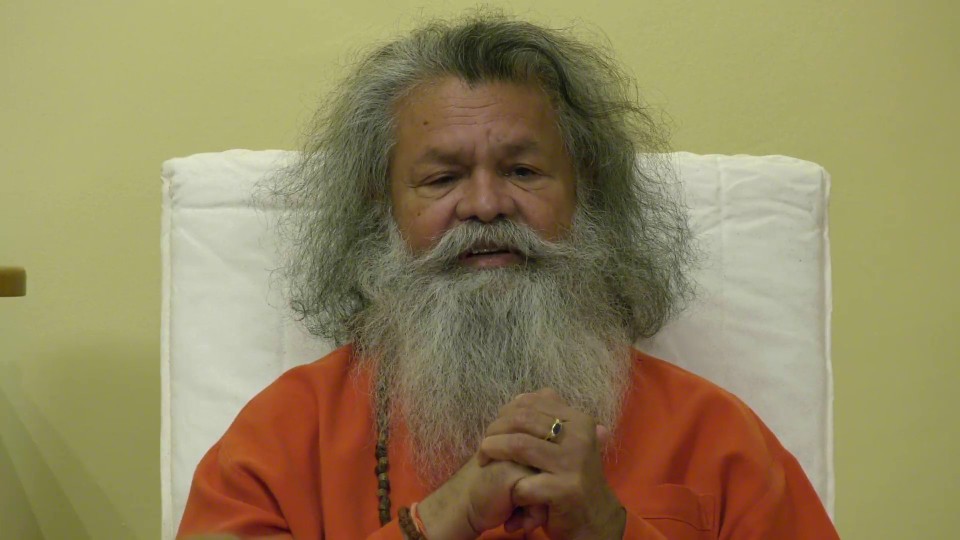
A spiritual discourse on life's two paths, illustrated through a parable about marriage and communication.
"You know very well... And there are two paths." "Spiritual human life is everything. This is what it is, and for that we are thinking."
The speaker presents two life paths: a worldly, professional path and a spiritual path centered on relationships and conscious living. He emphasizes the spiritual path through a lengthy parable about a married couple whose 50-year resentment stems from miscommunication over sharing bread, illustrating how small, unspoken issues can define a life. The talk concludes with the imparting of a lifelong mantra and instructions for a disciplined lifestyle, including vegetarianism.
Filming location: Salzburg, Austria
Iyengar Yoga During Pregnancy: A Synthesis of Tradition and Experience
3:00 - 4:42 (102 min)
A lecture on applying Iyengar Yoga to pregnancy, blending scientific and experiential perspectives.
"Yoga is one, like God is one; different people call it by different names. There is nothing like Iyengar Yoga."
"Āsanas are descriptions, not prescriptions... the practice must be partly individualized within that framework under the guidance of an experienced teacher."
Dr. Rajiv Mehta, a scientist and longtime Iyengar student, explains the methodology's use of props for precision and safety. She details how tailored yoga can address pregnancy's physical and emotional challenges—like back pain, stress, and hormonal changes—by strengthening the body, calming the mind, and preparing for delivery, while strongly emphasizing the need for expert guidance and collaboration with modern medicine.
Filming location: Delhi, India
Inauguration of Swami Madhavananda Statue in Om Ashram
4:45 - 4:59 (14 min)
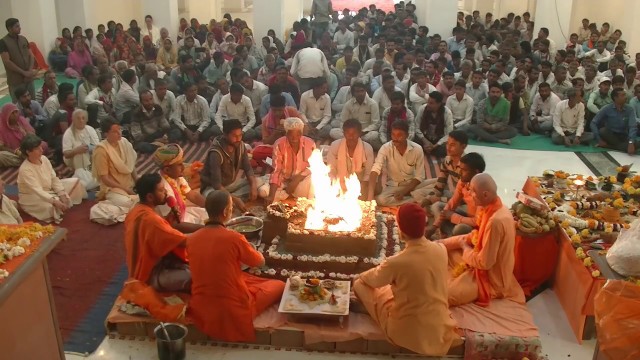
Yagya, ceremony of inauguration of Sri Swami Madhavananda Statue in Om Ashram, Jadan, Rajasthan, India.
Vegetarian cooking lesson 1
5:00 - 5:24 (24 min)
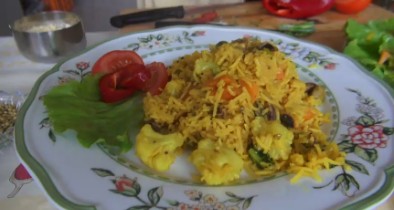
A cooking demonstration for a simple vegetarian Mediterranean meal.
"Today we are going to prepare a very simple vegetarian and Mediterranean meal."
"These spices are very useful for us. They help prevent any parasites in the digestion, in the stomach."
The host guides viewers through preparing a three-part meal: a pistachio and vegetable risotto, a creamy broccoli soup, and a fresh salad with a yogurt or chickpea-based dressing. Throughout the process, they explain techniques, such as grinding whole spices and managing water for the rice, and emphasize the health benefits and digestibility of ingredients like turmeric, cumin, and coriander. Practical tips are shared, including how to reduce salt intake via dressings and preserving nutrients in olive oil.
Filming location: Vép, Hungary
Recharging the spiritual energy
5:30 - 6:17 (47 min)
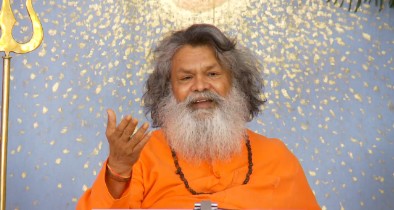
A spiritual discourse on Śiva consciousness, discernment in companionship, and a teaching parable.
"You are called Śivamaya, and many problems disappear. At home, many conditions arise, but here they vanish."
"A wise one will never put a question, because the wise are wise. Who puts the question? The ignorant, because they do not know."
The lecturer leads a satsang, explaining how entering a sacred space like Strelky during Śivarātri fills one with a divine aura. He emphasizes the importance of keeping company with spiritual people and avoiding negative influences (kusanga). He shares a long, illustrative parable about a princess seeking a wise husband, which involves a shepherd, a game of chess, and a mystical cat, ultimately conveying lessons on wisdom, silence, and destiny. The talk concludes with a promotion for an upcoming pilgrimage to Ujjain.
Filming location: Strilky, Czech Republic
Eat healthy food and live as a human
6:25 - 7:08 (43 min)
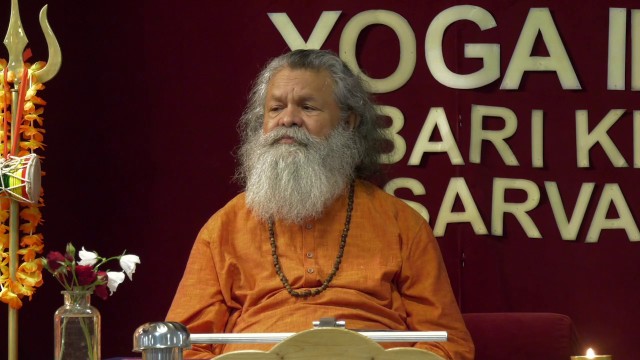
A spiritual discourse on prayer, lifestyle, and simple daily remembrance.
"Morning, midday, evening—always the whole family, women, men, and children. When they sat at the table to eat, they would pray."
"When we open our eyes, then tell, 'I am human.'... And then, second, don't look at animals and this and that first. Mother, mother. So see our mother."
The lecturer reflects on the decline of traditional prayer across religions and its connection to modern societal problems. He discusses dietary shifts, including the rise of veganism, and critiques modern agriculture's impact on the earth. He concludes with a simple daily practice: upon waking, remember "I am human," honor Mother Earth, and reverence water as life.
Filming location: Strilky, Czech Republic
The Holy Land
7:15 - 8:07 (52 min)
An explanatory discourse on the significance and organization of the Kumbh Mela at Prayagraj.
"Prayāgarāj is considered the king of all holy places, where many ṛṣis reside and numerous yajñas have been performed."
"The Mahāmaṇḍaleśvaras are designated solely to look after all sannyāsīs and ashrams... to solve their problems, protect them, look after them."
The speaker describes the sacred origins of Prayagraj (Allahabad) as a nectar-drop site and a river confluence. He details the annual and quadrennial Kumbh Melas, their timing at Makar Saṅkrānti, and the purposes of pilgrimage, ritual bathing, and societal discourse. The talk concludes with an explanation of the administrative structure established by the monastic orders (akhāṛās), including the role of Mahāmaṇḍaleśvaras as caretakers and a governing committee that selects an Ācārya.
Filming location: Maha Kumbha Mela, India
Learning in the Gurukul
8:10 - 8:46 (36 min)
A presentation on the Gurukul education system and its philosophical foundations.
"In our Gurukul, we have a different education. Not this modern education where they only want to work and earn money, earn money, earn money."
"The knowledge that has been taught in the Gurukul, according to the culture of India and according to the knowledge of the sages of India, we will do it."
A spiritual teacher speaks from the Om Shri Visva Dip Gurukul in Rajasthan, outlining the history and purpose of the traditional Gurukul system. He emphasizes education as a sacred, cultural duty focused on knowledge and morality over material gain, introduces the Gyān Putra scholarship project, and explains the significance of the students' Pitāmbara (yellow) uniforms. The talk is followed by an address from Mahāmaṇḍaleśvar Śrī Gyāneśvar Purī Jī Mahārāj, who discusses the logistical and ethical challenges of education in India, contrasting the Gurukul's holistic approach with modern, commercialized systems.
Filming location: Jadan, Rajasthan, India
The hatha yogi wants to live a long and healthy life
8:50 - 9:41 (51 min)
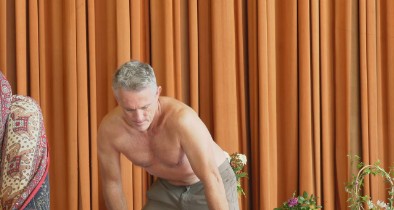
A satsang on herbal remedies and the principles of Haṭha Yoga.
"You take only a little of this babool fruit... Shake it in the water... By morning, it is ready. You drink the water, and you eat that."
"The biggest enemy of the human is laziness. Where there is laziness, there is tamas guṇa."
Swami Ji leads a session beginning with practical uses for neem and babool plants, sharing recipes and a disciple's testimony about neem healing a wound. The talk transitions into the philosophy of a Haṭha Yogī, emphasizing the conquest of laziness, dietary practices including the defense of garlic, and internal cleansing. The session concludes with a live demonstration of the Agni Sāra Kriyā by a disciple.
Filming location: Vép, Hungary
Supporters on the Spiritual Path
9:45 - 10:53 (68 min)
A spiritual discourse on the chakra system and the qualities needed for self-realization.
"Spiritual practice means not only just to sit and meditate and practice mantras, but to change inner feelings. Humbleness is one of the best parts of spirituality."
"Dayā dharam kā mūl hai, pāp mūl hai abhimān... the roots of the dharma, right-house-ness, is the mercy. And the roots of the sins is the ego."
Swami Brahmapuri leads a satsang, continuing a series on the chakras. He transitions from discussing the foundational Mūlādhāra Chakra to explaining the Svādhiṣṭhāna Chakra. The core teaching outlines five spiritual qualities—Vairāgya (detachment), Tyāga (renunciation), Bhakti (devotion), Jñāna (knowledge), and Dayā (mercy)—as the means to overcome negative obstacles like desire and anger. He illustrates these principles with stories of Krishna and Shiva, and gives practical advice, including how to care for a rudrākṣa bead.
Filming location: Vancouver, Canada
Yoga in Daily Life: The Fifth Level
11:00 - 11:38 (38 min)
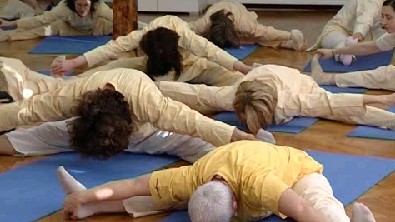
A fifth-level "Yoga in Daily Life" class focused on asana practice and breath awareness.
"Everything we practice in yoga has its purpose, and if we ask ourselves why, we must receive an answer. That is why we say that yoga is the science of the body, mind, spirit, and soul."
"Āsanas do not act only on the body. They are also a correction of our behavior; they act on our consciousness; they affect our entire being."
An instructor guides students through a detailed session, beginning with relaxation in Ānandāsana and emphasizing the purpose behind each alignment detail for reducing stress. The class progresses through a series of asanas including Pavanamuktāsana, Marjari Āsana, Paścimottānāsana, Upaviṣṭha Koṇāsana, Jānu Śīrṣāsana, and Mṛgāsana, with continuous focus on diaphragmatic breathing, mindful movement without strain, and the physical and subtle effects of each posture.
Filming location: Zagreb, Croatia
The Journey Beyond Duality: Life, Self, and the Path to Oneness
11:45 - 12:57 (72 min)
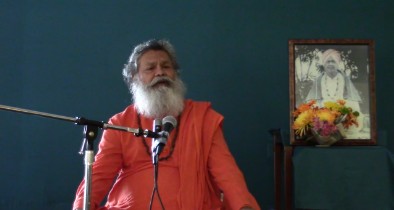
A spiritual discourse on yoga philosophy, the nature of the self, and the path to oneness.
"Our life, as we said, is a destiny and a journey. It is a journey; the destination is still not there."
"In Ātmā, in the self, there are no dualities; there is only oneness. So where there is heaven and hell, there is life and death... that's what we want to come out of, to become one with the highest, with our Self."
Swami Anand Arun delivers an extensive teaching, exploring the journey beyond dualities like life/death and divine/demonic energies. He explains core concepts of Ātmā, karma, and the three guṇas, detailing the system of senses (indriyas), vital energies (prāṇas), and channels (nāḍīs). The talk defines yoga as union, clarifies traditional Haṭha Yoga, and maps the subtle body's chakras, concluding with anecdotes about advanced practices like Khecharī Mudrā and the nectar of immortality.
Filming location: USA
Opening of inner eyes
13:05 - 13:42 (37 min)
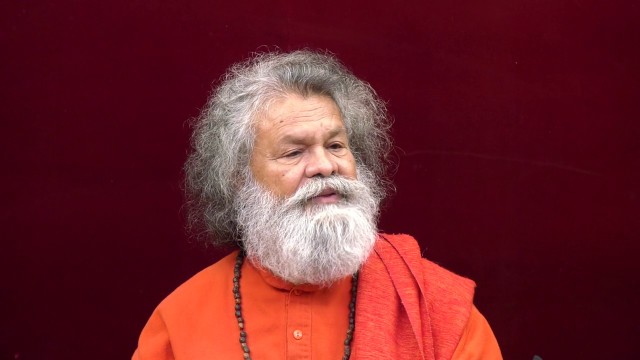
A spiritual discourse on the inner light and the practice of trāṭaka.
"Our soul, our ātmā, comes into our body from the cosmic energies. It is like water from the ocean that rises to become clouds, and from the clouds, dripping water falls to the earth and flows onward."
"Even the green grass, even any trees, bushes, all creatures—everyone has eyes, and they are all looking with their light toward their destination. Therefore, all our trees also have their eyes, and that is concentration, what we call trāṭaka."
The speaker addresses a gathering of practitioners, explaining the journey of the soul and the universal presence of inner sight. He shares teachings received from his Gurudeva, using the metaphor of a seed's growth and a story about a guru's astral rescue of a devotee to illustrate the power of focused awareness (trāṭaka) and the spiritual significance of the navel (nābhi) as a point of energy and re-entry.
Filming location: Strilky, Czech Republic
Our origin is in God
13:50 - 14:31 (41 min)
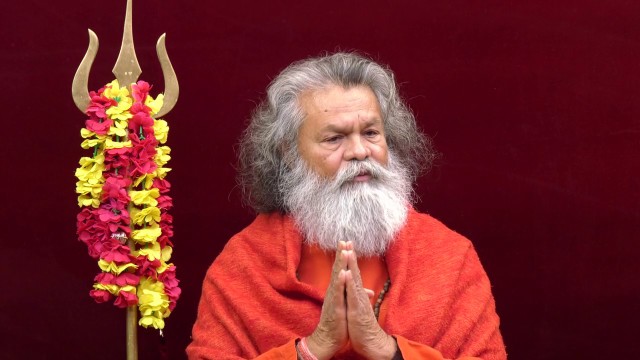
A spiritual discourse on the five sheaths of existence and the nature of life.
"God has given us this body. When the soul, the ātmā, enters the body, it comes into this world, to Earth."
"These five kośas, one after the other, Annamaya kośa, prāṇamaya kośa, manomaya kośa, vijñānamaya kośa, ānandamaya kośa."
A speaker, conveying blessings from Gurudeva Swāmī Madhavānanda, explores the journey of the soul into the human body and the five energetic sheaths (kośas) that surround it. The talk contemplates the cycle of life, the nature of God across traditions, and ethical principles like non-violence and forgiveness, weaving in references to Jesus and a parable about a fruit tree. The session concludes with a tribute to Satguru Dev on the anniversary of his Mahāsamādhi, honoring his life and teachings.
Filming location: Strilky, Czech Republic
Chakras, Nadis and Kundalini
14:35 - 15:14 (39 min)
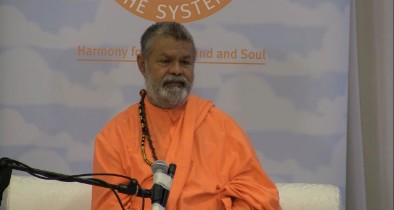
A discourse on the subtle energy systems of yoga, including chakras, nāḍīs, and the mind.
"The chakras are a methodological representation. You will not see this exact picture if you look within your own body, so do not try to see it literally."
"The mind is a river; we should not block it. If we block a dam, we must provide an outlet. Without an outlet, the dam will break and cause greater harm. The mind needs direction."
The teacher provides a detailed explanation of the chakra and nāḍī (energy channel) system, relating it to human physiology, the elements, and life metaphors like a leaf separating from a tree. Key themes include the symbolic nature of chakras, the function of the Iḍā and Piṅgalā nāḍīs, the dangers of improperly awakening kuṇḍalinī energy, and how suppressed emotions manifest as physical ailments. The talk integrates concepts of the five sheaths (kośas), the role of the guru, and the purpose of spiritual practice for holistic health.
Filming location: London, UK
Come here to practice yoga
15:15 - 15:29 (14 min)
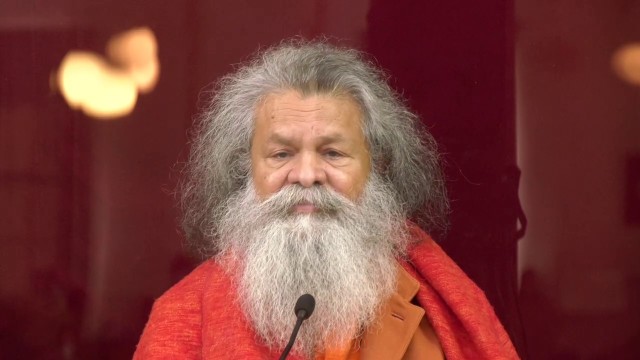
A spiritual leader addresses a gathering at an ashram, discussing the sanctity of the location and the community's service work.
"Our fruits here are all very good. Our vegetation is very good. We can take a long, very good walk. This is truly beautiful, very good."
"We help many, many people, and the animals, and cows, and the honeybees. It is very good that, thanks to this, we have another opportunity to help not only people but also animals and bees."
The speaker begins with chants and praises the ashram's pure environment, encouraging attendees to visit for spiritual practice (sādhanā). He outlines the community's charitable activities, mentioning affiliations with organizations like the United Nations, and discusses future travel plans to India to further this work. The talk concludes with blessings.
Filming location: Strilky, Czech Republic
Bhajan singing from Slovenska Vas
15:30 - 16:07 (37 min)
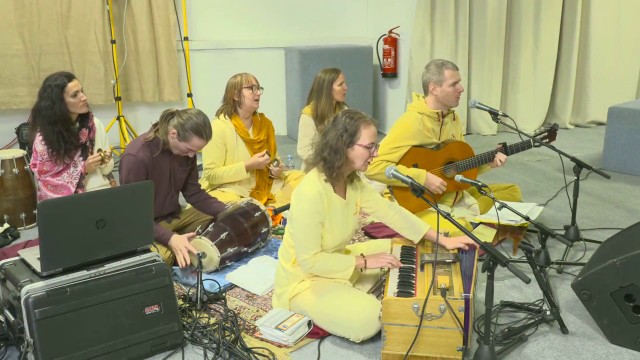
Evening satsang with Vishwaguruji from Slovenska Vas, Slovenia. including Juga Juga Jivo Maheshwarananda, Aba Tuma Gyana Karo
Bhajan singing from Slovenska Vas in the presence of Gurudev
16:15 - 16:36 (21 min)
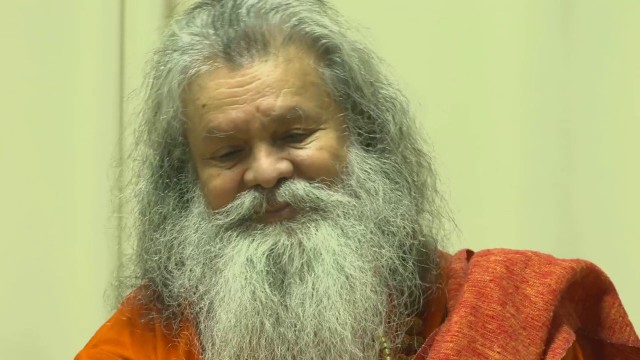
Morning satsang with Vishwaguruji from Slovenska Vas, Slovenia. Bhajan singing in the presence of Gurudev. Inculding Ho Guru Sukha Dama Swami, Sajana Tane Ma Fire Maza Karana, Tum Se Ham Ne Dil Ko Lagaya
Singing bhajans by Swami Gajanandji
16:40 - 17:17 (37 min)
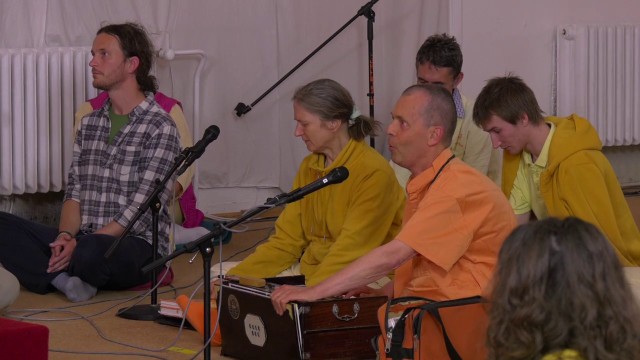
Evening satsang with Vishwaguruji from Strilky Ashram, Czech Republic. Singing bhajans by Swami Gajanandji.
Bhajan evening from Vep
17:25 - 18:20 (55 min)
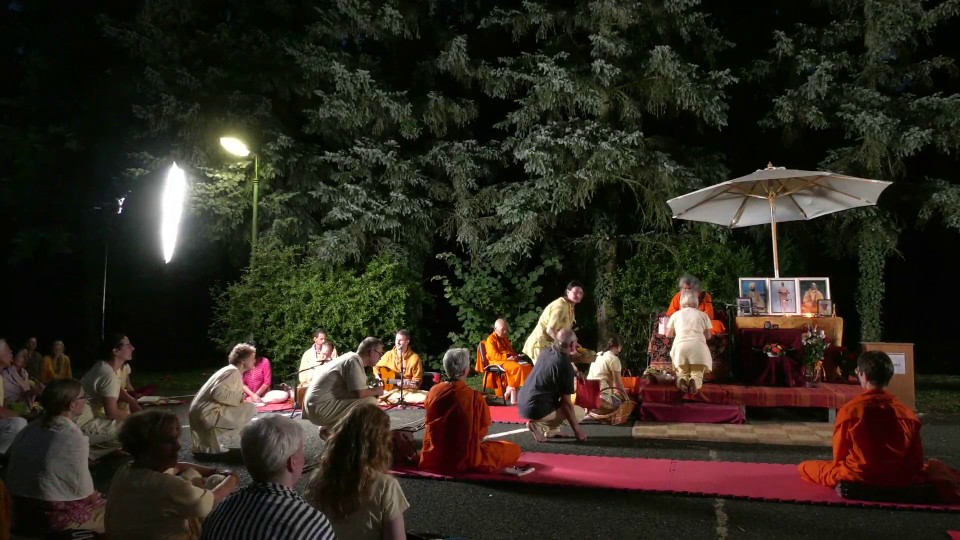
Evening satsang with Vishwaguruji from Vep, Hungary. Bhajan singing.
The Journey Beyond Duality: Life, Self, and the Path to Oneness
18:25 - 19:37 (72 min)
A spiritual discourse on yoga philosophy, the nature of the self, and the path to oneness.
"Our life, as we said, is a destiny and a journey. It is a journey; the destination is still not there."
"In Ātmā, in the self, there are no dualities; there is only oneness. So where there is heaven and hell, there is life and death... that's what we want to come out of, to become one with the highest, with our Self."
Swami Anand Arun delivers an extensive teaching, exploring the journey beyond dualities like life/death and divine/demonic energies. He explains core concepts of Ātmā, karma, and the three guṇas, detailing the system of senses (indriyas), vital energies (prāṇas), and channels (nāḍīs). The talk defines yoga as union, clarifies traditional Haṭha Yoga, and maps the subtle body's chakras, concluding with anecdotes about advanced practices like Khecharī Mudrā and the nectar of immortality.
Filming location: USA
Learning in the Gurukul
19:45 - 20:21 (36 min)
A presentation on the Gurukul education system and its philosophical foundations.
"In our Gurukul, we have a different education. Not this modern education where they only want to work and earn money, earn money, earn money."
"The knowledge that has been taught in the Gurukul, according to the culture of India and according to the knowledge of the sages of India, we will do it."
A spiritual teacher speaks from the Om Shri Visva Dip Gurukul in Rajasthan, outlining the history and purpose of the traditional Gurukul system. He emphasizes education as a sacred, cultural duty focused on knowledge and morality over material gain, introduces the Gyān Putra scholarship project, and explains the significance of the students' Pitāmbara (yellow) uniforms. The talk is followed by an address from Mahāmaṇḍaleśvar Śrī Gyāneśvar Purī Jī Mahārāj, who discusses the logistical and ethical challenges of education in India, contrasting the Gurukul's holistic approach with modern, commercialized systems.
Filming location: Jadan, Rajasthan, India
Supporters on the Spiritual Path
20:25 - 21:33 (68 min)
A spiritual discourse on the chakra system and the qualities needed for self-realization.
"Spiritual practice means not only just to sit and meditate and practice mantras, but to change inner feelings. Humbleness is one of the best parts of spirituality."
"Dayā dharam kā mūl hai, pāp mūl hai abhimān... the roots of the dharma, right-house-ness, is the mercy. And the roots of the sins is the ego."
Swami Brahmapuri leads a satsang, continuing a series on the chakras. He transitions from discussing the foundational Mūlādhāra Chakra to explaining the Svādhiṣṭhāna Chakra. The core teaching outlines five spiritual qualities—Vairāgya (detachment), Tyāga (renunciation), Bhakti (devotion), Jñāna (knowledge), and Dayā (mercy)—as the means to overcome negative obstacles like desire and anger. He illustrates these principles with stories of Krishna and Shiva, and gives practical advice, including how to care for a rudrākṣa bead.
Filming location: Vancouver, Canada
Respect is important
21:40 - 22:33 (53 min)
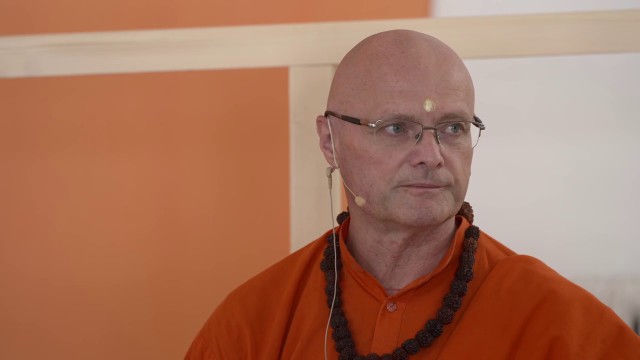
A spiritual discourse and mantra teaching session on the power of language, respect, and energy.
"Spirituality does not mean wholly very slow... But with this different energy inside, just try to be aware of this thing: in which way are we addressing other people?"
"You get from an object only as much as you respect it... If your mālā has some value for you, you will keep it in a safe place... Because of that, you will, from your mālā, get energy when you need it."
A speaker leads a satsang, emphasizing the profound impact of words, gestures, and intention. He discusses how language shapes reality, using examples from addressing others to serving food and respecting spiritual objects like a mala. The talk covers the importance of positive speech, respectful action, and the energy behind our deeds. The session concludes with Swami Avatar Puri teaching and explaining the "Nāma kamala nābhāya" mantra, including its translation and significance.
Filming location: Strilky, Czech Republic
What means Satsang
22:40 - 23:56 (76 min)
Evening satsang with Vishwaguruji from Jadan, Rajasthan, India. Nearly one-hour bhajan singing. Without prayers, meditation and singing bhajans humans life is not complete. When we are coming to the prayer we are in oneness again. In Satsang, we are in the truth. Do not continue with negative thinking. That one is lost.
American
Australian