
European
Practicing of the system 'Yoga in Daily Life', Level 1 - Part 5
0:00 - 1:06 (66 min)
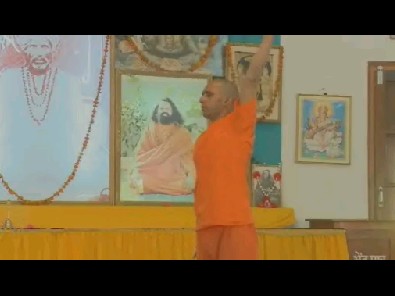
A guided yoga session from the "Yoga in Daily Life" system at a desert retreat.
"This centre is intended to be a yoga retreat and a spiritual centre. Its purpose is to serve humanity, to protect the environment through an ecological way of life, to offer spiritual seekers a path to find the light of spirituality through yoga."
"The book consists of eight levels. All levels include physical exercises, breath exercises, mental exercises, concentration techniques, relaxation and meditation techniques."
An instructor leads a comprehensive practice from Level One, beginning with a welcome to the ashram and its lineage. The session includes Oṁ chanting, deep relaxation (Śavāsana), instruction in the full yoga breath, and a series of āsanas performed lying, sitting, and standing. The practice concludes with Prāṇāyāma (Nāḍī Śodhana) and final Oṁ chanting, aiming to balance the body and mind.
Filming location: Jadan, Rajasthan, India
We are Humans
1:10 - 1:38 (28 min)
A spiritual discourse exploring the nature of self and practice through contemplative inquiry.
"All that is moving is not you; it is that." "We are human. But what does it mean to be human? It is important to see what we are and what we are not."
A speaker leads a satsang, questioning the identity of the practitioner within yoga and life. Using a stream-of-consciousness style, they contemplate the names of yoga postures, the elements composing the body, and phenomena like airplanes and light to point toward a transcendent Self. The talk oscillates between deconstructing the doer and advocating a yogic lifestyle, concluding with blessings for oneness and enjoyment.
Filming location: Strilky, Czech Republic
Yoga for the physical body and beyond
1:45 - 2:07 (22 min)
A morning satsang at a summer retreat discussing the modern practice of yoga and a return to spiritual roots.
"Spirituality does not mean religious practice. Spirituality means not only doing meditation, but encompasses everything."
"Yoga is from the mother’s womb until liberation, and it should be a very easy practice. Everyone can do it."
The teacher addresses the assembly, reflecting on the global spread of yoga since International Yoga Day. He cautions against practices focused solely on physical fitness or difficult postures, which he links to future injuries, and criticizes the commercialization of yoga. Emphasizing the need for a genuine guru lineage, he shares the discovery of their spiritual ancestor, Ālagpurījī, in the Himalayas, and concludes with remarks on environmental protection and a blessing for practice.
Filming location: Vép, Hungary
Chakras, Nadis and Kundalini
2:15 - 2:54 (39 min)
A discourse on the subtle energy systems of yoga, including chakras, nāḍīs, and the mind.
"The chakras are a methodological representation. You will not see this exact picture if you look within your own body, so do not try to see it literally."
"The mind is a river; we should not block it. If we block a dam, we must provide an outlet. Without an outlet, the dam will break and cause greater harm. The mind needs direction."
The teacher provides a detailed explanation of the chakra and nāḍī (energy channel) system, relating it to human physiology, the elements, and life metaphors like a leaf separating from a tree. Key themes include the symbolic nature of chakras, the function of the Iḍā and Piṅgalā nāḍīs, the dangers of improperly awakening kuṇḍalinī energy, and how suppressed emotions manifest as physical ailments. The talk integrates concepts of the five sheaths (kośas), the role of the guru, and the purpose of spiritual practice for holistic health.
Filming location: London, UK
Purify your prana
3:00 - 4:04 (64 min)
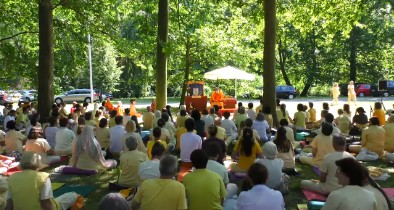
Morning satsang with Vishwaguruji from Summer Retreat in Vep, Hungary. We should protect every creature, not only humans. Bad smell indicates impurities in the prana. Sattvic nourishment and practicing yoga exercises cleans the prana and energies in the body.
Supporters on the Spiritual Path
4:10 - 5:18 (68 min)
A spiritual discourse on the chakra system and the qualities needed for self-realization.
"Spiritual practice means not only just to sit and meditate and practice mantras, but to change inner feelings. Humbleness is one of the best parts of spirituality."
"Dayā dharam kā mūl hai, pāp mūl hai abhimān... the roots of the dharma, right-house-ness, is the mercy. And the roots of the sins is the ego."
Swami Brahmapuri leads a satsang, continuing a series on the chakras. He transitions from discussing the foundational Mūlādhāra Chakra to explaining the Svādhiṣṭhāna Chakra. The core teaching outlines five spiritual qualities—Vairāgya (detachment), Tyāga (renunciation), Bhakti (devotion), Jñāna (knowledge), and Dayā (mercy)—as the means to overcome negative obstacles like desire and anger. He illustrates these principles with stories of Krishna and Shiva, and gives practical advice, including how to care for a rudrākṣa bead.
Filming location: Vancouver, Canada
Mantra is with you for your whole life
5:25 - 5:47 (22 min)
A spiritual discourse on life's two paths, illustrated through a parable about marriage and communication.
"You know very well... And there are two paths." "Spiritual human life is everything. This is what it is, and for that we are thinking."
The speaker presents two life paths: a worldly, professional path and a spiritual path centered on relationships and conscious living. He emphasizes the spiritual path through a lengthy parable about a married couple whose 50-year resentment stems from miscommunication over sharing bread, illustrating how small, unspoken issues can define a life. The talk concludes with the imparting of a lifelong mantra and instructions for a disciplined lifestyle, including vegetarianism.
Filming location: Salzburg, Austria
Learning in the Gurukul
5:55 - 6:31 (36 min)
A presentation on the Gurukul education system and its philosophical foundations.
"In our Gurukul, we have a different education. Not this modern education where they only want to work and earn money, earn money, earn money."
"The knowledge that has been taught in the Gurukul, according to the culture of India and according to the knowledge of the sages of India, we will do it."
A spiritual teacher speaks from the Om Shri Visva Dip Gurukul in Rajasthan, outlining the history and purpose of the traditional Gurukul system. He emphasizes education as a sacred, cultural duty focused on knowledge and morality over material gain, introduces the Gyān Putra scholarship project, and explains the significance of the students' Pitāmbara (yellow) uniforms. The talk is followed by an address from Mahāmaṇḍaleśvar Śrī Gyāneśvar Purī Jī Mahārāj, who discusses the logistical and ethical challenges of education in India, contrasting the Gurukul's holistic approach with modern, commercialized systems.
Filming location: Jadan, Rajasthan, India
Opening of inner eyes
6:35 - 7:12 (37 min)
A spiritual discourse on the inner light and the practice of trāṭaka.
"Our soul, our ātmā, comes into our body from the cosmic energies. It is like water from the ocean that rises to become clouds, and from the clouds, dripping water falls to the earth and flows onward."
"Even the green grass, even any trees, bushes, all creatures—everyone has eyes, and they are all looking with their light toward their destination. Therefore, all our trees also have their eyes, and that is concentration, what we call trāṭaka."
The speaker addresses a gathering of practitioners, explaining the journey of the soul and the universal presence of inner sight. He shares teachings received from his Gurudeva, using the metaphor of a seed's growth and a story about a guru's astral rescue of a devotee to illustrate the power of focused awareness (trāṭaka) and the spiritual significance of the navel (nābhi) as a point of energy and re-entry.
Filming location: Strilky, Czech Republic
The hatha yogi wants to live a long and healthy life
7:20 - 8:11 (51 min)

A satsang on herbal remedies and the principles of Haṭha Yoga.
"You take only a little of this babool fruit... Shake it in the water... By morning, it is ready. You drink the water, and you eat that."
"The biggest enemy of the human is laziness. Where there is laziness, there is tamas guṇa."
Swami Ji leads a session beginning with practical uses for neem and babool plants, sharing recipes and a disciple's testimony about neem healing a wound. The talk transitions into the philosophy of a Haṭha Yogī, emphasizing the conquest of laziness, dietary practices including the defense of garlic, and internal cleansing. The session concludes with a live demonstration of the Agni Sāra Kriyā by a disciple.
Filming location: Vép, Hungary
Our origin is in God
8:15 - 8:56 (41 min)
A spiritual discourse on the five sheaths of existence and the nature of life.
"God has given us this body. When the soul, the ātmā, enters the body, it comes into this world, to Earth."
"These five kośas, one after the other, Annamaya kośa, prāṇamaya kośa, manomaya kośa, vijñānamaya kośa, ānandamaya kośa."
A speaker, conveying blessings from Gurudeva Swāmī Madhavānanda, explores the journey of the soul into the human body and the five energetic sheaths (kośas) that surround it. The talk contemplates the cycle of life, the nature of God across traditions, and ethical principles like non-violence and forgiveness, weaving in references to Jesus and a parable about a fruit tree. The session concludes with a tribute to Satguru Dev on the anniversary of his Mahāsamādhi, honoring his life and teachings.
Filming location: Strilky, Czech Republic
Recharging the spiritual energy
9:00 - 9:47 (47 min)
A spiritual discourse on Śiva consciousness, discernment in companionship, and a teaching parable.
"You are called Śivamaya, and many problems disappear. At home, many conditions arise, but here they vanish."
"A wise one will never put a question, because the wise are wise. Who puts the question? The ignorant, because they do not know."
The lecturer leads a satsang, explaining how entering a sacred space like Strelky during Śivarātri fills one with a divine aura. He emphasizes the importance of keeping company with spiritual people and avoiding negative influences (kusanga). He shares a long, illustrative parable about a princess seeking a wise husband, which involves a shepherd, a game of chess, and a mystical cat, ultimately conveying lessons on wisdom, silence, and destiny. The talk concludes with a promotion for an upcoming pilgrimage to Ujjain.
Filming location: Strilky, Czech Republic
Respect is important
9:55 - 10:48 (53 min)
A spiritual discourse and mantra teaching session on the power of language, respect, and energy.
"Spirituality does not mean wholly very slow... But with this different energy inside, just try to be aware of this thing: in which way are we addressing other people?"
"You get from an object only as much as you respect it... If your mālā has some value for you, you will keep it in a safe place... Because of that, you will, from your mālā, get energy when you need it."
A speaker leads a satsang, emphasizing the profound impact of words, gestures, and intention. He discusses how language shapes reality, using examples from addressing others to serving food and respecting spiritual objects like a mala. The talk covers the importance of positive speech, respectful action, and the energy behind our deeds. The session concludes with Swami Avatar Puri teaching and explaining the "Nāma kamala nābhāya" mantra, including its translation and significance.
Filming location: Strilky, Czech Republic
Sataguru rakho laj hamari
10:50 - 10:56 (6 min)
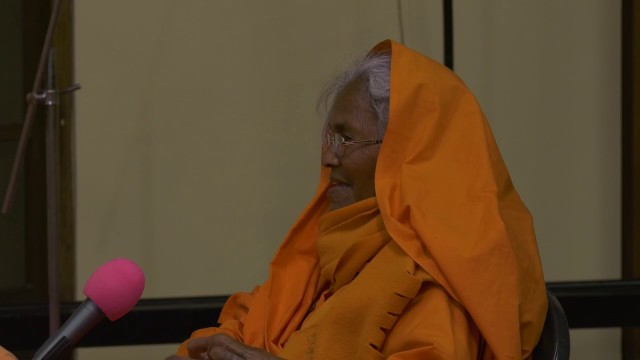
Evening satsang from Jadan Ashram, Rajasthan, India. Vishwaguruji"s sister sings Bhajans.
Around the world - Yoga camp for Kids Strilky
11:00 - 11:04 (4 min)
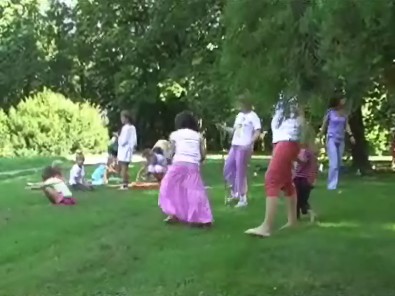
A guided visualization or ritual instruction involving symbolic objects and actions.
"If it shines forth in the darkness, it means you have saved it and that it has been fulfilled. Come and take from it."
"The cup is painted there, shining brightly. Behind that little pond, there is a tree stump. The cup is supposed to stand upon that stump, correct?"
An unseen guide leads participants through a symbolic sequence, identifying a location from a picture featuring a park with a whirlpool and pond. The focus is a brightly painted cup meant to be placed upon a tree stump. The instructions involve using colored pencils, initially to tie the cup but then not completely, before shifting to making the pencils into boats within groups.
Filming location: Strilky, Czech Republic
Around the world - Yoga Class of Level 1 Part 2 in Sydney
11:10 - 12:20 (70 min)

Yoga in Daily Life Class of Level 1 Part 2 filmed in Sydney
Be the tool
12:25 - 13:09 (44 min)
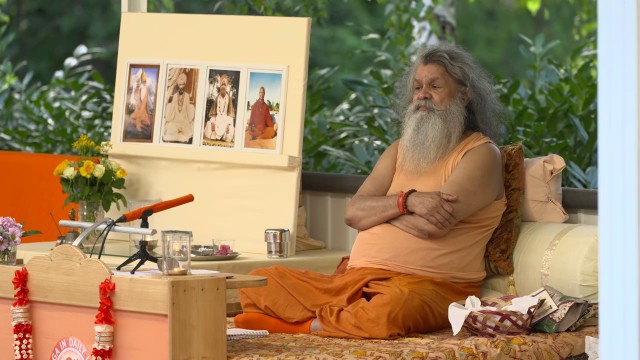
An evening satsang on humility, grace, and being an instrument for divine will.
"Only what is important for us is to understand and to pray to be the tool."
"Always be aware and pray. Please, God, give me opportunity. Give me a chance to be your tool."
Following opening prayers and chants to the guru's sandals, a speaker addresses the gathered and online audience. He shares a parable about a dog who mistakenly believes it is pulling a chariot, and the story of Hanuman receiving a lesson from a sage about the endless cycle of divine service. The core teaching emphasizes surrendering the ego, becoming a selfless instrument for grace, and performing service without seeking recognition, contrasting this with spiritual showmanship.
Filming location: Strilky, Czech Republic
The River of Selfless Service
13:15 - 13:47 (32 min)
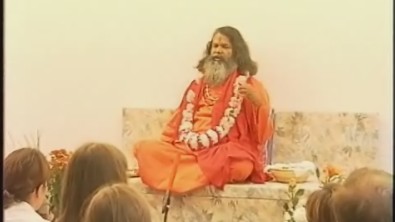
A satsang discourse on karma yoga, selfless service, and spiritual practice.
"Work is the beauty of life, but this work should be positive, selfless service."
"All that he did is for himself, for his soul, for his liberation."
The lecturer addresses ashram residents, praising their recent karma yoga efforts. He explores the nature of selfless service, using the example of Hanuman from the Ramayana to illustrate that all spiritual work ultimately benefits the doer's own soul. He outlines the threefold path of svādhyāya (self-study), manan (contemplation), and abhyāsa (practice), urging attendees to overcome personal likes and dislikes to foster inner harmony and continue flowing like a river in service.
Filming location: Zagreb, Croatia
What means Satsang
13:55 - 15:11 (76 min)
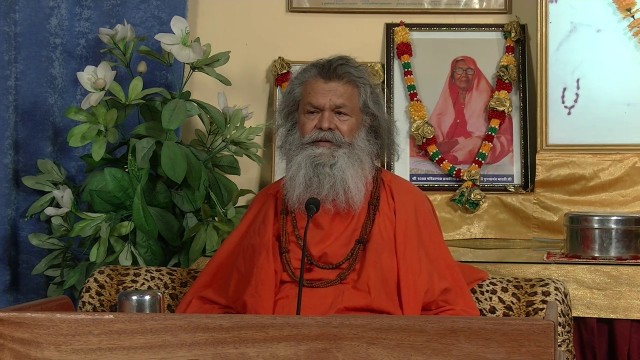
Evening satsang with Vishwaguruji from Jadan, Rajasthan, India. Nearly one-hour bhajan singing. Without prayers, meditation and singing bhajans humans life is not complete. When we are coming to the prayer we are in oneness again. In Satsang, we are in the truth. Do not continue with negative thinking. That one is lost.
In the cave of Sri Alakhpuriji
15:15 - 15:25 (10 min)
A personal story about receiving a devotional chant as a blessing.
"You go in and meditate; you will get good inspiration." "Print out this sentence in big letters and stick it on the place where you go the most, and read it every day."
The speaker recounts a Himalayan pilgrimage with Viśva Gurujī, where he was granted special permission to meditate in Śrī Alakpurījī's cave. After an uncomfortable period of cold, he later received the kīrtan as a blessing. He explains the chant's core meaning—"all you need is the Guru's grace"—and shares how he set the Sanskrit phrase to music, concluding by singing the devotional composition.
Filming location: Vép, Hungary
The Guru's name is a priceless diamond
15:30 - 15:46 (16 min)
Evening satsang with Vishwaguruji from Strilky Ashram, Czech Republic. Bhajan singing from Strilky. Including bhajan "Ho Guru Sukha Dama Swami"
Tvameva Mata Ca Pita Tvameva
15:50 - 17:06 (76 min)
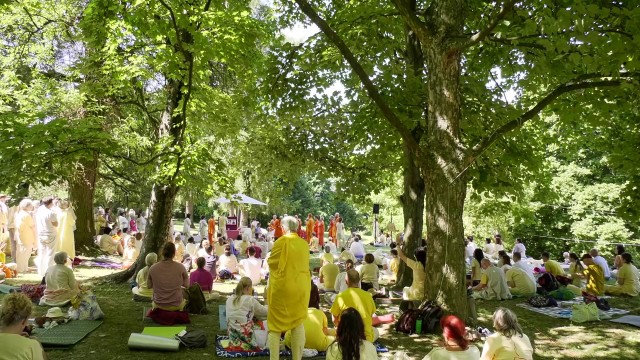
Morning satsang with Viswhaguruji from Strilky Ashram, Czech Republic. Bhajan singing from Strilky. Including He Nata Aba To, Itna to Karana Guruji
Sri Deep Narayan Mahaprahuji
17:10 - 17:17 (7 min)
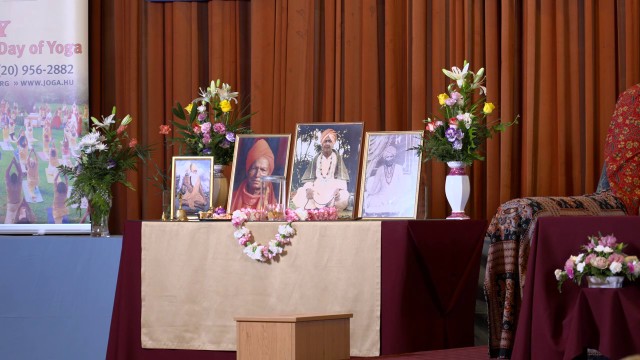
A devotional discourse on the power of the divine name and Guru's grace.
"For the beings of the world—the jīvas and jinn—His name itself is the boat to cross the ocean of existence."
"By always contemplating His name with grace, desire, anger, and greed are cut down."
The speaker offers praise to Śrī Dīp Nārāyaṇa Mahāprabhujī, described as a divine incarnation. The central theme is that constant remembrance and contemplation of this divine name serves as a vehicle for liberation, protecting devotees from worldly afflictions and illusion, and immersing them in divine absorption. The Guru's grace is presented as the essential means for this crossing.
Filming location: Vép, Hungary
Dhyan Karo
17:25 - 17:37 (12 min)
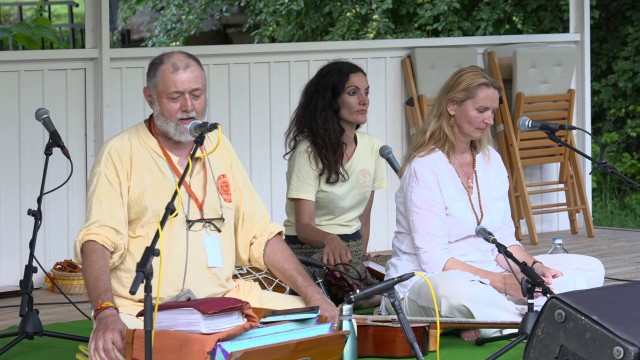
Evening satsang with Vishwaguruji from Strilky Ashram, Czech Republic. Bhajan singing from Strilky, including Dhyan Karo and Kyu Rakhte Ho Parada Ham Se
Ab Sop Diya Is Jivan Ka
17:45 - 18:00 (15 min)
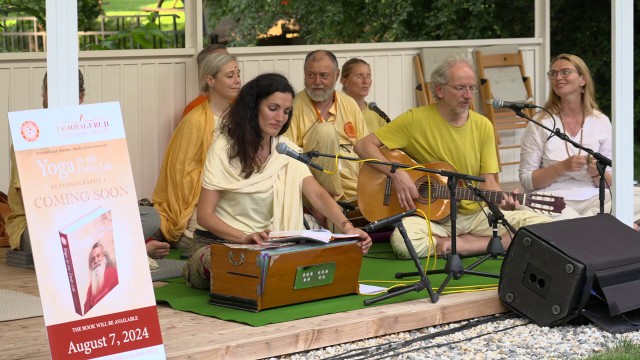
Evening satsang from Strilky Ashram, Czech Republic. Bhajan singing fron Strilky. Ab Sop Diya, Aba Hama
Without Gurudev the whole world cries
18:05 - 18:21 (16 min)
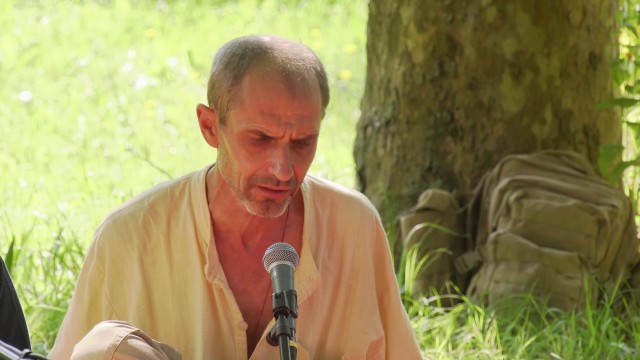
A devotee shares an interpretation and sings a devotional bhajan.
"I was wandering around the world. I searched the entire world but could not find a friend like Gurudev."
"Satguru āye, mera mana harṣāye. Dhanyabhāga mere Satguru āye. (My Satguru has come, my mind is delighted. Fortunate am I, my Satguru has come.)"
The speaker expresses a deep longing for the Guru, offering a personal interpretation of a hymn's meaning before clarifying it is not a proper translation. He then sings the bhajan "Dhania Bagha Mere Sat Guru Aya," which praises the arrival of the Satguru and the joy and liberation it brings. The session concludes with extended devotional chanting.
Filming location: Vép, Hungary
Cetana Ka Cilka Swami Ne
18:25 - 18:51 (26 min)
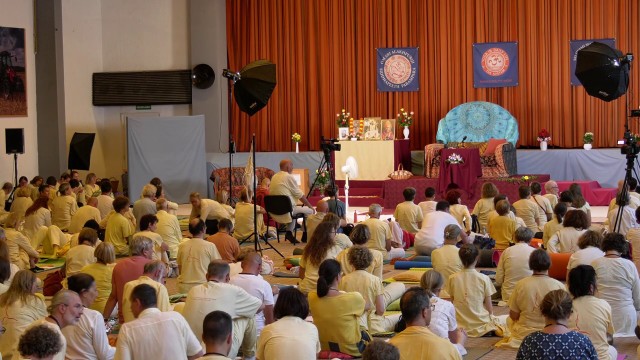
Evening satsang from Vep, Hungary. Bhajan singing from Vep.
Eat healthy food and live as a human
18:55 - 19:38 (43 min)
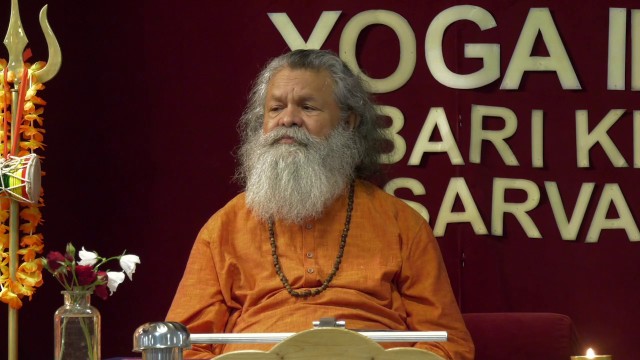
A spiritual discourse on prayer, lifestyle, and simple daily remembrance.
"Morning, midday, evening—always the whole family, women, men, and children. When they sat at the table to eat, they would pray."
"When we open our eyes, then tell, 'I am human.'... And then, second, don't look at animals and this and that first. Mother, mother. So see our mother."
The lecturer reflects on the decline of traditional prayer across religions and its connection to modern societal problems. He discusses dietary shifts, including the rise of veganism, and critiques modern agriculture's impact on the earth. He concludes with a simple daily practice: upon waking, remember "I am human," honor Mother Earth, and reverence water as life.
Filming location: Strilky, Czech Republic
We should have God in our heart
19:45 - 21:06 (81 min)
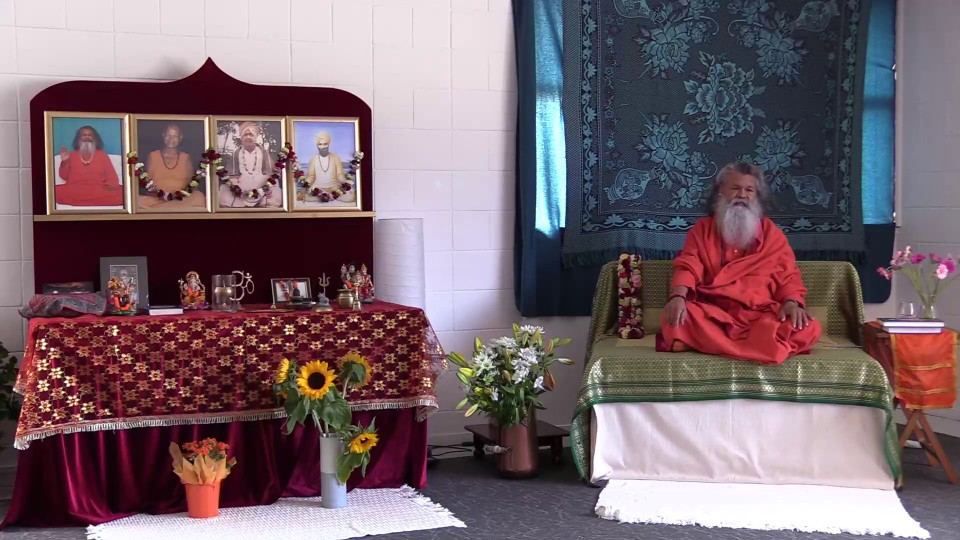
A spiritual discourse weaving stories and observations on faith, tradition, and true knowledge.
"Any lecture we hear... for one and a half or two and a half minutes we have concentration, then we don't have concentration... but that story is there; that story will never forget."
"We must not have a thousand, but even a hundred is enough, or one is enough. My Gurujī said, 'A hundred goats and one tiger is more than enough.'"
The lecturer delivers an evening satsang, moving from observations on preparation and cultural greetings into profound spiritual parables. He shares stories including a Pope testing devotees' faith, a devoted brother walking on water, and the mythological tales of Śiva, Śakti, and the sage Śukadeva, all illustrating that heartfelt devotion surpasses mere intellectual knowledge. The talk concludes with reflections on the enduring power of stories and the core principles of yoga.
Filming location: Auckland, New Zealand
Satsang from Strilky
21:10 - 22:27 (77 min)
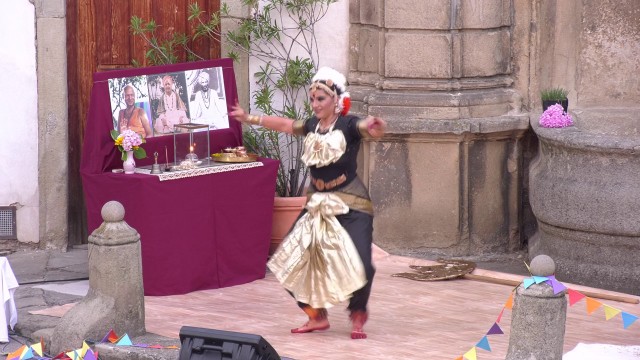
Evening satsang from Strilky Ashram, Czech Republic. Explanation and singing bhajans. Bharatanatyam dance by Bhaktidevi. The glory of Devpuriji Bhagawan is around the whole world. He was the incarnation of Bhagawan Shiva.
Webcast from Strilky
22:35 - 23:51 (76 min)
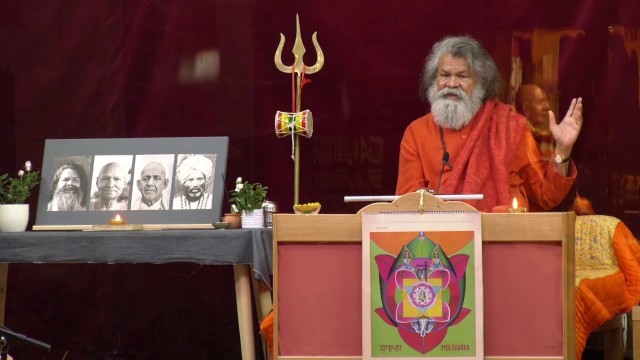
Evening satsang with Vishwaguruji from Strilky, Czech Republic.
American
Australian