
European
Practicing of the system 'Yoga in Daily Life', Level 1 - Part 4
0:00 - 1:04 (64 min)
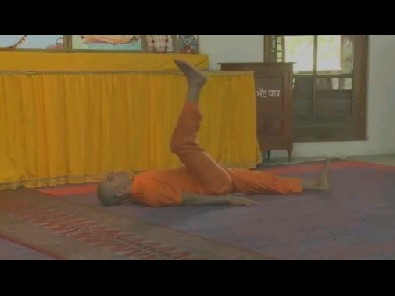
Practicing of the system "Yoga in Daily Life", Level 1 - Part 4, in Om Vishwa Deep Gurukul Swami Maheshwaranand Ashram, Jadan, Rajasthan, India on 23rd of October 2009.
Purify your prana
1:10 - 2:14 (64 min)
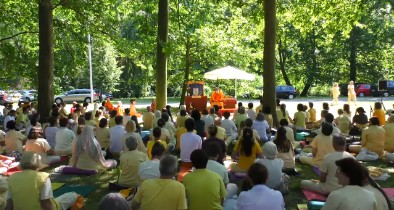
Morning satsang with Vishwaguruji from Summer Retreat in Vep, Hungary. We should protect every creature, not only humans. Bad smell indicates impurities in the prana. Sattvic nourishment and practicing yoga exercises cleans the prana and energies in the body.
Eat healthy food and live as a human
2:20 - 3:03 (43 min)
A spiritual discourse on prayer, lifestyle, and simple daily remembrance.
"Morning, midday, evening—always the whole family, women, men, and children. When they sat at the table to eat, they would pray."
"When we open our eyes, then tell, 'I am human.'... And then, second, don't look at animals and this and that first. Mother, mother. So see our mother."
The lecturer reflects on the decline of traditional prayer across religions and its connection to modern societal problems. He discusses dietary shifts, including the rise of veganism, and critiques modern agriculture's impact on the earth. He concludes with a simple daily practice: upon waking, remember "I am human," honor Mother Earth, and reverence water as life.
Filming location: Strilky, Czech Republic
Our origin is in God
3:10 - 3:51 (41 min)
A spiritual discourse on the five sheaths of existence and the nature of life.
"God has given us this body. When the soul, the ātmā, enters the body, it comes into this world, to Earth."
"These five kośas, one after the other, Annamaya kośa, prāṇamaya kośa, manomaya kośa, vijñānamaya kośa, ānandamaya kośa."
A speaker, conveying blessings from Gurudeva Swāmī Madhavānanda, explores the journey of the soul into the human body and the five energetic sheaths (kośas) that surround it. The talk contemplates the cycle of life, the nature of God across traditions, and ethical principles like non-violence and forgiveness, weaving in references to Jesus and a parable about a fruit tree. The session concludes with a tribute to Satguru Dev on the anniversary of his Mahāsamādhi, honoring his life and teachings.
Filming location: Strilky, Czech Republic
Respect is important
3:55 - 4:48 (53 min)
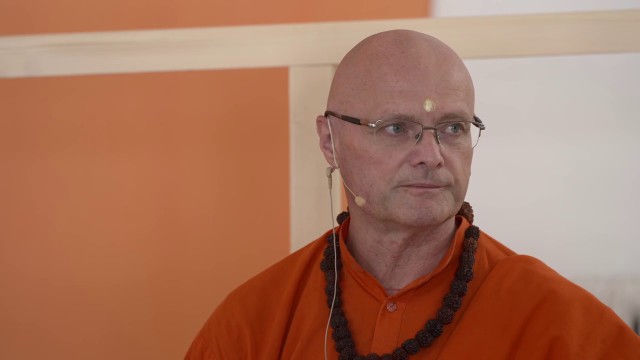
A spiritual discourse and mantra teaching session on the power of language, respect, and energy.
"Spirituality does not mean wholly very slow... But with this different energy inside, just try to be aware of this thing: in which way are we addressing other people?"
"You get from an object only as much as you respect it... If your mālā has some value for you, you will keep it in a safe place... Because of that, you will, from your mālā, get energy when you need it."
A speaker leads a satsang, emphasizing the profound impact of words, gestures, and intention. He discusses how language shapes reality, using examples from addressing others to serving food and respecting spiritual objects like a mala. The talk covers the importance of positive speech, respectful action, and the energy behind our deeds. The session concludes with Swami Avatar Puri teaching and explaining the "Nāma kamala nābhāya" mantra, including its translation and significance.
Filming location: Strilky, Czech Republic
Supporters on the Spiritual Path
4:55 - 6:03 (68 min)
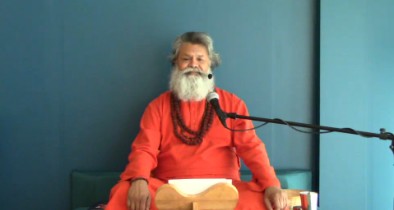
A spiritual discourse on the chakra system and the qualities needed for self-realization.
"Spiritual practice means not only just to sit and meditate and practice mantras, but to change inner feelings. Humbleness is one of the best parts of spirituality."
"Dayā dharam kā mūl hai, pāp mūl hai abhimān... the roots of the dharma, right-house-ness, is the mercy. And the roots of the sins is the ego."
Swami Brahmapuri leads a satsang, continuing a series on the chakras. He transitions from discussing the foundational Mūlādhāra Chakra to explaining the Svādhiṣṭhāna Chakra. The core teaching outlines five spiritual qualities—Vairāgya (detachment), Tyāga (renunciation), Bhakti (devotion), Jñāna (knowledge), and Dayā (mercy)—as the means to overcome negative obstacles like desire and anger. He illustrates these principles with stories of Krishna and Shiva, and gives practical advice, including how to care for a rudrākṣa bead.
Filming location: Vancouver, Canada
The Journey Beyond Duality: Life, Self, and the Path to Oneness
6:10 - 7:22 (72 min)
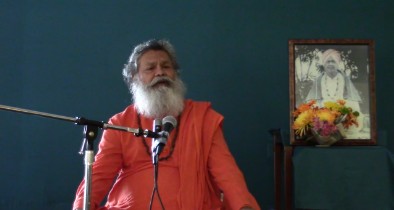
A spiritual discourse on yoga philosophy, the nature of the self, and the path to oneness.
"Our life, as we said, is a destiny and a journey. It is a journey; the destination is still not there."
"In Ātmā, in the self, there are no dualities; there is only oneness. So where there is heaven and hell, there is life and death... that's what we want to come out of, to become one with the highest, with our Self."
Swami Anand Arun delivers an extensive teaching, exploring the journey beyond dualities like life/death and divine/demonic energies. He explains core concepts of Ātmā, karma, and the three guṇas, detailing the system of senses (indriyas), vital energies (prāṇas), and channels (nāḍīs). The talk defines yoga as union, clarifies traditional Haṭha Yoga, and maps the subtle body's chakras, concluding with anecdotes about advanced practices like Khecharī Mudrā and the nectar of immortality.
Filming location: USA
Chakras, Nadis and Kundalini
7:30 - 8:09 (39 min)
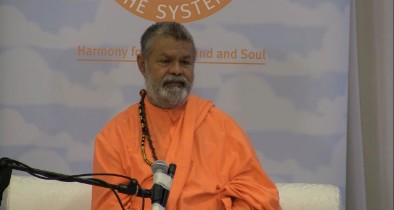
A discourse on the subtle energy systems of yoga, including chakras, nāḍīs, and the mind.
"The chakras are a methodological representation. You will not see this exact picture if you look within your own body, so do not try to see it literally."
"The mind is a river; we should not block it. If we block a dam, we must provide an outlet. Without an outlet, the dam will break and cause greater harm. The mind needs direction."
The teacher provides a detailed explanation of the chakra and nāḍī (energy channel) system, relating it to human physiology, the elements, and life metaphors like a leaf separating from a tree. Key themes include the symbolic nature of chakras, the function of the Iḍā and Piṅgalā nāḍīs, the dangers of improperly awakening kuṇḍalinī energy, and how suppressed emotions manifest as physical ailments. The talk integrates concepts of the five sheaths (kośas), the role of the guru, and the purpose of spiritual practice for holistic health.
Filming location: London, UK
Don't kill animals, remain clean
8:15 - 9:28 (73 min)
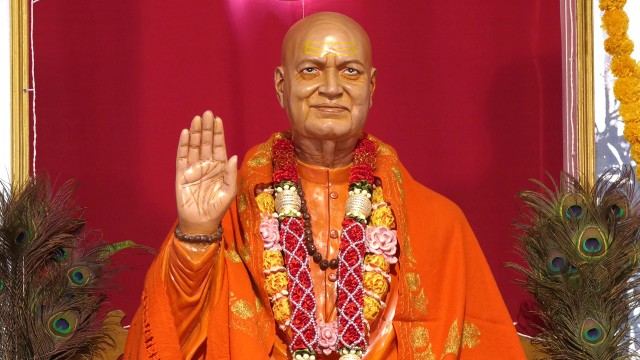
Evening sastang from Jadan Ashram, Rajasthan, India. When it rains, it feeds all the vegetation. The sea, the grass, the trees need water. Only humans can reach the highest. Those who don't use drugs or drink alcohol. Today, the whole world, all religions and cultures are right in the palm of our hands, accessible by mobile phone. With the help of yoga, meditation and ancient sacred scriptures, spirituality can be realized. Outer purity means inner purity.Chemical pollution is a big problem all over the Earth.
The hatha yogi wants to live a long and healthy life
9:35 - 10:26 (51 min)

A satsang on herbal remedies and the principles of Haṭha Yoga.
"You take only a little of this babool fruit... Shake it in the water... By morning, it is ready. You drink the water, and you eat that."
"The biggest enemy of the human is laziness. Where there is laziness, there is tamas guṇa."
Swami Ji leads a session beginning with practical uses for neem and babool plants, sharing recipes and a disciple's testimony about neem healing a wound. The talk transitions into the philosophy of a Haṭha Yogī, emphasizing the conquest of laziness, dietary practices including the defense of garlic, and internal cleansing. The session concludes with a live demonstration of the Agni Sāra Kriyā by a disciple.
Filming location: Vép, Hungary
Mantra is with you for your whole life
10:30 - 10:52 (22 min)
A spiritual discourse on life's two paths, illustrated through a parable about marriage and communication.
"You know very well... And there are two paths." "Spiritual human life is everything. This is what it is, and for that we are thinking."
The speaker presents two life paths: a worldly, professional path and a spiritual path centered on relationships and conscious living. He emphasizes the spiritual path through a lengthy parable about a married couple whose 50-year resentment stems from miscommunication over sharing bread, illustrating how small, unspoken issues can define a life. The talk concludes with the imparting of a lifelong mantra and instructions for a disciplined lifestyle, including vegetarianism.
Filming location: Salzburg, Austria
Around the world - Yoga against backpain SLO
11:00 - 11:36 (36 min)

A lecture on spinal anatomy, common causes of back pain, and a concise daily yoga routine.
"The most common among all these incorrect postures is this one... we sit every day like this for eight hours at the computer at work."
"One āsana, and ten minutes. Ten minutes. Now you all have to admit that you have ten minutes."
A medical professional delivers a detailed educational talk, explaining spinal structure, the biomechanics of injury from poor posture and lifting, and the development of acute versus chronic pain. He then introduces a preventative ten-minute yoga sequence, demonstrated by an assistant named Lena, which includes stretching, twisting, and strengthening exercises like the cat pose, emphasizing mindful movement to alleviate and prevent spinal issues.
Filming location: Slovenia
Learning in the Gurukul
11:40 - 12:16 (36 min)
A presentation on the Gurukul education system and its philosophical foundations.
"In our Gurukul, we have a different education. Not this modern education where they only want to work and earn money, earn money, earn money."
"The knowledge that has been taught in the Gurukul, according to the culture of India and according to the knowledge of the sages of India, we will do it."
A spiritual teacher speaks from the Om Shri Visva Dip Gurukul in Rajasthan, outlining the history and purpose of the traditional Gurukul system. He emphasizes education as a sacred, cultural duty focused on knowledge and morality over material gain, introduces the Gyān Putra scholarship project, and explains the significance of the students' Pitāmbara (yellow) uniforms. The talk is followed by an address from Mahāmaṇḍaleśvar Śrī Gyāneśvar Purī Jī Mahārāj, who discusses the logistical and ethical challenges of education in India, contrasting the Gurukul's holistic approach with modern, commercialized systems.
Filming location: Jadan, Rajasthan, India
Opening of inner eyes
12:20 - 12:57 (37 min)
A spiritual discourse on the inner light and the practice of trāṭaka.
"Our soul, our ātmā, comes into our body from the cosmic energies. It is like water from the ocean that rises to become clouds, and from the clouds, dripping water falls to the earth and flows onward."
"Even the green grass, even any trees, bushes, all creatures—everyone has eyes, and they are all looking with their light toward their destination. Therefore, all our trees also have their eyes, and that is concentration, what we call trāṭaka."
The speaker addresses a gathering of practitioners, explaining the journey of the soul and the universal presence of inner sight. He shares teachings received from his Gurudeva, using the metaphor of a seed's growth and a story about a guru's astral rescue of a devotee to illustrate the power of focused awareness (trāṭaka) and the spiritual significance of the navel (nābhi) as a point of energy and re-entry.
Filming location: Strilky, Czech Republic
Dhyan Karo
13:00 - 13:12 (12 min)
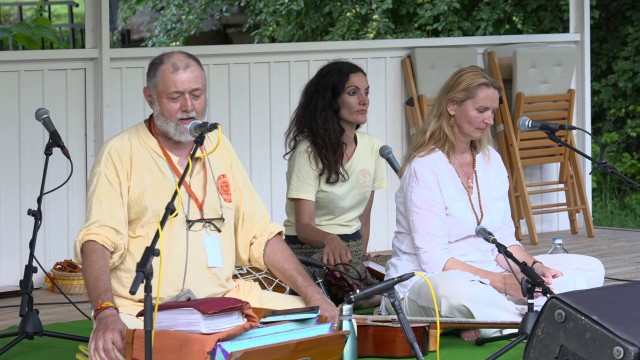
Evening satsang with Vishwaguruji from Strilky Ashram, Czech Republic. Bhajan singing from Strilky, including Dhyan Karo and Kyu Rakhte Ho Parada Ham Se
Narada cursed Vishnu
13:15 - 13:58 (43 min)
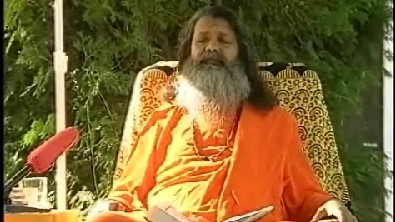
A narration of the mythological story of Nārada's curse upon Lord Viṣṇu, followed by a discourse on its spiritual meaning.
"You made me a monkey, and I tell you, when you will be in great trouble, only the monkey will help you, nobody else."
"The merciful Lord said, 'Nārada, that was all My icchā. It was My will.'"
The speaker recounts how the sage Nārada, enraged after being tricked by Viṣṇu's illusion (māyā), confronts the Lord to curse Him. In his anger, Nārada pronounces a curse that Viṣṇu will incarnate as Rāma, suffer separation from His wife, and be aided by monkeys. Viṣṇu accepts the curse, explaining it was His own divine will, and later dissolves the illusion. A remorseful Nārada seeks forgiveness, and Viṣṇu promises to give him a liberating Kriyā. The talk includes a tangential account of the churning of the ocean (Samudra Manthan) to illustrate Nārada's accusations.
Filming location: Vép, Hungary
Practical guide to meditation (5/11)
14:05 - 15:22 (77 min)
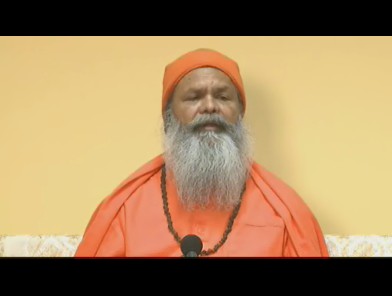
Webcast of Swamijis lecture about Meditation from Bratislava, Slovakia on 15th Feburary 2009.
Yuga Yuga Jivo Maheshwarananda
15:30 - 15:37 (7 min)
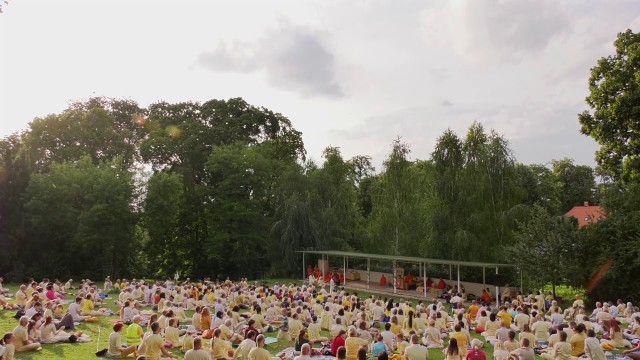
Evening satsang with Vishwaguruji from Strilky Ashram, Czech Republic. Bhajan singing on Gurupurnima satsang.
Sataguru rakho laj hamari
15:45 - 15:51 (6 min)
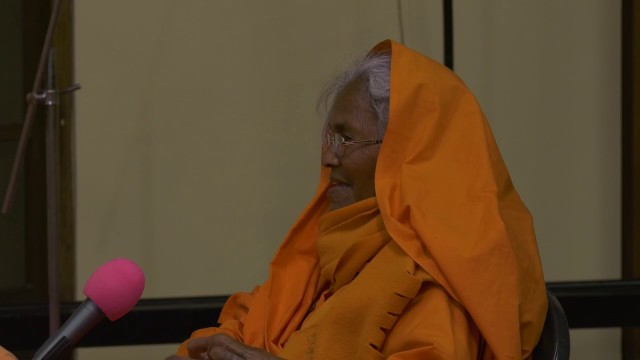
Evening satsang from Jadan Ashram, Rajasthan, India. Vishwaguruji"s sister sings Bhajans.
Repeat the name of Gurudev
15:55 - 16:22 (27 min)
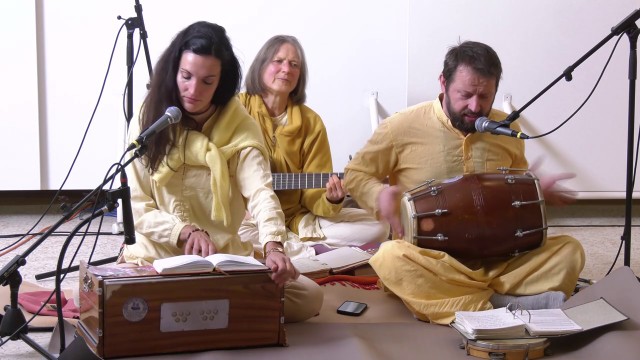
Evening satsang with Vishwaguruji from Vienna, Austria. Bhajan singinig to the Guru. Guru carano me arasatha tiratha he
Bhajan singing in the presence of the Master
16:30 - 17:17 (47 min)
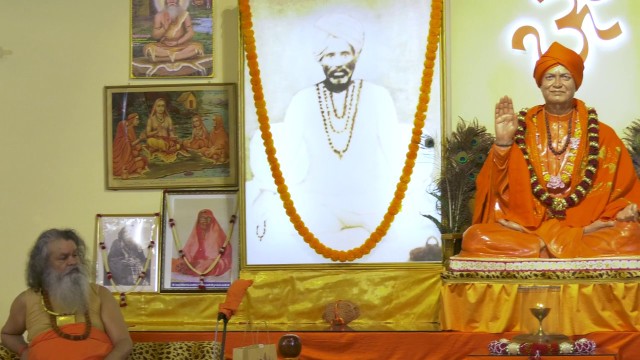
Evening satsang from Jadan Ashram, Rajasthan, India. Bhajan singing from Jadan. Including He nath ab to, Suno sakhi Sataguru aya, Guru carano me arasatha tiratha he
Guru bhakta jagata me na rahe
17:25 - 18:08 (43 min)
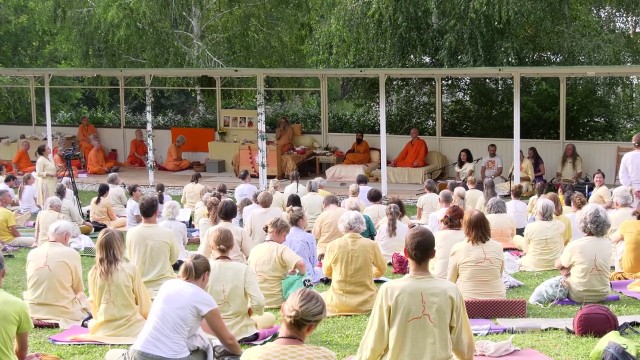
Evening satsang with Vishwaguruji from Strilky Ashram, Czech Republic. Bhajan singing on satsang, including bahajan Guru bhakta jagata me na rahe, Prema ka pyala Hari
Pyare darashana diyo aj
18:15 - 18:18 (3 min)
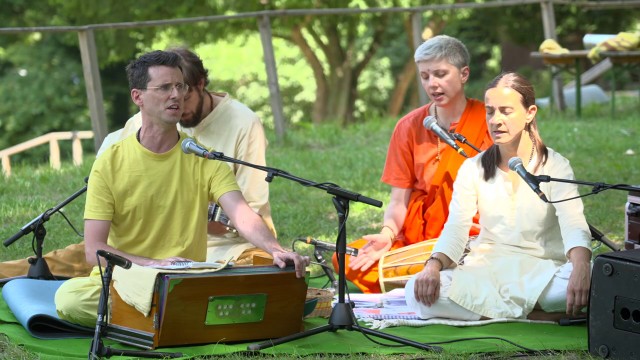
A spiritual song expressing longing for divine vision, followed by analytical remarks on the text's structure.
"Ākula vyākula fero re na dhinna" and "Darśan na dī chokhā. Darśan sannakā nindā, Nairin divasannā."
The content consists of poetic lyrics lamenting the agony of separation and the unfulfilled desire for divine sight (Darśan). This is followed by a separate section of critical remarks that analyze the song's text, pointing out its abrupt language shift, unclear referents, and narrative discontinuity.
Filming location: Strilky, Czech Republic
Bhajans from Vep
18:25 - 18:49 (24 min)
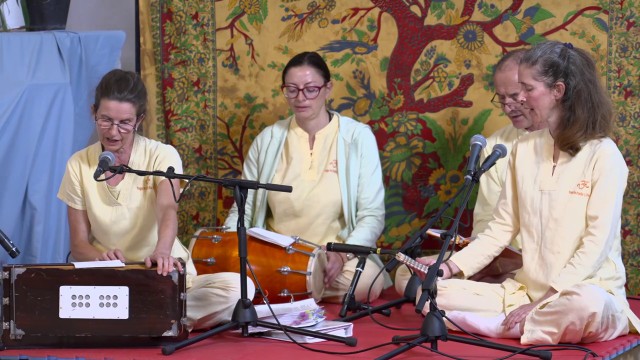
Yoga Summer Retreat from Vep, Hungary. Bhajan singing including Guruvara me cal usa una des.
Satsang from Strilky
18:55 - 20:12 (77 min)

Evening satsang from Strilky Ashram, Czech Republic. Explanation and singing bhajans. Bharatanatyam dance by Bhaktidevi. The glory of Devpuriji Bhagawan is around the whole world. He was the incarnation of Bhagawan Shiva.
We should have God in our heart
20:20 - 21:41 (81 min)
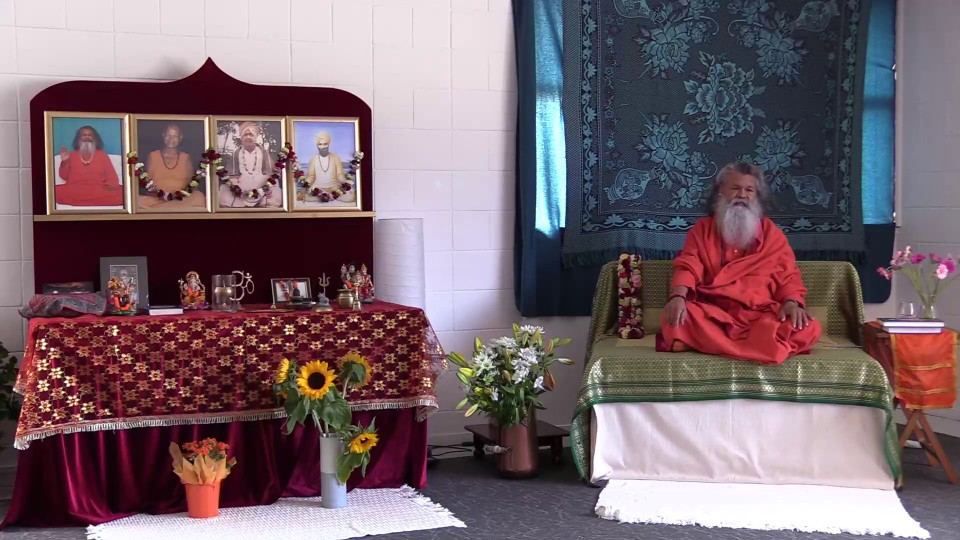
A spiritual discourse weaving stories and observations on faith, tradition, and true knowledge.
"Any lecture we hear... for one and a half or two and a half minutes we have concentration, then we don't have concentration... but that story is there; that story will never forget."
"We must not have a thousand, but even a hundred is enough, or one is enough. My Gurujī said, 'A hundred goats and one tiger is more than enough.'"
The lecturer delivers an evening satsang, moving from observations on preparation and cultural greetings into profound spiritual parables. He shares stories including a Pope testing devotees' faith, a devoted brother walking on water, and the mythological tales of Śiva, Śakti, and the sage Śukadeva, all illustrating that heartfelt devotion surpasses mere intellectual knowledge. The talk concludes with reflections on the enduring power of stories and the core principles of yoga.
Filming location: Auckland, New Zealand
Webcast from Strilky
21:45 - 23:01 (76 min)
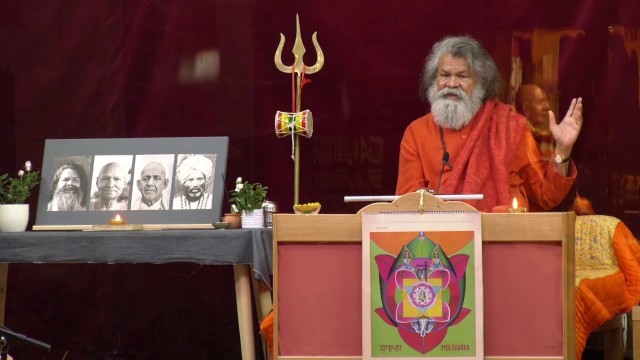
Evening satsang with Vishwaguruji from Strilky, Czech Republic.
Eat healthy food and live as a human
23:05 - 23:48 (43 min)
A spiritual discourse on prayer, lifestyle, and simple daily remembrance.
"Morning, midday, evening—always the whole family, women, men, and children. When they sat at the table to eat, they would pray."
"When we open our eyes, then tell, 'I am human.'... And then, second, don't look at animals and this and that first. Mother, mother. So see our mother."
The lecturer reflects on the decline of traditional prayer across religions and its connection to modern societal problems. He discusses dietary shifts, including the rise of veganism, and critiques modern agriculture's impact on the earth. He concludes with a simple daily practice: upon waking, remember "I am human," honor Mother Earth, and reverence water as life.
Filming location: Strilky, Czech Republic
Yuga Yuga Jivo Maheshwarananda
23:50 - 23:57 (7 min)
Evening satsang with Vishwaguruji from Strilky Ashram, Czech Republic. Bhajan singing on Gurupurnima satsang.
American
Australian