
European
Practising with Vishwaguruji
0:00 - 0:50 (50 min)
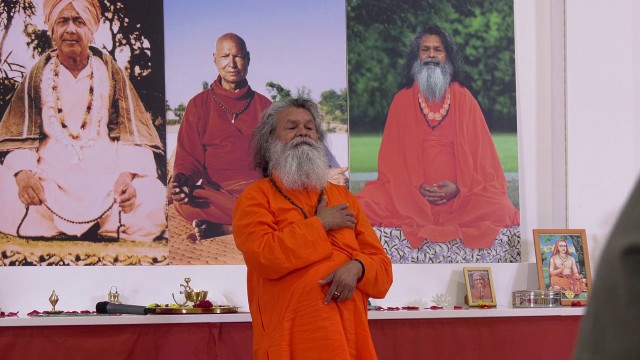
Evening satsang with Vishwaguruji from Rijeka Ashram, Croatia. Concentration on the heart and navel in a standing position. Practising asanas also in a standing position. Practising bhramari pranayama.
Unity in Diversity
0:55 - 1:08 (13 min)
A promotional overview of the "Yoga in Daily Life" organization and its global humanitarian and peace initiatives.
"Yoga in Daily Life is a system of yoga and meditation designed for health and lifestyle management, based on four main principles: physical health, social health, mental health, and spiritual health."
"War arises out of greed for power or difference in religious beliefs. But no matter on what side of the wall someone dies, remember that a member of our human society has lost their life."
The video outlines the structure and charitable work of the international Yoga in Daily Life system, founded by Paramahaṁsa Svāmī Māheśvarānanda (Svāmījī). It details local, national, and global projects—from community classes to UN initiatives—and focuses on Svāmījī's advocacy for interfaith dialogue and peace, highlighting a major 2002 conference and a meeting with the Dalai Lama. The message centers on tolerance, unity in diversity, and Gandhian principles.
We can not divide the Love
1:10 - 1:57 (47 min)
A satsang discourse on the universal and ancient science of yoga.
"Yoga is universal. All the saints and holy incarnations on this planet went through the practice of yoga."
"Yoga means union, harmony, understanding, wisdom. Yoga is the way to God because God Himself practices yoga."
The lecturer addresses spiritual seekers, continuing from a previous talk on yoga postures. He presents yoga as the foundational spiritual science for body, mind, and soul, encompassing all religions and aimed at self-realization. He discusses its origins with Shiva, its role in ending the soul's cycle of suffering, and promotes the "Yoga in Daily Life" system, touching on pranayama, the error of religious division, and the unity of all creation.
Filming location: Nepal
The Purifying Path of Haṭha Yoga: An Introduction to Ṣaṭkarma
2:00 - 2:47 (47 min)

An instructional webcast introducing the Haṭha Yoga purification techniques (Ṣaṭkarma).
"Haṭha Yoga is not only that we clean and purify our whole system, our whole body, but it also has a very great effect on our nervous system."
"Haṭha means willpower to do these Haṭha Yoga techniques. And with this, you also get the willpower, the strength to persevere, to continue, to get rid of the laziness."
A teacher from the Śrīkī Ashram, joined by assistants, explains the purpose and benefits of the six purification acts. The session features a detailed, practical demonstration of Jala Netī (nasal cleansing with salt water) and Kapāla Bhāti, followed by an introduction to Agni Sāra and the Naulī Kriyā for digestive health. The instruction emphasizes using natural elements, proper technique, and the holistic effects on physical and energetic systems.
Filming location: Strilky, Czech Republic
Navaratri - Honoring the Divine Mother and speech on Kriya Yoga, Gold Coast
2:55 - 4:39 (104 min)
Navaratri is a nine day celebration of the divine mother - Shakti. Singing and translation of Holy Gurujis bhajan: "Jaya Matesvari Jaya Devi Candan." Ram Navami is a festival, celebrating the incarnation of Lord Rama. What is Kriya Yoga? How can Kriya help you? What does Kriya do in our body? In our mind? In our consciousness? In our intellect? On our soul? And how it leads us to the divine consciousness, the Atma? There are six Kriyas in Hatha Yoga techniques which are cleaning and purifying our body. Practicing the spiritual Kriya Yoga technique will purify our subconsciuosness. Kriya is one of the best, quickest and sure path of the human life. Kriya practicing awakens the Kundalini Shakti. Through divine prayers and spiritual Kriyas we can purify our destinies. It will uplift and enlighten our consciousness, then we become free from the Karmas. Recorded at bush retreat at Mudgeeraba, Gold Coast, Australia.
Unity in Diversity
4:45 - 4:58 (13 min)
A promotional overview of the "Yoga in Daily Life" organization and its global humanitarian and peace initiatives.
"Yoga in Daily Life is a system of yoga and meditation designed for health and lifestyle management, based on four main principles: physical health, social health, mental health, and spiritual health."
"War arises out of greed for power or difference in religious beliefs. But no matter on what side of the wall someone dies, remember that a member of our human society has lost their life."
The video outlines the structure and charitable work of the international Yoga in Daily Life system, founded by Paramahaṁsa Svāmī Māheśvarānanda (Svāmījī). It details local, national, and global projects—from community classes to UN initiatives—and focuses on Svāmījī's advocacy for interfaith dialogue and peace, highlighting a major 2002 conference and a meeting with the Dalai Lama. The message centers on tolerance, unity in diversity, and Gandhian principles.
Navaratri - Honoring the Divine Mother and speech on Kriya Yoga, Gold Coast
5:05 - 6:49 (104 min)
Navaratri is a nine day celebration of the divine mother - Shakti. Singing and translation of Holy Gurujis bhajan: "Jaya Matesvari Jaya Devi Candan." Ram Navami is a festival, celebrating the incarnation of Lord Rama. What is Kriya Yoga? How can Kriya help you? What does Kriya do in our body? In our mind? In our consciousness? In our intellect? On our soul? And how it leads us to the divine consciousness, the Atma? There are six Kriyas in Hatha Yoga techniques which are cleaning and purifying our body. Practicing the spiritual Kriya Yoga technique will purify our subconsciuosness. Kriya is one of the best, quickest and sure path of the human life. Kriya practicing awakens the Kundalini Shakti. Through divine prayers and spiritual Kriyas we can purify our destinies. It will uplift and enlighten our consciousness, then we become free from the Karmas. Recorded at bush retreat at Mudgeeraba, Gold Coast, Australia.
Just go ahead
6:55 - 7:56 (61 min)
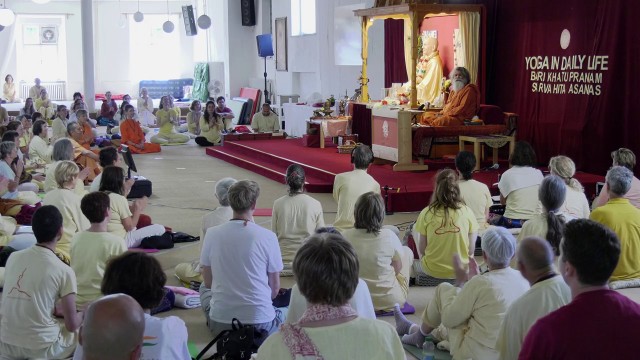
Morning program from Strilky Ashram, Czech Republic. Life eats life. There are many creatures living in the water on the earth and in the air. There are many living beings everywhere. Humans shouldn't kill and eat animals according to their dharma. The story of Buddha and how he received bhiksa. Buddhist people eat only good pure food. Water is life. There is no life without love. There are many very good people but Gurus are very rare. Muslim people are very good they are practising very strictly and faithfully. The story of Hoiigurujis and Vihwagurujis visit at Sankaracharya. Yoga in Daily Life people practised very well during corona time. It can be a female Guru also. A great sadhu keeps every child of God in his heart. Bhajan singing.
Purity in daily life
8:00 - 8:17 (17 min)
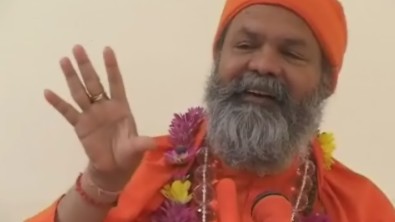
A spiritual discourse on living a pure, harmonious life, beginning with a devotional song.
"Spirituality means purity, happiness, forgiveness, clarity, clear action, clear thoughts, no fear, no fear at all."
"A man who raised the hand on his wife, he has raised the hand on the entire universe—never."
Following a bhajan, the speaker delivers a wide-ranging talk on the essence of spirituality. He defines it as inner purity achieved through satsang, mantra, and meditation, and applies it to daily life—advocating for vegetarianism, harmonious family life free from aggression, and a tolerant worldview. He warns against the negative energy of keeping dead animals for food and encourages self-love and spiritual practice.
Filming location: Perth, Australia
Unity in Diversity
8:25 - 8:38 (13 min)
A promotional overview of the "Yoga in Daily Life" organization and its global humanitarian and peace initiatives.
"Yoga in Daily Life is a system of yoga and meditation designed for health and lifestyle management, based on four main principles: physical health, social health, mental health, and spiritual health."
"War arises out of greed for power or difference in religious beliefs. But no matter on what side of the wall someone dies, remember that a member of our human society has lost their life."
The video outlines the structure and charitable work of the international Yoga in Daily Life system, founded by Paramahaṁsa Svāmī Māheśvarānanda (Svāmījī). It details local, national, and global projects—from community classes to UN initiatives—and focuses on Svāmījī's advocacy for interfaith dialogue and peace, highlighting a major 2002 conference and a meeting with the Dalai Lama. The message centers on tolerance, unity in diversity, and Gandhian principles.
Anahat Chakra
8:45 - 10:40 (115 min)
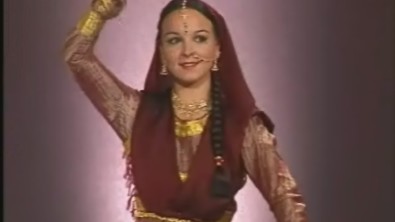
Public lecture about Anahat chakra in Zagreb Croatia in April 2007.
Purity in daily life
10:45 - 11:02 (17 min)
A spiritual discourse on living a pure, harmonious life, beginning with a devotional song.
"Spirituality means purity, happiness, forgiveness, clarity, clear action, clear thoughts, no fear, no fear at all."
"A man who raised the hand on his wife, he has raised the hand on the entire universe—never."
Following a bhajan, the speaker delivers a wide-ranging talk on the essence of spirituality. He defines it as inner purity achieved through satsang, mantra, and meditation, and applies it to daily life—advocating for vegetarianism, harmonious family life free from aggression, and a tolerant worldview. He warns against the negative energy of keeping dead animals for food and encourages self-love and spiritual practice.
Filming location: Perth, Australia
Just go ahead
11:10 - 12:11 (61 min)
Morning program from Strilky Ashram, Czech Republic. Life eats life. There are many creatures living in the water on the earth and in the air. There are many living beings everywhere. Humans shouldn't kill and eat animals according to their dharma. The story of Buddha and how he received bhiksa. Buddhist people eat only good pure food. Water is life. There is no life without love. There are many very good people but Gurus are very rare. Muslim people are very good they are practising very strictly and faithfully. The story of Hoiigurujis and Vihwagurujis visit at Sankaracharya. Yoga in Daily Life people practised very well during corona time. It can be a female Guru also. A great sadhu keeps every child of God in his heart. Bhajan singing.
Anahat Chakra
12:15 - 14:10 (115 min)
Public lecture about Anahat chakra in Zagreb Croatia in April 2007.
Just go ahead
14:15 - 15:16 (61 min)
Morning program from Strilky Ashram, Czech Republic. Life eats life. There are many creatures living in the water on the earth and in the air. There are many living beings everywhere. Humans shouldn't kill and eat animals according to their dharma. The story of Buddha and how he received bhiksa. Buddhist people eat only good pure food. Water is life. There is no life without love. There are many very good people but Gurus are very rare. Muslim people are very good they are practising very strictly and faithfully. The story of Hoiigurujis and Vihwagurujis visit at Sankaracharya. Yoga in Daily Life people practised very well during corona time. It can be a female Guru also. A great sadhu keeps every child of God in his heart. Bhajan singing.
Tuma bina rahyo
15:20 - 15:26 (6 min)
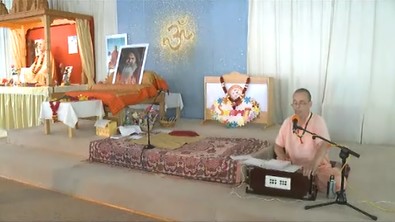
Bhajan sang by Swami Gajanandji
Bhajan evening in Jadan Ashram
15:30 - 15:52 (22 min)
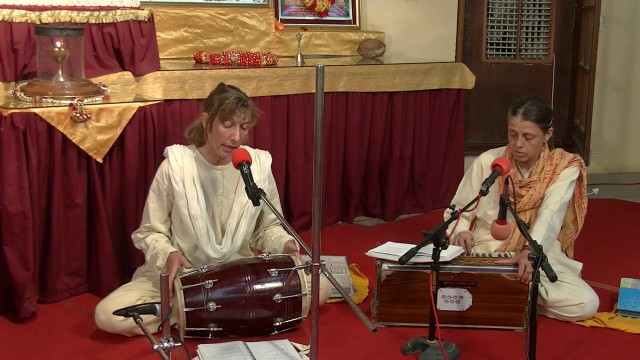
Evening satsang with Vishwaguruji from Jadan Ashram, Rajasthan, India. Bhajan singing.
Bhajan evening from Jadan Ashram
16:00 - 16:37 (37 min)
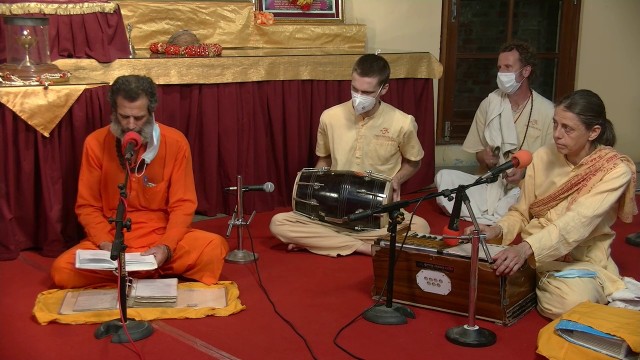
Evening satsang with Vishwaguruji from Jadan Ashram, Rajasthan, India. Bhajan singing.
Bhajan singing from Jadan Ashram
16:45 - 17:20 (35 min)
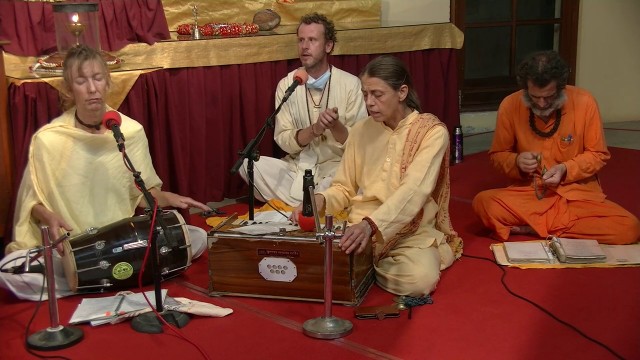
Evening Satsang with Vishwaguruji from Jadan Ashram, Rajasthan, India. Singing bhajans.
Bhajan Singing from Jadan
17:25 - 18:35 (70 min)
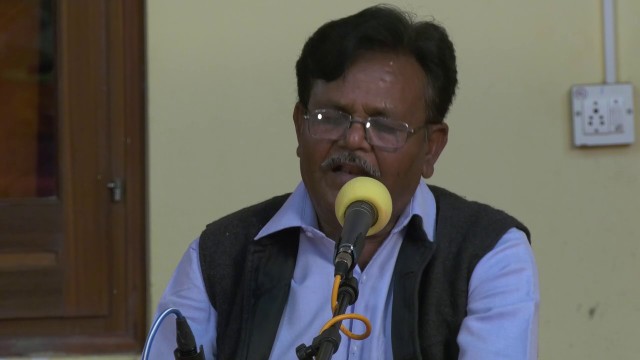
Evening satsang with Vishwaguruji from Jadan Ashram, Rajasthan, India.
Be Under His Shelter
18:40 - 19:45 (65 min)
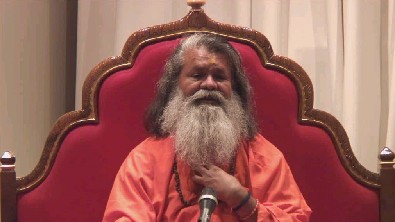
A spiritual discourse on cultivating inner peace through faith, surrender, and overcoming inner obstacles.
"One who is always under divine shelter is safe. But how does one come under God's shelter?"
"If you have peace within, you can bring peace outside. Without inner peace, you cannot."
The speaker delivers a satsang, weaving together devotional songs, parables, and teachings to explore the path to inner peace. He discusses the necessity of true surrender and faith in God, illustrated by a story of an atheist climber. Using examples from Gandhi and analyses of inner fires like anger and desire, he explains how peace is developed through prayer, meditation, and purifying negative qualities like rāga (attachment) and krodha (anger). The talk emphasizes that world peace begins with individual inner peace.
Filming location: Wellington, New Zealand
Webcast from London
19:50 - 20:55 (65 min)
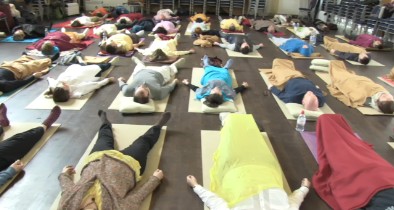
Morning practice with Vishwaguruji from London, UK.
Yoga - The Path Of Liberation
21:00 - 21:30 (30 min)
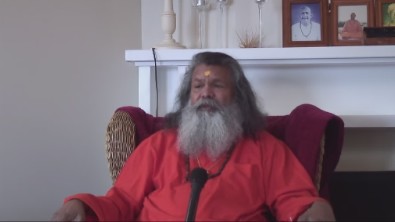
A spiritual discourse on karma, consciousness, and the path to liberation.
"Karma pradhāna hai. Karma is very important. One must not understand karma as negative. Karma is action."
"So, what we have to become is a witness, a knower, or an observer... You become a witness of everything."
In a morning satsang, Swami Madhav Krishna explains the fundamental nature of karma as all action and process in the universe, distinguishing it from mere negative consequence. He describes the journey from identification with the physical body and worldly attachments to realizing the still, witnessing consciousness (Ātman) that exists beyond the movement of energy (śakti). Using parables and analogies—including driving a car and the story of Dattātreya learning from a woman's bracelets—he elucidates concepts of non-duality, the blessing of divine energy from liberated beings, and the ultimate goal of Self-realization.
Filming location: Wellington, New Zealand
What is God?
21:35 - 22:33 (58 min)
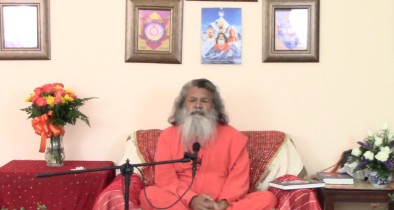
A spiritual discourse on the nature of God, human divinity, and traditional wisdom.
"A child asks a mother or father, 'What is the horizon? How far is it?' Have you ever reached or gone to the horizon?"
"Bhagavān Kṛṣṇa said to Arjuna: both are good, Nirākāra and Sākāra, the formless and with form. But he said, for you, Arjuna, it is easier to worship in form."
Swami Anand Arun explores the concepts of formless (Nirākāra) and personal (Sākāra) divinity, using the analogy of the unreachable horizon. He discusses the path of worship, the significance of divine forms and symbols in Hindu tradition, and the importance of sacred language and human relationships. The talk connects these themes to the science of the cakras, the significance of Vedic rituals like marriage, and the practical application of yoga and speech in daily life.
Filming location: USA
Be satisfied and content whatever you have
22:40 - 23:53 (73 min)
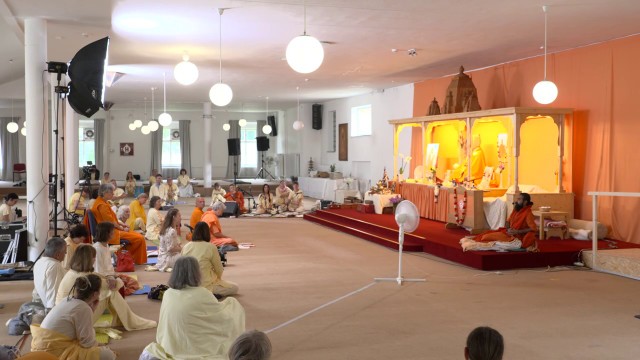
A satsang featuring spiritual stories and teachings on renunciation, ego, and the pitfalls on the spiritual path.
"Seeing you all the time indulged in these materialistic activities and always enjoying your life makes me sad."
"If you have ego, envy, or jealousy towards anything or anyone, then you get stuck in this māyā."
The lecturer narrates two primary parables. The first tells of King Gopichand, who renounces his kingdom at his mother's request and learns the true meaning of his mother's three advices for monastic life. The second, a cautionary tale, describes a powerful muni whose intense tapasya is destroyed by rising ego and desire, ultimately exploited by Kamadeva. The speaker weaves in related teachings, including a story of Lord Rama delivering justice to a dog, to emphasize controlling anger, speech, and the dangers of ego.
Filming location: Strilky, Czech Republic
American
Australian